
Comic book color touch is defined as the application of foreign materials, such as acrylic paint, markers, or dry pigments, to replace missing ink or fill color breaks on a comic's cover or pages. Every major grading service classifies it strictly as restoration, not preservation. That distinction carries real consequences for collectors: a comic with color touch carries a lower unrestored market value, regardless of how well the work was done. Understanding color touch detection, its permanence, and its grading implications is one of the most practical skills any serious collector can develop.
What is comic book color touch and how does it differ from other restoration?
Color touch is an additive restoration technique that physically introduces new material onto a comic's surface. That separates it from every other form of comic book conservation. Pressing uses heat and pressure to flatten physical defects without adding anything to the book. Cleaning removes surface contaminants while leaving the original ink and paper intact. Color touch, by contrast, deposits paint, pigment, or ink on top of the original surface to mask visible damage.
The distinction matters because grading companies treat additive restoration differently from stabilization. A pressed comic retains its "unrestored" status and commands full market value. A comic with color touch receives a restoration label, which places it in a separate, lower-value category regardless of grade.
Color touch is almost always applied to hide what the industry calls unpressable defects. These are physical breaks in the ink layer caused by creasing, spine ticks, or corner damage. Pressing cannot restore missing ink. Once the ink layer fractures, the white paper beneath shows through permanently. Color touch attempts to fill that gap cosmetically.
- Pressing: Uses heat and controlled pressure to flatten physical defects. No material is added. Unrestored status is preserved.
- Cleaning: Removes dirt, oils, and surface debris using solvents or dry methods. No material is added. Unrestored status is preserved.
- Conservation: Stabilizes paper, removes acid buildup, and prevents further deterioration. No cosmetic alteration occurs.
- Color touch: Adds paint, markers, or pigment to cover missing ink. Classified as restoration. Unrestored value is permanently affected.
Pro Tip: Before submitting a comic for grading, inspect every crease and spine tick under a bright light at a low angle. If the white paper shows through, pressing will not fix it. Color touch is the only cosmetic option, but it comes with a restoration label.
How to detect color touch on comics
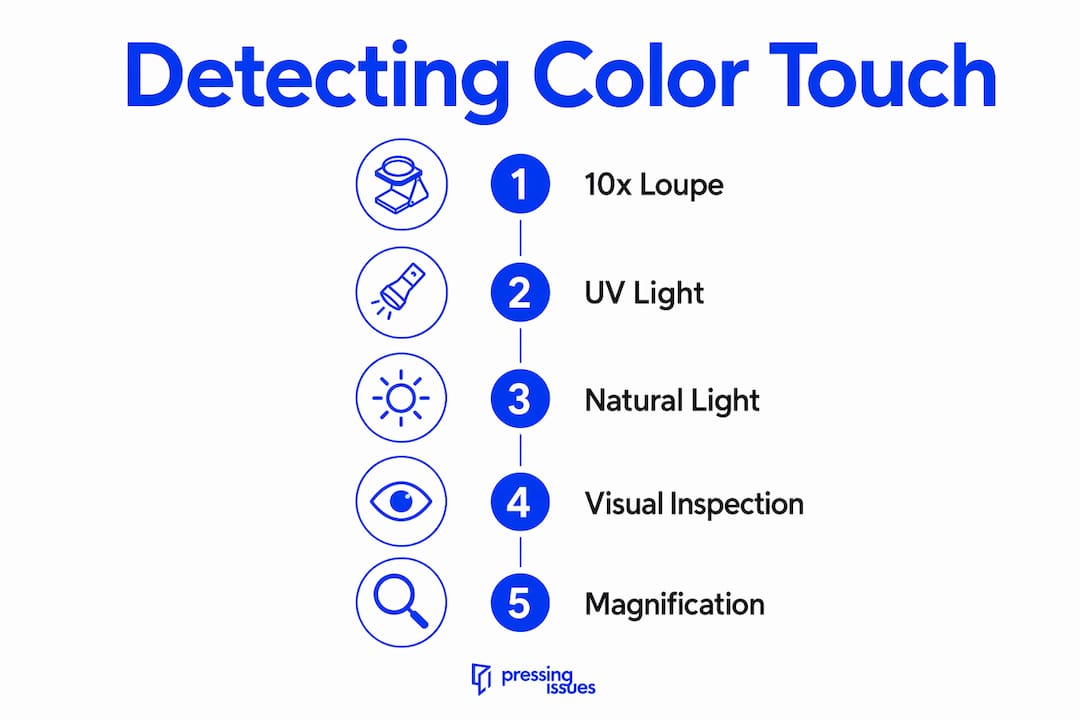
Detection relies on magnification, UV light, and careful visual inspection of sheen and texture. No single method catches every case, but combining two or three techniques makes color touch very difficult to hide.
- Use a loupe or magnifier. A 10x loupe reveals brush strokes, uneven texture, and pigment sitting on top of the original surface. Original printing ink sits within the paper fibers. Applied color touch sits above them, creating a subtle but visible difference in depth and texture.
- Inspect under longwave UV light. UV light causes non-original materials like acrylic paint to fluoresce differently than original comic ink. Areas with color touch often glow brighter or show a distinct color shift under UV. This is the most reliable detection method for professional-grade work.
- Check the cover sheen at an angle. Hold the comic under a directed light source and tilt it slowly. Color touch areas often appear duller or shinier than the surrounding original surface. The inconsistency in gloss is a strong indicator.
- Rub suspect areas gently. Dry powder color touch adheres only to crease fibers and transfers to your fingertip with light pressure. If pigment comes off on your finger, the area has been treated with dry powder. This method works specifically for amateur powder applications.
- Focus on high-risk areas. Spines, corner tips, and cover creases are where color touch appears most often. These are the spots where ink breaks are most visible and where sellers are most motivated to apply a cosmetic fix.
- Compare color saturation. Touched areas frequently show slightly different color saturation than the surrounding original print. This is easier to spot on solid color backgrounds than on detailed artwork.
Pro Tip: Always inspect a comic under both natural daylight and a UV lamp before buying a high-value book. A UV flashlight costs very little and catches restoration that even experienced eyes miss under standard lighting.
| Detection method | What it reveals | Skill level required |
|---|---|---|
| 10x loupe magnification | Brush strokes, texture differences, pigment depth | Beginner |
| Longwave UV light | Fluorescence differences between original ink and applied materials | Beginner |
| Angled directed lighting | Sheen and gloss inconsistencies on cover surface | Beginner |
| Finger rub test | Dry powder pigment transfer from crease fibers | Beginner |
| Color saturation comparison | Subtle tonal differences between touched and original areas | Intermediate |
Common color touch techniques used in comic book restoration
Professional restorers use acrylic paint applied with fine brushes to match the original color as closely as possible. The work requires skill, patience, and a good eye for color matching. When done well, professional acrylic color touch is the hardest type to detect without UV light or magnification.
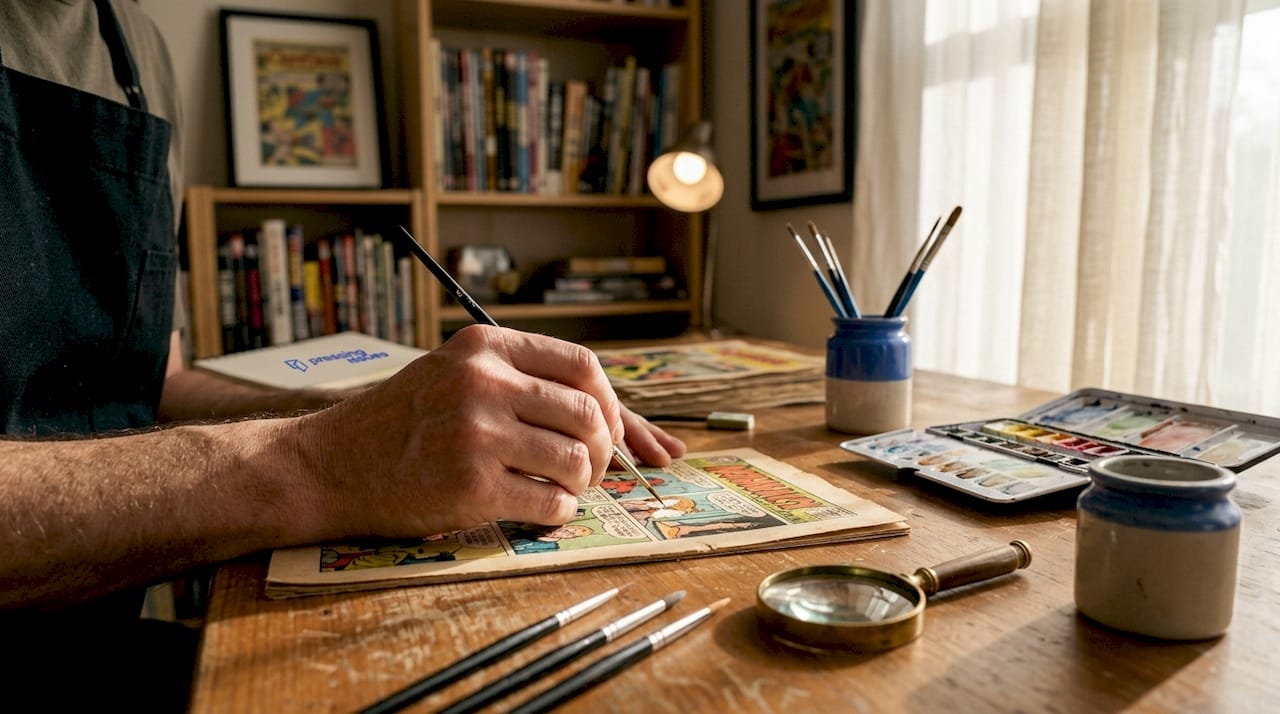
Amateur restoration is far more common and far easier to spot. Black markers are the most frequently used tool for hiding spine ticks and cover creases on dark-colored comics. The marker ink sits visibly on the surface and often bleeds slightly beyond the crease, creating a telltale smear under magnification.
Dry pigment powder is the subtlest amateur method. The collector rubs a colored powder into the crease, and the pigment adheres to the exposed paper fibers. Dry powder color touch produces a duller sheen than the surrounding original ink and transfers to the finger with light rubbing. It is harder to detect than marker work but still visible under a loupe.
Key areas where color touch is most commonly applied:
- Spine ticks: Small color breaks along the spine caused by reading stress or handling. These are the most common targets for both amateur and professional color touch.
- Cover creases: Diagonal or horizontal creases that break the ink layer and expose white paper beneath.
- Corner tips: Worn or bent corners where the ink has chipped away, leaving bare paper visible.
- Edge chips: Small areas along the cover edges where the paper and ink layer have physically separated.
Color touch is generally permanent and cannot be safely removed without damaging the original paper or ink. Attempting to remove acrylic paint or marker ink risks tearing the paper surface or lifting original ink along with the applied material. This permanence is why grading companies treat color touch as a serious restoration flag rather than a minor note.
How does color touch affect comic book value and grading?
Grading services classify color touch as restoration, and that classification changes everything about a comic's market position. A restored comic is graded on a separate scale from unrestored copies. Collectors and investors consistently pay a premium for unrestored books, so a color touch label directly reduces what a seller can expect at auction or in a private sale.
Color-breaking creases are permanent defects that pressing cannot repair. The ink layer has physically fractured, and no amount of heat or pressure brings it back. Color touch masks the defect visually, but the underlying damage remains. Graders using UV light and magnification will identify the restoration regardless of how carefully it was applied.
The grading impact is not subtle. A comic that might grade at 8.0 unrestored with visible spine ticks will receive a restoration label if those ticks have been touched. That label moves the book into the restored category, where it competes with other restored copies rather than clean, unrestored ones. Expert consensus recommends restraint with restoration because amateur attempts almost always reduce value more than the original defect would have.
| Comic condition | Grading outcome | Market value impact |
|---|---|---|
| Unrestored with visible spine ticks | Graded on standard scale, defects noted | Full unrestored market value |
| Color touch applied by professional | Graded as restored, restoration noted | Reduced; competes in restored market |
| Color touch applied by amateur | Graded as restored, often lower quality noted | Significantly reduced |
| Pressed only, no material added | Graded on standard scale, unrestored status retained | Full unrestored market value |
Proper comic book storage prevents the kind of handling damage that leads collectors toward color touch in the first place. Protecting your books before damage occurs is always the better investment.
Key Takeaways
Color touch is an additive restoration technique that permanently affects a comic's unrestored grading status and market value, making detection skills and careful handling the most important tools a collector has.
| Point | Details |
|---|---|
| Color touch is restoration | Grading services classify it separately from unrestored comics, reducing market value. |
| Pressing does not fix ink breaks | Color-breaking creases are permanent; pressing only addresses physical deformation. |
| UV light is the best detection tool | Non-original materials fluoresce differently, making UV inspection reliable for spotting color touch. |
| Amateur attempts cause more damage | Marker and dry powder applications are detectable and lower value more than the original defect. |
| Prevention beats restoration | Proper storage and careful handling avoid the conditions that make color touch tempting. |
Why I think collectors underestimate color touch risk
Most collectors focus on spine stress lines and staple rust when evaluating a book. Color touch rarely comes up until someone gets a grading result back with a restoration label they did not expect. I have seen it happen repeatedly, and it almost always traces back to a purchase made without a UV light or a loupe in hand.
The uncomfortable truth is that amateur color touch is common on lower-value comics and easy to miss without careful inspection. Sellers do not always disclose it, and buyers do not always look. A $40 book with marker on the spine is not a disaster, but the same habit applied to a $400 book is a real problem.
My honest recommendation: treat every high-value purchase as potentially restored until you have inspected it yourself. A UV flashlight and a 10x loupe together cost less than most single back issues worth grading. That investment pays for itself the first time you catch a touched spine before handing over money.
The preservation tips from experienced collectors consistently point to the same conclusion. Minimal intervention, proper storage, and educated buying decisions protect value far better than any cosmetic fix. Color touch is a last resort, not a solution.
— Charles
Pressing Issues keeps your comics unrestored and graded right
At Pressing Issues, we work with collectors in Seattle and Portland who care about maintaining the unrestored status of their books. Our professional comic book pressing uses controlled heat and pressure to address physical defects without adding any material to your comic. No paint, no markers, no pigment. Your book stays clean, unrestored, and ready for grading.
We also offer comic cleaning services that remove surface contaminants without touching the original ink or paper. If you are preparing a book for CGC or CBCS submission, we can help you get the best possible result without crossing into restoration territory. Reach out to Pressing Issues before you consider any cosmetic fix.
FAQ
What is comic book color touch in simple terms?
Color touch is the application of paint, markers, or pigment to a comic book to cover missing ink or color breaks. Grading services classify it as restoration, which reduces a comic's unrestored market value.
Can pressing remove color touch from a comic?
Pressing cannot remove color touch. The applied material is generally permanent, and attempting to remove it risks damaging the original paper and ink beneath.
Does color touch always show up in grading?
Professional graders use UV light and magnification to identify color touch, even when it is applied carefully. Most color touch is detectable by trained graders and will be noted on the grading label.
What is the easiest way to detect color touch at home?
A longwave UV flashlight is the most reliable home detection method. Non-original materials fluoresce differently than original comic ink, making touched areas visible under UV light even when they look clean under normal lighting.
Is color touch ever acceptable for a collector?
Color touch is a personal decision, but it permanently affects unrestored grading status. Most experienced collectors and grading experts recommend against it because the restoration label reduces value more than the original defect in most cases.
Recommended
- Comic Book Pressing & Cleaning Guide for CGC Grading & Comic Collectors | Pressing Issues — Pressing Issues
- Comic Book Encapsulation: What It Is and Why It Matters — Pressing Issues
- The Grading Upgrade Game: Where Are the Sweet Spots for Pressing and Cleaning? — Pressing Issues
- What Is Comic Book Flipping? A 2026 Investor's Guide — Pressing Issues