
The comic book condition scale is a standardized 0.5 to 10.0 numeric grading system that measures a comic's physical state and directly determines its market value. Known in the hobby as the comic book grading scale, it was formalized by third-party grading companies like CGC (Certified Guaranty Company) and CBCS (Comic Book Certification Service), which set the industry standard for condition assessment. A single grade point separates a common reading copy from a high-value collectible. Understanding this scale is the foundation of smart collecting, whether you are buying, selling, or submitting comics for professional grading.
What does the comic book condition scale mean, from Poor to Gem Mint?
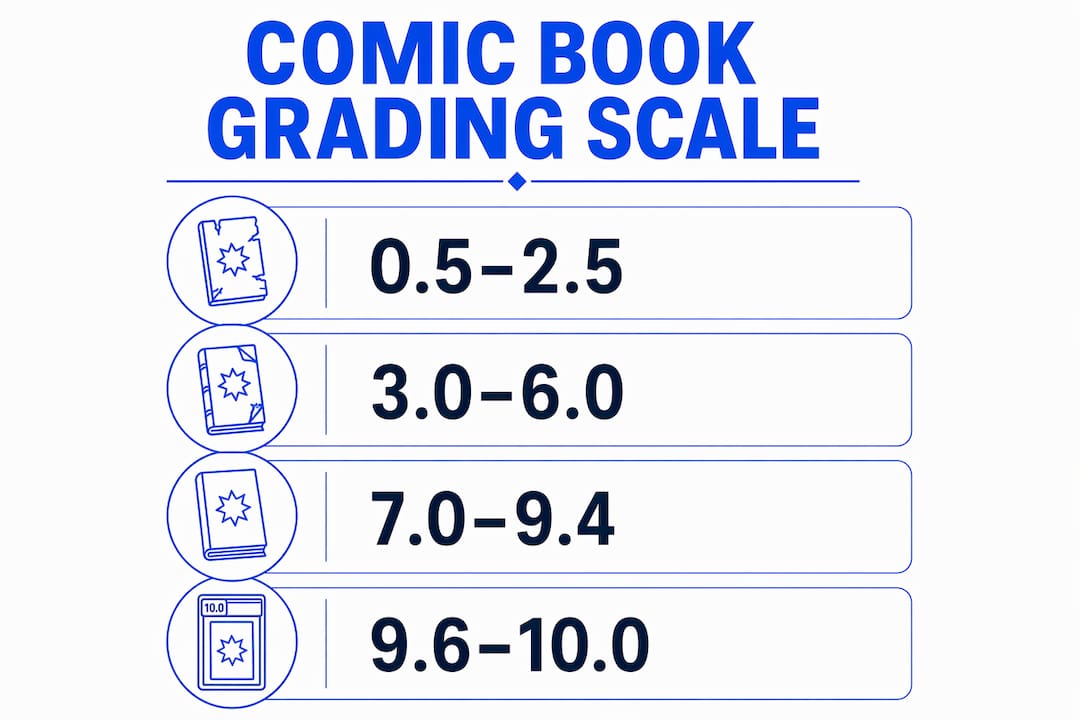
The 0.5 to 10.0 numeric scale covers every physical state a comic can be in, from heavily damaged to virtually flawless. Each grade carries a named label and a specific set of defect criteria. Knowing these labels helps you speak the same language as dealers, graders, and auction platforms.
Low grades: Poor to Good (0.5–2.5)
Comics in this range show major structural damage. Expect missing pieces, heavy tears, severe spine splits, brittle pages, and significant yellowing or browning. A Poor (0.5) copy may be held together by tape. A Good (2.0–2.5) copy is complete but heavily worn, with multiple creases, soiling, and rolled spines. These grades carry the lowest collector value but can still fill a reading gap for a key issue.
Mid grades: Very Good to Fine (3.0–6.0)
This is where most back-issue bins live. Very Good (3.0–4.0) comics show clear signs of use: moderate creases, minor spine stress, small corner bends, and light soiling. Fine (5.0–6.0) copies look much better, with only minor wear visible on close inspection. Spine stress lines may appear but do not break color. These grades are popular with collectors who want a presentable copy without paying a premium price.
Upper grades: Very Fine to Near Mint (7.0–9.4)
Very Fine (7.0–8.5) comics show minimal wear. Corners are sharp, the spine is tight, and any defects are small and few. Near Mint (9.0–9.4) copies look nearly perfect to the naked eye. Slight corner blunting or a single small spine tick may be present, but the overall presentation is outstanding. This range is where serious collector demand concentrates.

Premium grades: Near Mint+ through Gem Mint (9.6–10.0)
| Grade | Label | Key Characteristics |
|---|---|---|
| 9.6 | Near Mint+ | Nearly perfect; one small, barely visible defect allowed |
| 9.8 | Mint | Exceptional; only the most minor printing or handling flaws |
| 9.9 | Mint+ | Extremely rare; essentially flawless to the naked eye |
| 10.0 | Gem Mint | Perfect; no defects of any kind under any inspection |
CGC, founded in 2000, uses this scale with Universal (blue label) and Specialty labels to authenticate and encapsulate comics. A 9.8 is the most sought-after grade for modern books. A 10.0 Gem Mint is so rare that its existence on any given issue can make national collecting news.
How do subtle condition differences affect comic book value?
Grading is defect-focused, not appearance-focused. Two comics that look nearly identical side by side can receive very different grades because of underlying flaws invisible at a casual glance. This explains why price swings near the top of the scale are so dramatic.
A single grade-limiting defect such as a spine tick, a color-breaking crease, or a blunted corner caps the entire grade, regardless of how perfect everything else looks. Graders assign the overall grade based on the worst defect present, not an average of all attributes. That one flaw is the ceiling.
The value gap between a 9.6 and a 9.8 is significant. For key modern issues, a 9.8 can be worth 3 to 10 times more than a 9.6 of the same book. That multiplier grows even larger for first appearances or low-print-run variants. A 9.9 or 10.0 Gem Mint, when it exists, can command prices that dwarf even a 9.8 by an order of magnitude.
Common defects that separate a 9.4 from a 9.8 include:
- Spine ticks: Small color-breaking marks along the spine from handling or storage
- Corner blunting: Slight rounding or fraying at one or more corners
- Cover creases: Hairline folds that catch light at an angle
- Staple rust or migration: Oxidation staining spreading from the staple area
- Printing defects: Ink skips or misregistration that are not manufacturing errors
Pro Tip: Hold the comic at a 45-degree angle under a bright light source. Spine ticks and hairline creases that are invisible head-on will catch the light and become clearly visible. This single technique separates experienced pre-screeners from beginners.
How does page quality grading differ from overall condition?
Page quality is a separate grading dimension that CGC and CBCS note independently on the slab label. It measures the color and brittleness of the interior pages, not the cover or exterior. Page quality grades range from White (the most desirable) through Off-White, Cream, Tan, and Brittle at the lowest end.
Buyers pay premiums for whiter, less brittle pages even when two copies share the same exterior grade. A 9.6 with White pages will consistently sell for more than a 9.6 with Tan pages. The difference can be substantial on Golden Age and Silver Age books, where paper degradation is common.
Age, storage conditions, and environment drive page quality. Comics stored in high humidity, near heat sources, or in acidic bags and boards yellow faster. A comic kept in a cool, dry environment in Mylar sleeves with acid-free boards will retain White or Off-White pages far longer.
- White: Bright, supple pages with no yellowing; highest desirability
- Off-White to White: Slight aging but still bright; very acceptable to most buyers
- Off-White: Noticeable but mild yellowing; common in Silver Age books
- Cream to Off-White: Moderate aging; affects value on high-grade copies
- Tan to Brittle: Significant degradation; can make a high-cover-grade book far less desirable
Pro Tip: Before submitting a comic, fan the pages gently under a bright light. Compare the page color to a white sheet of printer paper. If the pages look noticeably yellow or brown by comparison, expect a page quality note that will affect your final sale price.
How to pre-screen your comics before professional grading
Pre-screening is the process of inspecting your own comics at home to estimate their likely grade before paying for professional submission. A careful pre-screen saves money and prevents disappointment.
- Wash your hands. Oils and dirt transfer instantly to covers and pages. Work on a clean, flat surface free of debris.
- Inspect the spine first. Lay the comic flat and look along the spine for ticks, stress lines, or color breaks. The spine is the most common grade-limiter on high-grade books.
- Check all four corners. Each corner should be sharp and square. Even one blunted or rolled corner can drop a grade from 9.8 to 9.4 or lower.
- Examine the cover surface. Look for creases, scratches, soiling, or printing defects. Inspect under angled light to catch hairline creases invisible at straight-on angles.
- Check the staples. Look for rust, migration staining, or staples that have been replaced. Replaced staples are a significant defect.
- Fan the pages. Look for tears, writing, stamps, moisture damage, and page color. Note the page quality category.
- Compare to the scale. Match your findings to the grade definitions. If you find one clear defect, that defect sets your ceiling grade.
- Decide on submission. Submit key issues with strong grade potential to offset grading fees. A common issue grading at 7.0 rarely justifies the cost of CGC or CBCS submission.
CGC and CBCS both offer full encapsulation and authentication through their slabbing process. A slabbed comic carries a trusted third-party grade that buyers accept without question, which directly supports resale value.
Key takeaways
The comic book grading scale assigns grades from 0.5 to 10.0 based on specific physical defects, and a single flaw at the high end can multiply or divide a comic's market value by a factor of ten.
| Point | Details |
|---|---|
| Grades reflect defects, not looks | Grading is defect-focused; the worst flaw present sets the grade ceiling. |
| High-grade gaps are expensive | A 9.8 can be worth 3–10 times more than a 9.6 for the same key issue. |
| Page quality is graded separately | CGC and CBCS note page quality independently; white pages command higher prices. |
| Pre-screen before you submit | Inspect spine, corners, staples, and pages under angled light to estimate your grade at home. |
| Submit selectively | Only submit comics with strong grade potential to justify professional grading fees. |
Why mastering the grading scale changed how I collect
I spent years buying comics based on how they looked in hand, and I paid for that mistake more than once. The shift that changed everything was learning to think in defects rather than impressions. A comic can look stunning in a bag and board and still grade at 9.2 because of two spine ticks I missed on the left edge.
The grading scale is not a beauty contest. It is a defect language. Once you internalize that, you stop being surprised by grades and start predicting them. I have caught a color-breaking crease on a book a dealer had priced as Near Mint, and I have found genuine 9.8 candidates in dollar bins because the previous owner did not know what to look for. That knowledge is real negotiating power.
For new collectors, I would say this: do not wait until you have a valuable book to learn the scale. Practice on cheap reading copies. Inspect them, estimate the grade, then look up what a grader would say. The gap between your estimate and the actual grade will shrink fast, and so will your costly mistakes. The collectors who protect long-term value are the ones who learned to see what others overlook.
— Charles
How Pressing-issues can help before you submit
Condition is not always fixed. Before you send a comic to CGC or CBCS, professional cleaning and pressing can remove minor defects and improve a book's grading potential.
Pressing-issues specializes in comic book pressing and professional cleaning for collectors in Seattle, Washington and Portland, Oregon. Pressing can reduce minor spine stress, flatten small non-color-breaking creases, and restore a book's presentation before it ever reaches a grader's hands. Cleaning removes surface dirt and residue that can affect the final grade. Both services are designed to give your comic the best possible chance at the grade it deserves. Review rates and turnaround times to plan your submission timeline.
FAQ
What is the comic book grading scale?
The comic book grading scale is a 0.5 to 10.0 numeric system used to rate a comic's physical condition, with labels ranging from Poor to Gem Mint. CGC and CBCS are the two primary third-party companies that apply this scale officially.
Why does a small grade difference matter so much in value?
A single grade-limiting defect caps the overall grade, and the gap between grades like 9.6 and 9.8 can represent a 3 to 10 times price difference on key issues. Grading is defect-focused, so even one flaw on an otherwise perfect book sets the ceiling.
What does page quality mean on a CGC or CBCS slab?
Page quality measures the color and brittleness of interior pages, graded separately from the overall condition. Whiter, more supple pages are more desirable and command higher prices even when two copies share the same exterior grade.
How do I grade a comic book at home?
Inspect the spine, corners, cover surface, staples, and pages under bright, angled light on a clean flat surface. Match your findings to the numeric scale, letting the worst defect you find set your estimated grade ceiling.
Should I get every comic professionally graded?
No. Submit only key issues with strong grade potential, since grading fees and turnaround times make submission impractical for low-value books. Focus on first appearances, low-print variants, and books you estimate at 9.0 or higher.