
Comic book water stain removal is the process of carefully treating moisture damage on comic book paper to minimize discoloration and preserve the book's condition and market value. Water stains form when minerals and paper fibers shift as moisture evaporates, leaving a visible tide mark that grading services like CGC treat as a defect. Without archival protection, comics can lose 20–60% of market value over five years from moisture damage alone. That number tells you everything about why acting quickly and correctly matters. This guide covers what tools you need, how to treat stains step by step, how to spot mold, and how to store your collection so it never happens again.
What tools do you need for comic book water stain removal?
Safe water stain treatment starts with the right supplies. Using the wrong materials, even with good intentions, can set a stain permanently or cause ink bleed that destroys a cover. Gather everything before you touch the comic.
Recommended cleaning supplies
| Supply | Purpose |
|---|---|
| Distilled water | Prevents mineral deposits that worsen tide marks |
| Cotton swabs or lint-free cloths | Apply moisture without abrading paper fibers |
| Soft artist's eraser (non-abrasive) | Lifts surface grime without tearing pages |
| Archival blotting paper | Absorbs excess moisture during drying |
| Mylar sleeves and acid-free boards | Protect comics after treatment |
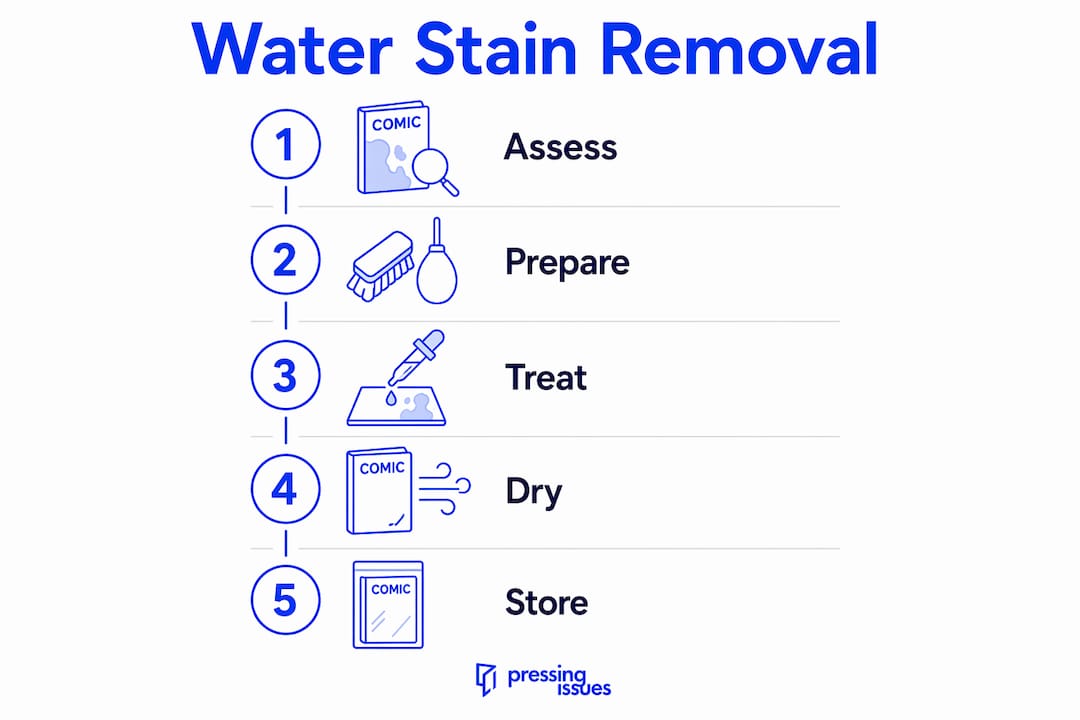
The supplies above are widely available at art supply stores and archival retailers. Mylar sleeves and acid-free boards are the two items collectors most often skip, and skipping them is how a treated comic gets re-damaged within weeks.
What to avoid entirely:
- Tap water (mineral content leaves new stains)
- Paper towels (fibers scratch and leave residue)
- Bleach or household cleaners (cause irreversible ink bleed)
- Heat guns or hair dryers (heat sets stains deeper and curls pages)
- Rubber erasers with abrasive compounds (tear paper fibers)
Pro Tip: Always test any cleaning method on a low-value comic of similar paper stock before treating a key issue. Paper reacts differently depending on the print era and coating.
How do you remove water stains from comic book covers and pages?
Speed is the single most critical factor in water damage restoration for comics. Mold can develop in 24–48 hours on wet paper, so the window for safe DIY treatment is narrow. Work methodically and never rush a drying step.
Step-by-step treatment process
-
Remove the comic from moisture immediately. Gently separate it from other books to prevent staining adjacent issues. Do not stack wet comics.
-
Fan the pages open carefully. Stand the comic upright in a slight fan shape so air can circulate between pages. Never force stuck pages apart while wet.
-
Place archival blotting paper between pages. Insert a sheet every 10–15 pages to absorb moisture. Replace blotting paper every hour until it comes out dry.
-
Air dry at room temperature. Set the comic in a clean, dry space with good airflow. Keep it away from sunlight, radiators, and vents. Avoid heat and rough handling at every stage.
-
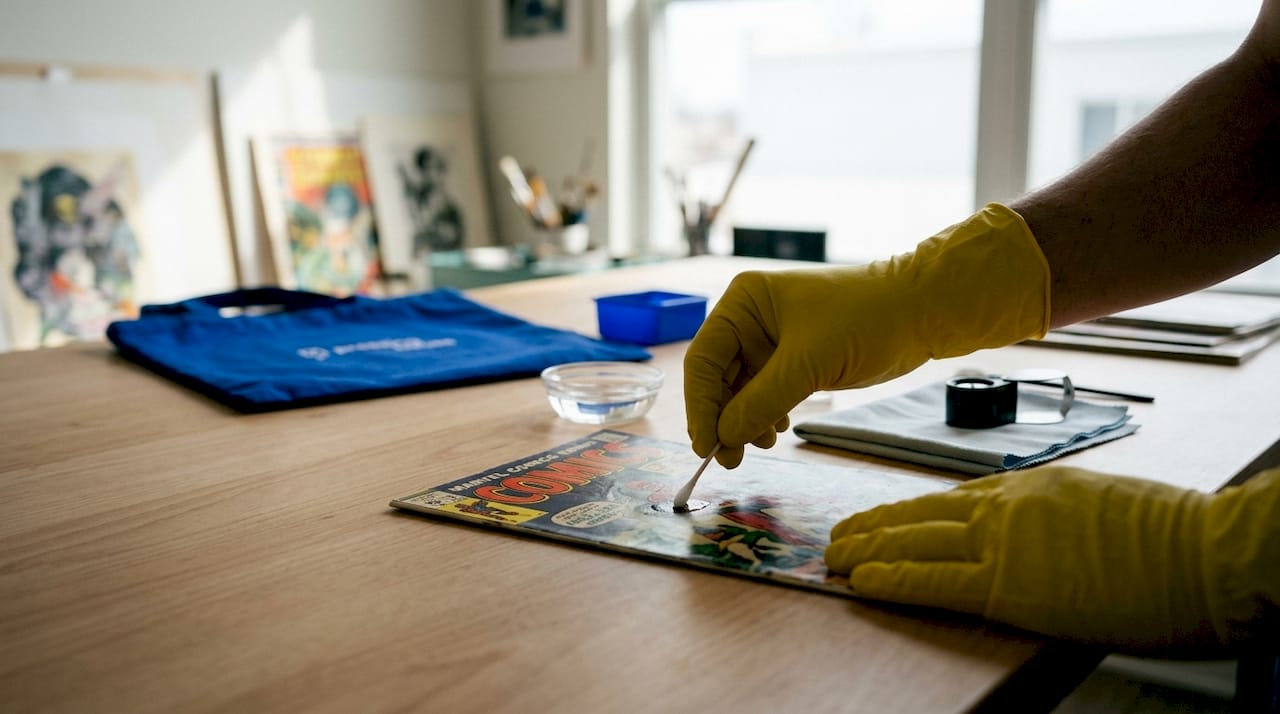
Assess the stain once fully dry. A tide mark left after drying is a mineral deposit on the paper surface. Lightly dampen a cotton swab with distilled water and dab, never rub, the outer edge of the stain to soften the tide line.
-
Try a diluted hydrogen peroxide solution for yellowed stains. A 3% hydrogen peroxide solution applied with a cotton swab can lighten oxidized staining on interior pages. Test on an inconspicuous area first and allow it to dry fully before evaluating results.
-
Press the comic flat under weight. Once dry, place the comic between two clean boards under a heavy, flat object for 24–48 hours to reduce waviness caused by moisture.
Restoration stops decay but may not remove stains. Water permanently alters paper fibers at the molecular level, so the goal of treatment is to minimize the tide mark and stabilize the comic, not to erase the damage entirely. Collectors who understand this distinction make better decisions about when to treat and when to seek professional help.
Common mistakes to avoid:
- Rubbing stains instead of dabbing (spreads the tide mark)
- Using too much liquid (re-wets and expands the stain)
- Skipping the blotting paper step (causes pages to stick together as they dry)
- Applying any solution to colored ink areas without testing first
Pro Tip: For cover stains on glossy paper, distilled water alone is usually safer than any chemical solution. Glossy coatings react unpredictably to hydrogen peroxide and can lose their sheen permanently.
How do you identify and handle mold from water damage?
Mold is the hidden threat inside every water-damaged comic. A musty odor signals active mold even when pages look dry. Masking that smell with baking soda does not stop the biological damage already underway.
Signs of mold on comics
- Fuzzy gray, white, or black spots on pages or covers
- Musty or earthy smell with no visible growth yet
- Brown foxing spots (small rust-colored dots) indicating past moisture exposure
- Pages that feel soft, spongy, or stick together slightly
Mold damage ranges from mild to severe, and the category determines your response. Mild surface mold on a dry comic can sometimes be addressed with careful air circulation in a clean, low-humidity environment. Major contamination requires professional comic book mold remediation because spores spread to neighboring books on contact.
Safe quarantine steps
- Isolate the affected comic in a sealed polyethylene bag immediately
- Label the bag with the date and issue to track the timeline
- Store it away from the rest of your collection until assessed
- Do not open the bag indoors near other collectibles
Mold permanently weakens paper fibers) and causes staining that no cleaning method fully reverses. That fact makes prevention and environmental control more valuable than any spot treatment. A comic that dries out does not automatically become safe. Spores remain dormant and reactivate when humidity rises again, which is why storage conditions matter as much as the initial drying process.
For comics with significant mold growth, protecting your collection from further contamination outweighs any attempt at DIY cleaning. Collectors who protect limited edition prints and other paper collectibles from moisture use the same principle: isolate first, treat second.
What storage practices prevent future water stains?
Prevention is the most cost-effective form of water damage recovery for any collection. The right environment stops stains before they start.
Climate control targets:
- Humidity between 50–55% and temperatures between 64–68°F slow yellowing, mold growth, and paper degradation
- A digital hygrometer (available for under $20) lets you monitor both in real time
- Avoid storing comics in basements, attics, or garages where humidity fluctuates
Archival storage essentials:
- Mylar (polyester) bags resist moisture far better than standard polypropylene bags
- Acid-free backing boards prevent chemical transfer and support the comic's spine
- Acid-free boxes protect against light, dust, and humidity spikes
Shelving and placement rules:
- Store comics upright, not flat, to prevent spine stress and moisture pooling
- Keep boxes off the floor to avoid flood risk and ground-level humidity
- Never store near exterior walls, pipes, or windows
Inspection routine:
- Check your collection every three to six months for early signs of staining, foxing, or odor
- Rotate comics in long-term storage to catch problems before they spread
Comic book encapsulation in CGC or CBCS slabs offers the strongest protection against moisture, because the sealed case creates a controlled microenvironment around the book. For high-value issues, encapsulation is the most reliable long-term storage solution available.
Key takeaways
Effective comic book water stain removal requires immediate action, controlled drying, and archival storage to protect both condition and market value.
| Point | Details |
|---|---|
| Act within 24–48 hours | Mold develops fast on wet paper; speed limits permanent damage. |
| Use distilled water only | Tap water leaves mineral deposits that create new stains. |
| Air dry, never heat dry | Heat sets stains deeper and causes irreversible page curling. |
| Quarantine mold-affected comics | Isolate immediately to stop spores from spreading to other issues. |
| Control humidity long term | Store at 50–55% humidity and 64–68°F to prevent recurrence. |
What I've learned after years of treating water-damaged comics
The hardest truth I share with collectors is this: water stains are often permanent. Professional comic pressing addresses physical distortions beautifully, but it cannot undo the chemical change that water causes in paper fibers. I have seen collectors spend hours on DIY cleaning only to fix the stain deeper into the page, making professional recovery harder afterward.
The collectors who get the best outcomes are the ones who act fast and stay conservative. They dry the comic correctly, quarantine anything that smells musty, and then call a professional before reaching for chemicals. DIY chemical treatments create tide marks and ink bleed that limit what any conservator can do afterward.
My honest advice: treat the drying process as the most important step you control, and treat everything after that as a job for someone with the right tools. A comic that dries flat and clean is already in better shape than one that dried fast under a lamp. Preservation is about protecting what remains, not chasing perfection.
— Charles
When professional comic restoration makes sense
Water damage does not always respond to careful home treatment. For comics with significant warping, deep staining, or any sign of mold, professional comic book cleaning and pressing delivers results that DIY methods simply cannot match.
Pressing Issues serves collectors in Seattle, Washington, and Portland, Oregon, with professional pressing, cleaning, and restoration services built around protecting your investment. Vacuum freeze-drying is the gold standard for severely saturated comics, and professional-grade cleaning removes surface contamination without risking ink bleed. If your comic has real value, the cost of professional treatment is almost always less than the grade loss from a stain left untreated. Reach out to Pressing Issues before attempting chemical cleaning on any key issue.
FAQ
What is a water stain on a comic book?
A water stain on a comic book is a tide mark left when moisture evaporates and deposits minerals and displaced paper fibers on the surface. The result is a visible discoloration, often a ring or blotchy patch, that grading services treat as a defect.
Can water stains be fully removed from comics?
Most water stains cannot be fully removed because moisture permanently alters paper fibers at the chemical level. Treatment can minimize the tide mark and stabilize the comic, but complete removal is rarely possible without professional intervention.
How do I know if my comic has mold, not just a water stain?
A musty or earthy odor is the clearest sign of active mold, even when pages look dry. Visible fuzzy spots in gray, white, or black, or small rust-colored foxing dots, also indicate mold or past moisture damage.
What humidity level is safe for storing comic books?
Store comics at 50–55% relative humidity and between 64–68°F. These conditions slow yellowing, prevent mold growth, and protect paper from long-term degradation.
When should I use a professional service instead of DIY treatment?
Seek professional help when a comic shows mold growth, deep warping, stuck pages, or significant staining on a high-value issue. Home cleaning attempts with chemicals often increase damage and can limit what professionals can recover afterward.