
Comic dealer pressing disclosure rules require dealers to disclose any restoration work performed on a comic, while pressing alone does not typically require disclosure under U.S. consumer protection standards. That distinction sounds simple, but it trips up dealers every day. Restoration includes chemical whitening, tape repairs, and color touch-ups. Pressing is a conservation technique that flattens non-color-breaking defects without altering the comic's material composition. Getting this wrong exposes you to fraud allegations, grade disputes, and lost buyer trust. This guide covers the definitions, legal obligations, liability management, and best practices you need to stay compliant in 2026.
What are comic dealer pressing disclosure rules?
Pressing disclosure rules define what dealers must communicate to buyers about any treatments a comic has received before sale. The core rule is straightforward: pressing alone does not require disclosure, but restoration must be disclosed to avoid fraud claims. That single distinction shapes every transaction you make as a dealer.

The industry term for the broader compliance framework is "restoration transparency," and it covers everything from how you label a book on your sales table to what you write in an online listing. Dealers who treat pressing disclosure as a formality rather than a professional obligation risk misrepresentation claims under state consumer protection laws. The stakes are real: a restored book sold as unrestored can trigger a fraud allegation even when the dealer had no intent to deceive.
Pressing Issues, based in Seattle and Portland, works with dealers and collectors who need to understand exactly where pressing ends and restoration begins. That clarity is the foundation of every compliant transaction.
What is the difference between pressing and restoration?
Pressing is a conservation technique that uses controlled heat and pressure to flatten non-color-breaking defects such as spine ticks, reading creases, and corner bends. It does not add or remove any material from the comic. Restoration, by contrast, involves treatments that aggressively alter a comic's appearance through material addition or chemical change.
Common restoration treatments include:
- Chemical whitening: Bleaching or brightening the paper to improve apparent color
- Tape repairs: Applying tape to reinforce spine splits or tears
- Color touch-ups: Adding ink or paint to cover color-breaking defects
- Piece replacement: Filling in missing paper with new material
- Staple replacement: Swapping original staples for new ones
The grading consequences of restoration are significant. CGC assigns restored comics a purple label, which signals to buyers that the book has been materially altered. That designation lowers market value significantly compared to an unrestored copy at the same numerical grade. A 9.0 purple label book typically sells for a fraction of what a 9.0 blue label commands.
Pro Tip: Before submitting a comic for pressing, inspect it under a UV light. Restoration treatments like tape and chemical whitening fluoresce under UV, while pressing leaves no detectable trace. This check protects you from unknowingly pressing and then selling a restored book without disclosure.
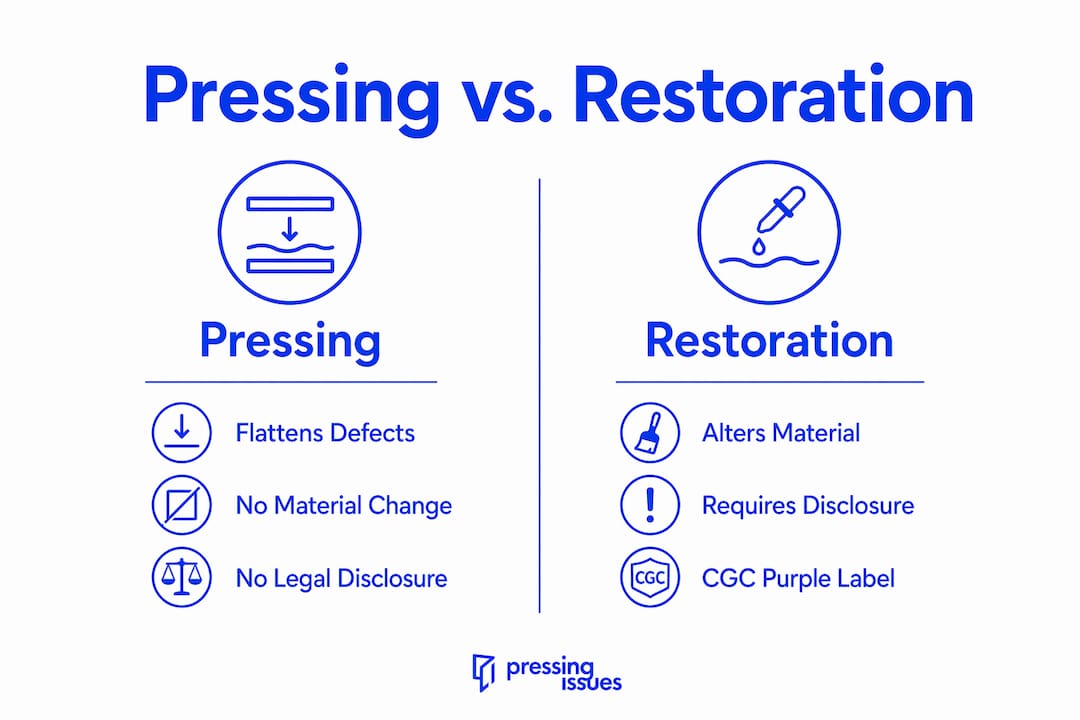
The line between pressing and restoration is often subtle and requires clear dealer understanding to comply with disclosure rules. A dealer who presses a book that already has hidden tape repairs has not performed restoration, but selling that book without disclosing the pre-existing restoration is still a violation.
What are the legal requirements for disclosing restoration?
U.S. consumer protection law prohibits the nondisclosure of material facts in a sales transaction. Restoration is a material fact because it directly affects a comic's grade and market value. Selling a restored comic without disclosure exposes a dealer to misrepresentation claims under FTC guidelines and state consumer protection statutes in every U.S. jurisdiction.
The industry's voluntary framework for this obligation is the Network of Disclosure (NOD). The NOD pledge promotes seller transparency to build trust and prevent fraud between buyers and sellers. Dealers who take the NOD pledge commit to disclosing all known restoration work, regardless of whether a buyer asks. That voluntary standard goes well beyond the legal minimum and signals professional credibility.
Voluntary disclosure from dealers is an industry best practice that prevents fraud accusations and enhances buyer confidence. A dealer who discloses proactively never has to defend a misrepresentation claim after the sale.
Key legal and industry obligations for dealers include:
- Disclose all known restoration in writing before the sale is completed
- Label restored books clearly in both in-person and online listings
- Maintain records of any restoration work you commissioned or observed
- Do not represent a restored book as unrestored under any circumstances
A transparent disclosure policy creates a safe harbor defense against consumer protection claims. That means a dealer who documents disclosure practices has a documented defense if a buyer later disputes the transaction. Dealers who skip disclosure have no such protection.
How should dealers handle pressing risks and liability?
Pressing carries physical risks that dealers must communicate to customers before any work is performed. CGC's 2026 terms and conditions include liability waivers where customers accept all pressing risks except in cases of gross negligence. That structure is the industry standard, and dealers offering pressing services should adopt similar agreements.
Common pressing risks that customers must understand include:
- Spine splits: Heat and pressure can open a spine that was already weakened
- Popped staples: Staples may loosen or detach during the pressing process
- Paper loss: Fragile or brittle paper can crack or flake under pressure
- New defects: Pressing can occasionally introduce creases if a book shifts during treatment
- No grade protection: Pressing service terms typically include no grade guarantee for the submitted comic
Dealers must educate customers on these risks before accepting a book for pressing. A customer who learns about a spine split after the fact is far more likely to dispute the service than one who signed a risk acknowledgment form beforehand.
Pro Tip: Create a one-page consent form that lists all pressing risks in plain language. Have customers sign it before you accept their books. Keep a copy on file for at least two years. This single step protects you from the vast majority of post-service disputes.
Service agreements require customers to accept all pressing risks, and dealers should mirror that standard in their own client agreements. Pressing Issues uses this approach with every submission to protect both the customer's collection and our own professional standing.
What are the recommended disclosure practices for selling pressed or restored comics?
Proper disclosure practices follow a clear sequence. Dealers who build this sequence into their standard workflow rarely face compliance problems.
- Identify the treatment before listing. Determine whether the comic has been pressed, restored, or both. Use UV inspection and grading notes to confirm the book's history.
- Write an explicit disclosure statement for restored books. Use direct language: "This comic has been restored. Known treatments include [list treatments]." Avoid vague phrases like "has been worked on" or "shows signs of repair."
- Note pressing transparently without overstating. Pressing is not restoration, but buyers appreciate knowing a book has been pressed. A simple note like "professionally pressed prior to grading" builds confidence without creating a legal obligation.
- Communicate verbally at point of sale. Written disclosure is the legal standard, but verbal confirmation at the time of sale reinforces your transparency and reduces post-sale disputes.
- Maintain a written disclosure policy. Post your policy on your website, at your table, or in your store. Transparent disclosure builds long-term buyer trust and signals that you operate at a professional standard.
The table below shows common dealer scenarios and the corresponding disclosure practice for each.
| Scenario | Disclosure practice |
|---|---|
| Comic pressed, no restoration | Note pressing in listing; no legal disclosure required |
| Comic restored before dealer acquired it | Disclose all known restoration in writing before sale |
| Comic pressed and restored by dealer | Disclose restoration explicitly; note pressing separately |
| Restoration status unknown | State "restoration status unknown" clearly in listing |
| CGC purple label book | Label and price as restored; disclose purple label designation |
Not every comic merits pressing based on defect types and market value. A $15 book with a reading crease does not justify a $15–$30 pressing fee. Dealers who press strategically and disclose accurately protect both their margins and their reputation.
Key Takeaways
Comic dealer pressing disclosure rules require explicit written disclosure of all restoration work, while pressing alone does not trigger a legal disclosure obligation under U.S. consumer protection law.
| Point | Details |
|---|---|
| Pressing vs. restoration | Pressing flattens defects without material change; restoration alters the comic and requires disclosure. |
| Legal obligation | U.S. consumer protection law treats undisclosed restoration as misrepresentation or fraud. |
| Network of Disclosure | The NOD pledge sets the voluntary industry standard for proactive seller transparency. |
| Liability waivers | Dealers should use signed consent forms listing all pressing risks before accepting customer books. |
| Safe harbor defense | Documented disclosure practices protect dealers against post-sale consumer protection claims. |
Why transparency is the smartest business move you can make
I've watched dealers lose long-term customers over a single undisclosed tape repair. The buyer didn't care about the repair itself. They cared that no one told them. That's the real cost of skipping disclosure: not the legal exposure, but the permanent loss of a collector who would have bought from you for years.
The dealers I respect most treat disclosure as a marketing advantage, not a compliance burden. When you tell a buyer upfront that a book has been professionally pressed, you're signaling that you know what you're doing. When you disclose a restoration and price the book accordingly, you're telling that buyer they can trust every other book you sell. That reputation compounds over time in ways that no advertising budget can replicate.
The Network of Disclosure pledge exists because the industry recognized that voluntary transparency is more powerful than any regulation. A dealer who adopts NOD standards before they're required to is ahead of the market. The collectors who matter most, the ones spending serious money on key issues and first appearances, gravitate toward dealers with documented disclosure practices. They've been burned before, and they remember who was straight with them.
Pressing, done correctly, is one of the best tools a dealer has for improving a comic's grade potential without crossing into restoration territory. The key is knowing the difference and communicating it clearly. That knowledge is what separates a professional dealer from someone who just moves books.
— Charles
Pressing Issues: professional pressing with full transparency
Dealers and collectors in Seattle and Portland trust Pressing Issues to handle their books with care and communicate every step of the process clearly.
Our comic book pressing services follow the same disclosure standards outlined in this guide. We tell you exactly what treatment each book received, so you can list and sell with confidence. We also offer professional comic cleaning for books that need surface work before grading submission. Every service comes with transparent documentation and honest communication about what pressing can and cannot fix. Check our service rates and turnaround times to find the right option for your collection or inventory.
FAQ
What is the difference between pressing and restoration?
Pressing uses heat and pressure to flatten non-color-breaking defects without altering the comic's material composition. Restoration involves material additions or chemical changes, such as tape repairs or color touch-ups, and must be disclosed to buyers.
Do comic dealers legally have to disclose pressing?
Pressing alone does not require disclosure under U.S. consumer protection law. Restoration is a material fact that must be disclosed, and failure to do so can constitute misrepresentation or fraud.
What is the Network of Disclosure?
The Network of Disclosure is an industry initiative that promotes voluntary transparency between comic sellers and buyers. Dealers who take the NOD pledge commit to disclosing all known restoration work regardless of whether a buyer asks.
What risks should dealers communicate before pressing a customer's comic?
Dealers must inform customers of risks including spine splits, popped staples, paper loss, and the possibility of new defects. CGC's 2026 terms and conditions require customers to accept these risks, and independent dealers should use similar signed consent forms.
How does a CGC purple label affect a comic's value?
A CGC purple label indicates the comic has been restored. Restored books typically sell for significantly less than unrestored copies at the same numerical grade, making accurate disclosure and correct labeling critical for fair pricing.
Recommended
- Comic Dealer Heritage Auction Preparation: 2026 Guide — Pressing Issues
- The Grading Upgrade Game: Where Are the Sweet Spots for Pressing and Cleaning? — Pressing Issues
- Services, Rates and Turnaround Time — Pressing Issues — Pressing Issues
- Top 3 Youtube Alternative Comic Book Pressers 2026 — Pressing Issues