
Comic pressing batch submission is the practice of grouping multiple comics together for simultaneous pressing and grading, cutting per-book costs on shipping, insurance, and handling fees. Collectors who master this process protect their books, control costs, and walk away with slabs that reflect the true condition of their collection. The core comic pressing batch submission tips covered here apply whether you are sending five books or fifty: pre-screen every candidate, package each book correctly, and understand the cost-benefit math before you ship anything.
What are the best comic pressing batch submission tips?
Batch submission works because fixed costs spread across more books lower the effective cost per comic. Shipping a box of 20 books costs roughly the same as shipping a box of 5, so every additional book in a well-curated batch improves your return on investment.
Standard pressing and cleaning fees start at around $15 per book, with multi-book discounts such as 4 books for $50 available at many services. That pricing structure rewards collectors who plan ahead and submit in volume rather than one book at a time.
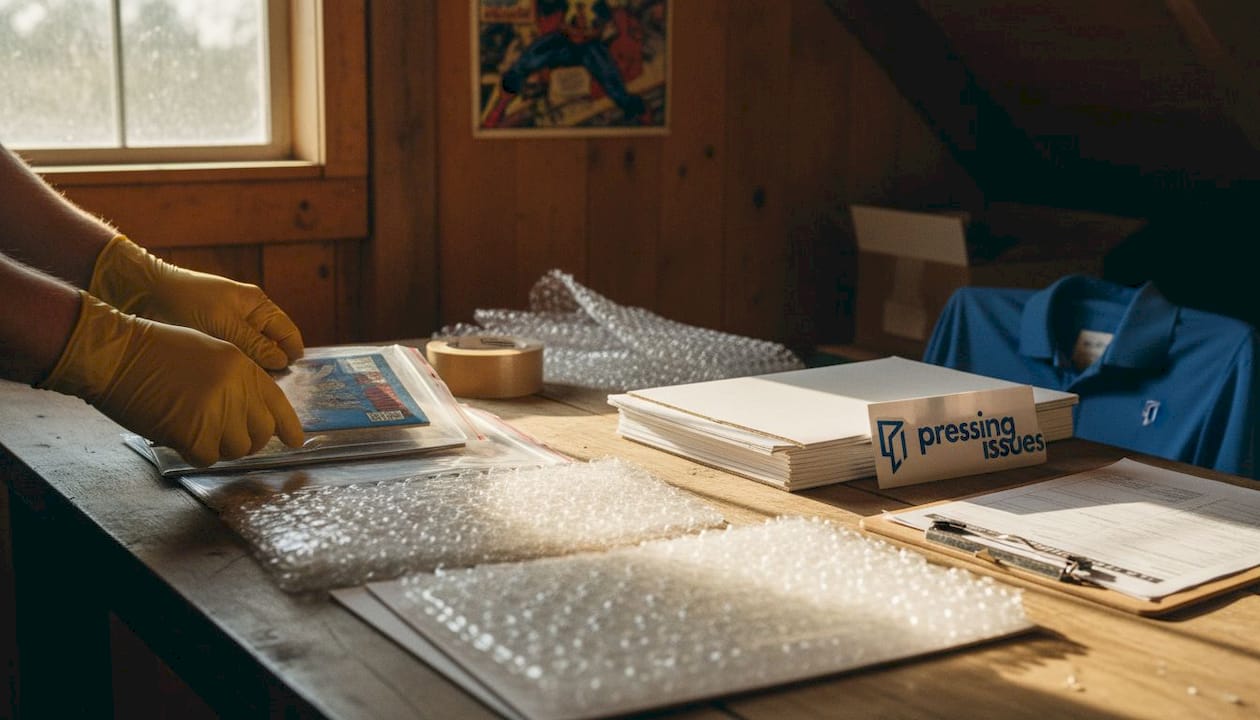
The three pillars of a successful batch are selection, preparation, and packaging. Get any one of them wrong and you risk damaged books, wasted fees, or grades that do not justify the cost. The sections below walk through each pillar in detail.
What materials and prerequisites do you need before submitting?
Gathering the right supplies before you touch a single comic saves time and prevents damage. Every book in your batch needs its own acid-free polypropylene bag and a backing board cut to fit. These two items protect covers and spines during transit and are non-negotiable for any pressing service worth using.
Beyond individual bags and boards, you need:
- Bubble wrap (at least two layers around each stacked group)
- Sturdy corrugated boxes sized to hold books snugly without shifting
- Packing peanuts or foam padding to fill dead space
- Acid-free tissue paper for extra cushioning between stacks
You also need an account with your chosen grading service and a completed submission form for every book in the batch. Each comic must be listed with its title, issue number, and declared value on the form included inside the package. Errors on submission forms cause delays and, in rare cases, misidentified books.
| Prep item | Purpose |
|---|---|
| Acid-free bags and boards | Prevent moisture, bending, and surface damage |
| Bubble wrap and foam | Absorb shock during shipping |
| Sturdy corrugated box | Maintain structural integrity in transit |
| Completed submission form | Required by grading services for processing |
| Declared value per book | Determines insurance coverage and tier pricing |
Pro Tip: Create a spreadsheet with each comic's title, issue number, estimated raw grade, and declared value before you pack a single book. This digital record speeds up form filling, helps you track submissions, and gives you a baseline if you need to dispute a grade later.
How do you select which comics belong in a pressing batch?
Selection is where most collectors lose money. Pressing cannot fix missing paper, tears, stains, or color-breaking defects, and poor pressing can actually damage a book. Knowing which defects pressing addresses and which it does not is the foundation of smart batch curation.
Pressing works well on these defect types:
- Spine rolls and spine ticks
- Reading creases that have not broken color
- Corner bends without color loss
- Light stress lines on covers
- Slight waviness from storage
Pressing will not help with these issues:
- Tears or missing pieces
- Stains, foxing, or water damage
- Color-breaking creases
- Writing or stamps on covers
- Brittleness from age
After sorting your books into candidates and non-candidates, apply the value test. The cost-effectiveness rule states that a comic's value at a 9.0 grade should be at least triple the total submission cost, including pressing fees, grading fees, shipping, and insurance. A book worth $30 in a 9.0 slab does not justify $25 in combined fees. A book worth $150 in a 9.0 slab absolutely does.
For collectors interested in grading comic books at home before submission, learning to spot these defects yourself sharpens your selection instincts significantly.
Pro Tip: Photograph every comic under bright, raking light before you bag it. These photos document pre-submission condition and protect you if a book comes back with unexpected damage or a grade that does not match what you sent.
How do you prepare, package, and ship a pressing batch safely?
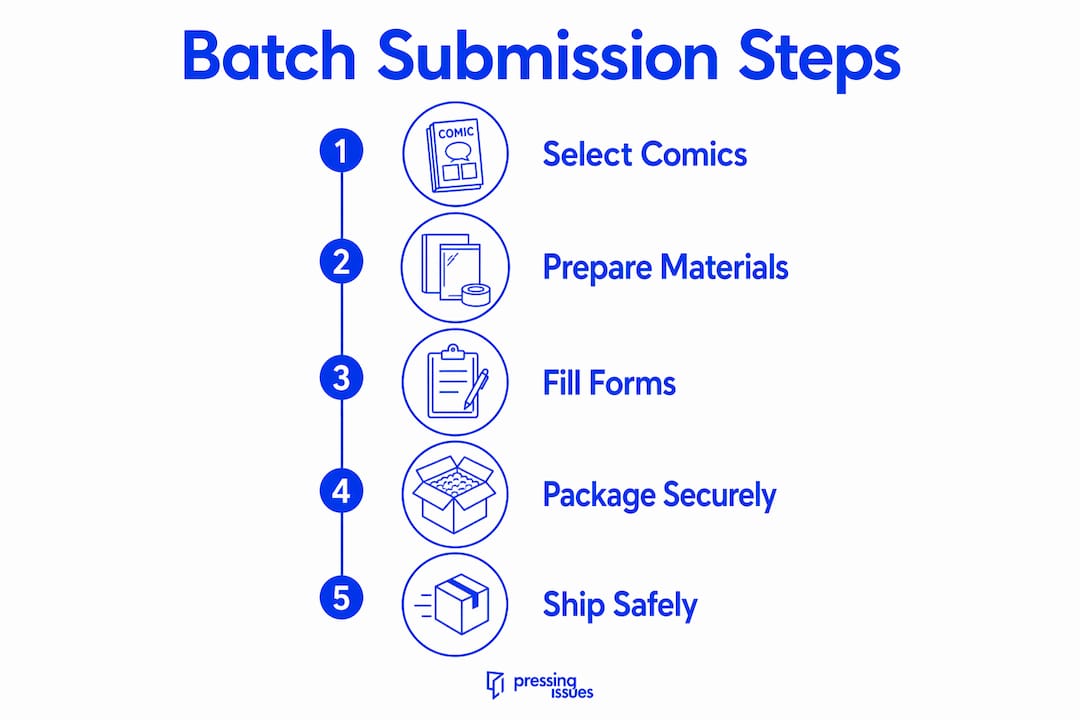
Correct packaging is the single most preventable failure point in bulk submissions. Follow these steps in order for every book in your batch.
- Bag and board individually. Slide each comic into its acid-free bag with a backing board behind it. The board should be snug but not forcing the bag to stretch.
- Stack in groups of 10 or fewer. Larger stacks shift during transit and can cause spine damage. Alternate book orientation if sizes vary.
- Wrap each stack in bubble wrap. Use at least two full passes around the stack and secure with tape. Do not let tape touch the bags directly.
- Place stacks in the box. Books should stand upright or lay flat with no room to slide. Fill gaps with foam or packing peanuts.
- Include your submission form on top. Place it in a sealed plastic sleeve so it stays readable even if the box gets wet.
- Seal and label the box clearly. Write your submission number on the outside of the box in permanent marker.
For shipping, use a carrier that offers tracking and signature confirmation. Insure the package for the full declared value of all books combined. Proper packaging and shipping protects your investment from the moment the box leaves your hands.
Common packaging mistakes to avoid:
- Skipping backing boards on any book
- Overpacking boxes until books bow under pressure
- Using newspaper as padding (it transfers ink and acids)
- Forgetting to include the submission form
- Underinsuring the shipment
Pro Tip: Write your submission confirmation number on a small card and tuck it inside the box alongside the form. If the outer label gets damaged, the carrier and the pressing service can still identify your package.
What should you expect during and after the pressing process?
Turnaround time depends on the service tier you choose. Economy submissions can take 5–6 months to return, and adding pressing extends that timeline further. Faster tiers cost more but deliver in weeks rather than months. Budget both time and money when planning your batch.
What pressing actually does for grades is worth understanding clearly. A well-executed press on a book with spine ticks and a reading crease can lift a raw 7.5 to a graded 8.5 or higher. For modern keys, pressing before signings can add half a grade or more, translating to several hundred dollars in added value on the right book.
When your slabs arrive, inspect every one before signing off on the return:
- Verify the label matches the correct title and issue
- Check the grade against your pre-submission photos
- Look for any damage to the slab itself
- Confirm the census number is active and correct
If a grade comes back lower than expected, most grading services have a review or reholder process. Document your concern with your pre-submission photos and contact the service directly. Disputes are easier to resolve when you have clear evidence from before the book was submitted.
Pro Tip: Track your submissions in a shared notes app or spreadsheet with expected return dates. Set a calendar reminder for 30 days before the estimated return so you can follow up if the batch is running late.
How do you troubleshoot common batch submission mistakes?
Batches can hide weak candidates, and that is the most expensive mistake collectors make. When you group books together, it is easy to slip in a low-value comic because the shipping is already paid. That logic costs you pressing and grading fees on a book that will never recoup them.
Pressing is not a cure-all. Every book in a batch deserves its own cost-benefit analysis, regardless of how convenient it feels to include it. One weak candidate does not ruin a batch, but five of them turn a profitable submission into a loss.
Other common errors and how to fix them:
- Wrong declared value. Undervaluing a book reduces your insurance payout if it is lost. Research recent sales on platforms like eBay before declaring a value.
- Incomplete submission forms. Missing fields cause processing delays. Double-check every line before sealing the box.
- Pressing books that do not qualify. If a book has a tear or color-breaking crease, remove it from the batch. Pressing it wastes money and risks further damage.
- Submitting too infrequently. Holding books for months to build a larger batch makes sense up to a point. Waiting years means missing market peaks for your key issues.
Cost control also means timing your submissions. Grading services occasionally run promotions or reduced-fee windows. Signing up for service newsletters keeps you informed about those opportunities.
Pro Tip: Set a minimum value threshold for your batch, such as $75 at a 9.0 grade, and stick to it. Remove any book that falls below the threshold before you seal the box, no matter how tempting it is to include it.
Key takeaways
Successful comic pressing batch submissions require individual cost-benefit analysis for every book, correct packaging for every copy, and realistic expectations about timelines and grade outcomes.
| Point | Details |
|---|---|
| Spread fixed costs across books | Batch submissions lower per-book shipping and insurance costs significantly. |
| Apply the 3x value rule | Only press books worth at least triple the total submission cost at a 9.0 grade. |
| Screen defects before submitting | Pressing fixes creases and spine ticks but cannot repair tears, stains, or color breaks. |
| Package every book individually | Each comic needs its own acid-free bag, board, and bubble wrap before boxing. |
| Track and document everything | Pre-submission photos and spreadsheets protect you during disputes and grade reviews. |
What I have learned from years of batch submissions
Collectors often ask me whether bigger batches are always better. My honest answer is no. A batch of 30 books where 10 of them should never have been pressed is worse than a tight batch of 15 books that all clear the value threshold. The discipline to pull a book from a batch is harder than it sounds when you have already done the prep work, but it is the difference between a profitable submission and an expensive lesson.
The documentation habit is the one I push hardest. I have seen collectors dispute grades without a single photo of the pre-submission condition. That dispute goes nowhere. A two-minute photo session under a desk lamp before bagging each book is the cheapest insurance you can buy.
I also think collectors underestimate how much pressing frequency matters. Submitting twice a year with well-curated batches beats submitting once a year with a massive, poorly screened pile. Smaller, tighter batches keep your cash flow moving and your collection growing in grade.
— Charles
How Pressing Issues handles your batch submissions
Pressing Issues serves collectors in Seattle, Washington, and Portland, Oregon with professional comic pressing and cleaning built around the kind of care your books deserve.

Whether you are sending a handful of keys or a full long-box worth of candidates, our team at Pressing Issues evaluates every book individually before pressing begins. We offer batch pressing services with competitive fees, careful packaging review, and honest guidance on which books belong in a batch and which ones do not. Check our current rates and turnaround times to plan your next submission, or reach out directly to talk through your collection with someone who genuinely loves this hobby.
FAQ
What is comic pressing batch submission?
Comic pressing batch submission is the practice of sending multiple comics together for pressing and grading in a single shipment. It reduces per-book costs on shipping, insurance, and handling fees.
How much does batch comic pressing cost?
Standard pressing fees start at around $15 per book, with multi-book discounts available. The total cost per book drops as your batch size grows.
How long does a batch submission take to return?
Economy-tier submissions take roughly 5–6 months, and pressing adds extra processing time on top of that. Faster service tiers return in weeks but cost more per book.
Which comics should I include in a pressing batch?
Include only books where the value at a 9.0 grade is at least triple the total submission cost. Remove any book with tears, stains, or color-breaking defects, since pressing cannot fix those issues.
How should I package comics for a batch submission?
Each comic needs its own acid-free bag and backing board, then stacked in groups of 10 or fewer, wrapped in bubble wrap, and packed in a sturdy corrugated box with no room to shift.
Recommended
- How to Choose Which Comics to Send for Pressing — Pressing Issues
- CGC Submission Do's and Don'ts: How to Save Money and Avoid Shipping Headaches — Pressing Issues
- Comic Book Pressing Secrets Revealed: What Experts Don't Want You to Know — Pressing Issues
- Comic Pressing and Cleaning | Pressing Isssues