
Comic pressing business expense tracking is the process of systematically recording and managing all costs tied to comic book pressing and cleaning to ensure accurate profit reporting and tax compliance. For U.S. comic book dealers and pressing operators, this means separating inventory costs from service fees, capturing every receipt, and choosing the right tools to keep records audit-ready. Without a consistent system, you risk misclassifying expenses, missing deductions, and losing visibility into your actual margins. Tools like Google Sheets, QuickBooks, and CentSense make this manageable at any business scale.
What types of expenses are involved in comic pressing and cleaning?
Comic pressing costs fall into three distinct categories: operating expenses, capital investments, and variable costs. Knowing which bucket each expense belongs to is the foundation of accurate financial management for comic shops.
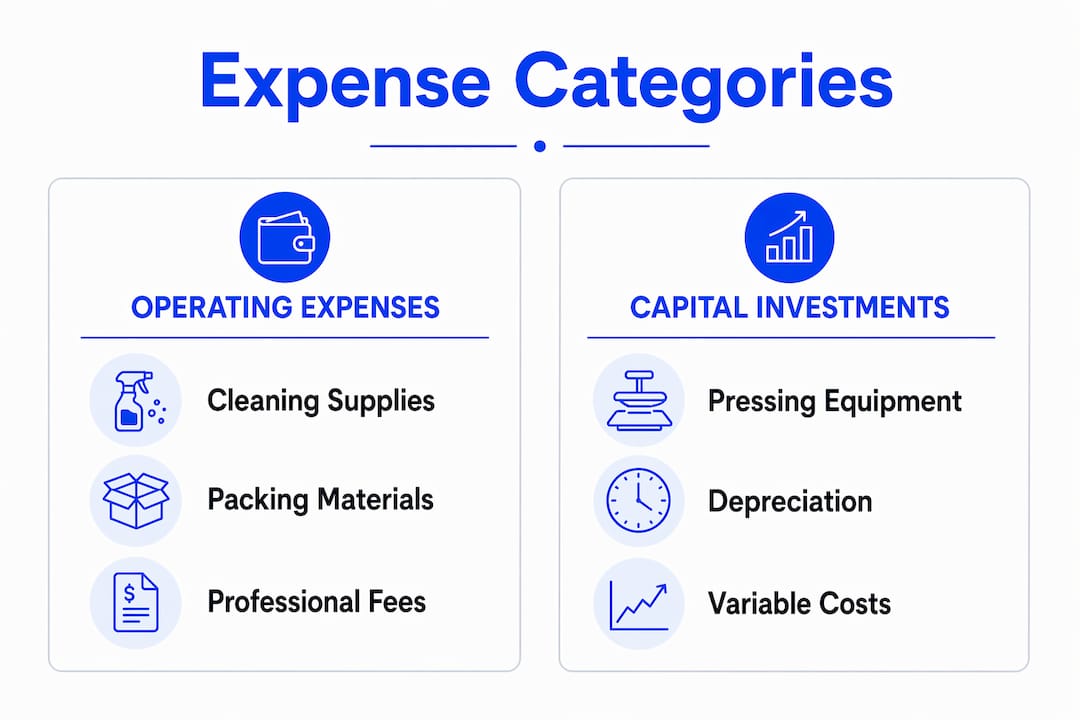
Operating expenses vs. capital investments
Professional pressing services typically cost $18–$35 per book, with rush orders running $40–$60 and specialty work reaching $50–$100. Shipping and insurance add another $20–$40 per transaction. These are operating expenses, meaning you deduct them in the year they occur.
DIY pressing equipment is a different story. An upfront equipment investment runs $300–$1,000, with a variable cost of $5–$10 per book afterward. That equipment qualifies as a capital expenditure, not an immediate deduction.
The COGS vs. operating expense distinction
The most costly accounting mistake in this business is mixing up Cost of Goods Sold and operating expenses. The comic book purchase price is inventory cost (COGS), while pressing and cleaning service fees are deductible operating expenses. Mixing these two distorts your profit statements and raises audit risk.
Here is a quick reference for the most common expense types:
| Expense Type | Category | Tax Treatment |
|---|---|---|
| Comic book purchase price | COGS (inventory) | Deducted when sold |
| Professional pressing fees | Operating expense | Deducted in current year |
| DIY pressing equipment | Capital expenditure | Depreciated over 5 years |
| Shipping and insurance | Operating expense | Deducted in current year |
| Labor for in-house pressing | Operating expense | Deducted with documentation |
| Grading submission fees | Operating expense | Deducted in current year |
Tax-deductible expenses in this business also include cleaning supplies, storage materials, packing materials, and any software subscriptions used for business management.
Which tools are best for tracking comic pressing expenses?
The right expense tracking tool depends on your transaction volume and how much automation you want. Three tools cover the full range of comic business needs: Google Sheets, QuickBooks, and CentSense.

Free vs. paid options compared
Google Sheets templates are the lowest-cost entry point. Small business owners save $180+ per year using free Google Sheets templates for expense tracking versus paid subscriptions, assuming monthly reviews. That saving is real, but it comes with a trade-off: manual data entry and no automated receipt capture.
CentSense is built around Schedule C categories, which maps directly to how the IRS expects sole proprietors to report expenses. QuickBooks handles higher transaction volumes and integrates with payroll if you have employees handling pressing or cleaning work.
| Tool | Cost | Best For | Automation Level |
|---|---|---|---|
| Google Sheets | Free | Solo operators, low volume | Manual |
| CentSense | Low monthly fee | Schedule C filers, sole proprietors | Moderate |
| QuickBooks | $30+/month | Multi-employee shops, high volume | High |
Automation and receipt capture
Automated receipt capture with reminder systems dramatically reduces lost receipts and missed deductions. The best tools ping you immediately after a transaction, so you attach the receipt while the purchase is still fresh. This matters most for shipping costs and pressing fees paid to third-party services, where paper receipts are easy to misplace.
Integrating expense tracking with accounting platforms like Sage or Xero eliminates reconciliation problems by mapping expense codes during entry. Auto-posting connects each expense directly into your accounting system, cutting out the manual reconciliation step at month-end.
Pro Tip: Set up a dedicated business email address for all pressing-related invoices and receipts. Forward every vendor confirmation to that address and link it to your expense tool. You will never hunt for a missing receipt again.
How to set up a consistent comic pressing expense tracking system
A consistent system beats a perfect system you never use. The goal is a monthly routine that takes 30 minutes or less, not a year-end scramble.
-
Open a dedicated business bank account. Mixing personal and business transactions is the single fastest way to create accounting errors. Every pressing fee, shipping charge, and supply purchase should run through one account.
-
Capture receipts at the point of purchase. Photograph or scan every receipt the moment you pay. Attach it directly to the expense entry in your tracking tool before you close the tab or leave the store. Proactive monthly tracking avoids the time-consuming year-end reconstruction that trips up most small operators.
-
Categorize expenses using Schedule C lines. The IRS Schedule C organizes business expenses into specific lines: advertising, supplies, contract labor, and more. Map your pressing fees to "contract services," equipment depreciation to "depreciation," and shipping to "shipping and delivery." Consistent categorization makes tax filing straightforward.
-
Reconcile your bank statement monthly. Pull your bank statement on the first of each month and match every transaction to a recorded expense. Any gap means a missing receipt or an uncategorized charge. Fix it immediately, not in April.
-
Document labor sessions with business purpose. If you or a staff member spends time on in-house pressing, log those labor hours with a note on the business purpose. This is especially important for incorporated entities, where the IRS expects clear separation between owner labor and business operations.
-
Review your profit and loss monthly. A monthly P&L review shows whether your pressing costs are eating into margins. If professional service fees are rising faster than your resale prices, that is the signal to evaluate DIY equipment or renegotiate with your pressing vendor.
Pro Tip: Create a simple monthly checklist in Google Sheets with six rows, one for each step above. Check each box on the first of the month. The checklist takes two minutes and prevents the most common tracking failures.
What common mistakes should comic pressing business owners avoid?
Most financial errors in comic pressing businesses come from habits formed before the business scaled. These mistakes are easy to make and expensive to fix.
-
Expensing equipment immediately. A comic press must be depreciated over 5 years, not written off in the year of purchase. Expensing it fully in year one overstates your deductions and creates IRS exposure.
-
Ignoring labor costs. In-house pressing time has real value. Failing to account for labor as a business expense understates your true cost per book and makes your margins look better than they are.
-
Reconstructing expenses at year-end. Month-end reconstruction is the most common financial management pitfall in small businesses. Chasing down receipts from eight months ago wastes hours and guarantees missed deductions.
-
Mixing COGS and operating expenses. Treating pressing fees as inventory costs, or treating comic purchases as operating expenses, produces inaccurate profit reports. The IRS and any potential buyer of your business will notice the discrepancy.
-
Skipping insurance documentation. Shipping insurance on high-value books is a legitimate business expense. Many dealers pay it but never record it, leaving money on the table at tax time.
The dealers who run the cleanest books are not the ones with the most expensive software. They are the ones who spend 30 minutes every month doing the same six things in the same order.
Key takeaways
Accurate comic pressing business expense tracking requires separating COGS from operating expenses, depreciating equipment correctly, and maintaining a consistent monthly documentation habit.
| Point | Details |
|---|---|
| Separate COGS from operating expenses | Comic purchase price is inventory; pressing fees are deductible operating expenses. |
| Depreciate equipment over 5 years | A comic press is a capital expenditure, not an immediate deduction. |
| Use the right tool for your scale | Google Sheets works for solo operators; QuickBooks fits multi-employee shops. |
| Capture receipts at purchase time | Automated receipt reminders prevent lost deductions and month-end scrambles. |
| Review finances monthly | A 30-minute monthly review catches errors before they compound into year-end problems. |
Why I track expenses the same way every month, no exceptions
Most comic dealers I talk to treat expense tracking as something they will "get to eventually." That mindset costs real money. The dealers running the most profitable operations are not necessarily pressing the most books. They are the ones who know their cost per book down to the dollar, every month.
The biggest shift I made was treating expense tracking as a production step, not an administrative task. Every pressing job has a cost. Every shipping label has a cost. Every cleaning supply order has a cost. When you record those costs at the time they happen, your P&L tells you the truth. When you reconstruct them in December, it tells you a story.
Automation changed the game for me. Linking a receipt capture tool to my business account means I spend less time chasing documents and more time evaluating which books are worth pressing for resale. The integrated accounting approach with platforms like Xero removed the reconciliation headache entirely. I also stopped trying to do everything myself. A bookkeeper who reviews your records quarterly costs far less than an IRS audit or a missed deduction on $3,000 worth of pressing fees.
The comic pressing business rewards people who understand their numbers. Pressing a book from a 6.0 to an 8.5 adds real value. Knowing exactly what that transformation cost you is what turns a hobby into a business.
— Charles
How Pressing-issues can support your pressing and expense workflow

Pressing-issues serves comic book dealers and collectors across Seattle, Washington and Portland, Oregon with professional comic pressing and cleaning services built for business-scale operations. When you outsource pressing to a professional service, every invoice becomes a clean, tax-deductible operating expense with no equipment depreciation to manage. Pressing-issues provides clear, itemized pricing so your expense records stay accurate from day one. Visit the services and rates page to see current pricing, turnaround times, and service options that fit your budgeting needs. Knowing your pressing costs in advance makes financial management for comic shops significantly easier.
FAQ
What is comic pressing business expense tracking?
Comic pressing business expense tracking is the practice of recording and categorizing all costs related to comic book pressing and cleaning to support accurate profit reporting and tax filing. It includes pressing fees, shipping, supplies, equipment, and labor.
Are comic pressing fees tax-deductible?
Yes. Professional pressing service fees are deductible operating expenses on Schedule C. The comic book purchase price is inventory (COGS) and is deducted separately when the book is sold.
How should I depreciate a comic press machine?
A comic press is a capital expenditure and must be depreciated over its useful life, which the IRS standard sets at 5 years. You cannot deduct the full purchase price in the year you buy it.
What is the best free tool for tracking comic business expenses?
Google Sheets with a Schedule C template is the most cost-effective option for solo operators or low-volume dealers. It requires manual entry but costs nothing and saves over $180 per year compared to paid subscriptions.
How often should I reconcile my pressing business expenses?
Reconcile monthly. Match every bank transaction to a recorded expense on the first of each month. Monthly reconciliation catches errors early and keeps your records audit-ready year-round.