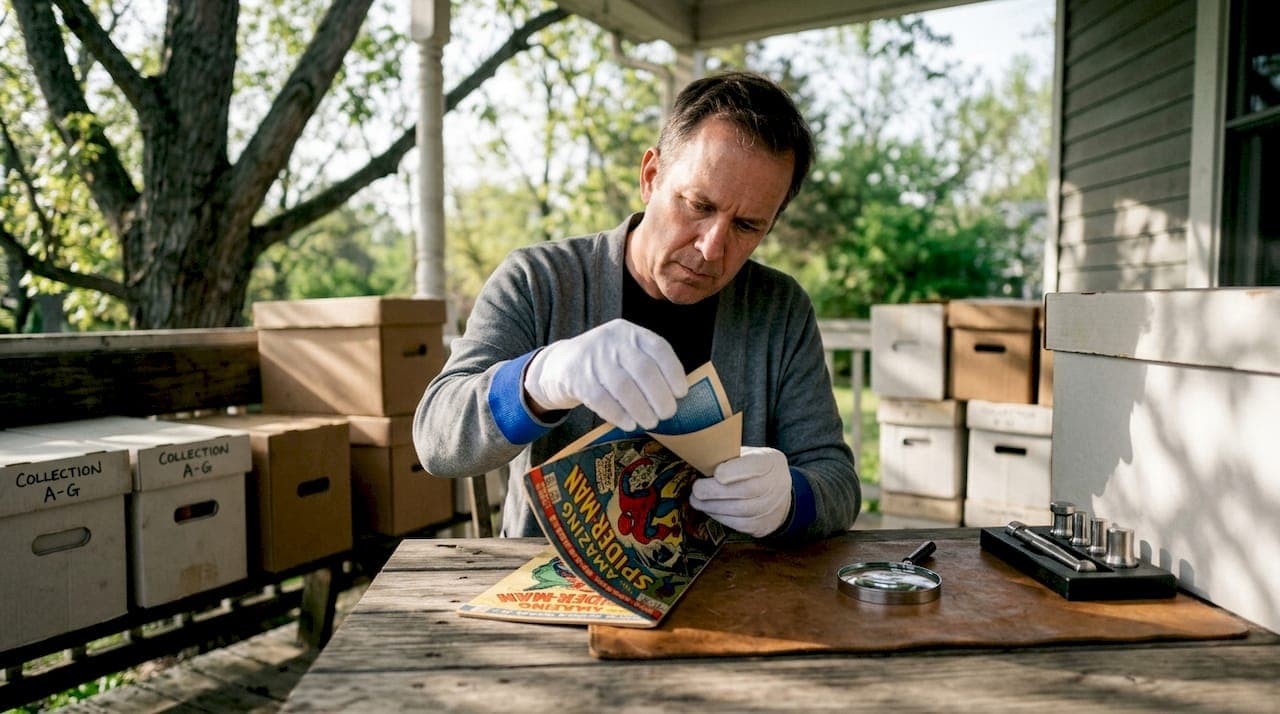
A cleaning fee in comic submission is the charge a pressing or grading service applies to physically prepare your comic book before it gets graded or resold. This fee covers services like dry cleaning, comic pressing, and careful handling. It is separate from the grading fee and any submitter handling charges. Services like Grasshopper's Comics, Syndicate Comics, and Comic Book CPR all charge this fee as a distinct line item. Understanding what is cleaning fee comic submission means knowing exactly what you are paying for and why it matters for your book's final grade and value.
What does the cleaning fee cover in comic submissions?
The cleaning fee pays for the physical work done to your comic before it ever reaches a grader. This is not a vague administrative charge. It covers specific, hands-on processes that directly affect how your book looks and grades.
Comic Book CPR describes their cleaning process as thorough dry cleaning, humidity control, pressing, and professional handling. Each step targets a different type of defect or cosmetic issue.
The core services included in a standard cleaning fee are:
- Dry cleaning: Removes surface dirt, soiling, and light stains from covers and pages without using water or chemicals that could damage the paper.
- Comic pressing: Applies controlled heat and pressure to flatten spine ticks, reading creases, and bends. This is the single biggest factor in improving a book's eye appeal score.
- Defect inspection: A trained technician reviews the book for staple rust, brittleness, and restoration before pressing begins. Submitting a restored book to CGC without disclosing it is a serious problem.
- Humidity control: Older books require careful moisture management during pressing to prevent brittleness or warping.
- Professional handling: High-value or fragile books get extra care during every step, including bagging and boarding after the process.
Pro Tip: Ask your service provider for a written list of exactly what their cleaning fee includes. Not every provider performs all five steps, and knowing the difference protects your book and your budget.
The cleaning fee does not cover grading itself. It does not pay for the CGC label, the slab, or the return shipping. Those costs come from separate fee categories entirely.
How are cleaning fees determined and priced?
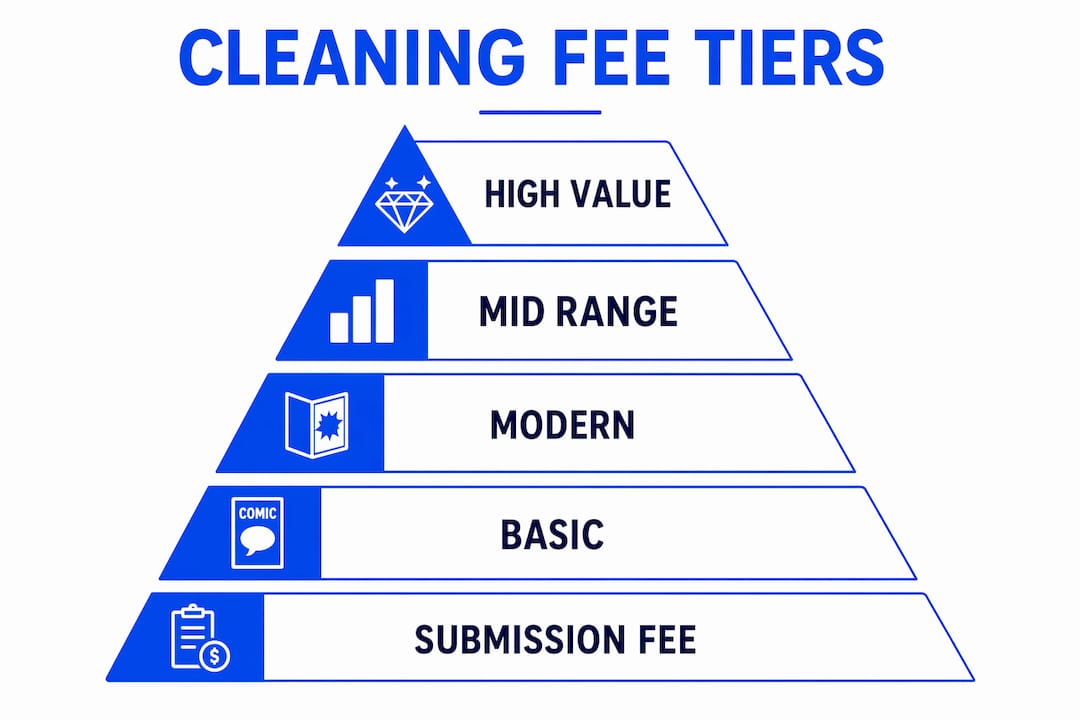
Cleaning fees are not flat across the industry. They scale based on three main factors: the comic's age, its declared fair market value (FMV), and the level of handling care required.

Syndicate Comics publishes a tiered fee structure that shows exactly how this works in practice. Their pricing moves from modern books at $25, up to vintage books at $35, then to high-value books at $70, and finally to an unlimited tier priced at 4% of FMV with a minimum charge of $150. That minimum charge matters. A book with a declared FMV of $500 would cost $20 at 4%, but the $150 floor applies instead.
Caveman Comics uses a similar age-based model, charging more for pre-1975 comics than for modern ones. Older books require more careful pressing techniques and longer processing times, which justifies the higher fee.
Grasshopper's Comics charges a $5 submission fee plus a $15 cleaning and pressing fee per book, separate from CGC grading fees and shipping. That structure is straightforward for modern books with modest values.
| Tier | Example provider | Typical fee |
|---|---|---|
| Modern (post-1975) | Syndicate Comics | $25 per book |
| Vintage (pre-1975) | Syndicate Comics | $35 per book |
| High-value | Syndicate Comics | $70 per book |
| Unlimited / FMV-based | Syndicate Comics | 4% of FMV, min. $150 |
| Modern flat rate | Grasshopper's Comics | $15 per book |
Pro Tip: Always declare an accurate FMV. Undervaluing a book to reduce fees can backfire if the book is damaged during processing and the service's liability is capped at your declared value.
Collectors who know fee tiers and FMV protocols before submitting avoid the most common budgeting mistakes. The difference between a $25 and a $150 minimum charge on a single book is not trivial.
How the cleaning fee fits into total submission costs
The cleaning fee is one of three or four distinct charges you pay when submitting a comic for grading. Treating it as the only cost leads to real budget surprises.
Grasshopper's Comics makes the separation explicit: submission, cleaning, and grading fees are distinct and cumulative. You pay each one separately, and they add up quickly on a high-value book.
Here is how a typical submission cost breaks down:
| Fee type | What it covers | Paid when |
|---|---|---|
| Submitter handling fee | Service provider's time managing your submission | At intake |
| Cleaning and pressing fee | Physical preparation of the comic | Before grading |
| CGC grading fee | Professional grade, label, and slab | At submission to CGC |
| Shipping and insurance | Return delivery and coverage | At shipment |
Syndicate Comics confirms that payment for cleaning and pressing happens before books are sent to CGC for grading. This means you pay the cleaning fee first, then wait for the book to be processed, and then the grading fee is charged when the book enters the CGC queue. Collectors submitting multiple books should plan for two separate payment moments.
Shipping costs also scale with volume. Grasshopper's Comics charges shipping based on each collector's proportional share of a group shipment. Submitting more books in a single batch reduces the per-book shipping cost. That makes bulk submissions a real cost management tool, not just a convenience.
Understanding comic book grading basics before you submit helps you decide which books are worth the full cleaning and grading investment. Not every book in your collection needs a CGC slab.
Are cleaning fees relevant for comic art submissions?
Cleaning fees apply exclusively to physical comic books being prepared for grading or resale. They do not apply to comic creators submitting artwork or pitches to publishers.
The terminology overlap causes real confusion. A creator submitting pages to a publisher under comic submission guidelines is following an entirely different process. Alterna Comics, for example, publishes strict digital art standards for creator submissions but has no cleaning fee concept in that context. The submission process for creators involves file formats, page dimensions, and editorial review, not pressing or dry cleaning.
The key distinctions are:
- Physical comic book submission (for grading or resale): Cleaning fees apply. Services like CGC, Grasshopper's Comics, and Syndicate Comics charge them.
- Creator art submission (pitching to publishers): No cleaning fees. Submission fees for comics in this context, if any exist, are editorial processing fees, not physical preparation charges.
- Digital submissions: No physical handling occurs, so no cleaning fee is possible or relevant.
Collectors sometimes search for "cleaning fee definition" after seeing the term on a grading service invoice and assume it relates to publisher submission guidelines. It does not. The cleaning fee is a physical services charge tied to the condition and value of a tangible book.
Graded comics command higher values precisely because cleaning and pressing create consistent, documented quality. That value increase is the reason collectors pay the fee in the first place.
Key Takeaways
The cleaning fee in comic submission is a distinct physical preparation charge, separate from grading and submitter fees, and it scales with a book's age, condition, and declared fair market value.
| Point | Details |
|---|---|
| Cleaning fee definition | Covers dry cleaning, pressing, and handling before grading, not the grade itself. |
| Fee tiers by age and value | Modern books cost less to clean than vintage or high-value books, with FMV minimums on top-tier submissions. |
| Payment timing | Cleaning fees are paid before grading begins, creating two separate payment stages. |
| Creators vs. collectors | Cleaning fees apply only to physical books for grading, not to publisher art submissions. |
| Bulk submission savings | Submitting multiple books in one batch reduces the per-book shipping cost share. |
Why I think collectors underestimate cleaning fees more than any other cost
Most collectors I talk to have done their homework on CGC grading fees. They know the tier structure, they know the turnaround times, and they have a rough idea of what a slab costs. What catches them off guard every time is the cleaning fee, specifically the FMV minimum on high-value books.
A collector brings in a book they think is worth $400. They budget $70 for a high-value cleaning tier. Then they find out the service uses a 4% FMV model with a $150 minimum, and suddenly their cleaning cost doubles. That is not a scam. It reflects the real labor and risk involved in pressing a book worth several hundred dollars. But it is a shock if you did not ask the right questions upfront.
The other mistake I see constantly is treating pressing as a guaranteed grade upgrade. Cleaning and pressing improve condition consistently, but they cannot fix structural damage, missing staples, or trimmed pages. If a book has those issues, you are paying a cleaning fee on a book that will still grade poorly. A good service provider will tell you this before they take your money.
My advice is simple. Before you submit anything, ask for the full fee breakdown in writing. Ask which tier your book falls into and why. Ask what the service will and will not fix. Transparent invoicing is not just a courtesy. It is the sign of a service that respects your collection and your budget.
— Charles
Pressing-issues makes the submission process clear
Collectors in Seattle and Portland have a local option that takes the guesswork out of cleaning and submission costs. Pressing-issues specializes in comic book cleaning, pressing, and CGC submission handling, with transparent pricing that separates every fee category before you commit.

Whether you have a single high-value key issue or a box of Silver Age books ready for grading, Pressing-issues walks you through the full cleaning and pressing process before anything ships to CGC. The team handles everything from dry cleaning and pressing to submission paperwork and return shipping coordination. Check the full service rates and turnaround times to plan your submission budget with confidence.
FAQ
What is a cleaning fee in comic submission?
A cleaning fee is the charge a pressing or grading service applies to physically prepare a comic book before grading. It covers dry cleaning, pressing, and careful handling, and it is separate from the CGC grading fee.
How much does a comic cleaning fee typically cost?
Fees range from around $15 for a modern book at flat-rate services to $150 or more for high-value books priced at 4% of declared FMV. Vintage books generally cost more to clean than modern ones.
Do comic creators pay a cleaning fee when submitting to publishers?
No. Cleaning fees apply only to physical comic books submitted for grading or resale. Publisher art submissions follow editorial guidelines and involve no physical preparation charges.
When do you pay the cleaning fee during a submission?
Cleaning fees are paid before the book is sent to CGC for grading. This creates two separate payment stages: one for cleaning and pressing, and one for the grading service itself.
Does cleaning and pressing guarantee a higher grade?
Cleaning and pressing improve a book's eye appeal and can raise its grade, but they cannot fix structural damage, missing staples, or trimmed pages. A reputable service will assess your book before charging a cleaning fee.