
Comic book flipping is the practice of buying comics at below-market prices and reselling them for profit, and the most common comic book flipping mistakes cost collectors real money before they ever realize what went wrong. Misjudging condition, misusing grading services, and ignoring restoration red flags are the three errors that sink most new flippers. With grading submission costs running about $25 per book, a 20-book batch costs $500 upfront before insurance or shipping. That kind of exposure makes every mistake expensive. This guide breaks down the most frequent pitfalls so you can protect your investment and flip smarter.
1. Common comic book flipping mistakes start with misjudging condition
Overly optimistic raw grading is one of the most frequent causes of inflated price expectations. Collectors look at a book, call it a 9.2, and price it accordingly. Then a professional grader returns a 7.5, and the math falls apart. Conservative grading assessment consistently predicts actual market value better than wishful thinking.
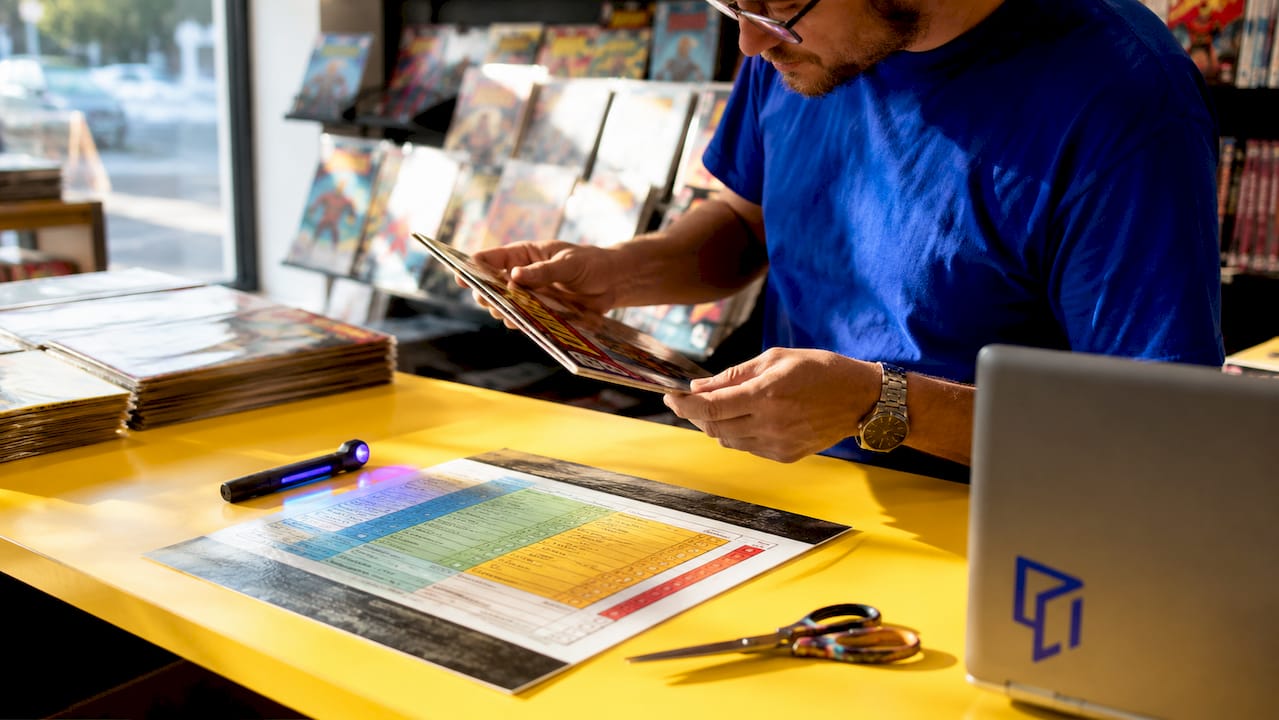
The problem runs deeper than ego. Two comics with the same numerical grade can carry very different market values based on eye appeal factors like centering, gloss, and page quality. A 9.6 with poor centering sells for less than a well-centered 9.6 every time. Graders and buyers both notice these details, even when the number on the label looks identical.
Restoration is the other side of this problem. Vague seller language like "presents beautifully" or "displays well" often signals undisclosed defects. Ambiguous listing language frequently hides trimming, color touch, or amateur cleaning. These restoration types drop a book into a "Restored" label category, which slashes resale value dramatically.
- Always request high-resolution scans of the spine, corners, and staples before buying
- Look for color inconsistencies along the edges, which can indicate trimming
- Check staples for rust or replacement, a common sign of amateur restoration
- Use a UV light or ask the seller to do so, since many color touch-ups are invisible in normal light
- Treat any vague condition language as a reason to ask more questions, not fewer
Pro Tip: If a seller refuses to provide close-up scans of the spine and staples, walk away. Legitimate sellers have nothing to hide, and that refusal alone tells you something is wrong.
Being knowledgeable about restoration types is not optional for flippers. It is the difference between buying a key issue and buying a liability.
2. How misusing grading services drains your profits
Grading only makes financial sense when the expected graded value exceeds the raw value by at least $150 after all fees and costs. That $150 threshold accounts for the submission fee, pressing, and shipping. Submitting without that math in place is how flippers turn profitable raw books into break-even slabs.
The numbers get serious fast. At $25 per book, a 20-book submission costs $500 before you add insurance, pressing fees, or return shipping. If half those books grade below the profitable threshold, you have lost money on the entire batch. Grading is a tool, not a guarantee.
- Calculate the raw value of the book before submitting
- Research recent sold comps for the same book in the grade you expect
- Subtract the submission fee, pressing cost, and shipping from the projected graded value
- Only submit if the net gain is $150 or more
- Time submissions around media announcements, since a movie or TV reveal can spike demand and graded premiums overnight
Statistic callout: Grading submissions cost about $25 per comic. A 20-book batch costs $500 upfront. That is real money at risk if your grade projections are off.
Timing matters more than most flippers admit. A book submitted six months before a major character announcement can return from grading right as demand peaks. That timing is not luck. It is research. Learning which comics to send for pressing before grading is the step most novice flippers skip entirely.
3. Research and pricing errors that reduce your margin
Overrelying on census data for rarity is a persistent trap. Low census counts sometimes mean a book is genuinely scarce. More often, they mean collectors simply have not submitted their copies for grading. Census counts reflect grading activity, not actual population. Treating a low census number as proof of rarity without cross-referencing market activity is a mistake that leads to overpaying.
Pricing errors compound quickly when flippers use stale data. eBay "sold" listings from six months ago do not reflect today's market. Demand shifts fast, especially around media announcements or convention season. Using outdated comps to set your asking price means you either leave money on the table or price yourself out of a sale.
- Cross-reference at least three recent sold comps before setting a price
- Use specialist resources that track key issue trends, not just general price guides
- Factor in auction dynamics: a bidding war on one listing does not mean the next buyer will pay the same
- Separate "asking price" from "sold price" and always base decisions on what actually closed
- Revisit your pricing every 30 days for any book sitting in inventory
Collectors often confuse hype with market knowledge, and that confusion leads directly to poor purchase decisions. A book trending on social media is not the same as a book with sustained demand. Chasing hype without data is one of the most expensive habits a flipper can develop.
4. How poor handling, storage, and shipping cause losses
Improper storage destroys value faster than almost any other mistake. Storing comics in damp basements or garages with temperature swings causes severe physical deterioration that no pressing or cleaning can reverse. Moisture warps pages, promotes mold, and permanently stains covers. Once that damage sets in, the book's grade drops and stays there.
Shipping slabs without adequate protection is equally costly. A cracked slab requires regrading, which means another submission fee, another wait, and the real risk that the book grades lower the second time. Cracked slabs also destroy buyer confidence and invite disputes that eat into your time and reputation.
- Store raw comics in Mylar sleeves with acid-free backing boards
- Keep storage areas at a stable temperature between 60°F and 70°F with low humidity
- Never stack heavy items on top of comic boxes
- Ship slabs in snug-fitting boxes with foam padding on all six sides
- Use "fragile" labels and consider signature-required shipping for high-value books
Pro Tip: Double-box every slab you ship. Place the slab in a snug inner box, then surround that box with at least two inches of foam or packing peanuts inside a larger outer box. This setup absorbs impacts that a single box cannot.
Physical care is not glamorous, but it is where profits quietly disappear for careless flippers. A book that arrives damaged is a refund, a dispute, and a negative review all at once.
5. Inventory management mistakes that leave money behind
Accepting bulk purchase offers without evaluating each book individually is one of the most common resale errors in the hobby. Bulk offers rarely compensate adequately for key issues buried in a collection. A dealer offering $500 for a long box may be walking away with three books worth $400 each.
The fix is straightforward but requires discipline. Pull every key issue before entertaining any bulk offer. Price those books individually, then decide whether the remaining common copies are worth selling as a lot or listing separately.
- Build a spreadsheet tracking every book by title, issue, grade, purchase price, and target sale price
- Set a threshold: any book with a raw value over $30 gets listed individually
- Group common copies into themed lots to attract buyers who want complete runs
- Review inventory monthly and mark down books that have not sold in 90 days
- Never let a bulk buyer see your full collection before you have pulled the keys
Flippers who skip item-level evaluation consistently leave their best profits in someone else's pocket. Speed feels efficient, but it costs more than it saves when key issues are involved.
6. Pressing mistakes that novice flippers make
Pressing is not a fix for every problem, and treating it as one is a common comic book pressing mistake that wastes money. Professional pressing improves structural defects like bends, creases, and light spine rolls. It cannot repair stains, tears, brittle paper, or missing pieces. Pressing unsuitable comics costs the pressing fee with no grade improvement to show for it.
The decision to press should follow the same logic as the decision to grade. If a book has a color-breaking spine tick or a water stain, pressing will not move the needle on its grade. Knowing which defects are pressable and which are permanent is a skill that separates experienced flippers from novices. The grading upgrade sweet spots for pressing are specific, and understanding them protects your budget.
Pressing a book that grades from a 7.0 to an 8.5 after treatment can mean a significant price jump on a key issue. Pressing a book with a tear gets you a pressed book with a tear, and you are out the pressing fee. Evaluate every book honestly before committing to any service.
Key Takeaways
Avoiding comic book flipping pitfalls requires conservative grading, disciplined research, and honest evaluation of every book before pressing, grading, or selling.
| Point | Details |
|---|---|
| Grade conservatively | Overly optimistic condition estimates lead to pricing errors and buyer disputes. |
| Calculate grading ROI first | Only submit for grading when the net gain after all fees exceeds $150. |
| Cross-validate rarity claims | Low census counts reflect grading activity, not true scarcity. |
| Protect storage and shipping | Damp storage and under-packed slabs cause irreversible value loss. |
| Pull keys before bulk deals | Evaluate every book individually to avoid selling key issues at bulk prices. |
What I have learned from watching flippers repeat the same errors
The most expensive mistake I see is emotional buying. A collector spots a book they loved as a kid, and suddenly their judgment goes out the window. They pay above market, skip the condition check, and rationalize it as "a good deal." It never is. The market does not care about nostalgia.
Patience is the skill that separates profitable flippers from frustrated ones. The best deals come from watching the market long enough to recognize when a book is underpriced, not from jumping at the first listing that looks interesting. That takes time, and most new flippers are not willing to wait.
Community matters more than most people admit. Connecting with experienced collectors through forums, local shops, and collector groups gives you access to knowledge that no price guide can replicate. The people who have been doing this for 20 years know which books are genuinely scarce and which ones just look that way. That knowledge is worth more than any single flip.
The flippers who last are the ones who treat this like a business, not a hobby with a side income. They track every purchase, every fee, and every sale. They know their margins. They do not chase hype. And they get better at reading condition every single time they handle a book.
— Charles
How Pressing Issues helps you flip with confidence
Condition is everything in comic flipping, and that is exactly where Pressing Issues comes in. Based in Seattle, Washington, and Portland, Oregon, we offer professional comic book pressing and cleaning services that bring your books closer to their full grade potential before you submit them for grading or list them for sale.
We work with collectors and flippers who want honest assessments, not just a service. We will tell you if a book is worth pressing or if the defects are beyond what pressing can fix. Check our rates and turnaround times to see how we fit into your flipping workflow. Protecting your investment starts with knowing exactly what your books need.
FAQ
What is the biggest comic book flipping mistake beginners make?
Overpaying for books based on optimistic raw grading is the most common error. Conservative condition assessment and recent sold comps prevent most of these losses.
When does grading a comic book actually make financial sense?
Grading makes sense when the expected graded value exceeds the raw value by at least $150 after submission fees, pressing costs, and shipping.
Can pressing fix any comic book defect?
No. Pressing corrects structural issues like bends and creases but cannot repair stains, tears, brittle paper, or missing pieces.
How do I avoid buying a restored comic book?
Request high-resolution scans of the spine, staples, and edges before buying. Vague seller language like "presents beautifully" often signals undisclosed restoration.
Is census data reliable for judging comic book rarity?
Census data reflects how many copies have been submitted for grading, not how many exist. Low census counts can indicate owner disinterest in grading rather than true scarcity.