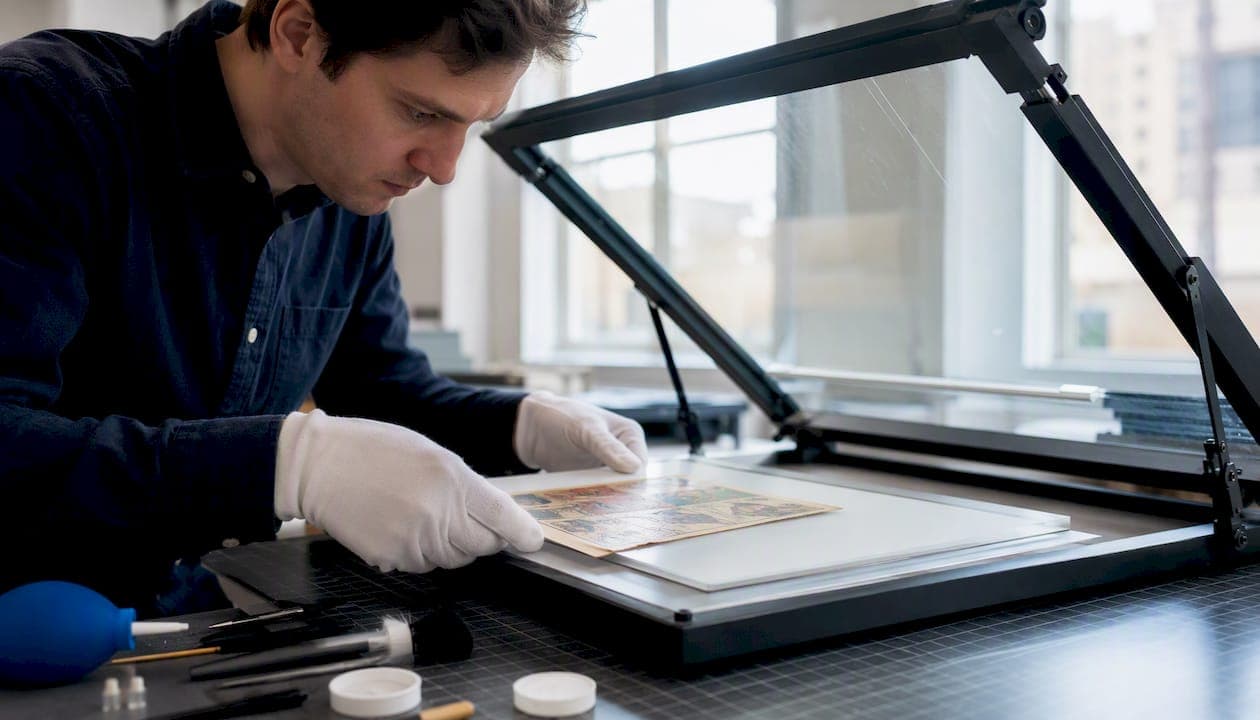
The short answer: if your comic grades in the mid-grade range with fixable, non-structural defects, or sits in the high mid-grade sweet spot on a key issue with sufficient raw value, it is almost certainly worth a professional appraisal before you decide anything else. CGC confirms that pressing and dry cleaning are non-additive procedures, meaning they are not classified as restoration, and a well-executed press can add a modest grade increase on books with purely surface-level defects. That grade bump can translate to a significant jump in market value, especially on first appearances and other key issues.
Here is what typically qualifies as a strong candidate:
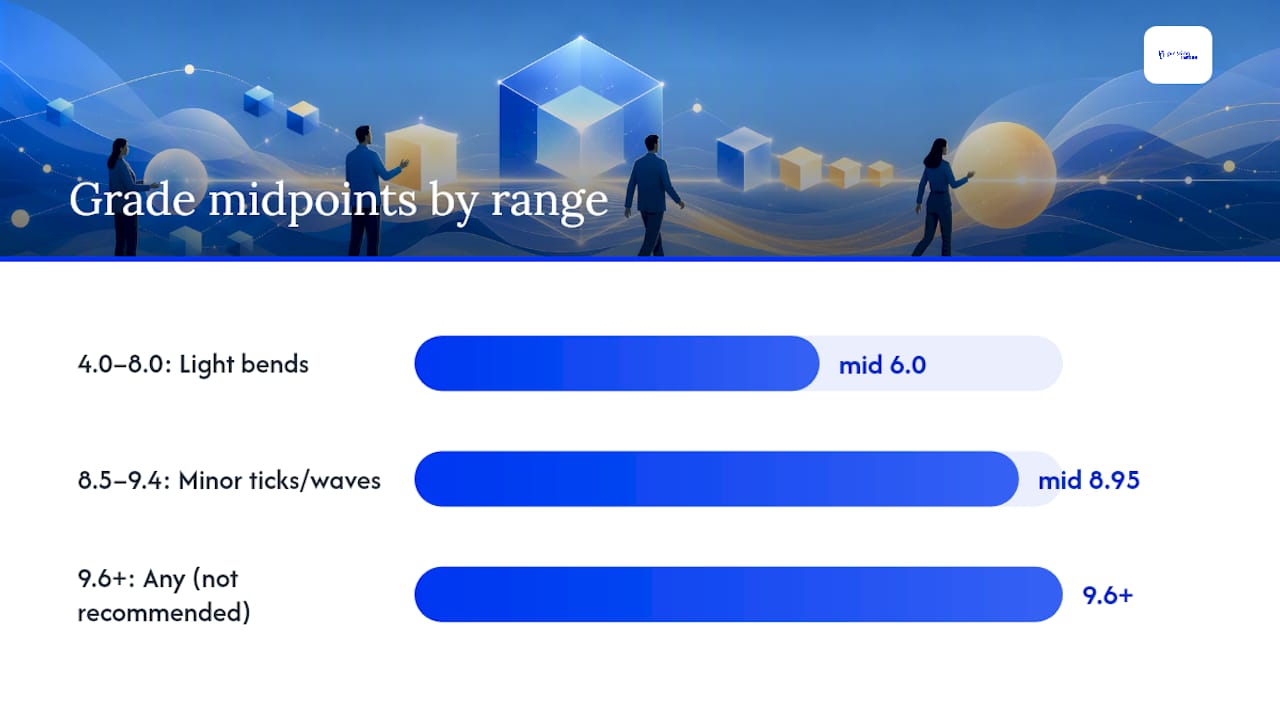
- Current grade in the 4.0–8.0 range with light bends, spine roll, or surface dirt
- Key issues in the 8.5–9.4 range are considered the sweet spot, where a half-point gain can significantly increase market value.
- Raw value above a moderate cost threshold (pro pressing is rarely cost-effective below that level)
- No color-breaking creases, piece loss, or prior amateur restoration
Submit photos to Pressing Issues for a complimentary candidate evaluation before committing to anything.
Table of Contents
- What professional pressing and dry cleaning actually accomplish
- How to identify high-value pressing candidates quickly
- Estimating ROI before you commit
- How Pressing Issues evaluates your submission candidates
- Practical preparation: packing and submitting your books
- Key Takeaways
- A practitioner's note on conservative risk management
- What Pressing Issues offers: appraisal, pressing, and CGC submission
- Useful sources and further reading
What professional pressing and dry cleaning actually accomplish
Pressing uses controlled humidity, pressure, and sometimes gentle heat to reduce non–color-breaking bends, finger dents, spine roll, and light waves in the paper. Dry cleaning removes surface dirt, fingerprints, mild foxing, and can reduce the appearance of staple rust. Together, they address the cosmetic defects that cost collectors the most points at grading time.
What pressing cannot do is equally important to understand. It cannot add or replace material. No piece fills, no color touch, no trimming. A crease that has broken the color of the ink is permanent. Tears with missing paper, water-damaged brittle pages, and mold are outside the scope of any press. According to CGC's restoration and conservation policy, restoration and conservation procedures are disclosed on the label, while non-additive procedures like pressing and dry cleaning are not. CGC includes a restoration check as part of every grading submission at no extra charge, so any prior amateur work on a book will likely surface during that process.
The practical implication: a book with only non-structural defects can realistically gain 0.5–1.5 grade points from a professional press. A book with structural damage will not improve, and a poorly executed press can actually introduce new problems.
How to identify high-value pressing candidates quickly
Use this checklist to screen a stack in minutes. The goal is to separate books that will respond well to pressing from those that will not.
Pressable defects (green light):
- Light bends and finger bends
- Shallow indents and wavy bends
- Spine roll and minor spine ticks
- Surface dirt, fingerprints, mild foxing
- Staple rust (surface-level reduction only)
Not pressable (stop here):
- Color-breaking creases or tears with piece loss
- Trimmed edges (a CGC restoration flag)
- Water damage, mold, or brittle newsprint
- Prior amateur restoration or adhesive residue
Comic Book CPR's pressable defects guide confirms that light bends, indents, and wavy bends respond well to professional techniques, while structural damage does not.
Decision flow: Does the book meet the grade range + value threshold + pressable defect criteria? If yes, send photos for a professional appraisal. If no on any count, hold the book or consult a specialist about conservation options.
| Grade Range | Defect Type | Expected Grade Lift | Cost & Turnaround | Restoration Risk |
|---|---|---|---|---|
| 4.0–8.0 | Light bends, surface dirt | 0.5–1.5 points | Moderate / standard | Low with experienced presser |
| — | Spine roll, finger bends | 0.5–1.5 points | Moderate / standard | Low with experienced presser |
| 8.5–9.4 | Minor spine ticks, light waves | 0.5–1.5 points | Moderate / standard | Low; high-grade books need extra care |
| 9.6+ | Any | Minimal to none | Not recommended | Elevated; risk of subtle damage |
| Any grade | Color-breaking creases, tears | None | Not applicable | N/A; do not press |
Pro Tip: When photographing a candidate for remote appraisal, shoot the front cover, full back cover, spine close-up, both staples, and the interior first and last pages. Good lighting at a slight angle reveals surface defects that a straight-on shot misses.
The Comic Locker's pressing guide specifically identifies the 8.5–9.4 range as the sweet spot for value gains, noting that pressing books already graded 9.6 or higher is rarely beneficial and carries real risk of subtle damage.
Estimating ROI before you commit
The math is straightforward. Use this formula:
ROI = (Estimated post-grade value − Pre-press raw value − Total cost) ÷ Total cost
Total cost includes pressing, dry cleaning if needed, CGC grading fees, shipping both ways, insurance, and any service fees. Professional pressing typically costs a moderate fee per book depending on era and provider, with dry cleaning adding an additional charge. CGC grading fees vary by tier and declared value.
A worked example using conservative numbers:
The conservative case still clears costs. On a key issue where a single half-point bump moves the book into a new price tier, the upside case is not unusual. Always model the conservative scenario first, and check our selection guide for more worked examples.
Caveats worth keeping in mind: CGC tier pricing and turnaround windows change, grader opinions vary slightly, and cracking an already-slabbed book to re-press it adds handling risk and another full grading cycle to your cost.
How Pressing Issues evaluates your submission candidates
Every book that comes through Pressing Issues goes through a structured review before we touch it. Here is the workflow:
- CGC submission handling — We manage the paperwork, declared value, tier selection, insurance, and tracking. You stay informed at every stage.
We ask every customer about declared value, insurance preferences, destination, and preferred CGC tier before submission. Our comic book pressing service page outlines current pricing and turnaround windows. The complimentary appraisal is genuinely free — it exists because we would rather tell you a book is not worth pressing than take your money on a marginal candidate.
Practical preparation: packing and submitting your books
Getting books to us safely is half the battle. Follow these steps:
- Bag each book in an archival-quality Mylar sleeve with a backing board.
- Place bagged books in a rigid outer box with foam padding on all sides. Double-boxing is worth it for anything over $500.
- Add silica gel packets to control humidity, especially for older books.
- Photograph every book before packing — front, back, spine, and any known defects. Keep these photos for your records.
- Declare the full replacement value when purchasing shipping insurance. Carriers like UPS and FedEx offer declared value coverage; confirm limits before shipping.
- Include a packing list with each book's title, issue number, estimated grade, and any known restoration history.
- Note your preferred CGC tier and any special instructions (conservation-only, no heat, etc.).
Pressing Issues coordinates CGC submission handling end to end, including paperwork, tracking, and return shipping, so you do not have to manage the CGC portal yourself.
Key Takeaways
The highest-leverage pressing candidates are mid-grade key issues with non-structural defects and sufficient raw value, where a modest grade lift can meaningfully change market value.
| Point | Details |
|---|---|
| Grade sweet spot | Target mid-grade (4.0–8.0) or high mid-grade (8.5–9.4) key issues for maximum ROI. |
| Pressable defects only | Light bends, finger bends, spine roll, and surface dirt respond well; color-breaking creases and piece loss do not. |
| Minimum value threshold | Professional pressing is rarely cost-effective below roughly $200, with expert guidance recommending the conservative professional threshold around $200–$250 and mandatory professional handling for key issues over $500. |
| Three clear red flags | Trimmed books, water/mold damage, and prior amateur restoration should not be pressed. |
| Pressing Issues appraisal | Submit photos for a complimentary candidate evaluation before committing to any pressing or grading costs. |
A practitioner's note on conservative risk management
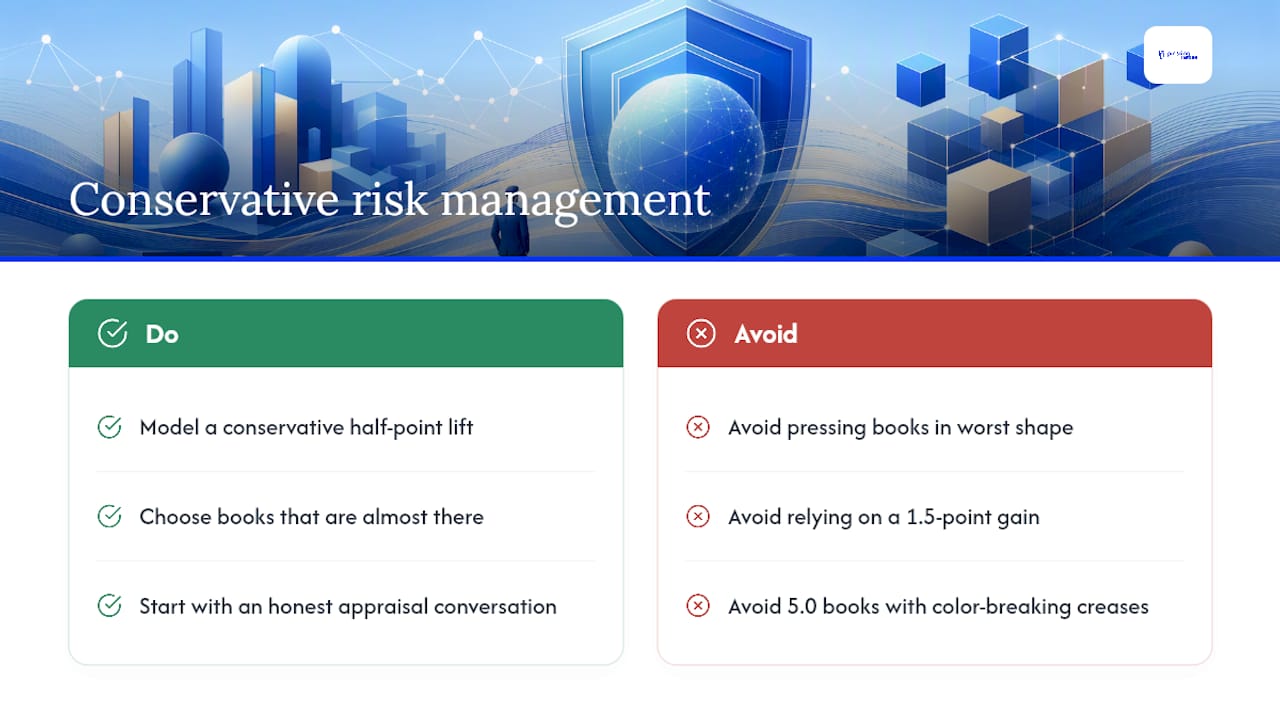
Most collectors overestimate what pressing can do and underestimate what it can undo. The books that benefit most are not the ones in the worst shape — they are the ones that are almost there. A 7.5 with a light spine roll and some surface dirt is a genuinely exciting candidate. A 5.0 with a color-breaking crease down the cover is not, no matter how much you want it to be.
The single rule I come back to most often: model the conservative grade lift, not the optimistic one. If the math still works assuming only a half-point gain, you have a real candidate. If it only works assuming a full point and a half, you are gambling. The market for key issues is strong right now, but CGC grading is not a guarantee — it is a professional opinion, and opinions vary.
Pressing Issues serves collectors and dealers across the U.S. from our Seattle and Portland locations. Every appraisal starts with an honest conversation about whether pressing is the right call, because the best outcome for your collection is always the one that protects its long-term value.
What Pressing Issues offers: appraisal, pressing, and CGC submission
Collectors and dealers across the U.S. send books to Pressing Issues because the appraisal is free and the process is transparent. You submit photos, we tell you honestly whether the book is a candidate, and we give you a written estimate before anything moves forward.
Our comic book pressing and cleaning service covers professional dry cleaning, pressing, before-and-after documentation, and full CGC submission handling including paperwork, tier selection, insurance, and return shipping. Pricing is per book, with a percentage fee applied to high-value submissions. Turnaround depends on CGC's current queue, but we keep you updated throughout the process.
To get started, submit photos of your candidates through our website or reach out directly to request an estimate. If you are working through a larger collection, our services and rates page has current pricing and turnaround windows.
Useful sources and further reading
- CGC Pressing
- CGC Restoration and Conservation FAQs | CGC
- How to Press a Comic Before CGC Submission
- Pressable Defects on Comic Books — Comic Book CPR
- Comic Book Pressing: What It Is, Whether It's Worth It, and How It Affects Value | The Comic Locker Blog
- Pressing & Cleaning Before Grading — Mint Condition
- Comic Book Cleaning | Comic Services | Pressing Issues — Pressing Issues
- How to Choose Which Comics to Send for Pressing — Pressing Issues
Verify CGC tier pricing and turnaround times directly at cgccomics.com at the time of your submission, as both change periodically.
Recommended
- How to Choose a Comic Book Pressing Service (And Why Process Transparency Matters) — Pressing Issues
- How to Choose Which Comics to Send for Pressing — Pressing Issues
- The Results Speak: Professional Pressing vs. The YouTube Rabbit Hole — Pressing Issues
- The 9.8 Gambit: How to Use the CGC Prescreen to Optimize Your Collection — Pressing Issues