Press before grading whenever the defects on your comic are non-color-breaking and the math works: expected value gain after grading beats what pressing, grading, and shipping cost combined. The sweet spot sits at a raw visual grade of 9.0 to 9.6. Skip pressing entirely on a book that already looks like a 9.8. Give the book at least 48 hours to rest after pressing, and ideally 7 to 14 days, before it ships to the grader.
TL;DR:
- Pressing is most effective for non-color-breaking creases, spine roll, page waves, and finger dents, but cannot fix tears, mold, stains, or torn paper.
- The best candidates for pressing are books graded between 9.0 and 9.6, where the grade jump can significantly increase market value.
- Proper professional pressing involves a multi-step process with controlled humidity, gradual heating, and stabilization, usually taking 36 to 72 hours.
- DIY pressing with household tools risks irreversible damage like scorch marks or uneven results, especially on older newsprint or damaged books.
- Collectors should ask presser about equipment, stabilization, documentation, insurance, and turnaround times before entrusting their books.
Table of Contents
- What Does Pressing Actually Fix?
- When Is Pressing Worth the Cost?
- How Do Professional Pressers Handle the Process?
- What Goes Wrong When Pressing Is Done Badly?
- What Should You Ask Before Hiring a Presser?
- What Collectors Get Wrong About Pressing
- Ready to Press Your Comics Before Grading?
- Sources
- FAQ
What Does Pressing Actually Fix?
Pressing corrects shape, not substance. That distinction matters more than most collectors realize when they're staring at a longbox full of Bronze Age books wondering which ones deserve the investment.
The process reshapes paper fibers using controlled humidity, heat, and pressure. Nothing gets added to the comic and nothing gets removed. A crease that hasn't broken the color layer is really just compressed, misaligned fiber, and the right combination of moisture and heat lets that fiber relax back into place. That's why CGC describes pressing as a conservation service rather than restoration: the book leaves the process with the same paper, ink, and structure it came in with, just reshaped.
Here's what a professional press can realistically resolve:
- Non-color-breaking creases. The most common candidate. Hold the book under raking light at a low angle; if the crease shows white fiber underneath, it's broken and pressing won't touch it.
- Spine roll. Slight curvature along the spine from years of being shelved wrong. A loupe check along the spine edge will show whether the roll has cracked the surface color.
- Page waves and cover warping. Humidity fluctuations over decades leave paper wavy. Pressing flattens it back out.
- Finger dents and corner crunch. Localized indentations from handling, usually reversible if the paper hasn't torn.
Pro Tip: Check every suspected defect under a raking light before you spend money on pressing. Hold the comic almost flat to a lamp and let the light skim across the surface. Color-breaking damage throws a visible shadow line; non-breaking creases barely show at all.
What pressing cannot touch is just as important to know. Tears, missing paper, mold, heavy foxing, water stains, and any crease that has already broken through the color layer are permanent. Those defects change the actual material of the book, and no amount of heat or humidity puts torn paper back together. If a presser tells you they can "fix" a tear without restoration work, that's a red flag, not a selling point.
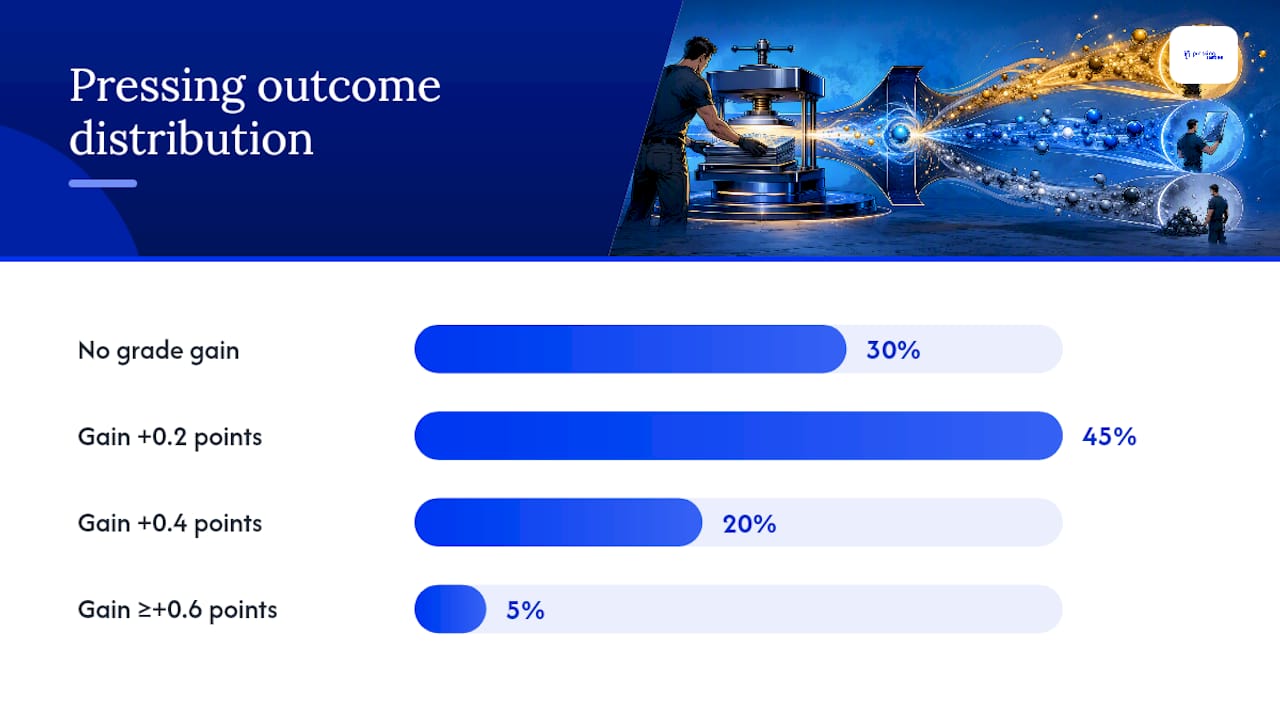
The numbers back up a measured approach. Aggregated data across thousands of professional pressing operations shows an average grade gain of 0.2 to 0.4 points, and the distribution is lopsided: roughly 30% of pressed books see no gain at all, about 45% pick up 0.2, around 20% gain 0.4, and only 5% jump 0.6 or more. Pressing shifts the odds in your favor. It doesn't guarantee a windfall.
When Is Pressing Worth the Cost?
The decision comes down to where your book sits on the grading scale and what it's worth before you touch it.
Books in the visual 9.0 to 9.6 range make the best candidates. They usually carry the kind of surface-level, non-breaking defects pressing was built to correct, and the grade jump from a 9.0 to a 9.4 or 9.6 often translates into a real price difference on the secondary market. Pushing a 9.6 to a 9.8 is a much narrower target. It's achievable, but only worth attempting on keys where that last jump commands a steep premium, since the 9.6 to 9.8 gap tends to reward disproportionately compared to lower grade jumps. Never press a book that's already sitting at a clean 9.8. There's nowhere left to go, and you're only adding risk.
Here's how that plays out on paper:
- Raw book value: $150 (a mid-grade Bronze Age key)
- Pressing cost: a bronze age pressing price
- Grading fee plus 10% submission handling: a grading fee plus 10% submission handling
- Total investment: around $90 to $105
- Post-grade value at a bumped grade: post-grade value higher by multiple times
- Net gain: $345 to $510, well past the 5x threshold
That example assumes the press actually moves the needle. On a book already close to its ceiling, or one with defects too minor to matter, the math flips fast.
Vintage and modern books play by different rules. Newsprint from the Golden and Silver Age is brittle and reacts unpredictably to heat, so safe pressing depends on tighter humidity and lower temperature control than a glossy modern cover needs. Practitioners generally treat three value bands as decision points:
- Under roughly $200 in raw value, DIY curiosity is low stakes, though still not risk free.
- Between $200 and $500 sits a genuine gray zone where professional pressing usually pays for itself.
- Above $500, and especially above $1,000 on a key, professional pressing stops being optional if you care about protecting the book's value.
Factor in time, too. A full press, stabilization, and grading cycle can add weeks to months before your book comes back slabbed. If you're planning to sell around a convention, a movie release, or an anniversary event, build that lag into your schedule now, not after you've already shipped the book.
How Do Professional Pressers Handle the Process?
A professional press runs on a sequence, not a single step, and skipping stages is exactly how books get damaged or the improvement disappears.
The order matters: diagnose the book first, press it, dry-clean if needed, then submit for grading. Doing it backward, or pressing after a book is already encapsulated, means cracking the slab open, which roughly doubles both the cost and the time involved. That's the single biggest argument for pressing before grading rather than after.
Here's what the workflow looks like at a professional shop:
- Intake and diagnosis. The presser examines the book under raking light and a loupe, separates color-breaking from non-breaking defects, and flags anything pressing can't help.
- Pre-humidification. The book sits in a controlled humidity chamber, typically around 85% relative humidity for 12 to 24 hours, which relaxes the paper fibers before heat is introduced.
- Heated press cycle. Temperature stays in a safe practitioner range, generally 40 to 60 degrees Celsius for modern offset-ink covers, held for four to eight hours depending on paper thickness. Reputable pressers never push past roughly 60 degrees Celsius on modern stock, since higher heat is what causes ink migration.
- Gradual cool-down. The book cools under continued pressure for two to four hours rather than coming out of the press directly.
- Cold stabilization. This is the step collectors skip when they try it at home: 24 to 48 hours under light pressure with no heat at all, letting the fibers set in their new position.
- Optional dry-cleaning. Surface grime and light residue get addressed before the book ships.
Total cycle time from intake to a stabilized, ready-to-ship book usually runs 36 to 72 hours, plus the stabilization window. Skip stabilization and you risk losing a real portion of the improvement as the paper slowly relaxes back toward its old shape, sometimes eroding a third to half of the gain you just paid for.
Pro Tip: Ask any presser you're considering what their stabilization protocol looks like before you ask about turnaround time. A shop that rushes a book out the door the same day it comes off the heat is cutting the one step that locks in the result.
A legitimate operation documents the work: before-and-after photos, a written defect assessment, a clear insurance or claims policy, and a packing protocol that protects the book on its way to you and then on to the grader. If pressing alone is all you need, expect a turnaround measured in days to a couple of weeks. Bundle pressing with a CGC submission and the combined timeline stretches into the standard grading turnaround window on top of the press cycle.
What Goes Wrong When Pressing Is Done Badly?
Most pressing damage traces back to one thing: heat and humidity applied without real control.
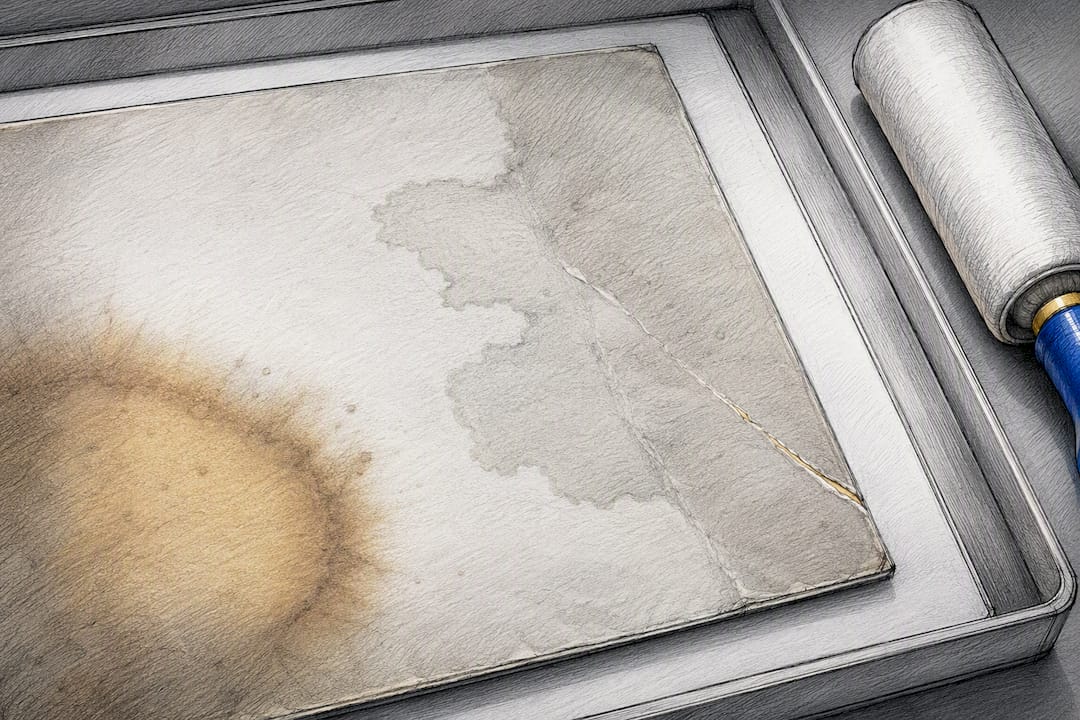
Household irons and stacks of heavy books are the two most common DIY tools, and neither one lets you regulate temperature or moisture with any precision. That's a problem because the failure modes aren't subtle. Ink migration and scorch marks show up when heat runs too hot or sits too long in one spot. Water marks appear when humidity gets applied unevenly, often as a visible ring or cloudy patch on the cover. And sometimes the press itself reveals a color-break that wasn't obvious before, turning a hidden defect into a visible one and lowering the grade instead of raising it.
There's also a subtler risk: a grader who spots signs of improper heat treatment, uneven pressure, or an amateur pressing attempt may flag the book for further scrutiny, which can slow a submission down or affect how it's ultimately labeled. Professional operations lean on tight temperature and humidity ranges precisely to avoid triggering that kind of review.
A few conditions should stop any press attempt cold, professional or DIY:
- Active water damage or visible mold
- Brittle newsprint that flexes poorly or crackles when handled
- Tears, missing corners, or missing interior pages
- Any defect that already shows color break under raking light
A version of this plays out often enough to be a pattern rather than a story: a collector presses a mid-grade Silver Age book at home with an iron on low heat, only to find a faint scorch shadow across the cover once it cools. What would have been a clean, sellable 8.0 becomes a book with a new, permanent defect that actually lowers its market value. A professional press using controlled humidification instead of direct dry heat would have addressed the same crease without introducing that risk at all.
What Should You Ask Before Hiring a Presser?
Choosing a presser is really a due diligence exercise, and most of the questions worth asking have nothing to do with price.
Before you ship a book anywhere, run through this list:
- What equipment controls humidity and temperature, and can they name the ranges they use?
- What's their stabilization protocol, and how long does it run after the heated cycle?
- Do they provide before-and-after photos as standard documentation, not an upsell?
- What's their insurance and claims policy if a book is damaged in their care?
- Do they handle CGC submission paperwork and shipping, or is that on you?
- What's the full fee structure, including any percentage-based charges on higher-value books?
- What's the realistic turnaround for pressing alone versus pressing plus grading?
Require a signed estimate before any work begins, along with a written commitment to before-and-after documentation. A presser who won't put photos and a defect assessment in writing isn't giving you anything you can verify later if a dispute comes up.
Shipping deserves its own checklist. Pack the book in a rigid mailer with acid-free backing board, insure it for close to its full expected post-grade value rather than its raw value, and always ship with tracking. That gap between raw and post-grade value is exactly where collectors under-insure, and it's the gap you're paying a presser to close.
Pro Tip: Photograph your book yourself, from all four corners and both covers, before it ever leaves your hands. It's your own baseline record if there's ever a disagreement about condition.
If you're weighing whether to handle this yourself or hand it to a shop like Pressing Issues, the honest answer is that detailed communication and a clear value analysis before any work begins are what separate a responsible operation from a risky one, regardless of who you choose.
What Collectors Get Wrong About Pressing
Pressing gets treated like a magic fix more often than it should. It isn't restoration, and it has a ceiling. The best pressers I've watched work don't chase every crease on a book. They chase the ones that matter.
Three priorities guide that judgment every time. Safety comes first: if a defect is questionable under raking light, the answer is to leave it alone rather than risk revealing a break. ROI comes second: a book worth $40 raw rarely justifies the cost and wait of professional pressing, no matter how satisfying the crease removal would feel. Documentation comes third, because a presser who won't hand you before-and-after photos and a written assessment isn't giving you anything to stand on if the grade comes back lower than hoped.
I've seen a beat-up Bronze Age key jump nearly half a point from a clean press and turn a break-even sale into real profit. I've also seen a collector spend money pressing a book with a defect too minor to matter, and the grade didn't move at all. Both outcomes are normal. The difference is whether someone told you the truth about which one you were walking into before you paid for it.
— Charles
Ready to Press Your Comics Before Grading?
Some professional pressing services offer cleaning, pressing, appraisal-style value analysis, and CGC submission paperwork under one roof, sometimes pricing scaled to the book's era rather than a flat rate that overcharges modern collectors and undercharges Golden Age owners.
Rates run from a modest fee for Modern Age books up to a higher fee for Spine Roll and Golden Age titles, with a percentage fee on CGC submission handling and an additional fee on high-value books, all listed on our services page. Every job includes documented before-and-after photos and secure packaging designed for the trip to the grader, not just back to you. If you're not sure a book is worth pressing at all, our value analysis service looks at the book first and gives you an honest read before you commit a dollar.
Start by requesting an estimate through our comic pressing service page, and send clear photos of the defects you're concerned about so we can screen the book before anything ships.
Sources
- Is Comic Book Pressing Worth It? Complete Guide 2026
- Pressing | CGC
- How to Press a Comic Before CGC Submission
- Pressing & Cleaning Before Grading — Mint Condition
FAQ
What Is CGC Pressing?
CGC pressing refers to a conservation process, using controlled heat, humidity, and pressure, that reshapes non-color-breaking defects like creases and spine roll without adding or removing material. CGC classifies it as conservation rather than restoration and offers screening to determine whether a given book is a good candidate before any work happens.
How Much Does It Cost to Get a Comic Cleaned and Pressed?
Pressing-only services typically run $15 to $75 per comic depending on era, while combined pressing and cleaning bundles generally range within a certain mid-range price. Pressing Issues prices by era specifically, starting at $17 for Modern Age and reaching $50 for Spine Roll and Golden Age books, listed on the services page.
What Comic Sold for $15 Million?
A copy of Action Comics #1 sold for $6 million, and a near mint copy of Superman #1 has reached multi million dollar territory in major auctions, with condition and grade driving nearly all of that value, which is exactly why pressing before grading matters so much on high-value keys.
When Did Comics Stop Using Newsprint?
Most mainstream publishers shifted away from cheap newsprint interior paper toward higher-quality stock in the past decades, with the transition varying by publisher and title. That shift is a big part of why vintage books need more conservative pressing temperatures than modern glossy stock, since older newsprint is far more brittle and heat-sensitive.
Should I Press a Book Myself or Hire a Professional?
Hire a professional for any book above roughly $200 to $500 in raw value, and treat it as mandatory above $500 to $1,000 on a key issue. DIY methods like irons and heavy books can't control heat and humidity precisely enough, which is where most permanent damage, like scorch marks and ink migration, actually happens.