
A high-value comic key is any issue whose historical or cultural significance, rarity, and condition reliably concentrate collector demand and long-term value. That definition covers a wide range of books, from a Golden Age first appearance to a modern limited variant, but the underlying logic is always the same: scarcity plus significance plus condition equals price.
Quick takeaways before you read on:
- Blue Chip keys (Golden and Silver Age first appearances and origins) form the safest core of any serious collection.
- CGC certification is the market standard for liquidity on high-value transactions. A raw copy of a major key leaves money on the table.
- Professional non-restorative pressing and cleaning from Pressing Issues can improve eye appeal and grade potential without triggering a restoration flag.
- Start here: assess condition honestly, identify your key type, then decide whether pressing and a CGC submission make financial sense.
Pro Tip: Before spending on grading fees, check the CGC census for your book's grade distribution. If 9.8s are plentiful, the premium over 9.6 may not justify the cost. If 9.8s are scarce, a professional press could be the most profitable decision you make.
Table of Contents
- What are the main types of high-value comic keys?
- What actually makes a comic book a key?
- How grading and authentication affect what your key is actually worth
- How to prepare a key comic for grading
- When should you press or clean, and when should you stop?
- How to value and sell a high-value key
- What do pressing, cleaning, and CGC grading actually cost and take?
- Insuring and updating valuations for your high-value keys
- How to build and diversify a high-value key collection
- Legal and ethical considerations when buying, selling, and holding keys
- Key Takeaways
- Why preservation and "keyness" go hand in hand
- Pressing Issues handles the hard part for you
- Useful sources
What are the main types of high-value comic keys?
Every collector and dealer should be able to place a book into one of these categories before deciding how much to spend on preparation and grading.
1. First appearances
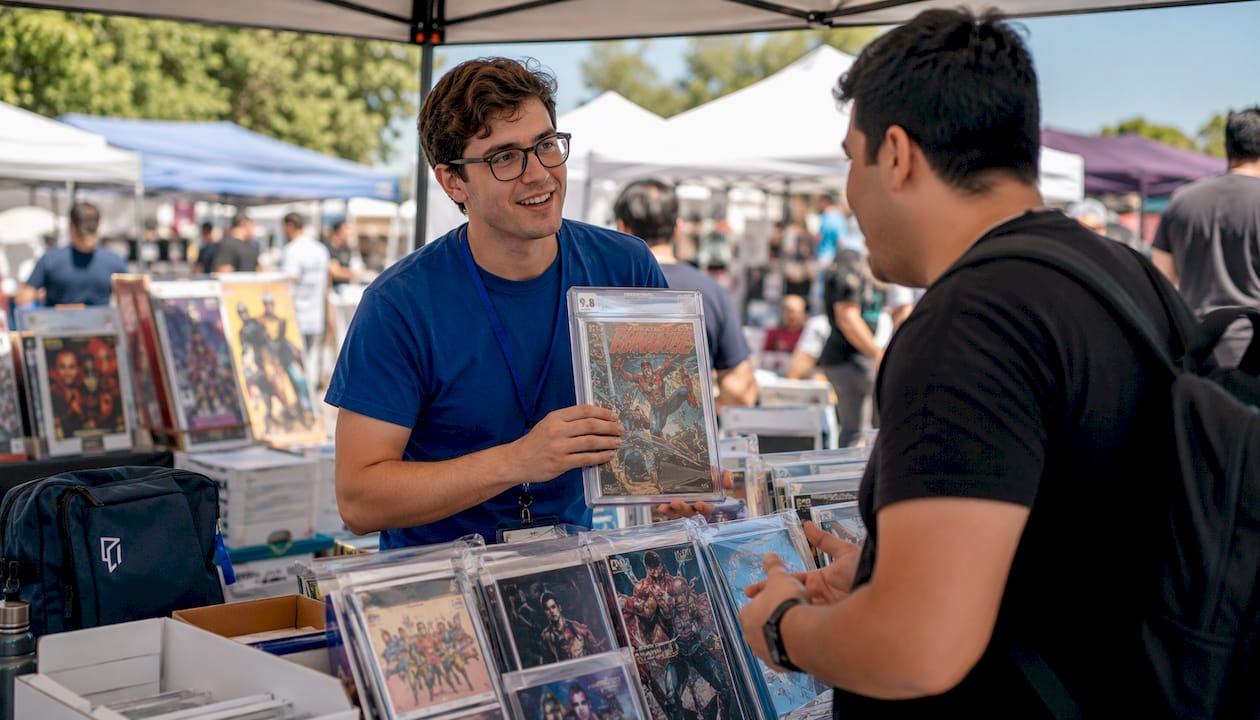
First appearances concentrate demand because there is only one true first instance of any character. Verify carefully: the market distinguishes between a cameo, a proto-appearance, and a full first appearance, and buyers pay different premiums for each. Grade sensitivity is extreme here. A single grade point on a major first appearance can mean thousands of dollars.
2. Origin issues
Origin stories establish why a character matters. They often trade at a premium even when the character already appeared elsewhere, because collectors treat them as "core lore." Batman's origin retelling in Batman #404 is a classic example of an origin issue that commands strong prices independent of the first-appearance issue.
3. Landmark story arcs and major events
Deaths, resurrections, and status-quo shifts drive cyclical demand tied to media cycles. A character death that gets adapted for film or television can spike a book's value overnight. Document whether the event was later retconned, because reversals dampen long-term demand.
4. First team-ups and crossovers
The first meeting of two major characters, or a character's first appearance in another title's continuity, creates a secondary tier of keys that serious collectors actively pursue. These are often underpriced relative to solo first appearances and can represent strong value for dealers building inventory.
5. Golden and Silver Age blue chip keys
Blue Chip comics from 1940–1970 have consistently outperformed many traditional indices over a 40-year horizon. These are the safest core of a value-focused collection, and most experienced collectors recommend allocating roughly 80% of a key-focused budget here. Preservation priority is highest: paper brittleness, tanning, and staple rust are the primary threats.
6. Limited variants and convention exclusives
Variant ratios and SDCC exclusives create measurable scarcity. A 1:100 retailer incentive variant or a convention exclusive with a documented print run under 1,000 copies can carry significant premiums. Error prints and remarqued copies also fall into this category.
7. Creator-significant issues
A debut issue by a writer or artist who later becomes iconic can appreciate sharply. Neal Adams' early Batman work and Jack Kirby's Fantastic Four run are canonical examples. The key indicator is whether the creator's reputation has grown to the point where their early work is treated as a collectible in its own right.
8. Cameo appearances
Minor keys, but real ones. A cameo often precedes a full first appearance by one issue, and the market sometimes rewards the earlier book on chronology alone. The Incredible Hulk #180 (Wolverine cameo) versus #181 (full appearance) is the textbook case.
9. Sleeper keys
These are books the broader market hasn't priced correctly yet. Knowledge of comic lore and census gaps lets savvy collectors spot underrated issues before media announcements or anniversary events push prices up. A character rumored for a streaming adaptation is worth researching before the announcement, not after.
Pro Tip: Track census population reports alongside media news. A book with low census population in high grade and a character rumored for adaptation is the definition of a sleeper. Move before the announcement, not after.
What actually makes a comic book a key?
Industry experts consistently point to historical and cultural significance as the primary driver of keyness, not speculation. Here are the core value drivers and the practical indicator to check for each:
- Historical/cultural significance: Does the issue define a character or era? Check whether the book is referenced in official character histories and fan wikis.
- Rarity and print run: How many copies exist in high grade? Pull the CGC census for your specific issue, printing, and variant.
- Demand and liquidity: Is there an active buyer pool? Check recent sold listings on major auction platforms, not active listings.
- Condition and eye appeal: Eye appeal affects sale speed and price ceiling. Clean centering, vibrant colors, and tight spine all matter.
- Creator importance: Is the writer or artist now considered a legend? Creator significance can elevate otherwise minor issues.
- Provenance: Original owner documentation, purchase receipts, and collection history build buyer confidence, especially for high-value transactions.
"The same milestone can be worth very different amounts depending on era, character popularity, and scarcity — which is why your list should record why it's key, not just that it's key." — Appraisily, Key Issue Comics Research Guide
Media announcements create short-term spikes. A character's MCU debut can double a book's price in a week, then partially retrace. Blue Chip keys tend to hold value through those cycles; speculative modern keys are more volatile.
How grading and authentication affect what your key is actually worth
For high-value keys, CGC certification is standard practice. Buyers of serious books don't want to negotiate condition with a stranger. A CGC slab removes that friction entirely and functions as a liquidity mechanism that commands a premium.
The grade ladder effect is real and steep. For keys valued over $200 raw, a CGC 9.8 premium frequently reaches 3 to 10 times the raw Near Mint value.
Authentication matters before you submit. Check for:
- Reprints and facsimiles: Compare indicia, paper tone, and staple type against documented originals.
- Trimming: Measure dimensions against known standards; a trimmed book will grade as restored.
- Color touch: UV inspection reveals touch-ups invisible under normal light.
- Staple replacement: Original staples show age-consistent oxidation; replacements often look too clean.
Gather documentation before submission: purchase receipts, provenance notes, and high-resolution photographs. Use the CGC prescreen strategy to avoid paying full grading fees on a book that won't hit your target grade.
Pro Tip: A CGC Qualified label (noting a defect) is not the same as a Restored label, but both affect price. Know the difference before you submit, and disclose known issues to your presser so they can advise correctly.
How to prepare a key comic for grading
Start conservatively. Non-restorative cleaning and professional pressing are appropriate when there is a demonstrable grade-up potential. Intervention for its own sake is not.
- Inspect and document: Photograph every defect under bright, raking light before touching the book.
- Prescreen for likely grade: Use sold comps and census data to estimate where the book lands raw.
- Decide on pressing and cleaning: A professional non-restorative press makes sense when spine roll, surface grime, or small stress marks are present and a grade-up is plausible. Read the grading upgrade sweet spots guide before committing.
- Catalog and photograph: Record issue number, printing, variant type, and all visible defects.
- Assemble provenance: Collect purchase receipts, prior grading labels if any, and ownership notes.
- Package and insure for shipping: Use rigid, acid-free packaging. For U.S. high-value shipments, insure at least the book's conservative market value and choose a tracked, signature-required carrier.
Pro Tip: Request a complimentary value analysis before paying grading fees on any book over $200 raw. Knowing the realistic grade ceiling first saves money and prevents disappointment.
When should you press or clean, and when should you stop?
Short answer: press and clean when non-restorative techniques can yield a measurable grade-up and a professional can guarantee non-restorative handling. Stop when the defect requires anything beyond that.
Press or clean when you see:
- Spine roll or spine stress marks addressable with heat and pressure
- Surface grime or dust that non-restorative cleaning can remove
- Minor corner blunting from storage
- Staple toning without active rust migration
Stop and reconsider when you see:
- Active staple rust with migration into the paper (signals moisture damage)
- Color flaking or brittleness (pressing can worsen it)
- Suspected color touch or prior restoration (UV inspection first)
- Structural tears that would require adhesive
Incorrect handling that results in color touch or trimming flags reduces value permanently. A CGC Restored label on a major key can cut its value by 50% or more compared to an unrestored copy in the same grade.
Pro Tip: Experienced pressers evaluate staple rust, spine roll, and surface grime before recommending any work. If a presser doesn't ask about these specifics upfront, that's a red flag.
How to value and sell a high-value key
Choose the channel that matches the book's expected ceiling and your time horizon.
| Channel | Reach | Typical fees | Best for |
|---|---|---|---|
| Major auction houses | Deepest buyer pool | 15% seller commission | Record-level keys, maximum ceiling |
| Online auction platforms | Broad, active market | 10% platform fees | Mid-value keys, established demand |
| Private sale / dealer | Fast, lower friction | Negotiated, often lower | Speed, discretion, repeat relationships |
| Consignment | Moderate to broad | 20–40% depending on venue | Collections, patient sellers |
Auction houses reach the deepest pool of serious buyers for record-level keys. For everyday and mid-value books, online platforms work well. Private sales through established dealers offer speed and lower fees when you know the buyer pool.
Buyers of high-value keys expect: a CGC slab with legible label, original purchase receipts where available, provenance notes, and high-resolution photographs of the book before slabbing. If you're considering a private sale or fast liquidation, a collection buyer specialist can help you understand your options before committing to a channel.
Consignment timelines vary widely. Documented provenance and prepress photography materially shorten consignment timelines by building buyer confidence before the book even hits the market.
What do pressing, cleaning, and CGC grading actually cost and take?
Expect variable timelines. Professional pressing and cleaning typically runs 1–4 weeks depending on volume and complexity. CGC grading timelines depend on the submission tier selected and can range from a few weeks to several months.
Cost factors to budget for:
- Book's raw market value (determines appropriate submission tier)
- Desired turnaround (faster tiers cost more at CGC)
- Pressing and cleaning fees (charged per book; high-value books may carry a percentage fee)
- Shipping and insurance both ways
For current rates and turnaround estimates, check the Pressing Issues services page directly. Fees change, and a written quote protects both parties.
Insuring and updating valuations for your high-value keys
Long-term preservation requires controlled temperature (ideally 60–70°F), relative humidity between 40–50%, low light exposure, and acid-free storage materials. Those conditions aren't optional for books worth thousands of dollars.
Insurance is equally non-negotiable. Standard homeowner's policies rarely cover collectibles at full market value. A scheduled personal property rider or a dedicated collectibles policy through a specialty insurer covers replacement value and typically requires a documented appraisal. Update valuations annually or after any significant market movement in your key's category. Keep a digital record of CGC labels, purchase receipts, and high-resolution photographs stored separately from the physical collection.
How to build and diversify a high-value key collection
The most durable approach allocates the majority of capital to proven Blue Chip keys and reserves a smaller portion for speculative modern issues. That 80/20 framework reflects how Blue Chip comics have performed over long horizons relative to more speculative picks.
Diversify across eras and publishers. Golden and Silver Age books anchor the collection. Bronze Age keys offer strong value with lower entry prices than Silver Age equivalents. Modern keys add liquidity and media-cycle upside, but treat them as the speculative allocation, not the core. Smaller publishers and independent titles can carry outsized value due to scarcity, even when the characters are less famous. Sourcing at comic conventions remains one of the best ways to find underpriced keys before they hit the broader market.
Legal and ethical considerations when buying, selling, and holding keys
Provenance verification is both a legal and ethical obligation. Buying a stolen comic, even unknowingly, can result in forfeiture without compensation. Request documentation for any high-value purchase and cross-reference known stolen collection databases when buying from unknown sellers.
Export restrictions apply to certain culturally significant items. While most American comics don't trigger export controls, original artwork and items with documented museum or institutional provenance may. If you're buying internationally, confirm the item's export status before completing the transaction.
Accurate representation matters in every sale. Describing a restored book as unrestored, or a reprint as an original, exposes sellers to fraud claims. CGC certification reduces this risk significantly because the label documents condition and any restoration notes independently.
This article is general information for collectors and dealers, not legal or financial advice. Confirm current regulations and tax treatment with a qualified professional for your specific situation.
Key Takeaways
Blue Chip first appearances in high grade, professionally pressed and CGC-certified, represent the strongest combination of liquidity and long-term value in the key comic market.
| Point | Details |
|---|---|
| Prioritize Blue Chip keys | Allocate the majority of your budget to proven Golden and Silver Age first appearances and origins. |
| CGC certification is standard | For keys over $200 raw, a CGC 9.8 premium frequently reaches 3 to 10 times the raw Near Mint value. |
| Press before you grade | Non-restorative pressing and cleaning can yield a meaningful grade-up when done by a professional. |
| Document everything | Provenance, receipts, and high-res photos shorten consignment timelines and build buyer confidence. |
| Pressing Issues handles it | Pressing Issues provides non-restorative cleaning, pressing, and full CGC submission handling for U.S. collectors and dealers. |
Why preservation and "keyness" go hand in hand
Most collectors understand that a key comic is worth more than a common issue. Fewer appreciate how much condition narrows or widens that gap in practice. Working with books across the full spectrum of key types, from Golden Age blue chips to modern sleepers, makes one thing clear: the difference between a book that sells at ceiling and one that undersells almost always comes down to preparation. A spine tick that could have been pressed out, surface grime that a careful cleaning would have removed, a staple that needed attention before submission. These are not small details. On a major first appearance, they are the difference between a 9.4 and a 9.8, which can mean thousands of dollars.
The taxonomy in this article isn't just academic. Knowing what type of key you're holding tells you exactly how much preparation is justified and which grading tier makes financial sense. A sleeper key with a speculative upside gets a different treatment than a Blue Chip first appearance you plan to hold for a decade.
Pressing Issues handles the hard part for you
When you've identified a high-value key worth protecting, the preparation process deserves the same care as the book itself. Pressing Issues offers professional non-restorative cleaning, pressing, and full CGC submission handling for collectors and dealers across the United States, operating out of Seattle, Washington and Portland, Oregon.
We evaluate every book for pressing and cleaning potential before any work begins, and we provide a complimentary value analysis so you know whether the investment makes sense. High-value books receive a percentage-based fee structure that aligns our incentives with yours. No guesswork, no surprises. If a book isn't a good candidate for pressing, we'll tell you that upfront.
Ready to protect what your key is actually worth? Request a quote or check our current rates and turnaround times to get started.
Useful sources
- Key Issue Comics: Research, Grade and Price Your Series — Appraisily — Practical methodology for identifying, grading, and pricing key issues.
- What Are "Key Issues" in Comic Books? — Panels Pixels Pop — Clear overview of key issue categories and what drives collector demand.
- Comic Book Value Guide: Key Issues and Prices — Collecting.top — Estimation methodology for valuing keys across eras and grades.
- Are Comic Books a Good Investment in 2026? — ComicValue — Long-horizon performance data for Blue Chip keys and portfolio allocation guidance.
- How to Invest in Comics in 2026 — MyComicsCollection — CGC certification rationale, variant scarcity data, and selling channel guidance.
- The Grading Upgrade Game — Pressing Issues — Where pressing and cleaning create the most meaningful grade-ups.
- CGC Submission Handling — Pressing Issues — Full-service CGC submission management for collectors and dealers.
- Collection Buyer Guide — Insta-Auction — Guidance on private-sale and collection-buyer channels for fast liquidation.