
Comic cover detachment is defined as the physical separation of a comic's cover from its interior pages, caused primarily by staple failure, spine splits, and environmental stress on paper fibers. The industry term for this condition is "cover detachment" or "cover separation," and CGC grading recognizes it as a defect that drops a book to VG or lower. Collectors who understand what causes comic cover detachment can make smarter buying decisions, store their books correctly, and protect real financial value. Staple pull-through, humidity damage, improper storage, prior restoration, and manufacturing defects all contribute to this problem.
What causes comic cover detachment at the staple and spine?
Staple failure is the single most common mechanical cause of cover detachment. A comic's cover and interior pages are held together by two staples driven through the spine. When those staples loosen, rust, or tear through the paper, the cover separates. Grading standards classify centerfold or cover detachment at the staples as a VG-grade defect or worse. That classification directly affects resale value and CGC submission outcomes.
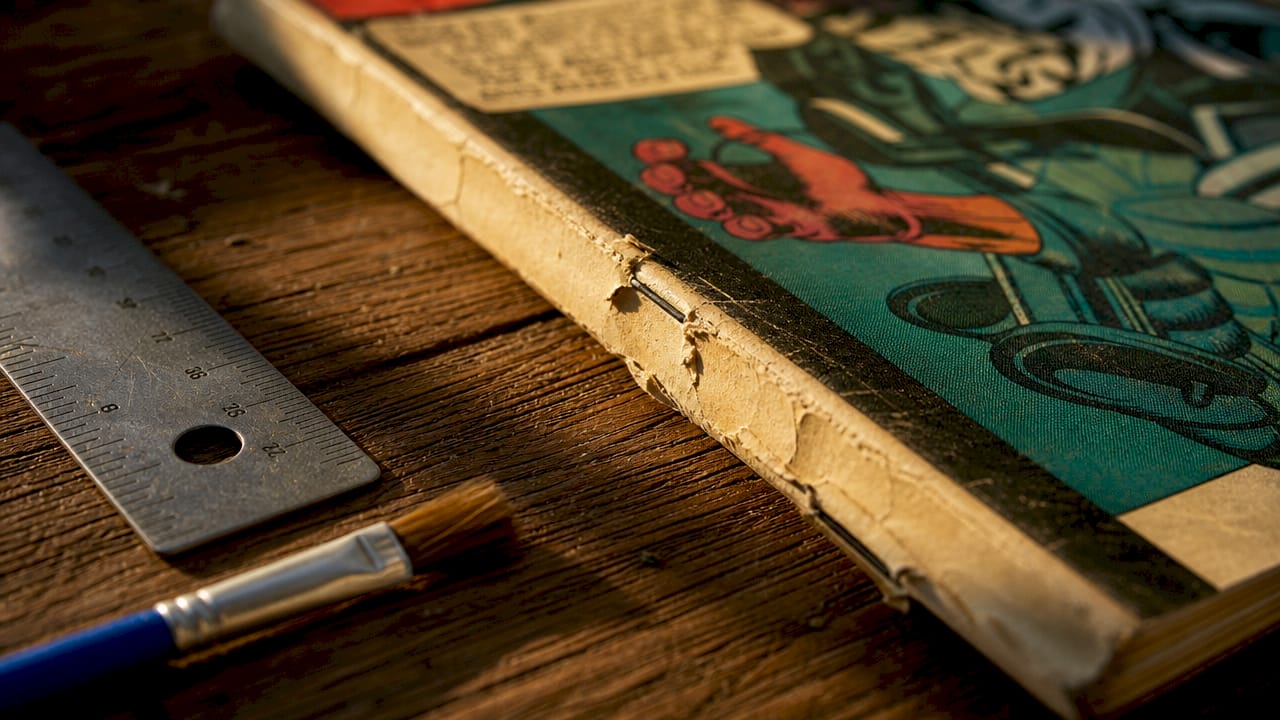
Staple pull-through and tear patterns
Staple pull-through happens when the paper around a staple tears outward, creating a small hole or split at the spine edge. This is not always visible from the outside. The tear usually starts on the interior cover wrap and works outward with repeated handling. Once the paper tears past the staple point, the cover has nothing left to grip and begins to separate.
Spine splits are a related failure. A spine split is a vertical crack along the folded spine edge, running parallel to the staples. Repeated opening and closing of a comic stresses the fold line. Over time, the paper fibers break along that line, and the cover begins to peel away from the interior. Both staple pull-through and spine splits accelerate each other once either one starts.
Pro Tip: Open a comic by holding it at the spine and gently fanning the pages. Never bend the cover back past 90 degrees. That single habit prevents most mechanical stress on the staple area.
- Staple rust weakens the metal's grip on paper fibers over decades
- Repeated reading creates micro-tears around staple holes that widen gradually
- Spine ticks (small stress marks on the spine) are early warning signs of coming splits
- Centerfold detachment at staples is a grading red flag that signals structural failure
How do heat and humidity accelerate cover separation?
Heat and humidity are the two environmental forces most responsible for long-term comic book cover damage. Heat accelerates the chemical reactions inside paper, causing fibers to become brittle and lose flexibility. Brittle paper tears more easily under the same mechanical stress that a healthy comic would survive. Stable storage temperatures around 65–70°F and relative humidity between 40–50% significantly reduce mold growth and chemical degradation.
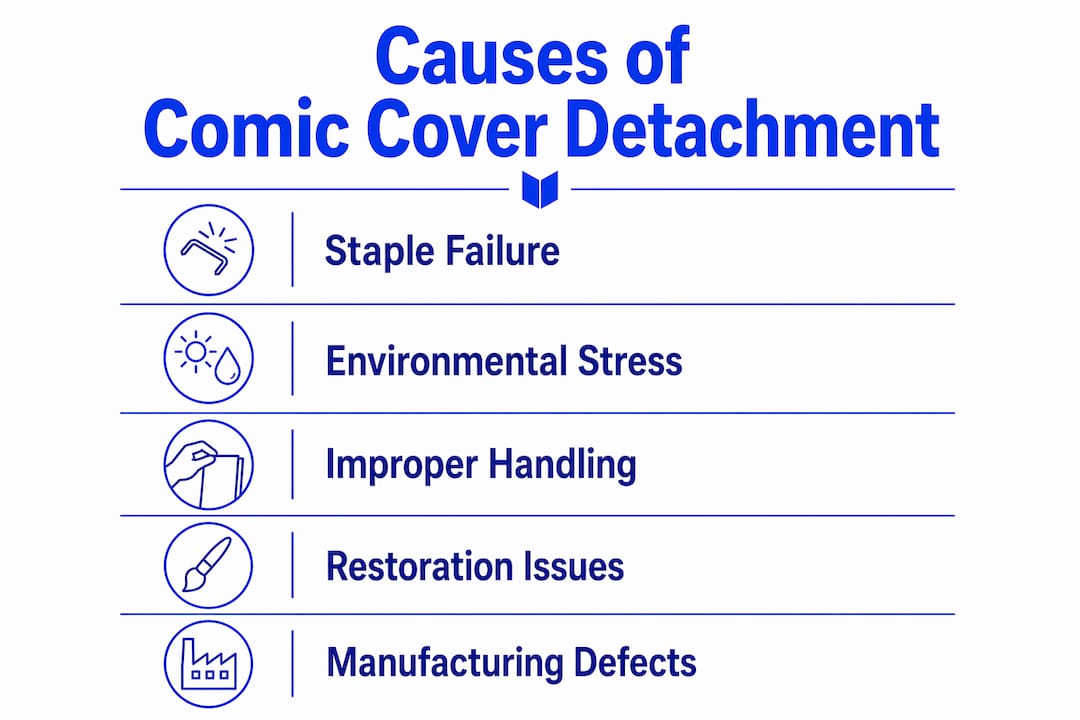
Humidity does two kinds of damage. High humidity encourages mold, which digests paper fibers and weakens the cover's structural integrity. It also causes staples to rust, which corrodes the metal and stains the surrounding paper, making the staple hole larger and the grip weaker. Low humidity is not safe either. Dry conditions cause paper to shrink and crack, stressing the staple interface from the opposite direction.
The most underappreciated threat is cycling. Repeated temperature and humidity swings cause paper fibers to expand and contract repeatedly. Each cycle adds microscopic stress to the staple interface. A comic stored in a garage or attic that experiences seasonal temperature swings may look intact for years, then suddenly show cover looseness because the cumulative stress finally exceeded the paper's tolerance.
- Store comics away from exterior walls, which conduct outdoor temperature changes
- Avoid basements unless you use a dehumidifier rated for the space
- Use a digital hygrometer to monitor humidity in your storage area
- Never store comics in direct sunlight, which combines UV degradation with heat
Does improper packaging cause cover detachment?
Improper packaging is a direct cause of spine stress and eventual cover separation. Comics stored without backing boards slump and bend under their own weight. That bending concentrates stress at the spine fold, exactly where the staples and paper are already under tension. Acid-free backing boards stabilize a comic's shape and prevent the bending that loosens staples over time.
- Store comics upright, not flat. Flat stacking puts pressure on the spine of every book in the pile. Upright storage with a divider distributes weight evenly.
- Use acid-free boards sized for your bags. A board that is too small lets the comic shift and bend inside the bag. A board that fits snugly holds the comic rigid.
- Fold bag flaps to the back, not the front. Sealing a bag flap onto the front cover causes adhesive damage to glossy surfaces within months, weakening the cover edge and contributing to detachment.
- Replace bags every few years. Polypropylene bags off-gas over time and can become brittle, losing their protective function.
- Never rubber-band comics together. Rubber bands compress the spine and leave permanent indentations that stress the staple area.
Pro Tip: When buying comics at a convention or shop, carry a rigid flat case or a dedicated comic bag with a board already inside. Bending a comic in transit is one of the fastest ways to start a spine split.
Handling mistakes compound packaging failures. Picking up a comic by its cover alone, rather than supporting the spine, puts immediate torque on the staple area. Proper handling techniques treat the spine as the structural core of the book, not the cover.
Can prior restoration worsen cover detachment?
Prior restoration is a hidden cause of cover detachment that many collectors overlook when buying. Restoration techniques involving glue or tape near the staples are common in older comics that showed early looseness. The repair may look solid at first, but adhesives change the flexibility of the paper they contact. Restoration adhesives create stiff, shiny spots on the interior cover that alter how the paper flexes, and that altered flexibility causes new stress points to develop over time.
Signs of prior restoration near the staple area include:
- Shiny or slightly raised spots on the interior cover wrap near the staples
- Stiffness in the cover that does not match the flexibility of the interior pages
- Fused paper fibers that feel thicker than the surrounding paper
- Discoloration or slight yellowing in a localized area around the spine
Restoration detection matters for two reasons. First, a restored comic graded by CGC receives a purple label designating it as "Restored," which significantly reduces its market value compared to an unrestored copy. Second, the adhesive used in a prior repair may continue to degrade, making future detachment more likely rather than less. Restoration materials and methods directly impact long-term structural integrity, so collectors must assess restoration history before purchasing any high-value book.
How do manufacturing and distribution defects cause early detachment?
Manufacturing defects introduce cover damage before a collector ever touches a book. Large print runs use high-speed binding equipment, and mechanical misalignment during stapling can place staples off-center or at an angle. An off-center staple grips less paper, making pull-through far more likely under normal handling. Reports of spine damage in print runs such as Absolute Batman #20 demonstrate that supply chain mechanical stresses cause early cover problems at scale.
| Damage Type | Origin | Collector Impact |
|---|---|---|
| Off-center staples | Binding machine misalignment | Higher pull-through risk from first read |
| Spine creases | Distribution bundling and compression | Immediate grade reduction, faster split |
| Cover waviness | Humidity exposure in warehouse storage | Structural weakness before purchase |
| Loose covers at receipt | Combined staple and spine failure in transit | May qualify as manufacturing defect |
Distribution handling adds a second layer of risk. Comics shipped in bundles are compressed and may be dropped or bent during transit. A book that arrives with a loose cover or a visible spine crease has already suffered mechanical stress that shortens its structural life. Collectors should inspect new comics at the point of purchase and document any factory-origin damage before handling the book further.
Key Takeaways
Comic cover detachment results from a combination of staple failure, environmental stress, and improper storage, and preventing it requires treating preservation as a complete system rather than a single fix.
| Point | Details |
|---|---|
| Staple failure is the primary cause | Staple pull-through and spine splits are the main mechanical reasons covers separate. |
| Environment accelerates damage | Store comics at 65–70°F and 40–50% humidity to slow paper brittleness and staple rust. |
| Packaging prevents mechanical stress | Acid-free boards and correct bag sealing stop bending-induced spine and staple damage. |
| Restoration can worsen detachment | Prior adhesive repairs alter paper flexibility and create new stress points over time. |
| Manufacturing defects start early | Off-center staples and distribution compression cause cover looseness before handling begins. |
What I've learned from inspecting thousands of comics
The most common mistake I see collectors make is judging cover condition from the outside only. A cover can look tight and clean from the front while the interior staple area is already torn halfway through. The real diagnostic work happens when you open the book and look at where the cover wrap meets the staples. Intact staples with wrinkled covers usually mean storage damage. Torn paper around the staples means true mechanical detachment is underway.
What surprises most collectors is how much damage comes from the storage environment rather than handling. A comic read carefully once a year but stored in a fluctuating garage environment will deteriorate faster than a comic read monthly but kept in a climate-controlled room. Thermal and humidity cycling is a slow, invisible process that builds up over years before the cover suddenly feels loose.
My strongest advice is to treat preservation as a system. Bags, boards, and environment control all work together. Fixing one without the others leaves the book exposed. And if you are buying a key issue or a high-value book, always check for restoration signs near the staples before you commit. A prior repair that looks solid today may be the reason that cover separates in five years.
— Charles
Pressing-issues: professional care for your collection
Collectors in Seattle and Portland have a trusted resource for comics that need more than storage fixes.
Pressing-issues specializes in comic book pressing and professional cleaning that address the surface-level damage caused by improper storage, handling, and environmental exposure. Pressing can reduce spine stress marks, flatten cover waviness, and restore a book's structural appearance before a CGC grading submission. Cleaning removes the residue and oxidation that weaken cover paper over time. For collectors preparing key issues for grading or resale, professional pressing and cleaning complement good storage practices and give your books the best possible foundation. Contact Pressing-issues to discuss your collection.
FAQ
What is the most common cause of comic cover detachment?
Staple pull-through is the most common cause. Paper tears around the staple holes, removing the cover's only mechanical connection to the interior pages.
What grade does CGC assign to a comic with cover detachment?
CGC grading places comics with cover or centerfold detachment at the staples at VG or lower, which significantly reduces market value.
What storage conditions prevent cover separation?
Store comics at 65–70°F and 40–50% relative humidity. Stable conditions prevent the thermal cycling that stresses staple interfaces over time.
How can I tell if a comic has been restored near the staples?
Look for shiny spots, localized stiffness, or fused paper fibers on the interior cover wrap near the staples. These are signs that restoration adhesives have been applied.
Can a factory-new comic arrive with cover detachment?
Yes. Manufacturing misalignment and distribution compression can cause spine damage and loose covers before a collector handles the book at all. Inspect new purchases at the point of sale.