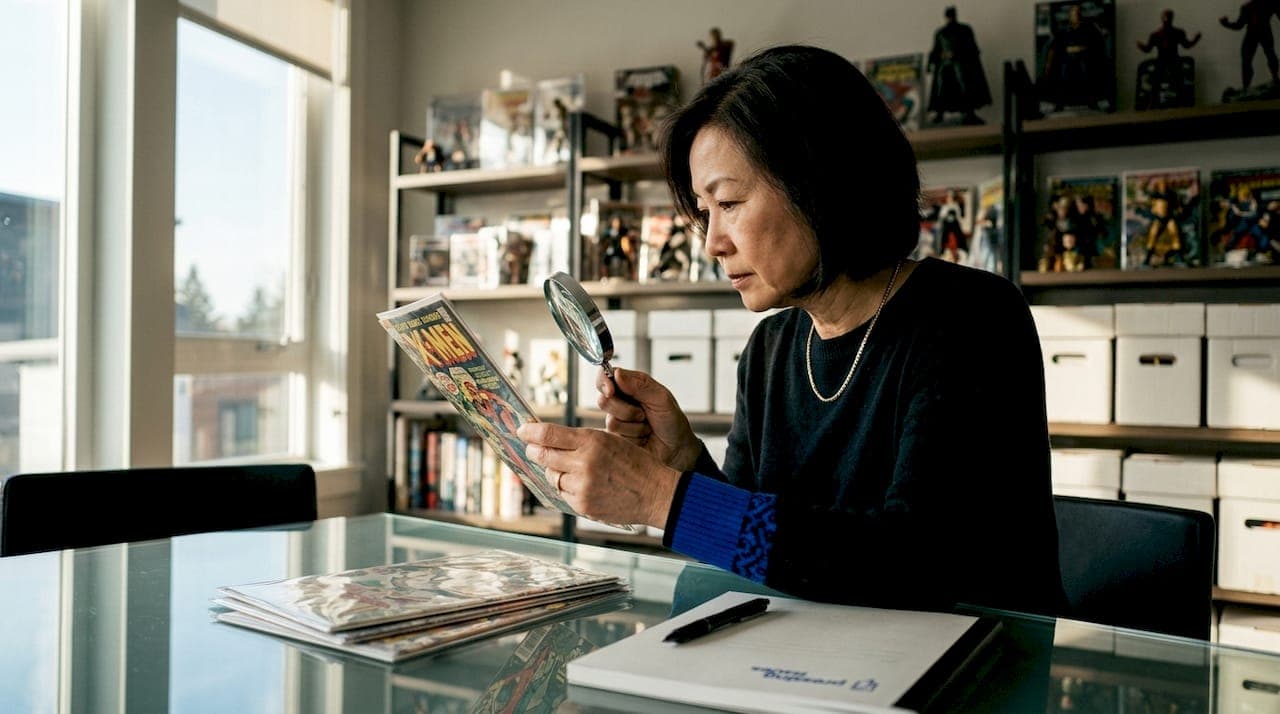
A printing error comic is a copy that left the press with an unintentional manufacturing defect, uncorrected before distribution. These are not planned variants or publisher experiments. They are genuine mistakes: double covers, reversed covers, missing color plates, typographical errors, and flipped interior pages. Common defects can raise a copy's value by 20% to 100% over the standard edition. Ultra-rare errors, those surviving in only 30–50 copies, can command five to ten times the base price. For collectors, understanding the difference between a true printing error and a minor print flaw is the foundation of smart collecting.
What is a printing error comic and why does it matter?
A printing error comic is defined as a copy where an unintentional manufacturing defect passed quality control and reached the public. The industry term for these copies is "error comics," and professional grading services including CGC, CBCS, and PGX recognize five main error categories: double covers, reversed or upside-down covers, missing color plates, typographical errors, and flipped interior pages. Each category carries its own rarity profile and market premium.
The significance for collectors is direct. Rarity drives value, and printing errors are rare by nature because publishers and retailers work to pull flawed copies from circulation. A copy that escapes destruction becomes a documented anomaly in the print run. That scarcity, combined with the visual drama of a dramatic defect, fuels collector demand and secondary market pricing.
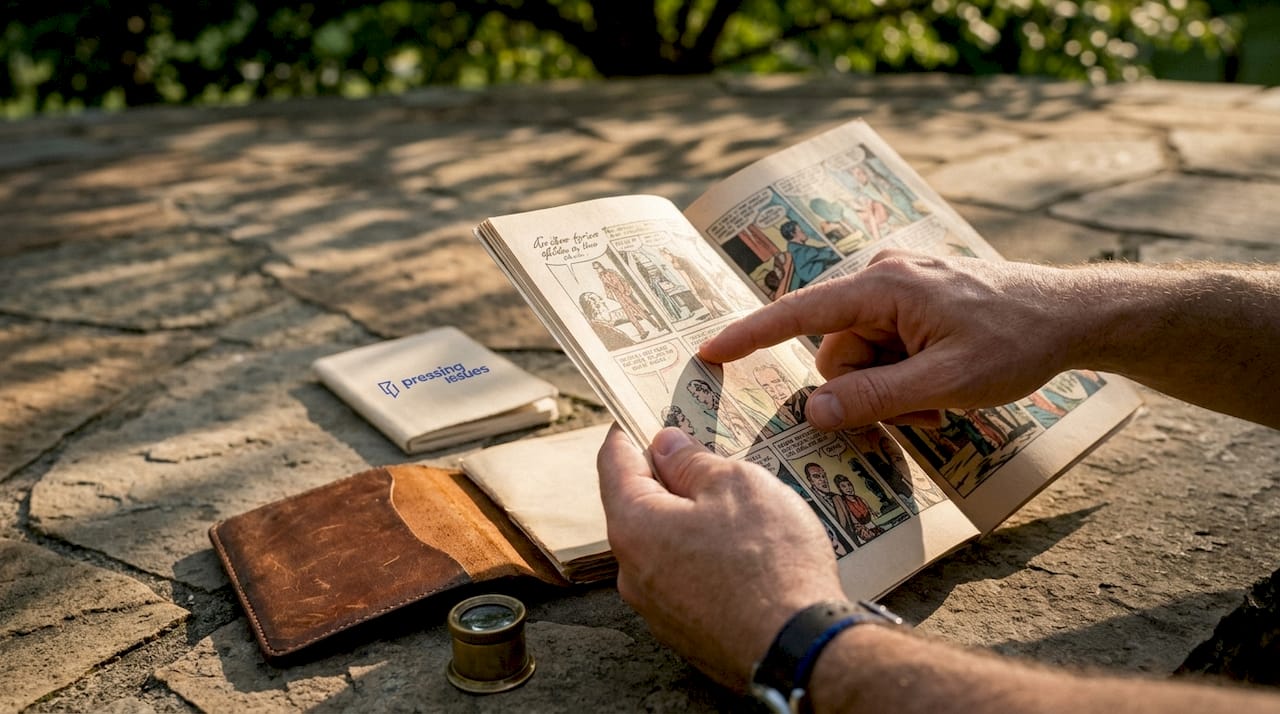
What types of printing errors occur in comic books?
The five primary error families each look and behave differently. Knowing them helps you spot a genuine error fast.
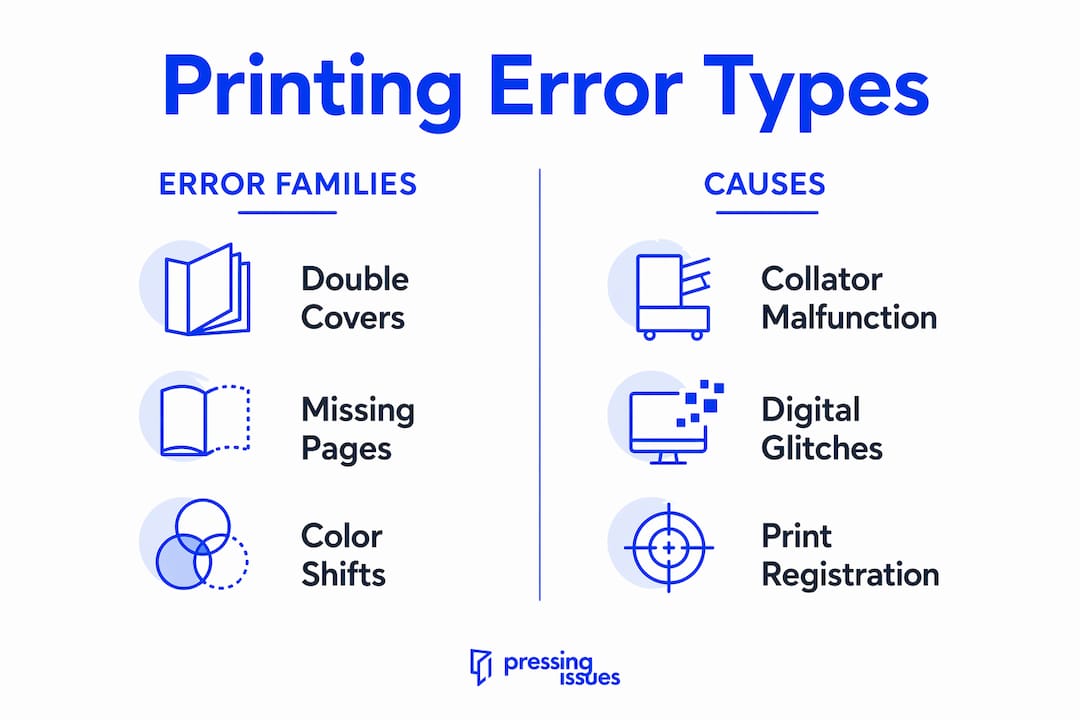
Double covers occur when a second cover is bound over the first, creating a layered effect. The interior cover is often a different color or an earlier proof state. Reversed or upside-down covers are exactly what they sound like: the cover is printed or bound at 180 degrees from the interior. Missing color plates happen when one ink layer, typically cyan, magenta, yellow, or black, fails to print, leaving flat or washed-out art. Typographical errors range from misspelled character names to wrong issue numbers on the cover. Flipped interior pages appear when a page or signature is inserted backward, reversing the art as a mirror image.
| Error type | Common cause | Typical rarity |
|---|---|---|
| Double cover | Collator malfunction | Uncommon |
| Reversed cover | Binding feed error | Rare |
| Missing color plate | Ink plate failure | Uncommon to rare |
| Typographical error | Pre-press oversight | Common |
| Flipped interior pages | Signature insertion error | Rare |
Pro Tip: Not every printing oddity qualifies as a true error. Minor color shifts or slight misregistration are signs of poor print quality, not collectible errors. High-value errors are dramatic and unmistakable, like a cover printed upside down or an entirely missing page.
Notable recent examples reinforce this. The Kid Juggernaut #1 missing page incident, where page 33 was replaced by a duplicate of page 32, triggered retailer recalls and pushed the secondary market price to around $10 per copy. That is a modest dollar figure, but the recall itself confirmed the error's legitimacy and set a documented precedent.
How do printing errors happen during comic production?
Comic production runs through three stages: pre-press, printing, and binding and collation. Errors can enter at any stage, and the stage of origin shapes the type of defect you find.
Pre-press errors are the earliest. They include typos, wrong cover files, or incorrect color separations that slip through digital proofing. Once a flawed file goes to plate, every copy in that print run carries the mistake. Printing stage errors involve mechanical failures: an ink plate misregisters, a color unit runs dry, or a plate is loaded backward. Binding and collation errors are the most dramatic. Saddle stitchers and collators can misfire, causing missing staples, extra pages, duplicated signatures, or covers bound at the wrong orientation.
- Pre-press: typos, wrong files, incorrect color separations
- Printing: ink plate misregistration, missing color units, reversed plates
- Binding and collation: missing staples, duplicated pages, reversed covers, extra page inserts
Vintage comics carry errors tied to older letterpress and offset lithography technology. Modern comics use digital pre-press and computer-to-plate systems, which reduce pre-press errors but do not eliminate mechanical binding failures. Understanding the printing technology of a given era helps you authenticate whether a defect is consistent with how that book was actually produced.
Pro Tip: If you find a suspected error in a modern comic, check whether the defect type matches digital production methods. A "missing color" error in a 2020 book should show clean, sharp art in the remaining colors. Blurry or smeared color loss in a modern book is more likely damage than a true plate failure.
How do printing errors affect comic book value and collecting?
Value in error comics is driven by two factors: rarity of the defect and documentation of the print run. Common errors appearing across thousands of copies add a modest premium. Ultra-rare errors surviving in only a few dozen copies can multiply the base price dramatically.
- Common errors (large surviving quantities): 20%–100% premium over standard edition
- Scarce errors (hundreds of copies): 100%–500% premium
- Ultra-rare errors (30–50 copies): five to ten times base price
- Recalled and destroyed stock: premium depends on confirmed survival rate
Professional grading and authentication are the market's credibility layer. CGC, CBCS, and PGX each have established error typologies. A graded slab with a noted error on the label removes ambiguity and signals to buyers that an expert has confirmed the defect. Without a graded label, selling an error comic at a premium is difficult because buyers cannot verify the claim independently. The grading upgrade game matters here: a well-pressed, clean copy in a higher grade commands a significantly better price than the same error in poor condition.
Retailer recall practices directly shape supply. Publishers instruct retailers to destroy flawed stock, and compliance rates vary. When No Man's Land and Punderworld copies were flagged, comic shops were told to destroy all copies. Every copy that survives that destruction order becomes rarer by the day. Collectors who hold surviving copies benefit from a shrinking supply pool.
Counterfeit and artificially created errors are a real risk. Bad actors have been known to manually alter comics to simulate printing errors, then sell them as genuine. Expert verification through a grading service is the only reliable defense. Never pay a significant premium for an ungraded error comic without independent authentication.
How to identify and verify a printing error comic
Identifying a genuine printing error requires a systematic approach. Guesswork is expensive in this market.
- Compare to a standard copy. Place the suspected error next to a confirmed standard edition. Check cover orientation, color saturation, page sequence, and cover text. Differences should be obvious and consistent throughout the affected area, not isolated to one corner.
- Consult reliable databases. Collector communities maintain records of known error runs. Cross-reference your copy against documented error reports before drawing conclusions.
- Check provenance and recall history. If a title had a documented recall, surviving error copies carry stronger market credibility. Publisher recall announcements and distributor notices are public record.
- Distinguish errors from editorial variants. Error comics are unintentional; variants like cover B editions or retailer incentive covers are pre-planned and documented with signed press proofs. Confusing the two is a common and costly mistake.
- Submit to a professional grading service. CGC, CBCS, and PGX each have processes for noting printing errors on the label. CGC submission handling through an experienced service provider reduces the risk of submission errors and ensures your comic is presented correctly for grading.
- Document with photographs. Before submission, photograph every defect clearly. These images support your case if the grader needs additional context and protect you if ownership is ever disputed.
The Invisible Man #1 "thank you" variant incident illustrates why this process matters. Image Comics accidentally printed full-color interiors on what was intended to be a blank interior variant. The misprint sparked debate on whether the result was a variant or an error. Without clear authentication, collectors holding those copies faced genuine uncertainty about market value.
What are notable examples of printing error comics?
Real-world cases show how dramatically errors can shape the market.
- Kid Juggernaut #1 missing page: Page 33 was replaced by a duplicate of page 32. The publisher issued a recall, and surviving error copies traded at a premium on the secondary market. The recall-related destruction of most copies made survivors genuinely scarce.
- No Man's Land and Punderworld destruction orders: Retailers received direct instructions to destroy all flawed copies. Compliance was not universal, meaning a small number of error copies entered the collector market with documented scarcity.
- Invisible Man #1 "thank you" variant misprint: Intended blank interiors were printed full color by mistake. The incident highlighted how blurry the line between error and variant can become, and why professional authentication is the only reliable answer.
- Classic upside-down cover errors: Several Silver Age and Bronze Age titles produced covers bound at 180 degrees from the interior. These are among the most visually dramatic errors and consistently attract strong collector interest at auction.
Each of these cases influenced collector behavior. Documented recalls create a paper trail that validates surviving copies. That paper trail is what separates a story from a provable investment.
Key takeaways
A printing error comic is a manufacturing defect that passed quality control, and its value depends entirely on rarity, documentation, and professional authentication.
| Point | Details |
|---|---|
| Definition is precise | Error comics are unintentional manufacturing defects, not planned variants or editorial decisions. |
| Five error families exist | Double covers, reversed covers, missing colors, typos, and flipped pages are the recognized categories. |
| Rarity drives value | Common errors add 20%–100% premium; ultra-rare copies can reach five to ten times base price. |
| Recalls shrink supply | Destruction orders from publishers reduce surviving copies and increase value for those that escape. |
| Authentication is non-negotiable | CGC, CBCS, or PGX grading is the only reliable way to confirm an error and support a price premium. |
What I've learned from years of watching error comics change hands
Collectors get excited about printing errors, and that excitement is completely justified. A genuine error comic is a piece of production history. But the market around error comics is also where I see the most costly mistakes made by otherwise careful collectors.
The biggest mistake is paying a premium before authentication. I have seen collectors spend real money on "errors" that turned out to be minor registration issues or, worse, manually altered copies. The visual drama of a defect does not confirm its legitimacy. Only a graded label from CGC, CBCS, or PGX does that.
The second mistake is ignoring condition. An error comic in poor condition is still a comic in poor condition. The error adds a premium to the base value, but a low-grade copy has a low base. Comic book pressing and cleaning before grading submission can meaningfully improve the grade, and that grade improvement compounds with the error premium. A 9.4 error copy is worth substantially more than a 6.0 error copy of the same book.
My honest advice: treat error comics like any other high-value collectible. Verify first, buy second, and protect your investment with professional services before it goes into a slab.
— Charles
How Pressing Issues helps collectors protect their error comics
At Pressing Issues, we work with collectors in Seattle and Portland who bring us some genuinely remarkable books, including printing error comics that deserve careful handling before grading submission. Our comic book pressing and cleaning services prepare your copy for the best possible grade, and our appraisal and value analysis service helps you understand what your error comic is actually worth before you commit to a submission fee. We handle CGC submissions directly, so your book moves through the process correctly the first time. If you have a suspected printing error comic sitting in your collection, bring it to us. We will help you figure out what you have and what to do with it.
FAQ
What is the difference between a printing error and a variant?
A printing error is an unintentional manufacturing defect that passed quality control without publisher approval. A variant is a pre-planned alternate edition with documented press proofs and an official print run.
Do all printing errors increase a comic's value?
No. Minor color shifts or slight misregistration are poor print quality, not collectible errors. High-value errors are dramatic and unmistakable defects like missing pages, double covers, or reversed covers.
How do I get a printing error comic authenticated?
Submit the comic to a professional grading service such as CGC, CBCS, or PGX. These services have established error typologies and will note confirmed errors on the graded label.
Why do retailer recalls make error comics more valuable?
When publishers instruct retailers to destroy flawed copies, the surviving error copies become genuinely scarce. That reduced supply, combined with documented recall history, drives collector demand and market pricing.
Can a printing error comic be faked?
Yes. Bad actors have manually altered comics to simulate printing errors. Professional grading and authentication through a recognized service is the only reliable way to confirm a genuine error and protect your investment.