
Pre-screening comics is defined as the expert evaluation of a comic book's condition and grading potential before committing to professional grading and encapsulation services. Think of it as a financial checkpoint. Before you spend money on CGC grading fees, a pre-screen tells you whether that investment makes sense. For serious collectors, understanding the pre-screening process is the difference between a smart submission and an expensive mistake. Pressing Issues works with collectors every day who wish they had pre-screened before submitting, and the lesson is always the same: evaluate first, spend second.
What is pre-screening comics and how does it work?
Pre-screening is the formal evaluation step that sits between owning a raw comic and submitting it for professional grading. The industry recognizes two distinct types, and knowing the difference matters for your collection strategy.
The first type is bulk financial pre-screening, designed for high-volume submissions. CGC's Modern Bulk PreScreen option lets collectors set a minimum grade threshold, typically up to 9.8, and any book that falls below that threshold gets returned raw for a $5 reject fee instead of the full grading cost. This requires a minimum of 50 comics per submission. That structure makes it a pure cost-control tool for dealers and collectors moving large quantities of modern books.

The second type is consultative pre-screening, which is what most individual collectors actually need. A professional intermediary evaluates each book through a 4-step pre-screening process: form submission, expert diagnostic, a decision stage, and final submission guidance. Submission fees for this service range from $45 for modern books up to $250 or more for high-value items. The expert tells you not just what grade a book might receive, but whether pressing or cleaning could realistically improve that grade.
The critical distinction is this: bulk pre-screening answers "will this book hit my grade minimum?" Consultative pre-screening answers "is this book worth treating and submitting at all?"
Pro Tip: Before submitting any book worth more than $100 in raw condition, request a consultative pre-screen rather than relying on bulk financial screening. The extra cost often saves far more in avoided grading and pressing fees.
Here is a simplified breakdown of the consultative pre-screening workflow:
- Submit a form with photos and basic condition notes for each book.
- Expert diagnostic evaluates defects, cleaning potential, and pressing viability.
- Decision stage produces a recommendation: submit, press first, clean first, or skip entirely.
- Final submission proceeds only for books that pass the filter.
What are the financial and strategic benefits of pre-screening comics?
Pre-screening functions as an ROI filter for collectors, preventing the common mistake of spending more on services than a comic's improved market value can justify. The math is straightforward once you see it clearly.
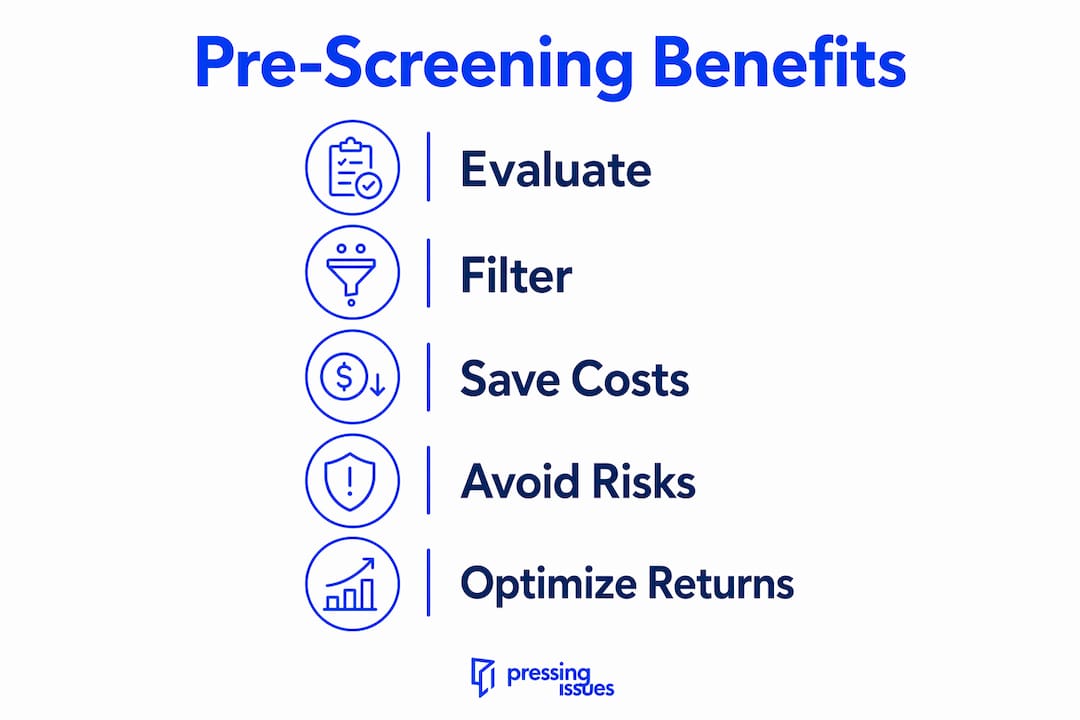
Consider a modern book you believe might grade at 9.6. Full CGC grading, pressing, and cleaning could easily cost $80 to $150 total. If the book's market value at 9.6 is only $60, you have already lost money before the slab arrives. A pre-screen catches that scenario before it costs you anything significant.
The financial case for pre-screening becomes even clearer when you look at specific numbers:
- CGC's bulk PreScreen charges $24 per item for grading and just $5 per item for rejected books, meaning collectors save $19 per rejected book compared to paying full grading fees.
- Pre-screening can save $50 to $100 on unnecessary pressing alone when an expert identifies a book as grade-locked.
- Reject fees of approximately $5 per item factor into cost-benefit calculations, making pre-screening economically sound even when books are returned raw.
Those savings compound quickly across a large collection. A collector submitting 100 books without pre-screening and receiving 30 rejections at full grading cost loses significantly more than one who paid $5 per reject through a pre-screen program.
Pre-screening also protects you from a subtler financial trap: over-investing in low-grade books. A book with a color-breaking crease or a missing coupon will never grade above a certain ceiling regardless of how much pressing or cleaning you apply. Expert pre-screening identifies these grade-locked books before you spend money trying to fix the unfixable. That knowledge alone is worth the pre-screen fee on any book with meaningful market value.
The 9.8 threshold rule is worth understanding. CGC's bulk PreScreen accepts a maximum minimum grade of 9.8, meaning collectors can filter their submissions to return anything that won't hit near-mint status. For modern collectors chasing high-grade copies of key issues, this is a powerful tool for keeping submission costs under control.
What condition issues does pre-screening identify?
Pre-screening evaluates defects across two categories: those that pressing or cleaning can address, and those that are permanent. Understanding which category a defect falls into determines whether a book is worth treating.
Defects that pressing and cleaning can address
Surface dirt and soiling on covers or pages respond well to dry cleaning techniques. Dry cleaning is often more critical than pressing for vintage comics because surface contamination directly affects grade in ways that are invisible until a grader examines the book under proper lighting. Non-color-breaking folds and light spine stress can frequently be reduced through professional pressing. Staple rust migration in early stages, minor corner blunts, and reading creases that haven't broken color are all candidates for improvement.
Defects that cause grade-lock
Some defects cannot be corrected, and pre-screening exists partly to identify them before you waste money. Color-breaking creases are permanent. Coupon clippings, address labels, and writing on covers are irreversible. Brittleness from paper deterioration, water staining that has set into the paper, and missing pages obviously cannot be fixed. A positive pre-screen does not guarantee a specific grade. It identifies books likely to improve and flags those that are grade-locked due to defects no service can correct.
Pro Tip: When photographing a book for pre-screening, shoot under a raking light source held at a 45-degree angle to the cover. This reveals spine stress, ticks, and surface abrasions that flat overhead lighting completely hides.
The pre-screening consultation also covers whether comic book cleaning should precede pressing. Pressing a dirty book can grind surface particles into the paper, potentially causing more damage than the original defect. A proper pre-screen sequences these steps correctly, which is something collectors attempting DIY evaluation frequently get wrong.
How should collectors decide which comics to submit for pre-screening?
The selection decision comes down to three factors: the book's current raw market value, its realistic grade ceiling after treatment, and the total cost of getting it there. Pre-screening should be prioritized for high-value or high-grade-potential comics because the cost may outweigh benefits when applied indiscriminately to lower-value modern books.
Use these criteria to build your pre-screening priority list:
- Raw market value above $75. Below this threshold, grading and treatment costs frequently exceed the value gain from encapsulation.
- Key issues and first appearances. These books carry premium graded values that justify pre-screening even in lower grades.
- Books you believe are close to a grade break. A book sitting between 8.5 and 9.0 raw has significant value to gain from a confirmed grade improvement.
- Vintage books with surface soiling. Dry cleaning potential on a Silver Age or Bronze Age book can mean the difference between a 6.0 and an 8.0 grade, which often represents hundreds of dollars in market value.
- Books you plan to sell, not hold. If a book is going to market, the graded premium justifies the pre-screening investment. If you are holding it for personal enjoyment, the calculus changes.
For guidance on choosing comics for pressing, the same logic applies: focus on books where the grade improvement translates to a meaningful market value increase. A modern book worth $15 raw and $25 in a 9.8 slab does not justify $45 in pre-screening and pressing fees.
The risk of skipping pre-screening on bulk submissions is real. Collectors who send 50 books without evaluation often find that 15 to 20 of those books come back graded lower than expected, with no recourse and full fees paid. Pre-screening converts that uncertainty into a known cost before you commit.
Key Takeaways
Pre-screening comics is the most cost-effective step a collector can take before committing to grading fees, pressing, or cleaning services.
| Point | Details |
|---|---|
| Two types of pre-screening | Bulk financial pre-screening filters by grade threshold; consultative pre-screening evaluates treatment viability for each book. |
| CGC bulk PreScreen savings | Rejected books cost $5 instead of full grading fees, saving collectors significant money across large submissions. |
| Grade-locked books | Pre-screening identifies permanent defects that no pressing or cleaning can fix, preventing wasted service fees. |
| Selection priority | Focus pre-screening on books with raw market value above $75 or clear key-issue status. |
| Pre-screening is not a guarantee | A positive pre-screen indicates improvement potential, not a confirmed final grade. |
Why pre-screening changed how I think about collecting
I have watched collectors make the same expensive mistake for years: they fall in love with a book, assume it will grade well, and submit it without evaluation. The slab comes back at a grade they did not expect, and the math no longer works. Pre-screening does not eliminate that risk entirely, but it reduces it dramatically.
What I find most underappreciated is the consultative side of pre-screening. Collectors tend to focus on the bulk financial version because CGC has made it visible and easy to understand. But the real value is in sitting with an expert who can tell you whether a book's spine ticks are pressing candidates or permanent stress lines. That distinction is worth more than any grade prediction.
The CGC Modern Bulk PreScreen launch was a genuine improvement for the hobby. It gave high-volume collectors a structured way to control costs without abandoning quality standards. But I would caution against treating it as a substitute for proper consultative evaluation on books with real value. The $5 reject fee is a great safety net. It is not a replacement for expert eyes on a book that matters.
My honest advice: build pre-screening into your collection workflow as a standard step, not an occasional one. Treat it the way a serious investor treats due diligence. The collectors who do this consistently spend less, grade smarter, and end up with slabs that actually reflect the value they expected.
— Charles
Pressing Issues: professional pre-screening and pressing services
Pressing Issues serves collectors in Seattle, Washington, and Portland, Oregon with professional comic pressing, cleaning, and grading preparation services. We evaluate your books before any treatment begins, so you never spend money on pressing or cleaning a comic that cannot benefit from it.
Our comic book pressing services cover everything from modern keys to Golden Age books, with tiered pricing based on book value and complexity. We also handle CGC submission preparation, walking your books through the full process from raw evaluation to encapsulation. If you want to know exactly what your books are worth treating before you spend a dollar on grading fees, reach out to Pressing Issues and let us take a look.
FAQ
What is the comics pre-screening definition in simple terms?
Pre-screening comics is the process of evaluating a raw comic book's condition and grading potential before paying for professional grading or restoration services. It helps collectors decide whether a book is worth the cost of submission.
How much does comic pre-screening cost?
Consultative pre-screening fees range from $45 for modern books to $250 or more for high-value items. CGC's bulk PreScreen option charges $5 per rejected book, making it a low-cost filter for large submissions.
Does a positive pre-screen guarantee a high grade?
A positive pre-screen does not guarantee a specific grade. It identifies books with realistic improvement potential and flags grade-locked books where defects cannot be corrected through pressing or cleaning.
Which comics benefit most from pre-screening?
Books with raw market value above $75, key issues, first appearances, and vintage comics with surface soiling benefit most from pre-screening. Low-value modern books often do not justify the pre-screening fee relative to potential grade gains.
What is the difference between dry cleaning and pressing in pre-screening?
Dry cleaning removes surface dirt and soiling, while pressing corrects physical defects like folds and creases. Pre-screening determines which treatment a book needs and whether either will realistically improve its grade before any work begins.