
Comic book wrinkling is caused by a combination of humidity fluctuations, physical storage pressure, and production defects that stress the paper fibers in ways most collectors never anticipate. Understanding why comic books wrinkle is the first step toward protecting the condition and value of your collection. Whether you own a single key issue or thousands of back issues, the same forces are working against you every day. The good news is that most causes are preventable once you know what to look for.
Why do comic books wrinkle from humidity and temperature?
Humidity is the primary environmental cause of comic book wrinkling. Stable relative humidity between 40–50% prevents the paper fibers from swelling and rippling. When humidity rises above 55%, paper absorbs moisture and expands unevenly. When it drops below 40%, paper loses moisture and becomes brittle. Each swing leaves a mark.
The real damage comes from repeated cycles. Paper fibers expand when wet and contract when dry. Over months and years, those cycles create permanent waves and ripples that no amount of flattening will fully reverse. This is why a comic stored in a basement through several seasons can look noticeably worse than one kept in a climate-controlled room.
Temperature compounds the problem. The ideal storage temperature sits between 65°F and 72°F. Higher temperatures accelerate chemical breakdown in the paper and inks, making fibers more vulnerable to moisture damage. Lower temperatures can cause condensation when comics are moved to warmer rooms.
"Environment is the silent killer of comic books. Long-term humidity and temperature fluctuations cause irreversible wrinkling and warping despite protective bags."
Key environmental risks at a glance:
- Humidity above 55% causes paper swelling, rippling, and mold growth
- Humidity below 40% causes brittleness, cracking, and spine splits
- Temperature above 72°F speeds up chemical degradation of paper and inks
- Condensation from temperature swings deposits moisture directly onto covers
- Archival Mylar sleeves alone cannot protect comics if room conditions fluctuate
A hygrometer is the single most useful tool a collector can own. Place one in your storage area and check it weekly. If readings drift outside the 40–50% range consistently, a dehumidifier or humidifier will do more for your collection than any premium bag.
How does physical storage and handling cause wrinkles?
Storage orientation is the second biggest cause of comic book damage. Horizontal stacking creates compression waves as the weight of upper comics presses down unevenly on lower ones. Over time, those compression waves become permanent wrinkles. Stacked comics can lose a full grade point in under ten years from this pressure alone.
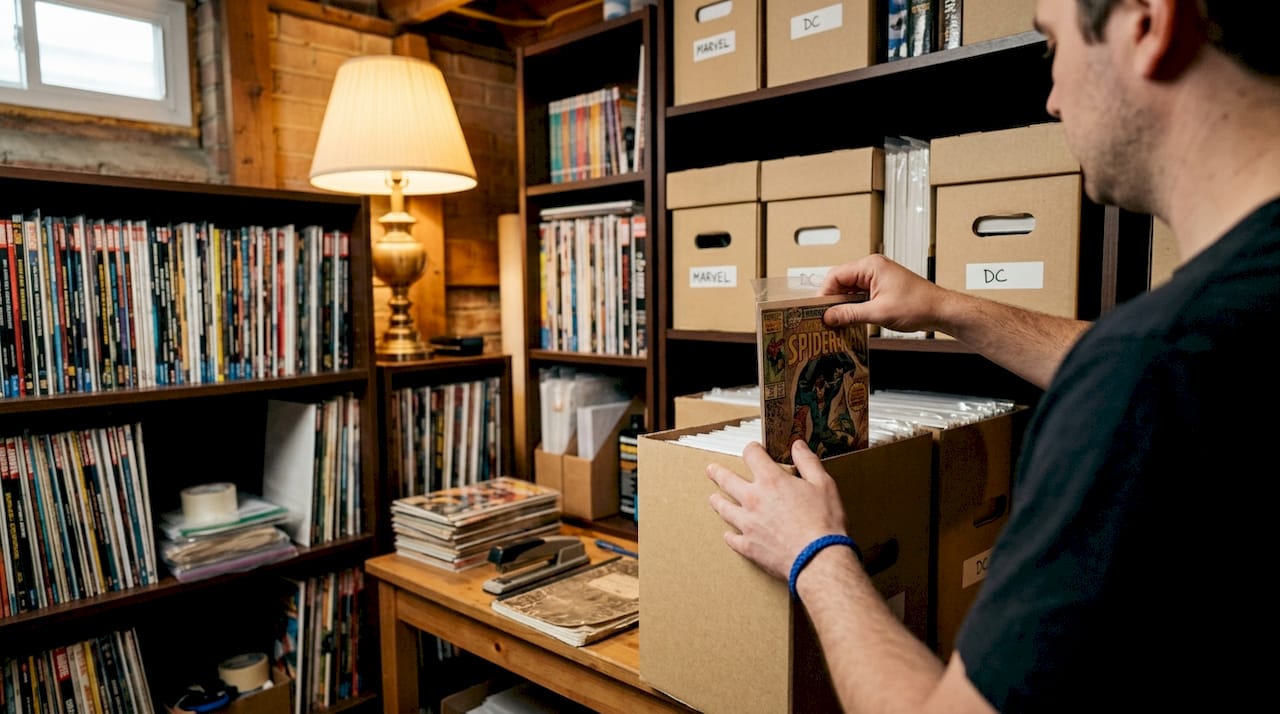
Vertical storage on shelves or in archival boxes with dividers is the correct approach. Comics stored upright, like books on a shelf, distribute weight evenly along the spine. Archival boxes with spacers keep comics from leaning and developing spine roll. Overfilling a box is just as damaging as stacking. When comics are packed too tightly, the covers and edges buckle under lateral pressure.
Handling mistakes add up quickly. Folding the adhesive seal flap of a comic bag onto the front cover is one of the most common errors collectors make. Folding the flap onto the front causes pressure marks, ripples, and adhesive residue damage within 6–12 months. The flap must always fold onto the back of the bag.
- Store comics vertically in archival boxes or on shelves with bookends
- Never overfill a box. Leave at least two inches of space at the top
- Always fold the bag's adhesive flap onto the back, never the front cover
- Use acid-free, lignin-free, alkaline-buffered backing boards behind every comic
- Handle comics with clean, dry hands or cotton gloves to avoid oil transfer
Backing boards must be acid-free and alkaline-buffered to prevent acid migration into the paper. Non-archival boards can cause a full grade point drop in ten years as the acid slowly transfers into the comic's pages.
Pro Tip: Replace your bags and boards every two to three years. Protective materials degrade over time and can begin to off-gas or yellow, transferring damage to the comics they were meant to protect.
Are printer's creases a cause of wrinkling in new comics?
Printer's creases are production defects, not collector errors. They form as paper pleats during the printing press run when paper rolls and stacks under mechanical pressure before cutting. These pleats are not caught or corrected before comics ship to retailers. A collector can open a brand-new issue and find a crease that was baked in at the factory.
Several factors at the production level contribute to these defects:
- Paper rolling tension during high-speed press runs creates micro-folds
- Cutting and stacking freshly printed sheets compounds existing pleats
- Ink coverage and paper weight affect how a sheet responds to mechanical stress
- Thinner paper stocks used by some publishers are more prone to press-related creasing
Modern publisher materials add another layer of complexity. IDW comics are a documented example of paper and ink combinations that off-gas moisture inside sealed bags. That moisture has nowhere to go. It condenses against the bag interior and imprints wrinkles directly onto the cover, even when the comic is stored carefully. Regular bag inspection is necessary to catch this effect before it causes lasting damage.
The practical takeaway for collectors is to inspect new acquisitions immediately. Do not assume a fresh comic is defect-free. Check the spine, cover corners, and interior pages before bagging. If a printer's crease is present, document it before grading submission so it is not mistaken for handling damage.
What are the best practices to prevent comic book wrinkling?
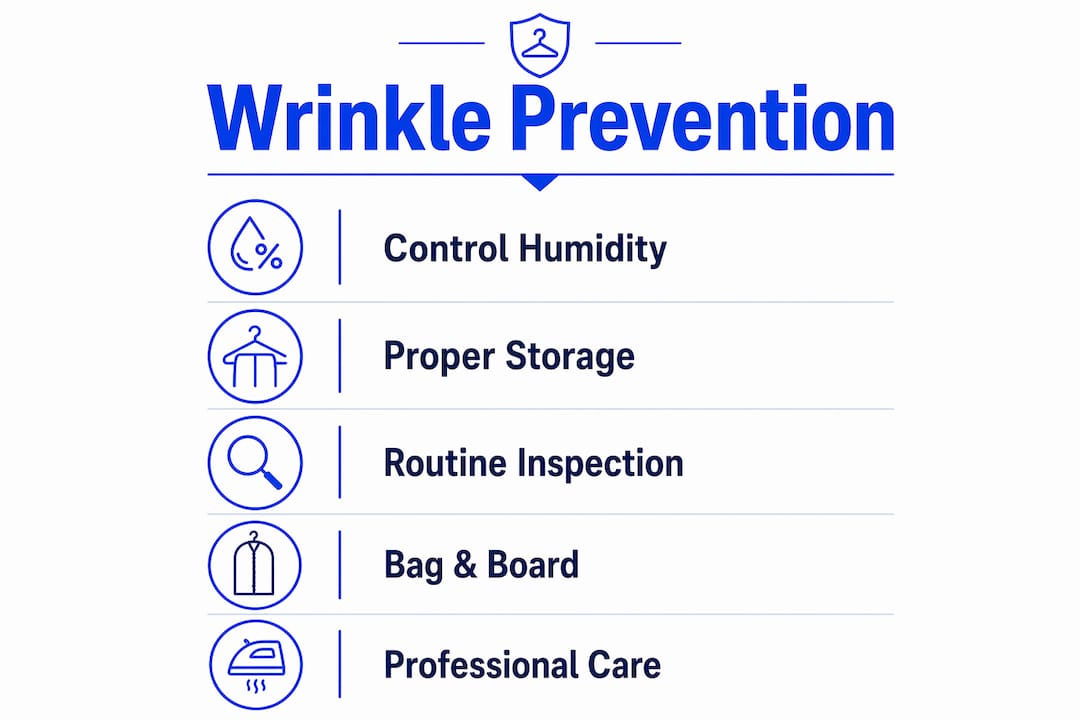
Prevention is far less costly than restoration. The foundation of comic book preservation tips rests on three pillars: environment, storage, and routine maintenance. The "Holy Trinity" of bag, board, and box must be actively maintained throughout the year, not set up once and forgotten.
Environmental controls
A hygrometer and a climate-controlled storage space are non-negotiable for serious collectors. Target 40–50% relative humidity and 65°F–72°F temperature year-round. A small dehumidifier or humidifier in your storage room costs far less than the grade loss on a key issue.
Storage setup
Store comics vertically in acid-free archival boxes. Use dividers or spacers to prevent leaning. Keep boxes away from exterior walls, basements, and attics where temperature and humidity fluctuate most. Shelving in an interior room with consistent climate control is the gold standard.
Routine inspection
Monthly visual checks, quarterly hands-on inspections, and annual bag and board replacements form a maintenance schedule that catches problems before they become permanent. Collectors are often surprised to find that bags yellow and boards acidify faster than expected.
Pro Tip: Keep a simple log of when you last replaced bags and boards for each long box. A dated sticky note inside the lid takes ten seconds and saves you from guessing.
| Method | Protection level | Cost | Best for |
|---|---|---|---|
| Mylar bag and acid-free board | High | Low to moderate | All comics |
| Archival box with dividers | High | Moderate | Long-term storage |
| Climate-controlled room | Very high | Moderate to high | Key issues and full collections |
| Cotton gloves during handling | Moderate | Very low | Reading and inspection |
| Professional pressing | Restorative | Moderate | Damaged or high-value issues |
For organizing your collection in a way that also reduces handling damage, consistent labeling and a logical order reduce the number of times you need to flip through boxes searching for a specific issue.
How do you fix existing wrinkles in comic books?
Existing wrinkles can sometimes be reduced, but the approach matters. DIY methods carry real risk. Applying weight to a comic without proper preparation can set a wrinkle deeper or create new pressure marks. The safest manual method is placing the comic flat between two clean, smooth boards under moderate, even weight in a stable environment for several days.
- Assess the comic's condition before attempting any correction
- Place the comic between two clean acid-free boards
- Apply even weight across the entire surface, not just the wrinkled area
- Store flat in a stable humidity environment (40–50% RH) for three to seven days
- Inspect carefully before re-bagging. Do not force a stubborn crease
Specialized tools like steel balls are used by professional pressers to work out localized wrinkles and spine ticks without damaging the paper surface. This technique requires training and experience. Applying too much pressure or heat to the wrong paper stock can cause irreversible damage. For any comic with meaningful grade or monetary value, professional comic book pressing is the safer choice. Pressing can improve a comic's appearance significantly when performed correctly, and it is a standard step before CGC grading submissions.
Key takeaways
Comic books wrinkle primarily because of humidity fluctuations and physical storage pressure, and both causes are preventable with the right environment, materials, and routine maintenance.
| Point | Details |
|---|---|
| Humidity is the top cause | Keep relative humidity between 40–50% to prevent paper swelling and rippling. |
| Storage orientation matters | Store comics vertically in archival boxes to avoid compression wrinkles from stacking. |
| Bag flap placement is critical | Always fold the adhesive flap onto the back of the bag to prevent cover damage. |
| Printer's creases are production defects | Inspect new comics immediately and document any press-related creases before submission. |
| Routine maintenance prevents damage | Replace bags and boards regularly and inspect your collection on a monthly schedule. |
What I've learned about wrinkling that most guides won't tell you
Collectors spend a lot of money on premium Mylar bags and then store their comics in a garage that swings from 30% humidity in winter to 70% in summer. The bag does almost nothing in those conditions. Environment beats materials every time. I've seen comics in basic polypropylene bags stored in a stable interior room outperform comics in archival Mylar stored in a fluctuating basement. The bag is the last line of defense, not the first.
The other thing collectors underestimate is how fast routine maintenance falls apart. You bag and board everything in january, feel great about it, and then don't look at the collection again for three years. By then, boards have acidified, bags have yellowed, and some issues have developed ripples that weren't there before. A monthly visual check takes fifteen minutes and catches problems while they're still minor.
My honest advice on pressing is this: use it sparingly and purposefully. Pressing is not a magic reset. It works best on issues with non-color-breaking wrinkles and spine ticks. For a $15 reading copy, the cost doesn't justify the service. For a key issue you plan to submit to CGC, pressing before grading is almost always worth it. Know the value of what you're working with before you decide.
The collectors who preserve their books best are not the ones with the most expensive supplies. They're the ones who check their storage conditions regularly, handle their books carefully, and act quickly when something looks off.
— Charles
Professional pressing and cleaning for your collection
When wrinkles, spine ticks, or surface dirt have already taken hold, the right professional service can bring a comic back to a gradable condition.
Pressing-issues specializes in comic book pressing and professional cleaning for collectors in Seattle, Washington and Portland, Oregon. Whether you're preparing a key issue for CGC submission or restoring a reading copy you want to display, the team at Pressing-issues handles each book with the care it deserves. Services include wrinkle removal, surface cleaning, spine tick correction, and full CGC submission handling. For collectors who want to protect what they've built, professional maintenance is a practical part of any long-term preservation plan.
FAQ
Why do comic books wrinkle even in bags?
Bags alone cannot prevent wrinkling if the storage environment has fluctuating humidity. Archival sleeves require stable room conditions between 40–50% relative humidity to be effective.
Are comic books supposed to have wrinkles when new?
No, but printer's creases are a known production defect. Paper pleats form during press runs and are not corrected before comics ship, so a new issue can arrive with a factory-made crease.
How do I keep comic books from wrinkling during storage?
Store comics vertically in archival boxes with acid-free backing boards, maintain 40–50% relative humidity, and inspect your collection monthly to catch problems early.
Can wrinkles in comic books be fixed?
Minor wrinkles and spine ticks can be reduced through pressing. Professional pressing services use controlled heat and pressure to improve a comic's appearance without damaging the paper or inks.
How often should I replace comic bags and boards?
Replace bags and boards every two to three years. Protective materials degrade over time and can transfer acid or off-gas moisture onto the comics they are meant to protect.