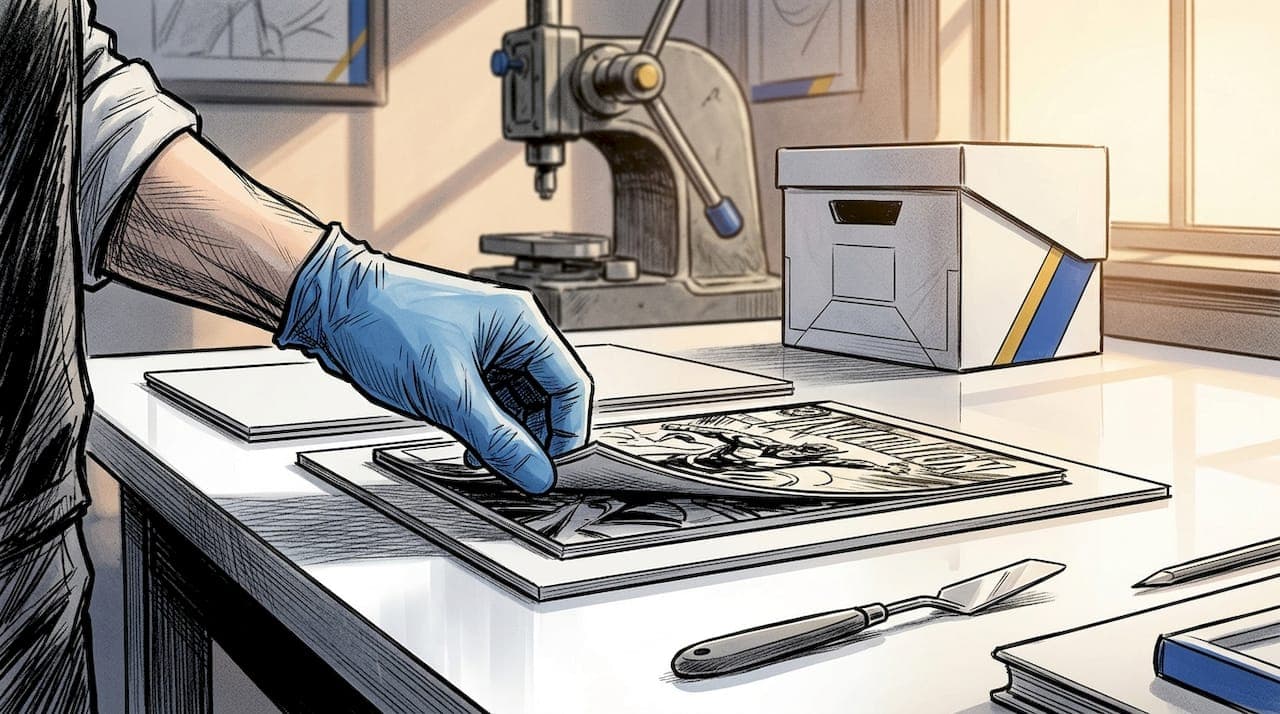
CGC treats pressing as conservation, not restoration, so a pressed comic that hasn't been altered any other way earns a standard universal label with no pressing note anywhere on it. Restoration, which physically changes a comic's material (color touch, tape removal, piece replacement), gets the purple "Restored" label instead. For collectors deciding whether to press before submission, that distinction is the whole ballgame: pressing carries zero label risk, and CGC's own pressing policy confirms it, while offering pressing and screening services that plug directly into the grading pipeline.
TL;DR:
- Pressing is considered conservation and does not trigger a purple "Restored" label, while restoration involves material changes and always results in a purple label.
- Removing a graded comic from its slab to press it results in the original grade being stripped from the census, and the label is destroyed; this process cannot be reversed.
- Pressing fixes bends, creases, spine stress lines, and surface dirt but cannot address missing material, tears, color breaks, or paper loss.
- CGC's pressing fees vary by category, and turnaround time is added on top of grading, requiring professional planning to maximize value.
- Proper diagnosis before pressing, pressing before cleaning, and submitting only after completing both steps prevent value loss and unnecessary costs.
Table of Contents
- What CGC Officially Says About Pressing and Labels
- Pressing vs. Restoration: A Clear Checklist
- What Pressing Fixes, and What It Can't Touch
- CGC Pressing Fees, Turnaround, and Submission Flow
- How to Prepare, Press, and Submit a Comic to CGC
- When Pressing Actually Pays Off
- Let Pressing Issues Handle Your Pressing and CGC Submission
- Sources
What CGC Officially Says About Pressing and Labels
CGC draws a hard line between two categories of work, and that line determines everything about how your book comes back from grading. Conservation, which includes pressing, cleaning, and other reversible physical treatments, does not alter the comic's original material and stays off the label entirely. Restoration does alter the material, and CGC discloses it every time.
We've watched collectors assume pressing sits in some gray zone. It doesn't. CGC's pressing page states plainly that pressing is conservation, which means a comic that's been pressed and nothing else gets graded and labeled exactly like one that was never touched.
Label types that matter here:
- Universal (Blue) label — the standard label for unrestored comics, including pressed ones.
- Restored (Purple) label — used whenever material alteration has occurred, regardless of grade.
- Signature Series labels — yellow variant labels for witnessed signatures, which follow their own transfer rules when a book is pressed and resubmitted.
Here's a detail most guides skip: when a graded comic gets cracked out of its holder and sent back for pressing and regrading, CGC removes the original grade from its Census and destroys the old label once the new grade posts, according to CGC's own pressing documentation. That's worth remembering before you crack a slab on a whim. Once that label is gone, there's no getting the old Census entry back, even if the new grade turns out lower.
Pro Tip: If you're on the fence about cracking a graded book to press it, get a second opinion first. A misjudged crease or a spine roll that's actually a spine split can turn a pressing job into a value-destroying mistake in seconds.
Pressing vs. Restoration: A Clear Checklist
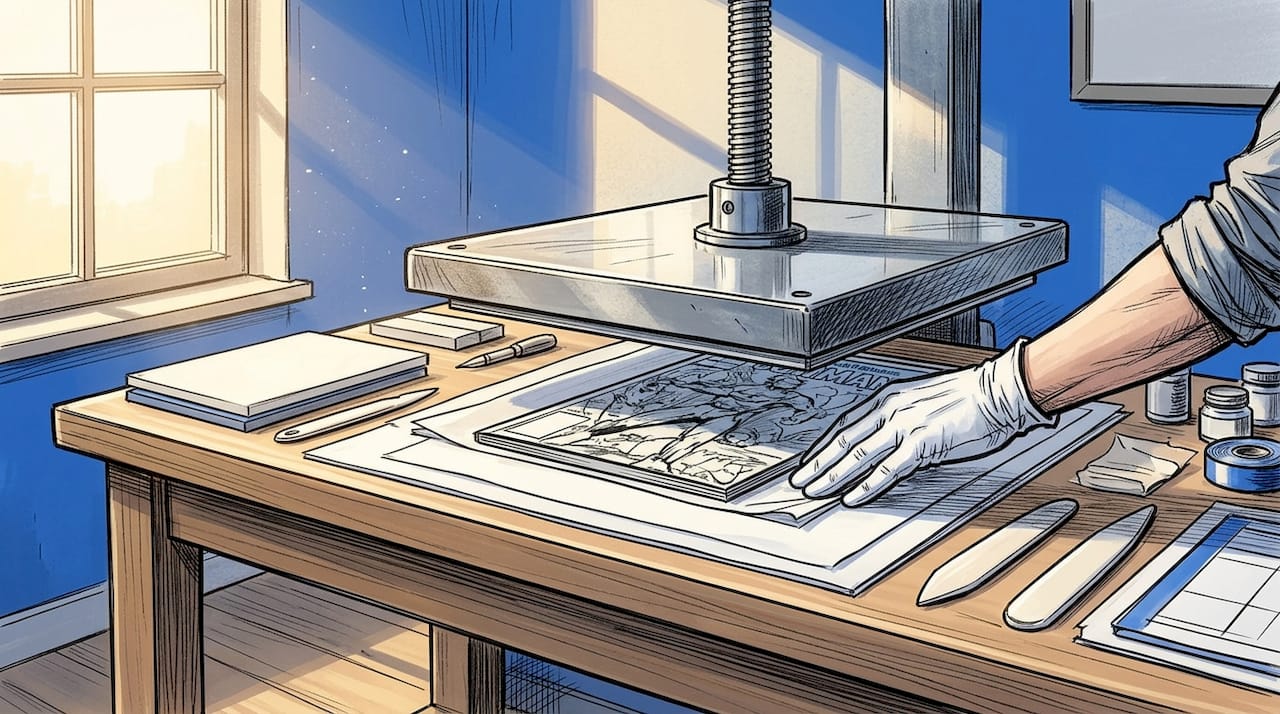
The safest way to think about this: pressing reshapes, restoration replaces. Pressing applies heat, humidity, and pressure to relax paper fibers and flatten distortions, without adding a single fiber of new material to the book. That's the technical reason pressing counts as conservation rather than restoration in CGC's eyes.
Restoration is a different animal. Any of the following will trigger the purple label, no exceptions:
- Color touch or ink retouching on the cover or interior pages
- Piece fill or replacement (missing corners, spine pieces, coupon cuts)
- Tape or glue removal and repair
- Trimming, whether to straighten edges or remove damage
- Bleaching or re-inking to disguise stains or fading
Most defects fall cleanly into one bucket or the other, but edge cases exist. A spine that's rolled can usually be pressed flat. A spine that's actually split or has a tear running into the interior needs repair, and repair means restoration. Cover gloss loss from a bad press attempt (over-pressing under too much heat) can sometimes look like it needs "fixing" with color touch, which is exactly how a pressable defect turns into a restoration case. That's why diagnosis before treatment matters more than most sellers admit.
What Pressing Fixes, and What It Can't Touch
Pressing corrects a specific, well-understood set of defects rooted in how paper physically deforms under pressure. It won't touch anything involving missing or added material.
- Bends and creases from shipping or handling, including corner crunch and reading creases.
- Non-color-breaking ripples across the cover surface.
- Spine roll and spine stress lines, provided the spine hasn't actually split.
- Stacking bends, the horizontal indentations from long-term storage under weight.
- Light surface dirt and fingerprints, when addressed alongside dry cleaning.
Tears, missing pieces, color breaks along the spine, and any paper loss are outside pressing's reach entirely. If a defect involves something gone from the book rather than something displaced on it, pressing can't help. Grade movement from pressing is real but modest most of the time. A book that goes from a heavily creased 6.0 to a clean-looking 8.0 or 8.5 after professional pressing isn't rare, but expecting every pressed book to jump multiple full grades sets you up for disappointment.
CGC Pressing Fees, Turnaround, and Submission Flow
CGC runs its own in-house pressing service alongside grading, with fee tiers that scale by category and speed. CGC's services and fees page lists separate pricing structures for modern versus vintage books, along with bulk-rate minimums and fast-track options for collectors who don't want to wait in the standard queue.
Key operational details to plan around:
- Value caps apply per tier, so a high-value Golden Age book may require a different service level than a modern key.
- Bulk submissions carry per-item minimums that reward batching similar books together.
- Pressing turnaround is added on top of grading turnaround, not run in parallel with it.
That last point trips up a lot of first-time submitters. If you send a book to CGC for both pressing and grading, the pressing step happens first, and its processing time stacks on top of however long your chosen grading tier takes. A fast-track grading tier doesn't make the pressing queue move any faster.
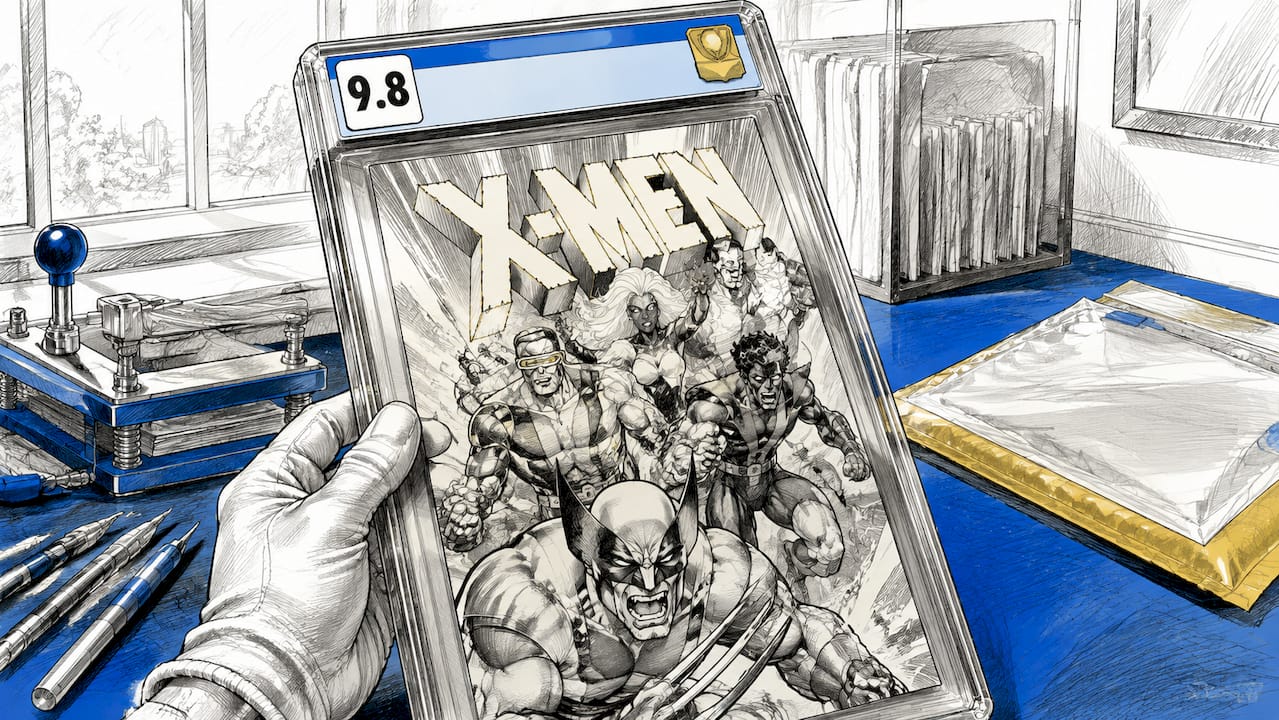
That's the core tradeoff every collector faces: press before you submit, using an independent service or an authorized handler, or let CGC press it during the grading process itself. Pressing beforehand means your book arrives at CGC ready for its final grade on the first pass. Letting CGC handle it internally is convenient, but it locks your timeline to CGC's combined pressing-plus-grading queue instead of running the two processes independently. Either path leaves the label the same. Neither one notes pressing anywhere on it.
How to Prepare, Press, and Submit a Comic to CGC
Getting a book from your shelf to a slab with the best possible outcome comes down to sequence. Skip a step or do them out of order, and you either waste money or risk a grade you didn't need to accept.
- Diagnose first. Check for color breaks at the spine, examine under raking light for tape shadows or glue residue, and look closely at any retouched-looking areas. If you spot prior restoration attempts, pressing won't change the label outcome. That book is already a restoration candidate.
- Press before you clean. Heat and humidity treatment should happen before dry cleaning, since pressing can shift surface debris that a subsequent cleaning pass removes more effectively.
- Submit only after pressing and cleaning are complete. Guides on pre-submission pressing consistently recommend this order because pressing after grading means cracking a slab, losing the original Census entry, and paying for a second grading cycle. Community pressing resources back this up with the same warning: pressing after the fact typically doubles your total turnaround and cost compared to doing it right the first time.
- Declare an accurate value. Undervaluing a book to save on fees can complicate insurance claims if something happens in transit. Use recent sale comps, not wishful thinking.
- Package to CGC's standards. Boards, bags, and rigid mailers matter more than people think. A perfectly pressed book that arrives with a new corner ding from loose packaging defeats the entire purpose.
- Flag Signature Series books clearly. If a book carries a witnessed signature and needs pressing, use the proper transfer procedure so the Signature Series label carries over correctly rather than getting reissued as a standard universal label.
Bundling pressing, cleaning, and CGC submission paperwork into a single handoff, rather than juggling three separate vendors and three separate shipping legs, is exactly where a dedicated CGC submission handling service earns its fee. Fewer shipping legs means fewer chances for something to go wrong between your shelf and the grading room.
When Pressing Actually Pays Off
Pressing earns its cost on books with real upside: a key issue sitting at a borderline grade, where a clean press could push it from an 8.0 to a 9.0 and meaningfully change the sale price. It's a weaker bet on common back-issue filler, where the grading and pressing fees can exceed what the grade bump adds to resale value.
For resellers, disclosure is where trust gets built or lost. CGC won't note pressing on the label, but that's not a license to stay quiet about it. Dealers who state upfront that a book was professionally pressed tend to build the kind of buyer confidence that a silent, unlabeled listing never earns. Buyers increasingly expect that transparency, label or no label.
A professionally pressed, unrestored book competes in the same market as any other unrestored copy at that grade. It just tends to look better doing it.
— Charles
Let Pressing Issues Handle Your Pressing and CGC Submission
Getting the sequence right, pressing, cleaning, then submission, is exactly where books lose value when handled solo. Pressing Issues manages all three under one roof: professional pressing and cleaning, a value assessment before you commit to grading costs, and complete CGC submission handling with the paperwork and shipping done correctly the first time.
Bundling those steps means one shipping leg instead of three, and one team diagnosing whether your book is a pressing candidate or a restoration case before you spend a dime on grading fees. That diagnosis alone can save you from an unwanted purple label down the line. If you have a comic that's been sitting with a stubborn spine roll or corner crunch, start with a look at Pressing Issues' comic pressing services and get a straight answer on what pressing can realistically do for your book before it ever goes near a grading submission.
Sources
Verify current fees and turnaround directly through CGC's pressing policy and CGC's services and fees page, since both are updated periodically. The Comic Locker's pressing guide and Pressing Issues' CGC submission checklist offer solid supplementary detail on preparation and value impact.