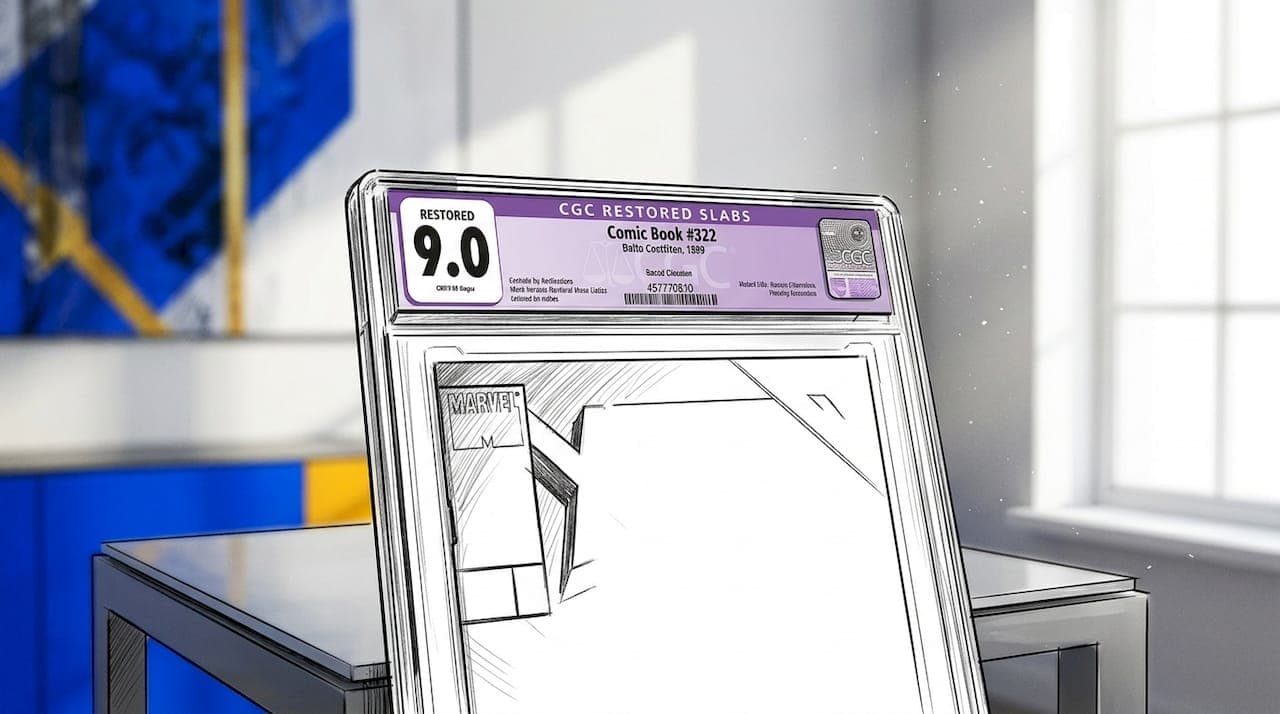
The CGC "Restored" label is a purple label applied by Certified Guaranty Company (CGC) when its graders detect evidence of non-original repair or enhancement on a comic book. It records both a numerical appearance grade and specific restoration descriptors directly on the label. For collectors, that purple label almost always means a meaningful reduction in market value compared to an unrestored copy of the same book.
Here is what you need to know at a glance:
- The label is purple and displays a numerical grade reflecting the book's appearance, not its unrestored condition.
- Restoration types and their extent (Slight, Moderate, or Extensive) are listed on the label.
- A Signature Series Restored variant exists: yellow and purple, for books with a CGC-witnessed signature and restoration.
- Restored books typically sell at a steep discount to unrestored equivalents, especially for investment-grade keys.
- Non-restorative services like pressing, cleaning, and conservation will not trigger a restored designation.
Key Takeaways
The CGC Restored label (purple) signals appearance-altering repair and almost always reduces resale value compared to an unrestored copy at the same grade.
| Point | Details |
|---|---|
| Purple label definition | CGC detected non-original repair or enhancement; grade shown reflects appearance, not original condition. |
| Restoration grading codes | Quality (A to C) and quantity (1 to 5) combine into a cumulative code; A-1 is minimal professional work, C-5 is extensive amateur work. |
| Market value impact | Collectors commonly describe steep discounts versus unrestored equivalents for major keys with restoration. |
| When restored books are acceptable | Display copies, personal collections, rare keys with no affordable unrestored alternative, or budget-conscious collecting. |
| Pressing Issues approach | Non-restorative pressing, cleaning, and full-service CGC submission handling in Seattle and Portland keep your books off the purple label. |
Table of Contents
- What the CGC restored label actually says and the variants you will see
- How CGC measures restoration: quality, quantity, and cumulative codes
- Restored vs. Conserved vs. Universal: what the difference costs you
- How the Restored label affects market value and resale
- How to read a CGC slab and spot restoration before you buy
- What the collector community actually thinks about restored books
- Non-restorative options: pressing, cleaning, conservation, and CGC submission help
- The case for knowing exactly what you are buying
- Pressing Issues handles the non-restorative side of the equation
- Sources
What the CGC restored label actually says and the variants you will see
CGC's label descriptions are precise, and understanding what each color signals is the fastest way to evaluate any slabbed book. The purple Restored label appears when CGC detects that non-original material was added or appearance-altering work was performed on the book. The grade shown is an appearance grade, meaning it reflects how the book looks after restoration, not what it would have graded in its original, unaltered state. You will often see the word "Apparent" preceding the grade (for example, "Apparent VF 8.0") to signal this distinction.
The label text itself lists the specific types of restoration found, such as color touch, piece fill, staple replacement, or spine reinforcement, along with a descriptor for extent: Slight (A), Moderate (B), or Extensive (C). That combination tells you both what was done and how much of it was done.
The Signature Series Restored label is yellow and purple. It is used when a book carries a CGC-witnessed and authenticated signature and also shows evidence of restoration. Both the signature details and the restoration descriptors appear on the same label. This variant is uncommon but worth recognizing, since the signature may add collector appeal even when the restoration reduces raw market value.
To place the purple label in context, here is a quick reference for the full CGC label family:
- Blue (Universal): Unrestored, no qualifying defects. The most desirable label for investment-grade books.
- Blue/Grey (Conserved): Non-aesthetic conservation work only (stabilization, archival repairs). Less damaging to value than Restored.
- Green (Qualified): Unrestored, but with a specific noted defect (missing pages, writing) that affects the grade.
- Yellow (Signature Series): Unrestored with a CGC-witnessed signature. Highly desirable for signed keys.
- Purple (Restored): Evidence of repair or appearance-altering enhancement detected.
- Yellow/Purple (Signature Series Restored): Witnessed signature plus detected restoration.
How CGC measures restoration: quality, quantity, and cumulative codes
CGC's Restoration Grading Scale operates on two axes simultaneously: quality and quantity. Quality describes how well the restoration work was executed, graded from A (professional) to C (amateur). Quantity describes how much restoration is present, graded from 1 (slight) to 5 (extensive). Every type of restoration found on a book is individually graded on both axes, and those scores combine into a cumulative restoration grade.
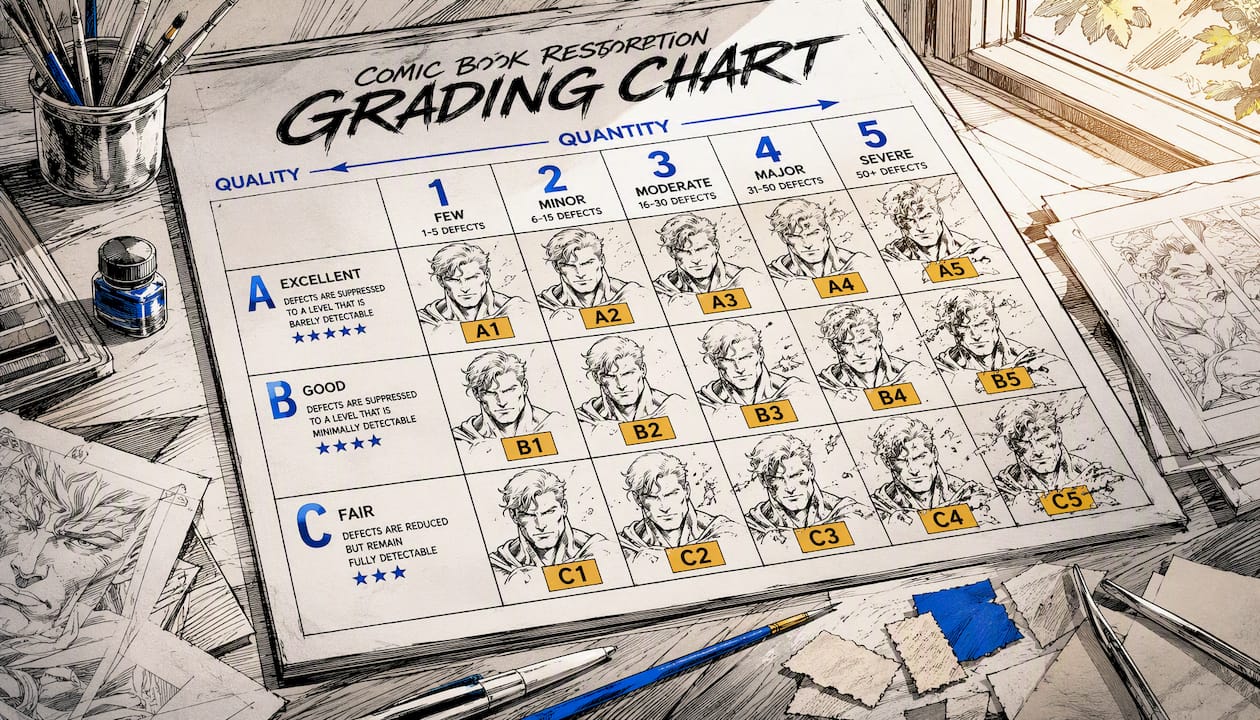
The CGC restoration grading handout clarifies that each restoration type is assessed separately before contributing to the final grade. So a book with minor professional color touch and a small piece fill will be evaluated for each repair individually, and the cumulative result determines the overall restoration descriptor on the label.
Here is a simplified breakdown of how the codes translate in practice:
| Quality Code | Quality Description | Quantity Code | Quantity Description | Example Cumulative Label |
|---|---|---|---|---|
| A | Professional | 1 | Slight | A-1 (Professional/Slight) |
| A | Professional | 3 | Moderate | A-3 (Professional/Moderate) |
| B | Moderate | 2 | Slight-Moderate | B-2 (Moderate/Slight-Moderate) |
| C | Amateur | 4 | Extensive | C-4 (Amateur/Extensive) |
| C | Amateur | 5 | Extensive | C-5 (Amateur/Extensive) |
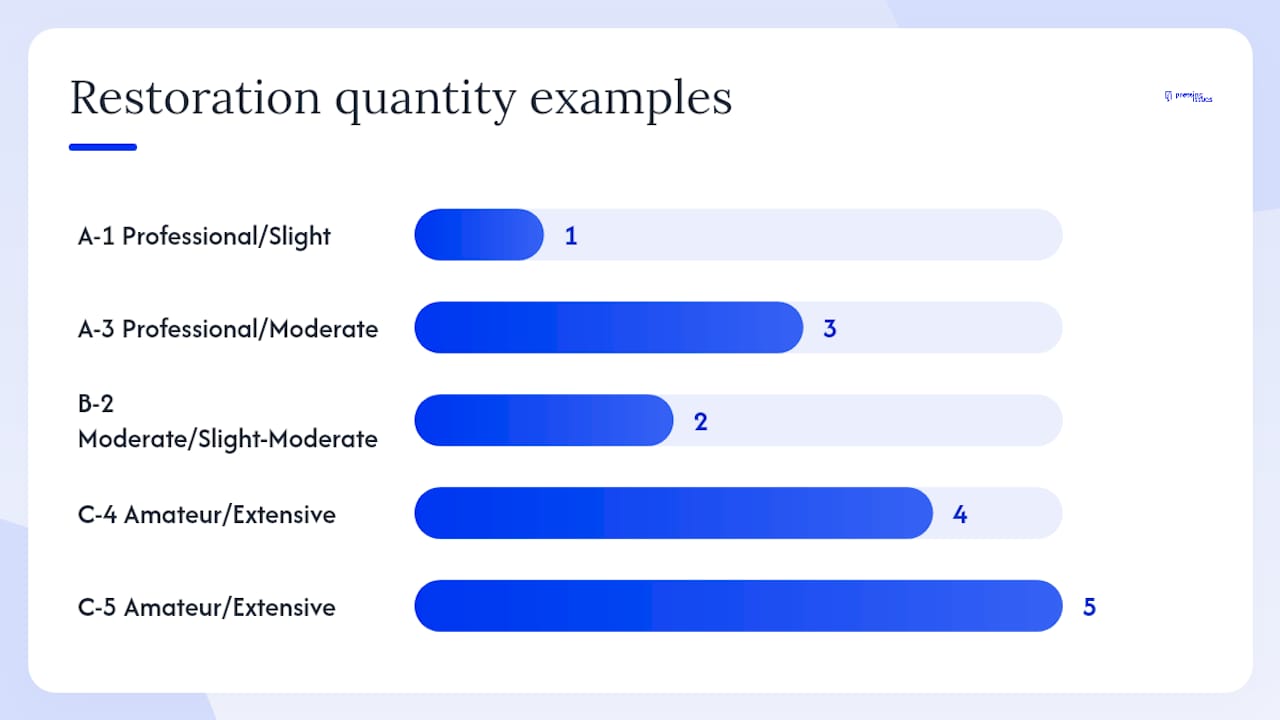
An A-1 designation means a professional did minimal, well-executed work. A C-5 means amateur-level work applied extensively across the book. The difference matters enormously to buyers: an A-1 restored copy of a key issue is a very different purchase from a C-5, even if both carry the same numerical appearance grade.
Consider this scenario: two copies of Amazing Fantasy #15 both grade at an apparent 6.0. One carries an A-1 restoration code (minor professional color touch on the cover). The other carries a C-4 (amateur piece fills and spine reinforcement). Both show the same number on the label, but the C-4 copy will sell for far less because the restoration is both heavier and lower quality. The numerical grade alone does not tell the full story.
Restored vs. Conserved vs. Universal: what the difference costs you
The distinction between restoration and conservation is not just semantic. CGC defines conservation as work intended to stabilize or preserve a book's structural or chemical integrity without altering its appearance. Think of it as archival maintenance: removing harmful adhesives, stabilizing tears with reversible materials, or deacidifying paper. Conservation does not include color touch, piece fills, or any work that adds non-original material to improve appearance.
Restoration, by contrast, is appearance-altering. Adding color to a faded cover, filling in a missing corner piece, or replacing staples all count as restoration because they change how the book looks, not just how long it will last.
Why does this matter for your wallet? Because collector market analysis consistently places the label value hierarchy as follows: Universal Blue and Signature Series Yellow at the top, Conserved Blue next, Qualified Green after that, and Restored Purple at the bottom for resale preference. A conserved book took steps to preserve original material; a restored book had its appearance altered. The market rewards preservation and penalizes alteration.
Here is a practical comparison of the three labels collectors encounter most often:
| Label | Color | Work Performed | Value Impact | Best Use Case |
|---|---|---|---|---|
| Universal | Blue | None (unrestored) | Highest | Investment, resale, high-grade collecting |
| Conserved | Blue/Grey | Structural/archival only | Moderate reduction | Display, preservation-focused collecting |
| Restored | Purple | Appearance-altering repairs | Steepest reduction | Display, affordable access, personal collections |
Key practical points:
- A Conserved book can still command strong prices if the conservation work meets CGC's strict A-quality, 1-quantity standard.
- A Universal book with a lower grade often outsells a Restored book with a higher appearance grade.
- For unrestored comic collecting, the Universal label is the gold standard, and most serious investors will not accept substitutes.
How the Restored label affects market value and resale
The honest answer is that a purple label hurts. That range is wide because the actual discount depends on the book's rarity, the restoration code (A-1 vs. C-5), and current market demand. Conserved books typically see far smaller discounts.
CGC's restoration-detection process, in place since around 2000, has made it very difficult to pass a restored book as unrestored. That transparency is good for buyers, but it also means restoration is primarily chosen for damaged or incomplete books where the alternative is a heavily defect-graded copy or no copy at all.
When a restored book still makes sense:
- You want a display copy of a key issue you could not otherwise afford in unrestored condition.
- You are filling a personal collection (PC) and the book's sentimental or reading value matters more than resale.
- The restoration is A-1 (professional, slight) and the price reflects the discount appropriately.
- The book is so rare that even a restored copy represents the only realistic path to ownership.
When to walk away:
- You are buying for investment or eventual resale at a profit.
- The restoration code is C-3 or worse (amateur work, moderate to extensive).
- The seller is pricing the book close to unrestored market value.
- The book is a high-grade modern key where unrestored copies are readily available.
Buying checklist for restored books:
- Confirm the restoration code (quality + quantity) before agreeing to a price.
- Research recent sales of unrestored copies at the same grade to calculate the realistic discount.
- Ask for close-up photos of the restoration areas listed on the label.
- Verify the CGC certification number in the CGC Census to confirm the label details match.
- Never pay unrestored prices for a purple-label book, regardless of how minor the restoration appears.
How to read a CGC slab and spot restoration before you buy
Reading a slab carefully takes about two minutes and can save you from a bad purchase. Here is a step-by-step process:
- Check the label color first. Purple means Restored. Yellow/purple means Signature Series Restored. If you see either, proceed with extra scrutiny.
- Read the grade phrasing. Look for the word "Apparent" before the grade (e.g., "Apparent VF 8.0"). That word signals the grade reflects appearance after restoration, not original condition.
- Identify the restoration types listed. The label will name specific work: color touch, piece fill, staple replacement, spine reinforcement, tape removal, or others. Each type listed was individually graded.
- Note the restoration descriptor. Slight, Moderate, or Extensive tells you the cumulative extent. Cross-reference with the quality code (A, B, or C) if visible.
- Look for tape. Tape is generally treated as a defect by CGC rather than restoration, so it lowers the numerical grade but does not automatically trigger a purple label. A book with tape damage may still carry a Universal label at a lower grade.
- Verify the CGC Census entry. Go to the CGC Census, enter the certification number from the label, and confirm the grade and restoration details match exactly what is on the slab. The CGC labels and holders FAQ explains how the Census tracks certified books and what to do if a slab has been opened or re-certified.
- Request specific photos from the seller. Ask for: full front cover, full back cover, spine close-up, staple close-up (both staples), and any interior pages mentioned in the restoration notes.
Pro Tip: When buying online, ask the seller to photograph the label at an angle under direct light. This makes the label text easier to read and helps you spot any discrepancy between the listed restoration types and what you can see on the book itself.
For a deeper look at what types of damage commonly lead collectors toward restoration, the comic book damage guide covers the most common defects and which ones are addressable without triggering a restored designation.
What the collector community actually thinks about restored books
The community's position is consistent: restored books carry a stigma for investment-grade collecting, and that stigma is not going away. On forums, in collector groups, and across marketplace discussions, the consensus is that a purple label is a dealbreaker for anyone buying with resale in mind. The label value hierarchy places Restored Purple at the bottom, and experienced collectors treat it that way in negotiations.
That said, the community is not uniformly hostile to restored books. There are accepted exceptions, and most experienced collectors acknowledge them openly.
Where the community accepts restored books:
- Personal collections and display. A restored copy of Detective Comics #27 on a wall is still Detective Comics #27. For display purposes, a well-restored book with an A-1 code can look stunning.
- Rare keys with no affordable unrestored alternative. Some Golden Age books exist in so few unrestored copies that a restored example is the only realistic option for most collectors.
- Budget-conscious collecting. A restored copy of a major key at 20 cents on the dollar lets collectors own books they could not otherwise afford.
What sellers are expected to do:
- Disclose the purple label immediately and prominently in any listing.
- Provide clear photos of the label text, including the restoration codes.
- Price the book honestly relative to recent unrestored sales.
- Never describe a restored book as "presenting well" without also leading with the restoration disclosure.
Buyers who discover undisclosed restoration after a purchase have legitimate grounds for returns or disputes on most major platforms. The community takes transparency seriously, and sellers who obscure restoration details develop reputations quickly.
Non-restorative options: pressing, cleaning, conservation, and CGC submission help
If your goal is improving a book's appearance or grade without triggering a purple label, you have real options. The key is understanding what each service does and what it cannot do.
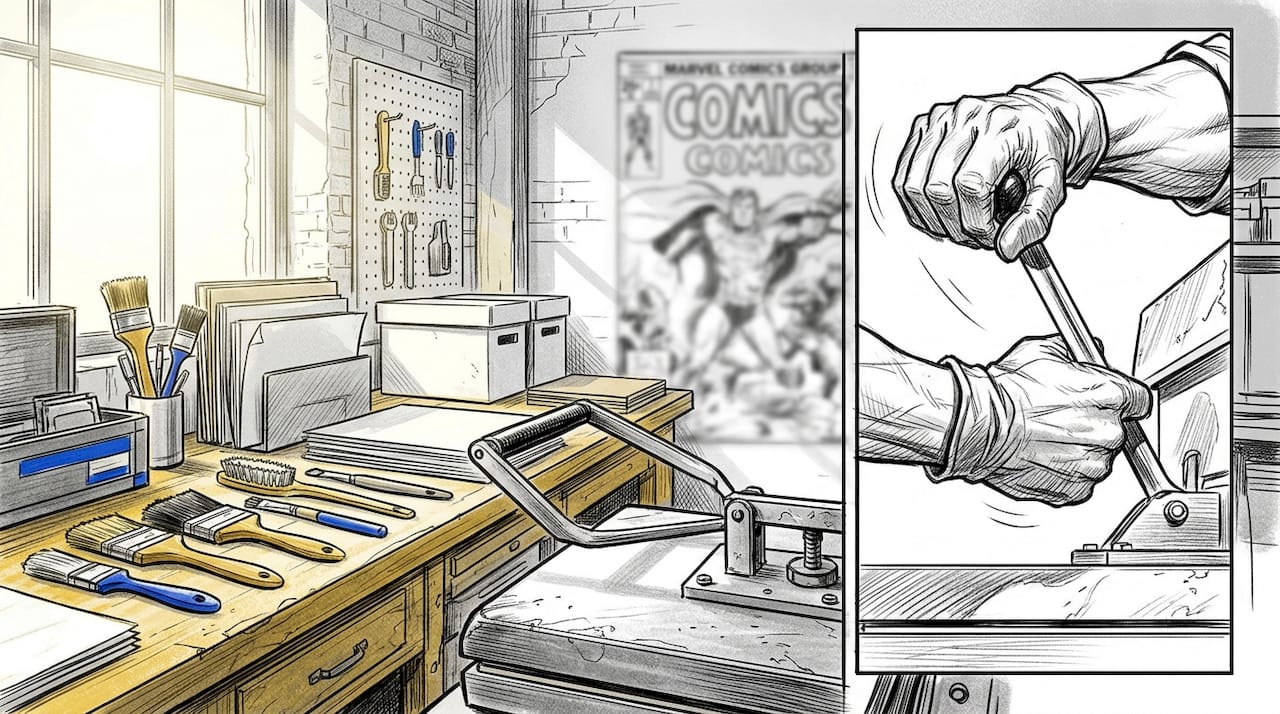
Conservation covers structural and chemical stabilization: removing harmful adhesives, stabilizing spine splits with archival materials, and deacidifying paper. It does not include color touch or piece fills. CGC's conservation standard requires A-quality work at a 1-quantity level; anything beyond that crosses into restoration territory.
Pressing uses controlled heat and pressure to reduce or eliminate non-structural defects: spine rolls, corner bends, reading creases, and light folds. It does not add material to the book and does not alter color. A well-executed press can move a book up one or more grade points without any restoration concern. The grading upgrade analysis covers where pressing produces the most meaningful grade improvements.
Surface cleaning removes dirt, grime, and oxidation from covers and pages using non-chemical methods. Like pressing, it is non-restorative when done correctly.
Tape removal is a nuanced case. CGC treats tape as a defect rather than restoration, so removing tape does not automatically trigger a restored label. However, if the removal process damages the book or requires any fill or color work to address the damage underneath, that work could cross into restoration. Always consult a professional before attempting tape removal on a book you plan to submit.
Full-service CGC submission handling covers the entire pipeline: evaluation, cleaning, pressing, packaging, shipping to CGC, and tracking. For collectors who want professional results without managing the logistics themselves, this is the most practical path.
What to ask any service provider before committing:
- Do you provide before-and-after photos of every book?
- Can you document the specific services performed (pressing, cleaning, conservation)?
- What is your turnaround time and how do you handle books that need more work than estimated?
- Are you familiar with CGC's conservation vs. restoration standards?
Pro Tip: Before submitting any book for cleaning or pressing, request a written estimate that lists every service to be performed. If a provider cannot tell you exactly what they plan to do before they do it, that is a reason to look elsewhere.
For color touch specifically, which is one of the most common triggers for a restored designation, the color touch explainer walks through exactly what CGC looks for and why even minor color work almost always results in a purple label.
The case for knowing exactly what you are buying
Restored books are not inherently bad purchases. They are just specific purchases, and the collectors who get burned are almost always the ones who did not read the label carefully or did not understand what the restoration codes actually mean.
The purple label's transparency is, in a real sense, its value. CGC's grading scale lists every type of work found, grades it for quality and quantity, and puts that information directly on the slab. A buyer who takes two minutes to read the label and cross-reference the Census knows exactly what they are getting. The problem is not the label; it is buyers who skip that step.
Where the community's stigma around restoration sometimes goes too far is in treating all restored books as equally undesirable. An A-1 restored copy of a rare Golden Age book, professionally conserved with minimal intervention, is a very different object from a C-5 amateur-restored Silver Age key. The codes exist precisely to make that distinction. Collectors who learn to read them can find genuine value in the purple-label market that others overlook.
The practical takeaway: buy restored books with open eyes, at prices that reflect the discount, and for purposes that match what a restored book actually is. For investment-grade collecting, hold out for blue.
Pressing Issues handles the non-restorative side of the equation
If you want to give your books the best shot at a strong CGC grade without touching restoration, Pressing Issues offers professional comic book pressing and cleaning in Seattle and Portland. We handle surface cleaning, pressing, and full-service CGC submission management from start to finish, including evaluation, packaging, shipping, and tracking. Every service we perform is non-restorative, so your books come back with a Universal or Conserved label, not a purple one.
We provide before-and-after documentation for every book and give you a clear estimate before any work begins. Our services page lists current rates and turnaround times. If you have a book you are considering for CGC submission and want to know whether pressing or cleaning could move the needle on its grade, reach out and we will give you an honest assessment.
Sources
Primary CGC resources for label definitions, restoration standards, and grading mechanics: