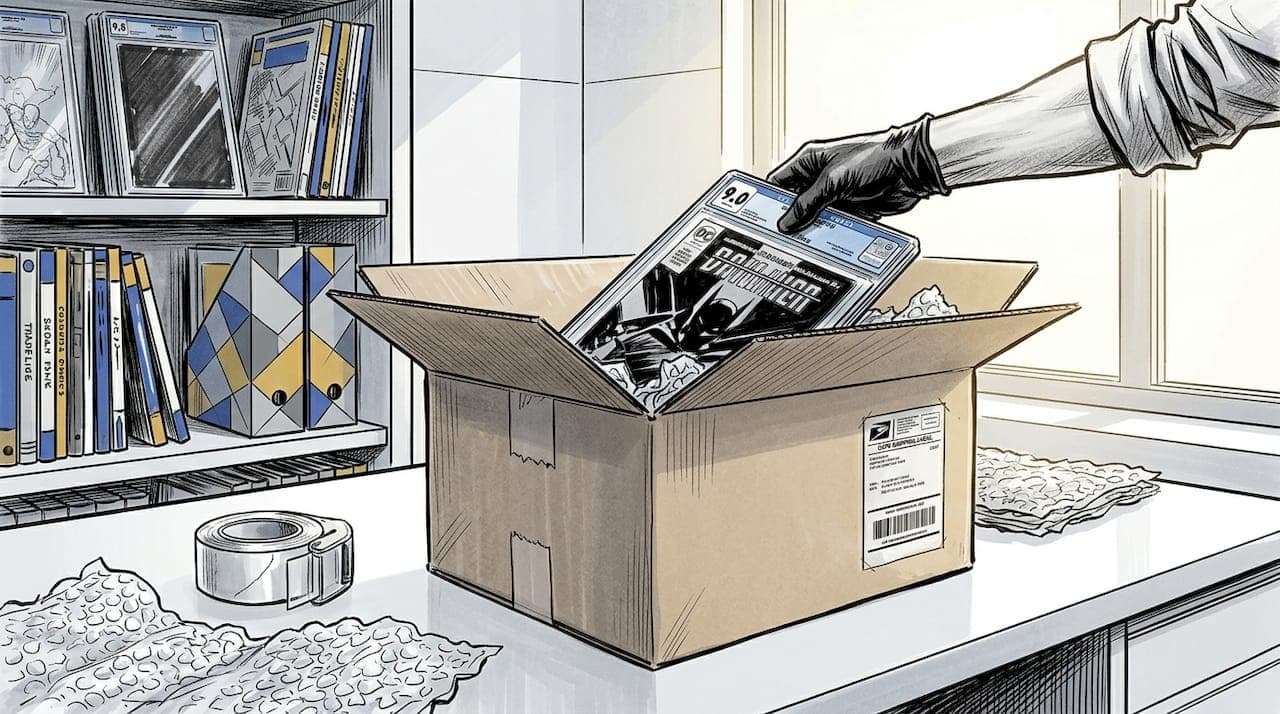
CGC ships completed U.S. submissions back to you via FedEx by default, with insurance coverage up to $100,000 per package built into the price you already paid. Fees are calculated based on your declared value and the number of items in the box, rather than a flat rate. You can also use your own FedEx, UPS, or USPS account instead, but CGC won't insure that shipment, and a small processing fee still applies.
TL;DR:
- Shipping fees depend heavily on declared value, item quantity, and extra services like signature confirmation, with high-value packages incurring significantly higher costs.
- Insurance coverage for domestic returns is capped at $100,000 per package, and exceeding this limit requires prior consultation with CGC.
- Using your own carrier account eliminates CGC insurance coverage and involves a $4 processing fee per shipment, with private insurance needed for full protection.
- Incorrect or late entry of return addresses or carrier details results in delays, extra fees, and the risk of undelivered packages returning to CGC.
- Proper documentation, careful packing, and early tracking are crucial to resolving damages, loss, or delays effectively and minimizing financial risks.
Table of Contents
- Understanding the CGC Return Shipping Process and Carrier Options
- How CGC Calculates Return Shipping Fees
- Can You Use Your Own Shipping Account Instead?
- Address Rules and FedEx Pickup Requirements
- What to Do If Your Return Is Delayed, Lost, or Damaged
- Practical Packing Tips From a Professional Presser
- Step by Step: Initiating a Return Shipment
- How Long Does CGC Return Shipping Take?
- Cost Breakdown Examples for Common Return Scenarios
- Customs Forms and International Shipping Documentation
- Special Considerations for Different Collectible Types
- What Handling Thousands of Submissions Teaches You About Shipping Risk
- Let Pressing Issues Handle Your Next CGC Submission
- Sources
Understanding the CGC Return Shipping Process and Carrier Options
CGC settled on FedEx as its default return carrier for U.S. addresses after 2024 updates aimed at making returns faster and more predictable. The service level you get, whether that's Ground or Standard Overnight, depends largely on your package's declared value. Submissions with higher declared values are assigned faster and more secure shipping services automatically.
If your return address is a PO box, FedEx can't deliver there. In that case, CGC switches to USPS Registered Mail, which is slower but still insured under CGC's domestic coverage. That trade-off matters if you're counting on a specific delivery window.
Insurance coverage varies by destination: domestic returns are insured up to a substantial coverage amount per package procured by CGC; international returns receive insurance coverage up to a lower amount per package; returns to PO boxes via USPS have insurance under the domestic policy but use a slower service.
One rule catches people off guard every year: once your package ships, CGC will not change the return address. If you're planning to grab your books at a FedEx location instead of a home address, that pickup address has to be entered correctly at the time of submission, not after the fact.
How CGC Calculates Return Shipping Fees
Your final shipping bill comes down to two main levers: what you declared your items are worth, and how many items are in the shipment. CGC Cards publishes a fee matrix that maps declared value bands and item count tiers to specific carrier services and price brackets, and CGC comics follows a comparable structure.
Push your declared value higher, and CGC moves your package to a faster, more secure service tier, which raises the fee. Add a signature requirement, and that's another line item. Ship to a rural or extended delivery area, and expect a surcharge on top of the base rate. Mixed collectible types (comics and cards in one order, for instance) also get split into separate shipments, each billed on its own.
Here's a representative look at how domestic tiers typically scale, based on published examples:
| Items | Declared Value Band | Approximate Fee |
|---|---|---|
| 1 to 5 | Lower value tier | Around $20 |
| 1 to 5 | High value tier (expedited) | Around $130 |
| 5 to 25 | Mid value tier | Varies by carrier service selected |
| 26 to 30 | Mid to high value tier | Varies by carrier service selected |
Pro Tip: If your collection's total value is anywhere near six figures, don't assume you're automatically covered. CGC's domestic cap sits at $100,000 per package, and if your submission's combined value pushes past that, contact CGC customer service before you ship to talk through special handling.
These numbers are examples pulled from published fee tables and are subject to change, so always confirm current rates before you submit.
Can You Use Your Own Shipping Account Instead?
Yes, but there's a form to file first and a trade off to accept. If you want to ship your submission back on your own FedEx, UPS, or USPS Express Mail account, you need to complete the Certified Collectibles Group® Shipping Information Form before your items go out the door.
Here's what changes when you go this route:
- CGC does not insure shipments sent on your own carrier account, full stop.
- A $4 processing fee still applies per shipment, even though you're covering the shipping cost yourself.
- You'll need to supply your carrier account number and any special instructions on the form in advance.
- If you want coverage, you'll need to arrange private insurance through your carrier or a third-party provider before the package ships.
For most collectors, the built-in CGC insurance is worth the convenience. But if you're already shipping high volumes on a business account with negotiated rates, this option can save money, as long as you're comfortable self-insuring or buying separate coverage.
Address Rules and FedEx Pickup Requirements
Planning to pick up your return at a FedEx location instead of your home? Enter that location's exact address and your name as the return address at submission time, not later. CGC will not change your return instructions after the package ships, so any error here sits with you.
Undelivered packages that bounce back to CGC because of a bad address trigger extra shipping fees on your account. PO box returns automatically route through USPS Registered Mail, which is insured but noticeably slower than a FedEx pickup.
What to Do If Your Return Is Delayed, Lost, or Damaged
Every CGC return ships with a tracking or PRO number, and that number is your starting point for anything that goes wrong. Here's the sequence to follow:
- Locate your tracking or PRO number from your CGC account or shipping confirmation email.
- Track the package directly through FedEx or USPS to see its last scanned location.
- If it's genuinely missing or arrived damaged, file a claim through FedEx's online claim form, which requires that tracking or PRO number.
- Notify CGC customer service in parallel so they have a record of the issue tied to your submission.
- Gather supporting documentation: photos of the damaged package, your declared-value paperwork, and your original submission records.
Claims move faster when your documentation is airtight. Carriers process thousands of claims, and vague reports get bounced back for more information, which adds weeks to resolution. If your shipment gets returned to sender because of an address issue, expect additional shipping charges billed back to you rather than absorbed by CGC.
Practical Packing Tips From a Professional Presser
Return shipping insurance only helps if you can prove what was in the box. At Pressing Issues, we treat documentation as part of the packing job, not an afterthought.
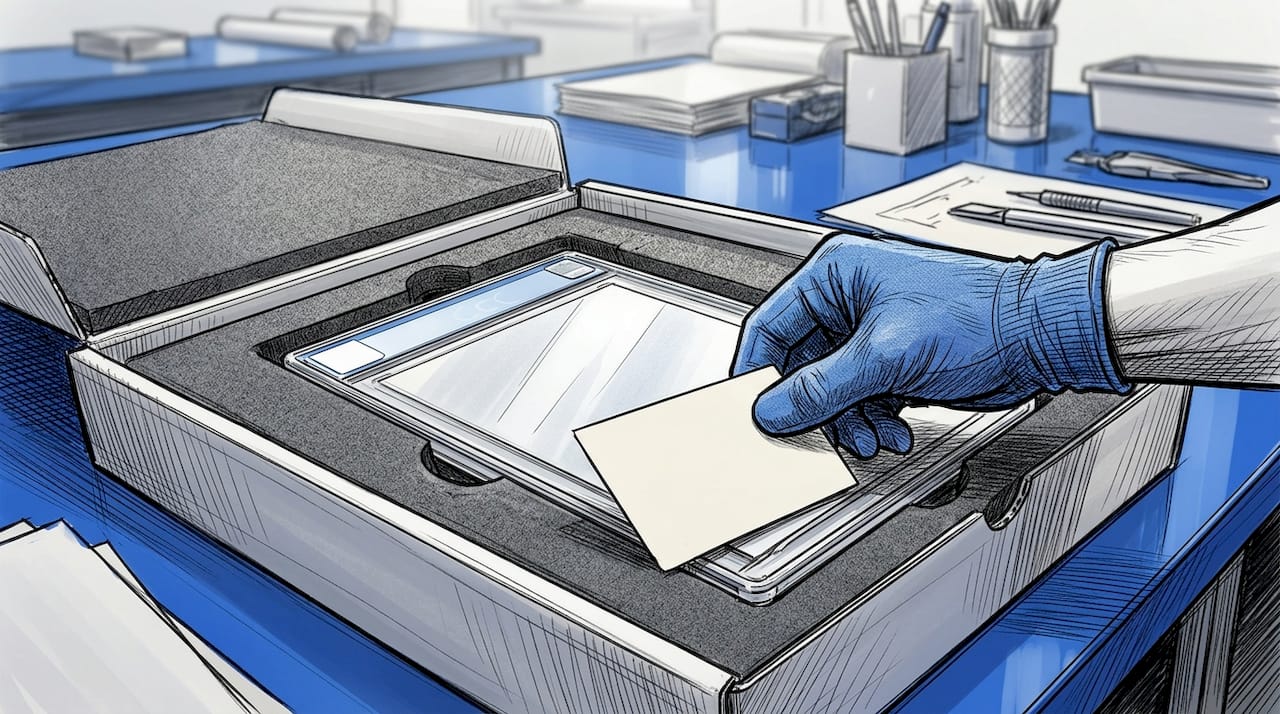
We photograph every book, front and back, noting spine ticks, corner wear, and any pre-existing condition issues before it ever leaves our shop. We also record CGC serial numbers and match declared values against invoices or appraisal notes, following the same documentation approach professional handlers use to streamline claims if something goes wrong in transit.
A few packing fundamentals we never skip:
- Rigid mailers or boxes sized to prevent sliding, not just "big enough to fit."
- Corner protection on graded slabs, since impact damage almost always starts there.
- Separate boxes for different collectible types, since CGC processes and returns each type independently.
- Moisture barriers for anything traveling through humid regions or long transit windows.
Pro Tip: If a single item in your submission is worth more than a few thousand dollars, ask about private insurance on top of CGC's coverage. It's cheap relative to the item's value and removes any ambiguity if a claim gets contested.
Step by Step: Initiating a Return Shipment
Getting your return shipment started correctly begins well before your comics or cards ever leave your hands. First, confirm your submission form lists an accurate, deliverable return address, and double check whether you're using CGC's shipping or your own carrier account.
If you're going with your own account, file the Certified Collectibles Group® Shipping Information Form ahead of time, since CGC can't process a private-account return without it on file. Next, declare an accurate value for your submission. This isn't a formality: your declared value drives both your insurance coverage and your fee tier, so undervaluing to save a few dollars can leave you underinsured if something happens in transit.
Once CGC finishes grading and encapsulation, your items move into the packing queue. CGC packages the submission according to its internal standards, selects the carrier and service level based on your declared value, and generates a tracking number tied to your account. You'll typically receive a shipping notification with that tracking number once the package physically leaves CGC's facility.
From there, your job is simple: monitor tracking, confirm delivery, and inspect the contents against your original submission list immediately. Don't wait days to open the box. If anything looks off, an early report makes any resulting claim far easier to support.
How Long Does CGC Return Shipping Take?
Delivery timing depends almost entirely on which service your declared value routes you into. FedEx Ground shipments, common for lower declared-value submissions, typically move in the standard multi-day ground transit window you'd expect for any FedEx Ground package within the continental U.S. Faster service tiers like Standard Overnight cut that down to next-business-day delivery, but they cost more and generally apply to higher declared-value packages.
PO box returns are the outlier. Because USPS Registered Mail is the only option for PO box delivery, expect a noticeably longer transit window than a comparable FedEx service. Registered Mail includes extra chain-of-custody handling at each stop, which adds security but also adds days.
Keep in mind that CGC's internal packing and processing time happens before any of this shipping clock starts. Once your submission clears grading and encapsulation, it still needs to be packed, labeled, and handed off to the carrier, and that internal queue can shift depending on submission volume. If you need an item back by a specific date for a show or a sale, build in buffer time beyond the carrier's advertised transit window rather than cutting it close.
International shipments add further variability, since customs processing on the receiving end sits entirely outside CGC's or the carrier's control.
Cost Breakdown Examples for Common Return Scenarios
Seeing a few realistic scenarios side by side makes the fee structure easier to plan around than reading a rate table cold.
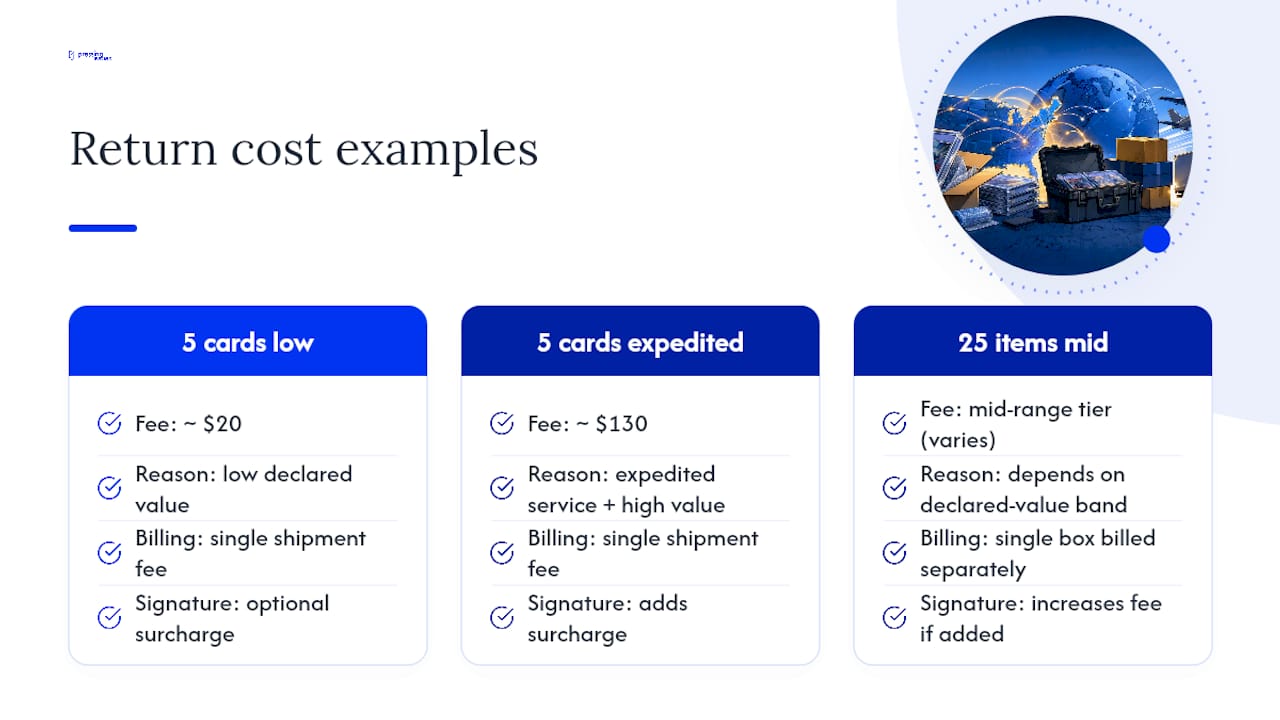
A collector returning five graded cards with a modest combined declared value might land in the lower fee bracket, around $20 for that tier under current published examples. Bump that same five-card shipment into a high declared-value bracket requiring expedited service, and the fee can climb toward $130, reflecting both the faster carrier service and the higher insurance exposure CGC is underwriting.
Larger submissions scale differently. A 25-item order sits in a mid-range tier, and the exact fee depends on which declared-value band the combined value falls into plus whether you've added a signature requirement. Mixed submissions, say, comics in one box and cards in another, get billed as two separate shipments rather than one combined fee, since CGC handles each collectible type independently.
Add-ons stack on top of the base tier fee: signature confirmation typically adds a modest surcharge, and delivery to a rural or extended-area ZIP code can trigger a remote-area fee from the carrier itself. None of these are hidden fees exactly, but they're easy to overlook if you're only checking the base rate table. Before you submit, it's worth running your expected declared value and item count against CGC's current published fee schedule so the final invoice doesn't surprise you.
Customs Forms and International Shipping Documentation
Most U.S. collectors ship domestically, but if you're submitting from a U.S. address and later shipping a graded item internationally (selling to a buyer overseas, for example) customs documentation becomes your responsibility, not CGC's.
CGC's own international return shipments, when they occur, carry insurance up to $50,000 per package and include the customs paperwork CGC generates on its end for the return leg. But once that graded item is in your hands and you're the one shipping it onward internationally, you'll need a completed customs declaration form (a CN22 or CN23 for USPS international shipments, or the equivalent commercial invoice for FedEx or UPS international services).
Declare the item's actual value accurately on that form. Undervaluing a graded comic or card to reduce duty costs for the buyer isn't just risky, it also invalidates most shipping insurance if the package is lost or damaged, since the carrier only covers the declared value on the customs paperwork. Include a clear description ("graded collectible comic book" or "graded trading card, encapsulated") rather than a vague catch-all term, since customs agents are more likely to flag ambiguous descriptions for inspection, adding delays.
Keep a copy of every customs form and the tracking number until the buyer confirms delivery. If a claim becomes necessary, that documentation is what a carrier will ask for first.
Special Considerations for Different Collectible Types
CGC doesn't treat every collectible the same way when it comes to return shipping, and that distinction affects both your packaging and your cost. Comics, trading cards, video games, and other collectible categories are grouped and returned separately even when they're part of the same overall order, which means a mixed submission generates multiple shipments and multiple fee calculations rather than one combined charge.
This separation exists for practical reasons. A slabbed comic and a slabbed trading card have different dimensions, weight distributions, and fragility profiles, so packing them together increases the odds of shifting damage in transit. Comics, being larger and heavier per item, often carry different per-item fee brackets than cards, which are lighter but frequently shipped in higher volumes.
Extremely high-value single items, a key issue graded at the top of the scale, for instance, warrant a phone call to CGC customer service before you ever submit. Standard fee tiers and the $100,000 domestic insurance cap work fine for the overwhelming majority of submissions, but if a single item's value approaches or exceeds that cap, you want special handling confirmed in writing before your book goes into the grading queue, not after it ships.
What Handling Thousands of Submissions Teaches You About Shipping Risk
Most of the damage claims we hear about from collectors trace back to two things: undervalued declarations and inadequate packing, not carrier negligence. CGC's insurance system works well when you use it correctly, but it can't protect you from a declared value that doesn't reflect what the item is actually worth.
We document every submission that passes through our shop the way we'd want our own collection documented: photos, serial numbers, and a paper trail that matches the declared value to something real, whether that's a recent sale comp or an appraisal note. When we coordinate shipping instructions with CGC, we're not guessing at declared values. We're building a record that holds up if a claim ever becomes necessary.
What clients get from that process is straightforward: less time spent chasing paperwork, and real peace of mind that their books are protected by more than a hope that nothing goes wrong.
— Charles
Let Pressing Issues Handle Your Next CGC Submission
Pressing Issues is the practical alternative to managing CGC submissions solo. When you're staring down declared-value decisions, packing logistics, and the fine print on insurance caps, we do the documentation and coordination work so a shipping mistake doesn't cost you a graded book's full value.

Our full-service approach covers professional pressing and cleaning before submission, CGC submission handling from paperwork to packing, and declared-value advisory so you're not underinsuring a book that's worth more than you think. We photograph and log every item before it ships, coordinate carrier instructions directly with CGC, and keep the documentation on file that makes a claim straightforward instead of stressful.
If you've got a submission coming up, whether it's a single key issue or a full box of cards, reach out to Pressing Issues to talk through pressing, cleaning, and submission handling before you ship anything. Getting the prep work right the first time is far easier than fighting a claim after the fact.
Sources
- CGC Announces Major Improvements to Return Shipping and Insurance Services | CGC
- CGC Cards Return Shipping Fees | CGC Cards