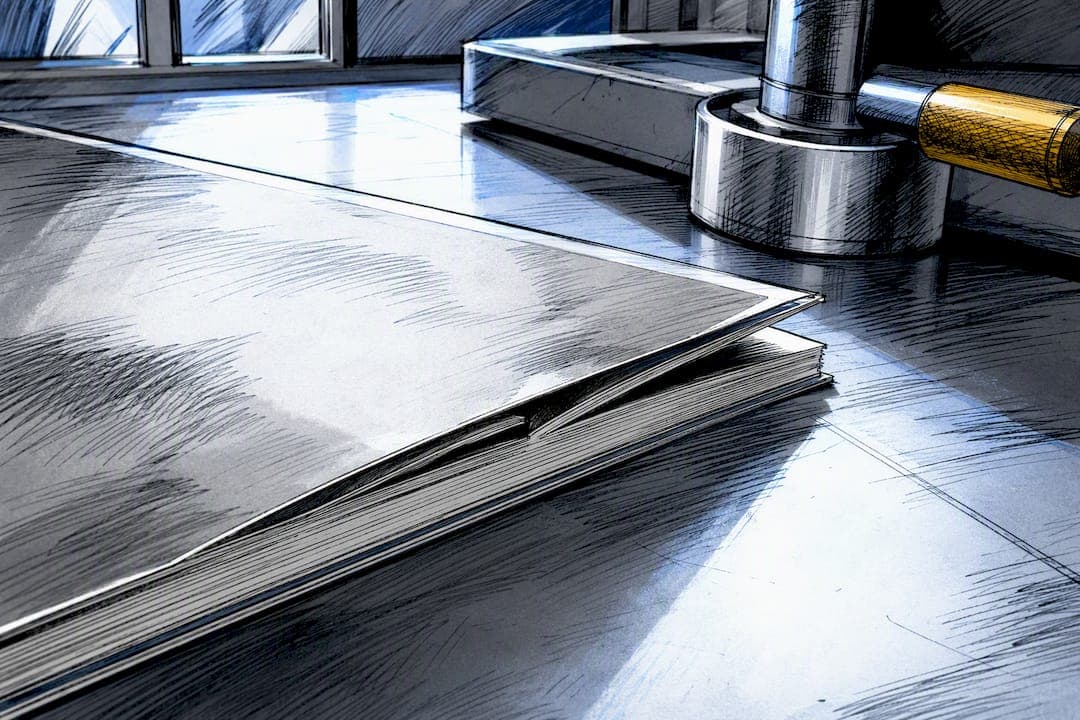
A true miswrap cannot be fixed by standard pressing or cleaning. It's a manufacturing alignment defect, not a handling issue, and no amount of humidity, heat, or careful flattening will realign a shifted cover to its interior pages. Pressing can improve flatness and reduce distortion around the edges, but it stops there. The next steps are identification, understanding the grading impact, and deciding whether the book is worth submitting as-is.
TL;DR:
- Minor miswraps involving offsets around 1/16 inch may still receive high grades but can significantly impact resale value if undisclosed.
- Pressing cannot correct a miswrap because it only affects paper flatness, not the binding alignment, which requires disassembly and restoration.
- Proper documentation, including four-angle photos and precise measurements, is essential before submitting a miswrapped comic for grading or valuation.
- Severe or obvious miswraps usually cap the numeric grade below 9.0 and should be fully disclosed to prevent disputes and maintain buyer trust.
- When the offset is substantial, selling the comic raw with a clear disclosure generally offers a more cost-effective option than grading or pressing.
Table of Contents
- What Is a Comic Miswrap, and How Does It Happen?
- How Do You Tell a Miswrap From a Miscut or Spine Roll?
- Can Pressing or Cleaning Actually Fix a Miswrap?
- How Do Miswraps Affect Grading and Resale Value?
- What Should You Do Right Now With a Miswrapped Comic?
- What We See When Collectors Bring In Miswrapped Books
- Setting Realistic Expectations Before You Spend
- How Pressing Issues Can Help With a Miswrapped Comic
- Where to Verify Grading and Pressing Facts
- Sources
- FAQ
What Is a Comic Miswrap, and How Does It Happen?
A miswrap happens during binding, when the cover isn't centered on the interior pages before stapling or gluing. CGC classifies it as a distortion defect, grouped with other production-origin flaws like miscuts and Siamese pages. It's baked in at the factory, not something that developed on a shelf.
You'll usually spot it by eye once you know what to look for:
- Uneven white borders on one side of the cover compared to the other
- Interior page edges peeking out past the cover trim
- A visible shift in the printed image relative to the spine
- Staples that look centered on the cover but land off center on the interior pages
The defect traces back to the pressline itself: centering guides, folding stations, and cutting blades all have to work in sync during binding. When one station drifts, even slightly, the cover wraps around the pages instead of matching them. That's a production error baked into the book before it ever reached a newsstand or a collector's hands.
How Do You Tell a Miswrap From a Miscut or Spine Roll?
Collectors mix these up constantly, and the confusion shows up in collector forum threads asking whether pressing can fix what's actually a miswrap. Here's how to separate them:
- Check the staple line first. If staples sit centered on the cover but off center on the interior pages, that's a miswrap.
- Compare front and back borders. A miscut shifts the entire book, cover and pages together, during final trimming, so borders stay proportional even if the whole book runs narrow or wide.
- Look for a curved spine with flat pages underneath. That's spine roll, caused by storage or handling, not a binding defect at all.
- Estimate the offset. Lay a ruler along the spine edge and eyeball how far the cover extends past (or falls short of) the interior page edge.
- Photograph a spread, not just the cover. Open the book to the centerfold and shoot straight down to reveal true alignment.
Pro Tip: Shoot four angles before you list or submit anything: a flat front cover shot, a three-quarter angle catching the spine edge, a close-up on the staple line, and a straight-down shot of the inner trim against the cover edge. Those four images tell a presser or a buyer almost everything they need to know.
Skipping this step causes real damage in the marketplace. Sellers who list a miswrapped book as "like new" without disclosure invite return disputes and negative feedback once a buyer notices the offset.
Can Pressing or Cleaning Actually Fix a Miswrap?
No, and understanding why comes down to what pressing physically does to a comic book. Pressing works on the paper itself, using controlled heat and humidity to relax fibers and reduce waviness, spine roll, and minor surface distortion. It does not touch the binding.
Here's the honest breakdown of what pressing can and cannot do:
- Pressing can: flatten warped covers, reduce spine roll, smooth out non-color-breaking creases, and remove surface waviness from humidity exposure.
- Pressing cannot: shift a cover that's physically bound off center relative to the interior pages. That would require disassembly, pulling the staples, realigning the signature, and rebinding, which crosses directly into restoration territory.
That distinction matters because restoration and pressing occupy different categories entirely for grading purposes. Standard non-restorative pressing services exist specifically to avoid the kind of intervention that alters a book's original manufacturing state. Disassembling a book to fix a miswrap almost always classifies it as restored once discovered, which typically drops its value well below an unrestored copy with a disclosed defect.
Community guidance among pressers is consistent on this point: submitting a book with an unpressable defect and expecting a grade bump wastes both money and time. If a book arrives with a genuine miswrap, a competent pressing service should tell you upfront that flattening will improve appearance but won't touch the alignment. That's the difference between a book that looks better in hand and a book that scores better on a grading tier.
How Do Miswraps Affect Grading and Resale Value?
Grading treats miswraps on a sliding scale, not as an automatic disqualifier. CGC grader notes record the defect's severity, and how much it costs you in numeric grade depends almost entirely on how far off the cover sits.
- Minor miswraps, sometimes cited around 1/16 inch of offset, can occasionally still land in a high grade tier. Treat that figure as illustrative, not a guarantee, since graders weigh the whole book.
- Severe or "wild" miswraps, where the shift is visible at a glance without measuring, typically cap a book well below a 9.0 regardless of how clean the rest of the copy looks.
- Marketplace buyers react to undisclosed miswraps far worse than disclosed ones. A clear photo and an honest line in the listing (something like "cover shows a slight miswrap, see photos") protects you from disputes and preserves trust with repeat buyers.
Run the math before submitting. If a book's raw value sits in the $20 to $40 range, a CGC submission fee plus shipping and handling can easily exceed what a slightly-off grade will recover. Save grading dollars for books where the miswrap is minor enough that a high numeric grade is still realistic, and sell the rest raw with full disclosure.
What Should You Do Right Now With a Miswrapped Comic?
Start with documentation, then work through a simple decision tree before you spend a dollar on shipping or fees.
- Photograph the book using the four angles from the identification checklist: flat cover, three-quarter spine view, staple close-up, and inner trim comparison.
- Measure the offset with a ruler at the widest visible point and note it in inches.
- Decide your path. If the offset is minor and the book is otherwise high grade, a CGC submission may still be worthwhile. If it's severe, sell raw with disclosure instead.
- Consult a presser before a restorer. Ask what pressing can realistically improve on this specific copy, and get that answer in writing before committing.
- Ask about restoration only if the book's value justifies the risk. Disassembly to fix binding is expensive, slow, and often reduces resale value once disclosed.
Pro Tip: When shipping a book for evaluation, use a rigid mailer with a bag and board, and ask the presser for a written estimate before they touch the book. A reputable pressing service will tell you plainly if a defect is unpressable rather than taking your money for a treatment that won't change the outcome.
Collectors weighing raw sale versus submission sometimes find it useful to compare how other collectibles markets handle condition disclosure. Condition grading criteria for trading cards follows a similar logic: severity and disclosure drive value far more than the defect's mere existence.
What We See When Collectors Bring In Miswrapped Books
The most common misunderstanding walking through the door involves a collector convinced that pressing "fixed" a book they submitted years ago, when what actually changed was flatness and spine roll, not the underlying miswrap. We hear this often enough that we now walk through before-and-after photos with every client before pressing begins, so expectations match reality.
Case notes from books we've evaluated follow a consistent pattern: a Bronze Age key with a visible cover shift comes in looking rippled and tired. After pressing, it looks sharp and presentable, colors popping, spine flat, but the offset between cover and interior pages remains exactly where it started. That's not a failure of the pressing. It's the nature of the defect.
Before we press anything, we look at whether the issue is pressable at all, whether restoration would make more financial sense, or whether the book is better left alone and sold raw with clear disclosure. Turnaround typically depends on order volume and book value, and we always recommend rigid, well-padded shipping for anything heading our way.
Setting Realistic Expectations Before You Spend
Collectors chasing a miswrap fix are usually chasing the wrong solution. Pressing does real work, flattening, de-creasing, restoring shape, but it was never built to correct a binding error, and expecting otherwise leads to wasted submission fees and disappointment. The smarter move is accepting what the book is: a copy with a disclosed, documented production quirk that some buyers won't mind and others will discount accordingly.
Spend money on pressing when the improvement is cosmetic and the grade potential justifies the cost. Skip it, and disclose instead, when the miswrap is severe enough that no amount of flattening changes the outcome. Before sending a high-value book anywhere, get a written estimate and ask direct questions about what will and won't change.
— Charles
How Pressing Issues Can Help With a Miswrapped Comic
Pressing Issues won't tell you a miswrap can be fixed, because it can't be, but that doesn't mean there's nothing worth doing with a miswrapped book. A book with a genuine binding defect can still benefit from surface cleaning, flattening, and an honest read on whether grading makes financial sense before you spend a cent on submission fees.
Our comic book cleaning and pressing work removes surface dirt, reduces waviness, and improves overall presentation, even when a defect like a miswrap will remain visible afterward. We're upfront about that limit every time, before any work begins. If a book's value is high enough to justify the conversation, we'll also walk you through what CGC submission handling involves and whether it's worth pursuing given the specific offset on your copy.
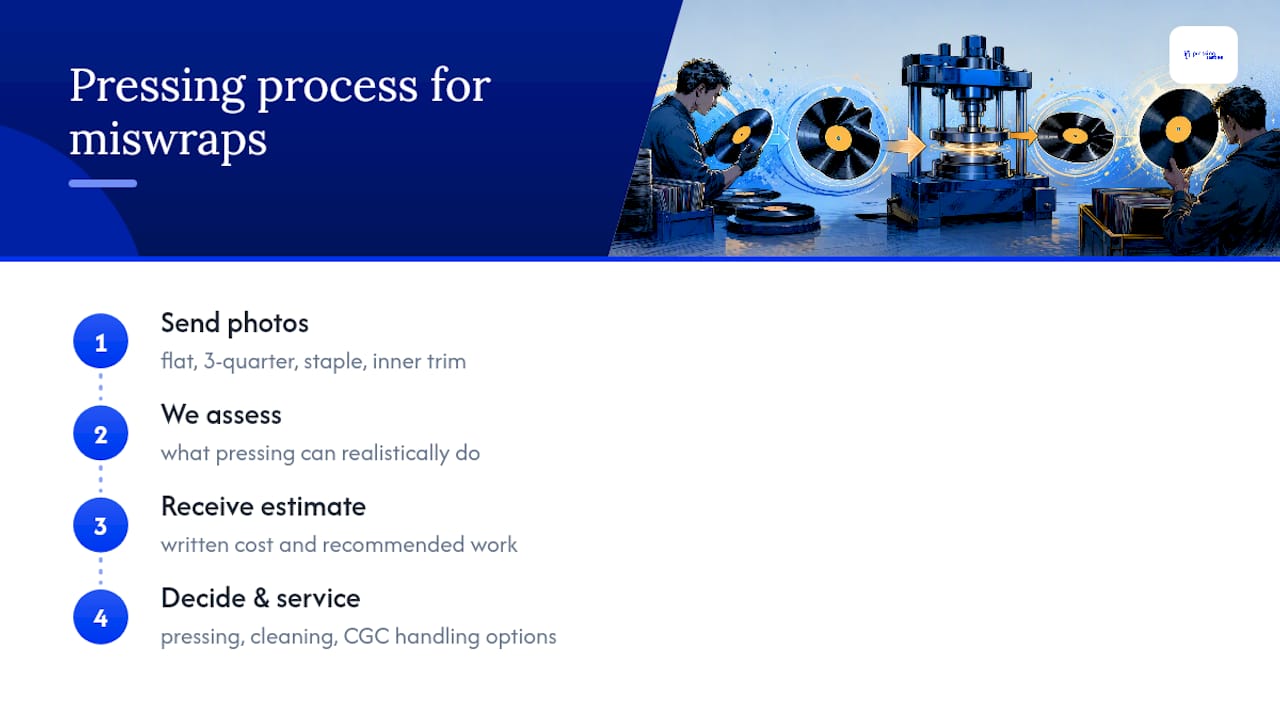
Send photos using the four angles covered above (flat cover, three-quarter, staple close-up, inner trim) and we'll give you a straight answer on what pressing can realistically do, along with a written estimate. Check our full services list for pricing on pressing by era, from $17 for Modern Age up to $50 for Spine Roll and Golden Age books, plus CGC submission handling if grading turns out to make sense for your copy.
Where to Verify Grading and Pressing Facts
For grader-level definitions, CGC's distortion category covers miswraps alongside miscuts and other production defects. For a technical rundown of what pressing services actually do, PSA's pressing guide breaks down the process clearly for collectors researching before they submit.
Sources
- CGC Comics Grader Notes Guide: Distortion
- Comic book and magazine pressing guide (PSA)
- CGC Comic Grading: Allowable defects in a CGC 9.8 (Brys Comics)
FAQ
Can a miswrap be fixed by pressing?
No. Pressing improves flatness and reduces spine roll, but it can't realign a cover that's structurally off center relative to the interior pages.
Is a miswrap the same as a miscut?
No. A miswrap is a cover-to-pages alignment error during binding, while a miscut shifts the entire book, cover and pages together, during final trimming.
Will CGC still give a high grade to a miswrapped book?
It depends on severity. Minor offsets around 1/16 inch sometimes still land in high grade tiers, while larger, visible shifts typically cap the numeric grade well below 9.0.
Should I disclose a miswrap when selling my comic?
Yes. Clear photos and a short disclosure line protect you from buyer disputes and tend to build more trust than an undisclosed defect discovered after sale.
Does Pressing Issues offer restoration for miswrapped comics?
Pressing Issues focuses on non-restorative cleaning and pressing. If your book's value might justify restoration to address a miswrap, we recommend discussing the tradeoffs honestly before choosing a path forward.