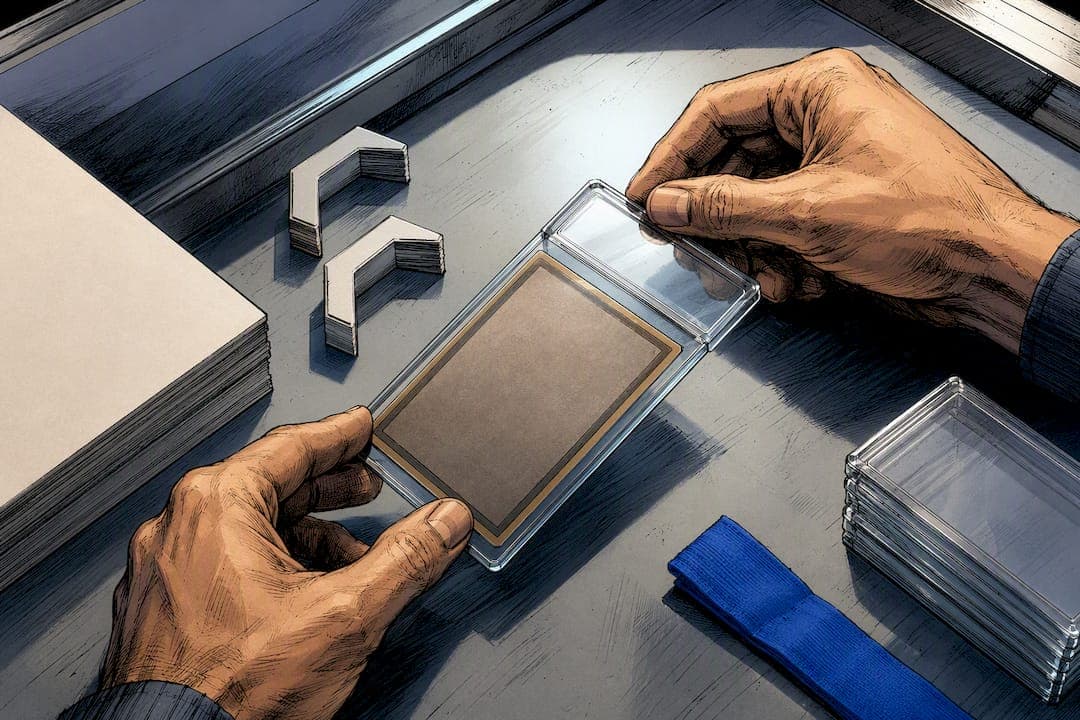
The top CGC submission mistakes fall into three buckets: wrong holders or careless packing, incorrect form entries like title, variant, or declared value, and missing documentation. Fix those three and you sidestep most delays, re-tiering fees, and shipping damage. Verify your form against the CGC mechanical-errors policy, use correct semi-rigid holders, photograph everything, and follow CGC's own packing guidance before the box ever leaves your hands. These errors are common among submitters and are almost always preventable.
TL;DR:
- Using semi-rigid holders and avoiding tape or sealing them prevents damage and delays during CGC submission intake.
- Proper packing, including bracing to eliminate movement, significantly reduces the risk of transit damage to graded cards.
- Accurate and matching paperwork, including declared value and issue details, avoids re-tiering fees and processing delays.
- Photographing every item before shipping provides essential evidence for claims related to holder or label defects.
- Confirming suspected error cards with specific defect identification and supporting photos speeds up authentication and grading accuracy.
Table of Contents
- Common CGC Submission Errors That Cost Collectors Time and Money
- Packing and Holder Mistakes: How to Get Cards There Intact
- Submission Form and Declared-Value Errors That Trigger Fees
- Mechanical Errors, Label Defects, and What CGC Will Actually Fix
- Service Tiers, Pre-Screening, and Bulk Submission Traps
- Documentation and Photos: Your Evidence Before You Ship
- Submitting Suspected Error Cards Without Mislabeling Damage
- Practitioner Advice From Pressing Issues: Workflows That Prevent These Mistakes
- Tips for Avoiding Submission Fraud or Scams
- How Graded Condition Actually Affects Resale Value
- Handling Resubmissions After a Grading Dispute
- Where to Verify These Rules Yourself
- Let Pressing Issues Handle the Parts That Trip Up Most Submitters
- Sources
Common CGC Submission Errors That Cost Collectors Time and Money
Most submission problems trace back to a handful of repeat offenders. We've pulled these from the patterns CGC documents in its own policies and from what we see cross our workbench in Seattle and Portland. Each one below follows the same structure: what goes wrong, why it matters, and exactly how to fix it.
-
Using top-loaders instead of semi-rigid holders. Top-loaders feel protective, but they're rigid plastic that can shift against a card's surface during transit and introduce new edge wear. CGC generally requires semi-rigid holders rather than hard top-loaders precisely because they cushion the item instead of trapping it against a hard edge. Fix: buy semi-rigid holders sized to your cards before you pack anything, not after.
-
Taping or sealing holders shut. Tape residue on a holder, or worse, on the card sleeve itself, can be mistaken for restoration or cause CGC to flag the item during intake. Fix: use the holder's built-in flap or a small piece of painter's tape on the holder edge only, never touching the card or sleeve.
-
Stacking items out of invoice order. When your physical stack doesn't match the order on your packing slip, CGC's intake team has to stop and reconcile it manually, which slows your whole batch down. Fix: number your holders and lay them in the box in the exact sequence your invoice lists.
-
Missing or incorrect paperwork. A submission form that doesn't match what's actually in the box, wrong quantity, wrong tier, missing signature, creates friction the moment your package is opened. Fix: print your final invoice only after a last read-through, and keep a copy for yourself.
-
Misdeclaring fair market value. Underdeclaring value to save on fees is one of the most common and costly mistakes. CGC reserves the right to re-tier a submission when the declared value doesn't match market reality, which means you could end up paying more than if you'd declared it correctly from the start. Fix: check recent sold listings for your exact issue and printing before you write down a number.
-
Shipping with empty space in the box. Loose room inside a shipping box lets everything inside shift, and shifting is how holders crack and cards get fresh dings. Fix: brace every open gap with packing paper or foam, not just bubble wrap laid on top.
-
Skipping photos before you ship. No photo record means no leverage if something arrives at CGC in a state you didn't expect. Fix: photograph every card, front and back, immediately before it goes into its holder.
-
Mislabeling damage as a factory error. Sun fading, handling wear, or a bent corner is not the same as a printing plant miscut, and describing it that way on your submission notes invites a rejected claim. Fix: compare suspected errors against CGC's own documented error types before you submit.
Pro Tip: Keep a simple spreadsheet with title, issue number, variant, declared value, and holder type for every item in a batch. It takes ten extra minutes and it's the single fastest way to catch a mismatched entry before it becomes a mismatched submission.
Packing and Holder Mistakes: How to Get Cards There Intact
Movement is the enemy. Almost every transit damage claim we've reviewed traces back to a card that had room to shift inside its packaging, not to a defect that existed before it left the sender's hands. That's why CGC's own packing recommendations focus less on padding thickness and more on eliminating gaps entirely, a point echoed in step-by-step submission guidance that treats bracing as more important than cushioning.
Top-loaders are risky specifically because their rigidity works against you the moment a box gets jostled. A semi-rigid holder flexes slightly and absorbs some of that motion. Screw-down cases go a step further in the wrong direction: the screws themselves can press marks into a card's surface under shipping pressure, and CGC's intake staff have to remove them anyway before grading, adding handling risk you didn't need to introduce.
Here's the packing sequence that holds up under real shipping conditions:
- Slide the card into a soft archival sleeve first, never bare card into a holder.
- Place the sleeved card into a semi-rigid holder sized correctly, not loosely.
- Stack holders in the exact order your packing slip lists, numbered if the batch is large.
- Bundle stacked holders together with a rubber band over cardboard, not tape directly on the holders.
- Fill every remaining inch of the box with packing paper, foam inserts, or air pillows until nothing moves when you shake it gently.
- Label the outside of the box clearly if you've paid for an expedited tier, since misrouted boxes lose time in the queue.
Movement causes damage more often than crushing does. A box that arrives dented but tightly packed usually protects its contents fine. A box that arrives pristine but loosely packed can still deliver cracked holders and fresh edge dings, because the cards had room to travel and collide with each other for the length of the trip.
Avoid buying screw-down cases, taped-shut holders, or oversized top-loaders for submission purposes. If you already own them from display use, that's fine, but repackage into semi-rigid holders before this box ships. A detailed packing walkthrough covers bracing techniques for oversized or high-value batches if your submission includes anything outside standard sizing.
Submission Form and Declared-Value Errors That Trigger Fees
The submission form is where most preventable mistakes actually happen, not in the box. Title, issue number, publisher, variant or printing designation, and declared fair market value each get checked against your physical items during intake, and a mismatch anywhere in that chain slows processing or triggers extra charges.
Variant and printing fields trip up more collectors than any other line on the form. A second-printing cover that looks nearly identical to the first printing can carry a very different market value, and CGC's fee structure accounts for that. If you declare a value that doesn't match what CGC determines the item is actually worth, the services and fees policy allows CGC to re-tier the submission, which can mean paying a higher handling fee than you budgeted for.
Before you finalize anything, run through this checklist:
- Use CGC's online search tool to confirm the exact title and issue number match what's printed on the book or card, not what you remember it being called.
- Check the indicia (the small print on the copyright page or card back) against your declared publisher and printing, since misprints and reprints often carry different indicia despite similar covers.
- Confirm variant status against recent grading population data or sold comps rather than guessing from cover art alone.
- Proofread the invoice line by line before printing your packing slip, since this is your last chance to catch a typo before it becomes part of the official record.
- If you spot an error after submitting but before the box is logged into CGC's system, contact customer service immediately. Once an item is entered into the grading queue, corrections become difficult or impossible.
A five-minute proofread against your own photos catches the vast majority of these errors before they cost you anything.
Mechanical Errors, Label Defects, and What CGC Will Actually Fix
CGC draws a firm line between two categories of problems that happen after grading: holder defects and label defects. Understanding which one applies to your situation determines whether you get a free correction and how much time you have to ask for it.
A holder defect means something is physically wrong with the case itself, a scratch, trapped debris, or a crack that wasn't there when you shipped the item. Under CGC's mechanical errors and returns policy, holder defects must be reported by the original submitter within 14 days of receiving the graded item. Miss that window and you've likely lost your window for a free fix.
Label defects are different. A misprinted grade, wrong title on the label, or incorrect issue number can be reported by anyone, not just the original submitter, and there's no time limit attached to that claim.
What qualifies and what doesn't matters just as much as the timeline:
- Qualifying holder defects generally include visible scratches, debris trapped inside the case, or a crack introduced during CGC's own handling.
- Non-qualifying issues include optical prism or rainbow effects on the plastic, which are a normal property of the holder material, not a defect.
- Damage that resulted from your own packing or shipping choices typically won't qualify, since the defect has to originate with CGC's process, not yours.
Starting a claim means contacting CGC directly with your submission number, a clear description of the defect, and photos showing the issue. If CGC agrees the item meets acceptance criteria, they'll arrange a correction, though you may be responsible for roundtrip shipping costs depending on the circumstances. That's another reason the photo documentation covered later in this guide matters: a photo taken the day you received the graded item is your strongest evidence that a defect existed before you handled it at all.
Service Tiers, Pre-Screening, and Bulk Submission Traps
Choosing the wrong tier is less about picking the "best" option and more about matching turnaround speed to what your items are actually worth. Faster tiers cost more per item, and paying premium speed on a stack of low-value commons rarely pencils out. The mismatch that actually costs money is declaring a value that puts you in the wrong tier bracket, since that's what triggers re-tiering fees down the line.
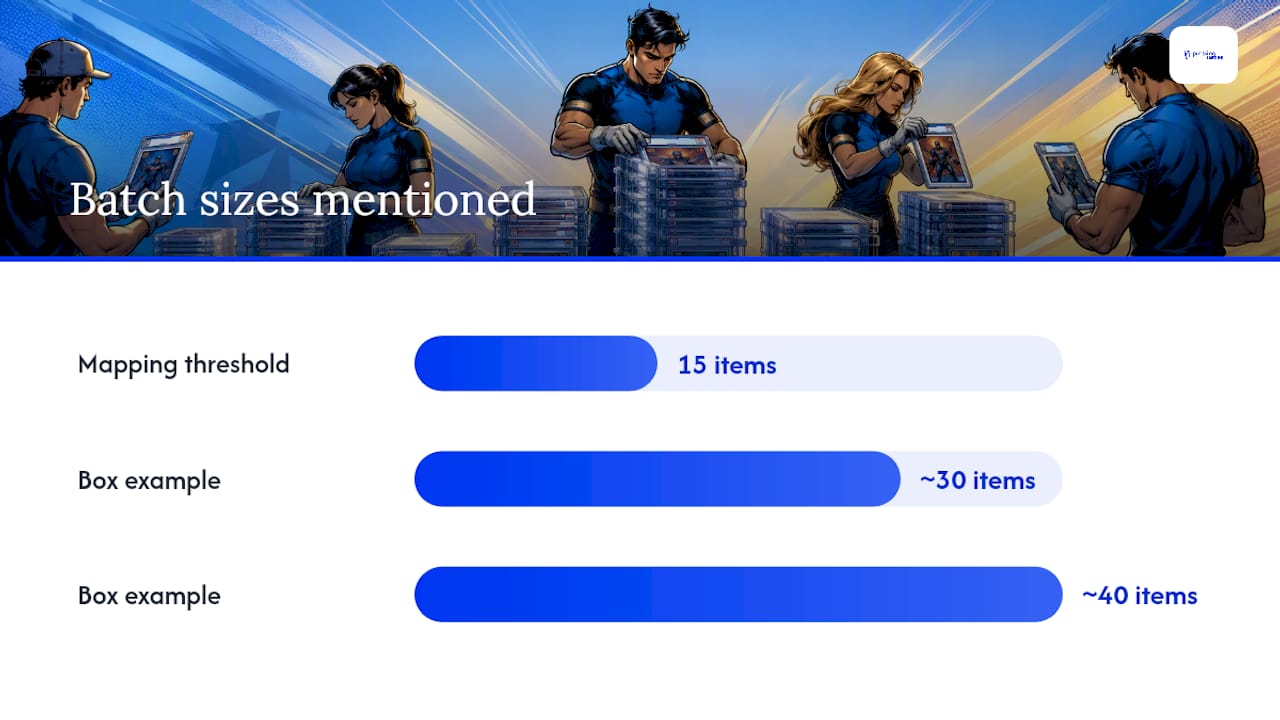
Pre-screen and bulk submission tools exist specifically for collectors moving large quantities through at once. CGC's bulk and pre-screen guidance lets you set a minimum acceptable grade for a group of items, so anything that doesn't clear your threshold gets pulled before you pay full grading fees on it. That single setting can save real money on a box of thirty or forty comparable items where a few are likely to grade lower than the rest.
A few operational habits keep bulk submissions clean:
- Separate your invoices by tier so mixed-speed batches don't get tangled during intake.
- Mark boxes clearly on the outside when any portion of the contents is on an expedited or fast-track tier.
- Set your pre-screen minimum grade based on realistic condition assessment, not wishful thinking, since an unrealistic threshold defeats the purpose of using it at all.
- Consult a submission-handling service before shipping a large mixed-value lot, since the paperwork complexity scales fast with volume.
Pro Tip: If you're submitting more than fifteen items in one batch, build a simple numbered map that ties each holder to a line on your invoice before you pack the box. It sounds tedious. It's the difference between a clean intake and a week of back-and-forth emails.
Documentation and Photos: Your Evidence Before You Ship
A photo taken the day you shipped something is worth more than any argument you can make after the fact. This is the single most underused protection collectors have, and it costs nothing but a few minutes with a phone camera.
Photograph the front, back, edges, and corners of every item, plus the packaging itself, at three stages: before it goes into its holder, once it's sealed in the box, and the shipping label attached to the outside. Shoot in good light at the highest resolution your device allows, and name files by submission number and item so you're not digging through a generic camera roll later.
Timestamped photos and a saved PDF of your packing slip matter for two reasons. First, they support any mechanical-error claim you might need to file, since CGC will want evidence the defect wasn't caused by your own packing. Second, they're what an insurer will ask for if a package is lost or damaged in transit and you need to prove condition and contents.
If you do need to attach documentation to a CGC ticket or email, include your submission number, a short factual description of the issue, and the relevant photos as attachments rather than links. Expect a review period. CGC staff compare your evidence against their intake records before issuing any correction, and clear, well-labeled photos speed that process along considerably.
Submitting Suspected Error Cards Without Mislabeling Damage
A genuine factory error and a damaged card can look deceptively similar to an untrained eye, and calling one the other on your submission form is a mistake that undermines your credibility with CGC's authentication team.
CGC's own error card documentation catalogs recognized factory error types: miscuts where the card border sits noticeably off-center in a way that suggests a production line issue, missing print layer where a color or texture pass simply didn't apply, double printing where imagery overlaps or ghosts, and albino backs where the reverse side printing failed entirely. These are production anomalies, not condition issues.
Environmental and handling damage looks different once you know what to check. Sun fading shows as uneven color loss concentrated on one side or edge, consistent with prolonged light exposure rather than a printing defect. Handling damage shows as localized wear, bent corners, or surface scuffing that follows a pattern of use rather than a pattern of production.
If you believe you have a genuine error card, follow these steps:
- Describe the suspected error specifically in your submission notes, naming the error type if you can identify it.
- Include close-up photos of the specific area in question, shot straight on with good lighting.
- Attach any provenance documentation you have, especially for rarer error types. CGC notes that certain error categories, like square-cut prints from specific runs, often require proven chain-of-custody before authentication proceeds.
- Expect an authentication review as part of the standard grading process rather than a guaranteed outcome.
Misrepresenting ordinary wear as a factory error rarely holds up under review, and it can slow down authentication for everything else in your submission.
Practitioner Advice From Pressing Issues: Workflows That Prevent These Mistakes
A comprehensive submission handling process should catch mistakes before shipment, including inspection, high-resolution photos, targeted pressing or cleaning where helpful, paperwork verification, and managed packing and shipping.
The order of these steps matters: inspecting before photographing helps catch condition issues early, and verifying paperwork after treatment ensures declared values reflect the item's post-treatment condition rather than an earlier estimate.
- Inspection catches holder mismatches and condition issues before anything gets packed.
- High-resolution photos create a documented record at intake, before treatment, and before shipping.
- Targeted pressing or cleaning can address surface defects that would otherwise lock in a lower grade, when it's appropriate for the item.
- Paperwork verification cross-checks title, variant, and declared value against the physical item one final time.
- Managed packing follows the same bracing and holder standards outlined earlier in this guide.
Batches sometimes include declared values based on outdated comps, and catching these during verification can avoid re-tiering fees before shipping. Mismatched variant designations are a common source of submission issues, and quick fixes can prevent headaches.
Removing light spine rolls or minor surface indentations before submission can affect the grading outcome and potentially reflect the book's true condition more accurately.
For the full breakdown of how each step works, our step-by-step submission guide walks through the process in more detail than we can cover here.
— Charles
Tips for Avoiding Submission Fraud or Scams
Not every risk to your submission comes from CGC's process itself. A growing number of collectors report scams involving third parties who claim to offer discounted or expedited CGC submission handling and then disappear with the cards or the payment.
A few habits protect you. Only ship valuable items to services with a verifiable business address and a track record you can confirm independently, not just a social media page. Be skeptical of any third party promising grading discounts that seem meaningfully below CGC's own published fee structure, since legitimate handlers work within CGC's actual pricing, not around it. Never wire payment to an individual claiming to submit on your behalf without a written agreement specifying what happens to your items at each stage.
Track your submission directly through CGC's own system rather than relying solely on a third party's word for status updates. If a handling service can't provide your actual CGC submission number once your items are logged, that's a warning sign worth taking seriously. Keep your own photo documentation regardless of who handles your shipping, since that record protects you whether the dispute is with CGC or with an intermediary.
The safest rule is simple: any legitimate submission-handling service should be transparent about pricing, timelines, and your submission number from the start, with nothing hidden until after you've paid.
How Graded Condition Actually Affects Resale Value
A card's grade doesn't just describe its condition. It sets the ceiling on what a buyer is willing to pay, often by a wide margin between adjacent grade points. The jump from a 9.0 to a 9.8, for instance, can represent a multiple of value on a desirable card, not a marginal percentage increase, because collectors at the high end are paying for scarcity in top condition as much as for the card itself.
This is exactly why the mistakes covered throughout this guide matter beyond just avoiding fees. A card that arrives at CGC with a fresh crease from loose packing, or a corner ding from a top-loader shifting in transit, can drop a full grade point or more compared to the condition it left your hands in. That's value lost entirely to a preventable packing mistake, not to the card's actual history.
Declared value errors compound this problem in a different way. If your declared FMV doesn't match the grade the card ultimately receives, you've either overpaid for coverage you didn't need or underinsured an item that turned out to be worth considerably more once graded. Getting the pre-submission value estimate right protects you on both ends of that gap.
Handling Resubmissions After a Grading Dispute
If a grade comes back lower than expected, resubmission is a legitimate option, but it only makes sense when you have a specific reason to believe the grade doesn't match the item's actual condition. Sending the same card back with no changes and hoping for a different grader rarely produces a different result.
Before resubmitting, review your original photos against the graded item's return condition. If something changed in transit or handling that wasn't present when you shipped it, that's a mechanical-error conversation with CGC directly, not a resubmission. If instead you believe the original assessment missed something, like a defect that professional pressing or cleaning could still address, that's worth resolving before the card goes back into the queue a second time.
Resubmitting the exact same card without addressing any underlying condition issue means paying full grading fees again for a result likely to land in the same range. If pressing or cleaning can genuinely improve a specific surface defect, doing that work first gives the resubmission a real chance at a different outcome rather than repeating the same fee for the same grade.
Where to Verify These Rules Yourself
CGC updates its policies periodically, so it's worth checking the source directly rather than relying on secondhand summaries, including this one.
- CGC grading services & fees: current fee schedules, tier options, and re-tiering policy.
- CGC Mechanical Errors / Return Policy: eligibility windows and qualifying defect types.
- How to submit (CGC official guidance): official intake process and form requirements.
- CGC Submission Do's and Don'ts: cost-saving tips and shipping best practices from Pressing Issues.
- Comic Book Cross-Over Label Strategy: labeling and invoice-matching guidance for batch submissions.
Let Pressing Issues Handle the Parts That Trip Up Most Submitters
Pressing Issues is the alternative to piecing together your own submission workflow from scattered forum advice: one team in Seattle and Portland inspects, presses, photographs, and ships your books so the mistakes covered in this guide never reach CGC's intake desk.

Our process covers every stage this article walked through: condition inspection, targeted pressing and cleaning where it can genuinely improve a grade, high-resolution photo documentation at each step, help completing submission forms accurately, and fully managed packing and shipping to CGC. Collectors with higher-value books, mixed-condition bulk lots, or anyone who's been burned by a re-tiering fee or a mechanical-error dispute in the past tend to benefit the most from handing this off.
If you've got a stack of books sitting in top-loaders wondering if they're ready for submission, that's exactly the question we answer first. Check our full service and pricing details and get a straight answer on what your books need before anything ships.
Sources
- CGC grading services & fees
- CGC Mechanical Errors / Return Policy
- CGC Cards Error Guide
- The CGC submission process: a step-by-step guide (Packz blog)
- How to submit (CGC official guidance)