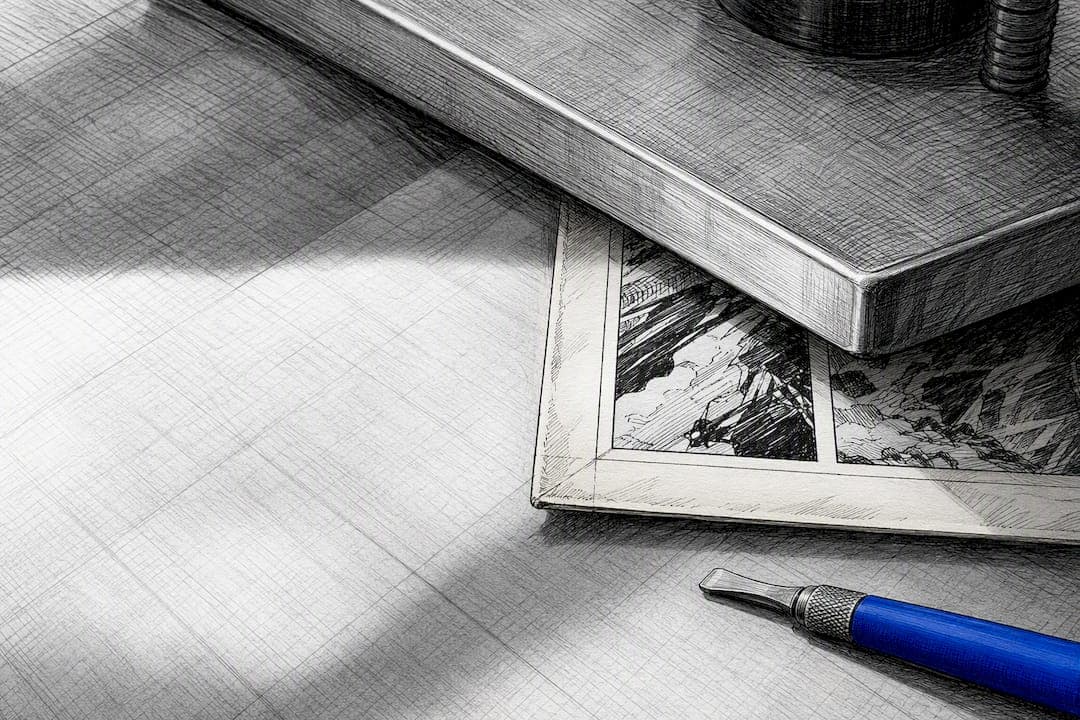
Pressing cannot remove a color break. A break in the ink layer is permanent, and no amount of heat, humidity, or pressure brings it back once the paper fibers show through. What pressing does fix is the non-color-breaking bend, dent, or ripple sitting nearby, and that's exactly where its real value lives. If a color break is present, the only question left is whether flattening everything else still makes financial sense.
TL;DR:
- Pressing cannot fix color-breaking creases, as the fractures in the ink layer are permanent and visible as white lines even after treatment.
- Non-color-breaking bends can often be flattened and improved through pressing, which relaxes paper fibers without altering the ink or coating.
- The presence of a color break significantly limits a comic's grade, while non-color-breaking defects may be improved enough to raise the final grade.
- Proper defect identification through raking light and fingertip tests is crucial before considering pressing or submitting a comic.
- Shipping preparation with detailed photos and careful packaging is essential to minimize handling risks and ensure accurate grading and valuation.
Table of Contents
- What Is Color Breaking Folds Pressing, and Where Does It Help?
- What Pressing Actually Does, and What It Can't Touch
- How Much Do Color-Breaking Creases Hurt Your CGC Grade?
- Should You Actually Press This Comic?
- How to Prepare and Send a Comic for Pressing and CGC Submission
- Why We Treat Pressing as Flattening, Not Restoration
- Ready to Get an Estimate From Pressing Issues?
- Sources
- FAQ
What Is Color Breaking Folds Pressing, and Where Does It Help?
Color breaking creases and non-color-breaking creases look similar at first glance but behave completely differently once a book goes under CGC's grading lens. A color break happens when the ink and coating layer on a cover actually fractures, exposing the lighter paper fiber underneath as a visible white or pale line. A non-color-breaking crease bends the same paper without splitting the ink, so the surface stays intact even though the fold itself is obvious.
Telling the two apart takes about thirty seconds if you know where to look.
- Raking light test: Hold the comic under a light source angled low across the surface, almost parallel to the cover, rather than shining straight down. A color break will show a hard white line that catches the light differently from the surrounding ink. A pressable bend usually shows shadow and contour but no color change.
- Fingertip test: Run a finger lightly across the fold. A color break often has a slightly raised or cracked ridge you can feel; a simple bend feels smooth, just angled.
- Flex check: Gently support the page from underneath. If the crease line stays white and hard-edged even as the paper flexes, the ink has fractured.
According to CGC's own grader notes on creases, the crease taxonomy graders use, finger creases, spine stress lines, veins, and subscription creases, each carries different grading consequences, and many stress lines only become visible under raking light. Before requesting an estimate, photograph every suspected defect under raking light and jot down a short note for each one. That documentation speeds up an accurate quote and keeps handling to a minimum.
What Pressing Actually Does, and What It Can't Touch
Pressing works by applying controlled heat, humidity, and pressure to relax the paper fibers in a comic's cover and interior pages, allowing them to settle back closer to flat. It's a mechanical process, not a chemical or additive one. Done correctly, pressing doesn't add material or alter the ink layer, which is exactly why grading houses treat it as non-restorative rather than flagging it as a restored book.
That distinction matters because it draws a hard line around what pressing can fix:
- Fixable: finger creases without ink fracture, spine stress lines, page waves, corner bends, minor indentations.
- Not fixable: color-breaking creases, tears, missing pieces, tape pulls, and brittle paper, all of which fall into the category of unpressable defects that pressing either can't touch or actively risks making worse.
When a book's grade is being held down purely by pressable defects, pressing can produce a real jump in eye appeal and, often, in final grade. You can see that gap for yourself in before-and-after comparisons from real client submissions, where the difference between a wavy cover and a flat one is dramatic even though nothing about the ink changed.
Pro Tip: Never attempt heat or moisture on a book yourself to "test" whether a crease will press out. Improper heat or pressure can cause fusion, color rub, or warping, damage that's often worse and more permanent than the original crease.
How Much Do Color-Breaking Creases Hurt Your CGC Grade?
CGC treats color-breaking creases as structural defects, and their grader notes are direct about it: presence of a color break significantly limits the final grade a book can receive, often capping it well below what the rest of the book's condition would otherwise support. A non-color-breaking bend, by contrast, can sometimes be improved enough through pressing to reach a meaningfully higher grade tier.
Severity isn't binary. Graders weigh several factors together:
- Length and location — a short color break tucked near the spine reads differently than one crossing a cover's main art.
- Number of breaks — one isolated break is a different case than a cluster of creases across the same panel.
- Accumulation with other defects — a color break stacked on top of soiling or spine stress compounds the grade impact rather than each defect being scored in isolation.
Pressing produces a meaningful grade gain only when non-color-breaking defects are what's holding the grade down. If a confirmed color break is the ceiling, pressing the rest of the book won't move that ceiling at all.
Should You Actually Press This Comic?
Before spending money, run through this in order:
- Confirm the defect type. Use raking light and the fingertip test to classify every crease as color-breaking or non-color-breaking.
- Photograph everything. Clear, well-lit images of each defect area, sent with your estimate request, get you a faster and more accurate quote.
- Estimate the realistic post-press ceiling. If color breaks are present, assume they stay. If not, ask what grade range the remaining defects would allow once flattened.
- Check for brittleness or prior restoration. Brittle paper and any signs of past restoration change the calculation, and sometimes rule pressing out entirely.
- Weigh total cost against expected value change. Add pressing, shipping, insurance, and CGC submission fees, then compare that total to the realistic value gain from a grade bump.
Red flags: a confirmed color break across major cover art, brittle pages, or evidence of prior restoration. Green flags: mostly non-color-breaking issues on an otherwise high-grade book, especially one where a small grade increase unlocks a meaningfully higher market price.
Pro Tip: A rough expected-value formula works well here: (probability of a 1 to 2 grade jump) × (market value increase for that jump), minus (pressing cost + shipping + grading fees). If that number is negative, skip pressing.
How to Prepare and Send a Comic for Pressing and CGC Submission
Getting a book to a presser safely takes more care than just tossing it in a box. Here's the sequence that keeps handling risk low and speeds up your turnaround:
- Take raking-light photos of every suspected defect and write a one-line note for each.
- Bag and board the comic in an acid-free bag with a full backing board before it leaves your hands.
- Note any special instructions, including whether a slabbed book has your permission to be cracked out for pressing.
- Pack in a rigid mailer with padding on all sides so the book can't shift in transit.
- Insure the shipment for its actual value and keep tracking information on hand.
- Label the package clearly and confirm the receiving address before dropping it off.
A professional presser will typically send back before-and-after photos, condition notes on any defects found, and an estimated turnaround window. If you're planning to submit for grading afterward, coordinating pressing and CGC submission through the same channel avoids an extra round of shipping and handling, which cuts both cost and risk. Reviewing a checklist for choosing which comics are worth sending before you pack anything can save you from shipping a book that was never going to benefit in the first place.
Why We Treat Pressing as Flattening, Not Restoration
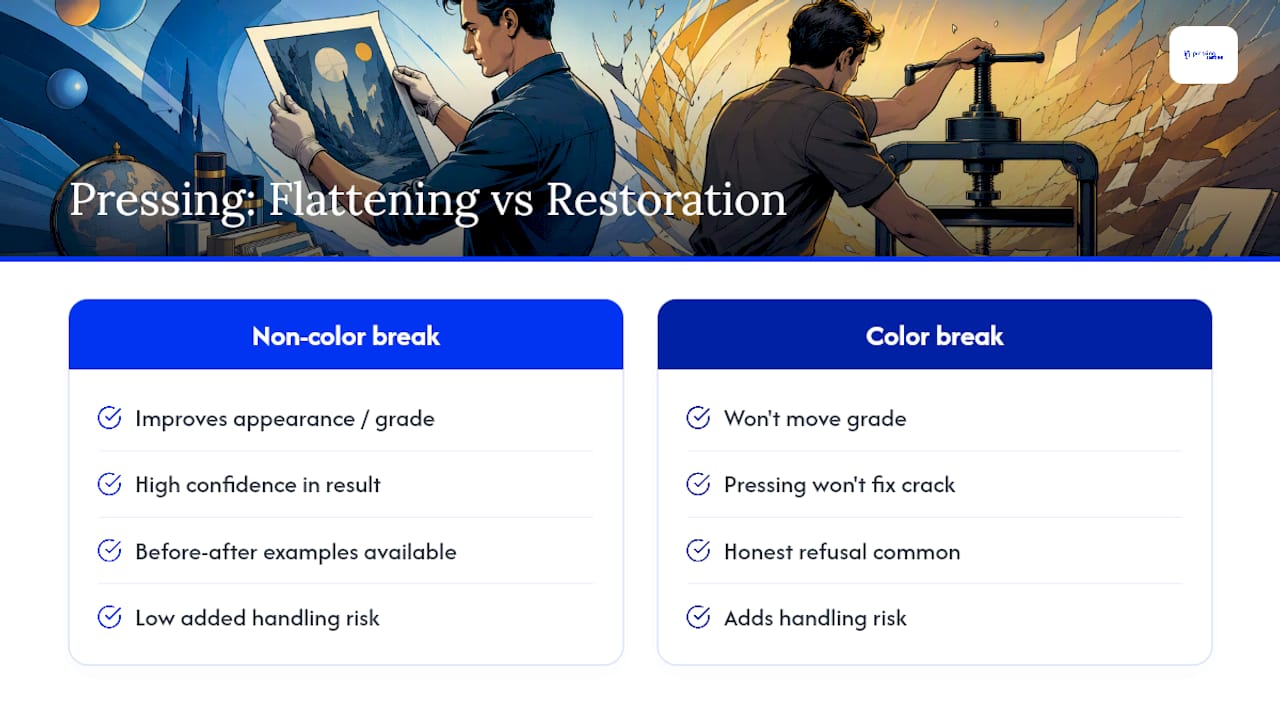
Pressing is a mechanical service, not a cure. That distinction shapes every estimate we write. When a crease is non-color-breaking, we can usually tell a customer with real confidence what kind of improvement to expect, and our before-and-after examples reflect books where that confidence was earned, not guessed at.
Where a color break is confirmed, honesty matters more than a sale. We'll tell you plainly if pressing won't move your grade, because cracking a slab or paying for pressing on a book with a confirmed color break usually adds handling risk without adding value. A good presser should talk you out of unnecessary work as readily as they talk you into worthwhile work.
— Charles
Ready to Get an Estimate From Pressing Issues?
Services include professional cleaning, non-restorative pressing, complimentary value appraisal, and management of CGC submission paperwork and shipping. Pricing details are available upon request, so you know what you're paying for before anything ships.
Requesting an estimate is straightforward. Send raking-light photos of any suspected defects along with a short note on what you're seeing, and you'll get back an honest read on whether pressing is worth it for that specific book, not a blanket yes. If staining or surface contaminants are part of the picture, ask about pairing pressing with a dedicated cleaning pass before the book ever touches a press. Once you approve the estimate, insure your shipment for full value and keep your tracking number handy. From there, Pressing Issues takes it from your mailbox to a finished, submission-ready comic.
Sources
- CGC Grader Notes Guide: Crease
- ComicMintAI — Comic Book Pressing primer
- Comic Book CPR — Unpressable defects primer
- Binary Sundown — comic pressing practitioner notes
FAQ
Can Pressing Fix a Color-Breaking Crease?
No. Pressing flattens paper fibers, but it cannot restore ink that has already fractured, so the white line from a color break stays visible after pressing.
Will Pressing Change My CGC Label to "Restored"?
No, not when done correctly. Because pressing doesn't add material or alter the ink layer, CGC and industry pressing standards treat it as non-restorative rather than restoration.
Should I Crack a Slab to Press a Book With a Confirmed Color Break?
Generally, no. Cracking a slab for a book with a confirmed color break usually adds handling risk without any real grading upside, since the color break itself won't change.
What's the Fastest Way to Spot a Color Break?
Angle a light source low across the cover in raking light and look for a hard white line where the ink appears fractured, then confirm with a fingertip check for a raised or cracked ridge along the fold.