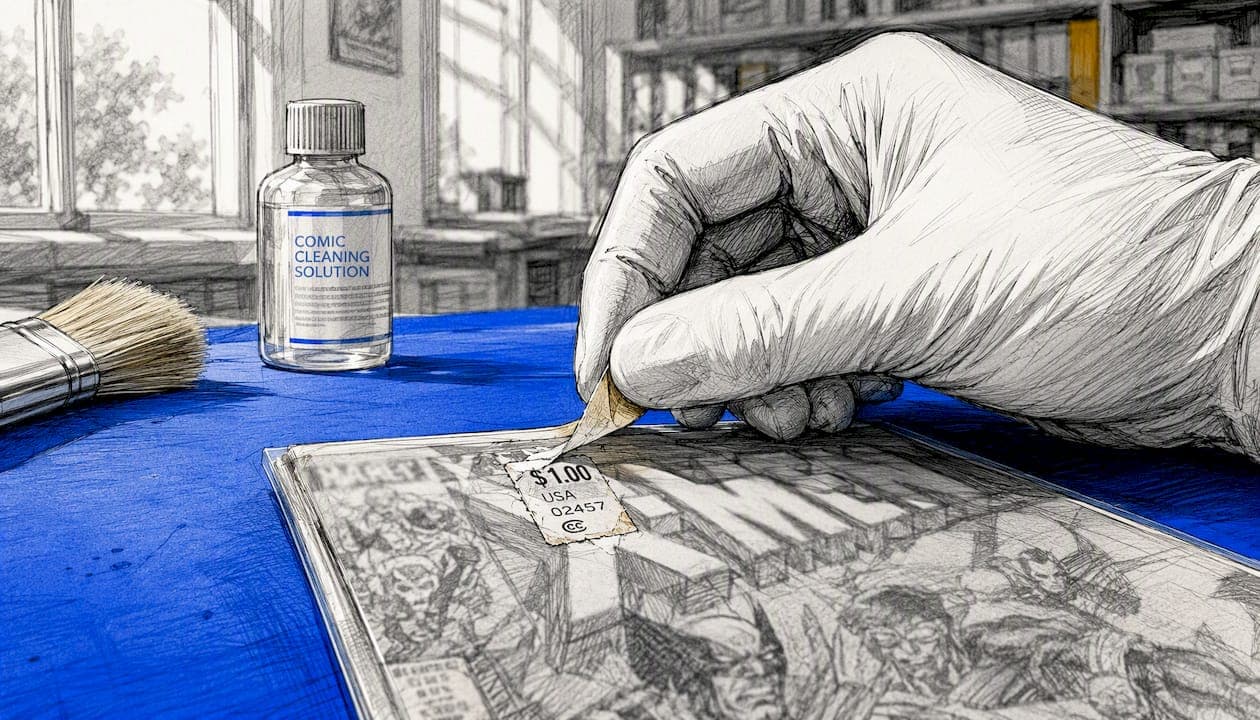
For a comic with real value, the answer is simple: don't attack that sticker yourself. Professional, non-restorative removal is the right call whenever the residue sits near art, ink, or the front cover, or whenever the book could realistically grade well. DIY solvents and scraping cause the exact tearing and ink lift that tank a submission. Pressing Issues and services like it use controlled heat, humidity, and micro-tools specifically to avoid that outcome.
TL;DR:
- Older stickers with layered adhesive or those near cover art pose high risks of damaging ink or fibers during removal.
- Professional removal uses controlled heat, humidity, and micro-tools to avoid tearing, ink lift, or other damage that DIY methods can cause.
- Unrestored, valuable comics benefit from documented, non-additive cleaning procedures that focus on adhesive removal without altering the paper or art.
- Shipment preparation should include detailed photos, proper packaging, insurance, and clear instructions to minimize handling risks.
- Default to professional screening and treatment for valuable or graded comics to preserve their condition and grading potential.
Table of Contents
- How Risky Is That Price Sticker for Your Comic's Grade?
- What Non-Restorative Removal Actually Looks Like in Practice
- When Does a Comic Actually Justify Professional Treatment?
- What Should a Reputable Cleaning Service Tell You Upfront?
- How to Prepare and Ship Your Comic for Adhesive Removal
- Why Pressing Issues Treats Every Sticker as a Screening Decision, Not a Given
- Ready to Send Your Comic in for Screening?
- Where to Read More on Grading Policy and Removal Standards
- Sources
How Risky Is That Price Sticker for Your Comic's Grade?
Not every sticker is a five-alarm fire. A sticker on a modern back cover, applied within the last few years, behaves very differently from a decades-old adhesive baked into a Silver Age cover.
Before you touch anything, look for these signals:
- Age of the adhesive. Older stickers cure into the paper fibers and pull up ink or fiber when disturbed.
- Location. Front-cover placement near a logo or character art carries far more grading risk than a sticker tucked on the back.
- Tanning or brittleness around the edges. Brittle paper tears before adhesive releases, which is the opposite of what you want.
- Multiple layers. A price sticker stacked over an older price sticker means two adhesive layers and double the risk.
Grader notes from CGC confirm that sticker size and placement directly factor into how a book gets scored, sometimes pulling a grade down a full range depending on where the residue sits and how visible it is. That's the statistic worth sitting with: it's not just cosmetic. A sticker in the wrong spot changes the number on the label.
Your only safe DIY moves at this stage are photographing the book from multiple angles and leaving it alone. Skip the rubbing, skip the household solvents, and skip any heat beyond what a cautious professional would apply. Even gentle attempts, like a hairdryer held too close or too long, tend to soften the surrounding ink layer before the adhesive fully releases, according to community reports on the CGC boards. If the sticker predates the current decade or sits anywhere near cover art, treat that as your cue to stop and call a professional.
What Non-Restorative Removal Actually Looks Like in Practice
"Professional cleaning" isn't a euphemism for stronger chemicals. It's a slower, more deliberate process built around not adding anything to the book and not removing more than the adhesive itself.
- Screening and documentation first. Every reputable service photographs the sticker and the surrounding paper before touching anything, establishing a baseline so both sides can see exactly what changed.
- Controlled heat and humidity. Rather than blasting a hairdryer at the spot, technicians use heat and humidity panels to gradually relax the adhesive bond without over-wetting the paper stock.
- Solvent-swab work, not soaking. A small swab applies solvent in a tiny, localized spot and lets capillary action draw it under the sticker edge, instead of flooding the surface the way a spray bottle would.
- Mechanical lifting under magnification. Micro-spatulas lift the loosened sticker edge millimeter by millimeter, so a technician can stop the instant paper resistance changes.
- Dry cleaning and finishing. Once the adhesive is gone, dry cleaning tools address any remaining surface residue, and the book gets leveled and pressed before a final check.
CGC's own pressing guidance draws a clear line here: procedures like pressing and dry cleaning count as non-additive conservation, not restoration, as long as nothing is added to the paper and nothing beyond the unwanted material is removed. That distinction is why a well-handled sticker removal can still leave a book eligible for an unrestored grade.
This is also exactly why household products get flagged so often in collector forums. Goo Gone, WD-40, and similar solvents are designed for painted surfaces and glass, not eighty-year-old newsprint, and collectors on the CBCS forum have documented staining and color loss after using them on covers.
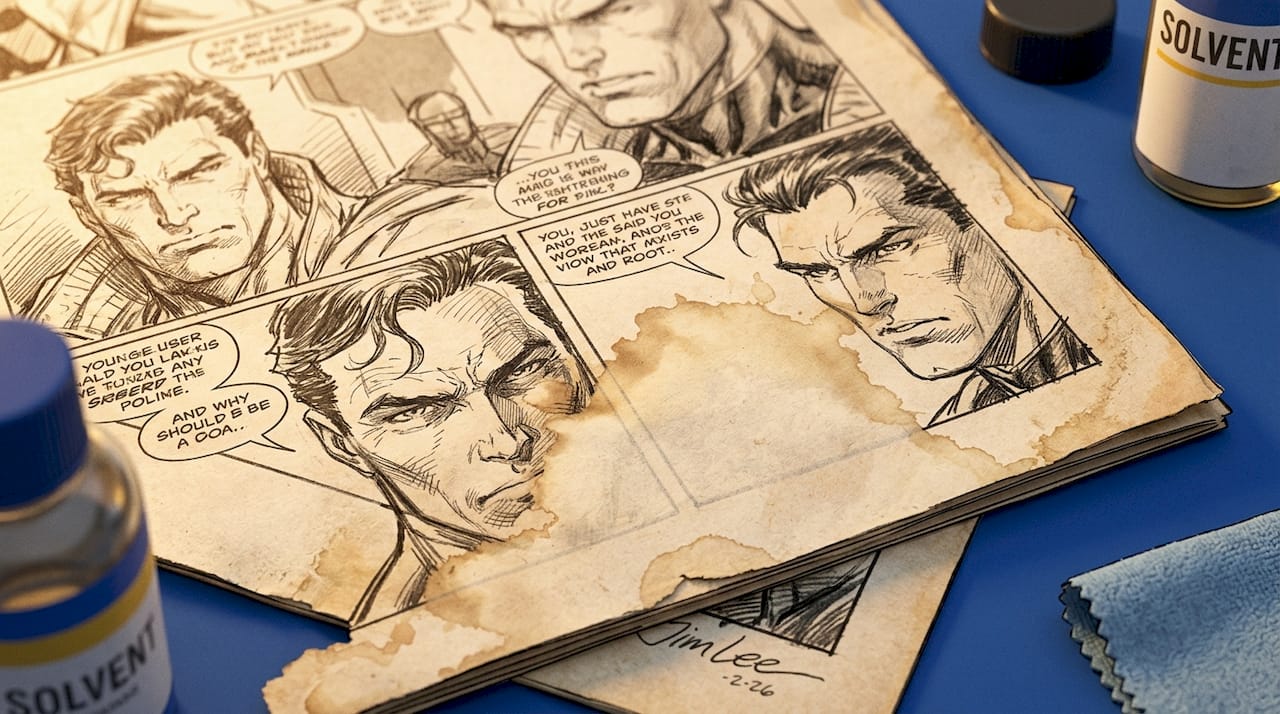
Pro Tip: If you're staring at a sticker and debating a test spot with any solvent, don't. A test spot on a comic is not reversible the way it is on a countertop. Photograph it and get a professional opinion instead.
When Does a Comic Actually Justify Professional Treatment?
Not every book needs a specialist. A dollar-bin reader with a torn sticker corner isn't worth a screening fee. But the math flips quickly once real value or a grading submission is on the table.
Send the book to a professional when:
- The expected sale price or post-grade value clearly exceeds the cost of treatment.
- The adhesive is old, layered, or sitting directly on cover art rather than a blank margin.
- You see tanning, brittleness, or discoloration near the sticker, since paper in that state tears far more easily.
- You're planning a CGC submission and want documented, non-restorative handling that protects an unrestored label.
If you're genuinely unsure which category your book falls into, default to professional screening rather than experimenting. A screening opinion costs far less than a downgraded book, and older or strongly adhered stickers carry enough risk that even collector-facing guides steer readers toward professional help once the sticker is anything but brand new.
What Should a Reputable Cleaning Service Tell You Upfront?
A service worth trusting with a valuable book leads with information, not a sales pitch. Expect a written estimate that explains the risk level, the likely outcome, and what happens if removal doesn't go as hoped, before any work begins.
That estimate typically covers:
- A screening fee that funds the initial risk assessment under magnification.
- A breakdown of cleaning, pressing, and any solvent-swab work as separate line items.
- A realistic turnaround window, since humidity-based treatments need time to work safely rather than being rushed.
- Documentation you can pass along with a CGC submission, showing the treatment was non-additive.
The outcomes fall into three buckets, and a straightforward technician will tell you all three are possible: full removal with no visible trace, no meaningful change if the adhesive resists safely, or, less often, revealed damage that was already hiding under the sticker. Pressing Issues documents its rates and turnaround windows precisely so collectors know what they're paying for before committing. A service that can't decline a job or offer a partial refund when the risk turns out higher than expected isn't one you want handling a key issue.
How to Prepare and Ship Your Comic for Adhesive Removal
Getting the book to a professional safely matters almost as much as the treatment itself. A cracked spine from bad packaging defeats the purpose of careful sticker work.
- Photograph the book first. Shoot the sticker location, the full cover, and any nearby damage from multiple angles, and jot down what you know about the sticker's age.
- Bag and board with archival materials. Use a fresh bag and board sized to the book, and keep any paperwork or invoices in a separate sleeve so nothing else can stick to the cover.
- Insure the shipment at declared value. For anything with real market value, insure it accurately and choose a carrier with tracking and signature confirmation rather than the cheapest option.
- Flag CGC-encapsulated books separately. A slabbed book may need to be cracked out before treatment, so note that clearly and confirm the service's process for reholdering afterward.
- Fill out the submission form completely. Include contact information, written permission to proceed, and the maximum intervention you're comfortable with, so nobody guesses at your intent.
Why Pressing Issues Treats Every Sticker as a Screening Decision, Not a Given
Every sticker removal starts as a question, not a task. Pressing Issues screens first because the same adhesive that lifts cleanly off one comic can strip ink off another, and no amount of enthusiasm changes that chemistry. Conservative, documented treatment protects your options: an unrestored label, a stronger resale story, and a book that still tells the truth about its history. That screening-first mindset runs through the comic cleaning process and shows up again in related guides like the water stain removal walkthrough, where the same non-additive logic applies. Collectors who skip screening are gambling with a number they can't get back.
— Charles
Ready to Send Your Comic in for Screening?
Pressing Issues is the alternative to guessing your way through a solvent and a prayer. Instead of experimenting on a book you can't un-damage, you get a written screening opinion before anything happens to the cover.
Submitting a book is straightforward. Send clear photos of the sticker's exact location, note the comic's approximate age and where the adhesive sits relative to any artwork, and tell the team your grading plans, whether that's a CGC submission or a private sale. The clearer your photos and declared value, the faster your estimate comes back. From there, the comic pressing and cleaning services page lays out exactly what's included, and the rates and turnaround page shows what to expect before you commit a dollar. If your book is also headed toward encapsulation afterward, the team can walk you through CGC submission handling at the same time, so screening and grading prep happen in one conversation instead of two separate headaches. Request your estimate whenever you're ready to stop guessing and start protecting the book's actual value.
Where to Read More on Grading Policy and Removal Standards
For collectors who want the underlying policy language rather than a summary, a few sources are worth bookmarking directly:
- CGC's pressing page explains how non-additive conservation differs from restoration.
- CGC's grader notes guide on substance details how stickers and residue factor into grading.
- Comic Buying Center's sticker removal guide offers a useful collector-level breakdown of when removal is safer versus risky.
Sources
- Pressing | CGC
- Comic grader notes guide: Substance | CGC
- Should You Remove Stickers from Comic Book Covers Before Selling Them? — Comic Buying Center