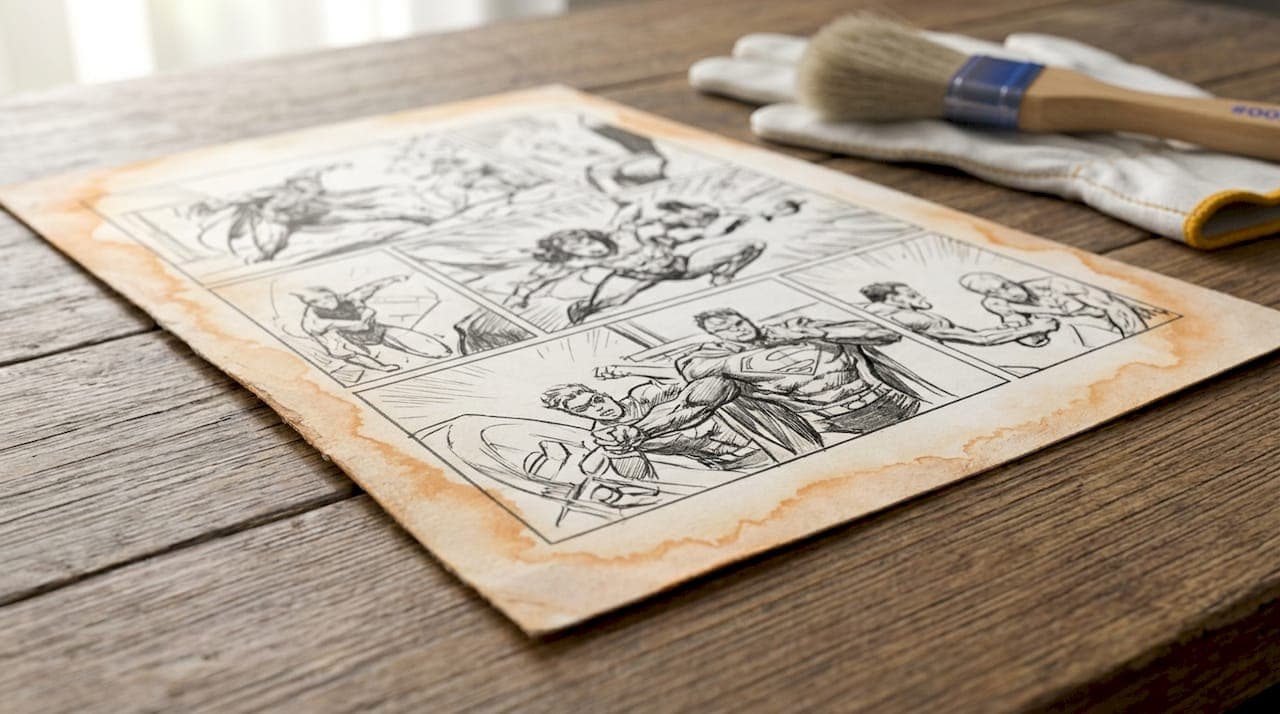
Tanning on comic pages is almost always a chemical change inside the paper fibers themselves, not surface dirt you can wipe away. The short verdict: true tanning generally cannot be fully reversed without restoration-level treatments that carry serious risks to both the paper and your book's grade. Your safest immediate steps are to stop further exposure, photograph the current condition, and decide whether conservative dry cleaning or a professional assessment makes more sense for that specific book.
- Stop the damage first. Move the book away from light, heat, and humidity before anything else.
- Document the condition. Photograph every page showing discoloration before touching the book.
- Identify what you're dealing with. Surface dirt and dust shadows often respond to dry cleaning; true tanning does not.
- Weigh the book's value. Low-value reader copies can tolerate cautious DIY attempts; high-value books deserve professional eyes first.
- Know your options. CGC's pressing guidance and services like Pressing Issues are your two main professional reference points.
Pro Tip: Before attempting any cleaning, check whether what you're seeing is actually tanning or a dust shadow. Run a clean, dry soft brush lightly across the area. If the discoloration lifts even slightly, it's likely surface soiling, not tanning.
Key Takeaways
Tanning is a fiber-level chemical change that cannot be fully reversed without restoration-level risk, making prevention and conservative treatment the most reliable strategy for protecting your collection's value.
| Point | Details |
|---|---|
| Tanning is usually irreversible | It is a chemical change in paper fibers, not surface dirt; dry cleaning and pressing do not remove it. |
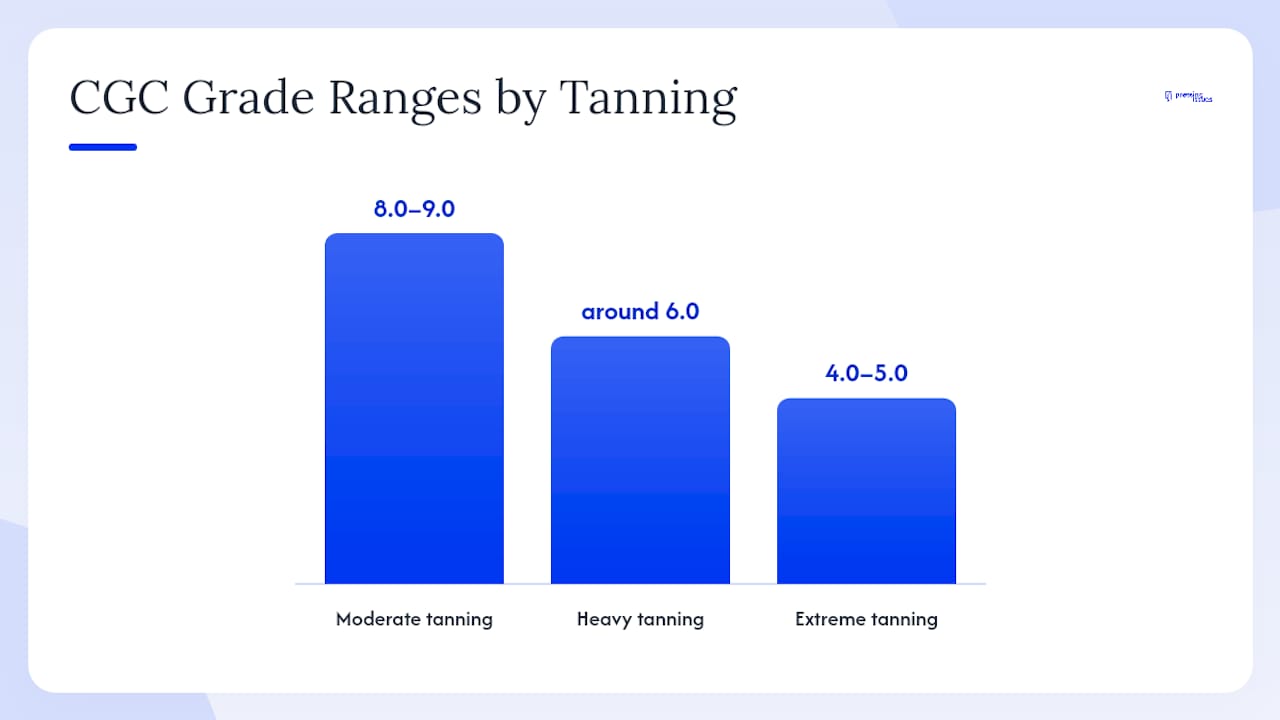
| Grade impact is significant | CGC notes moderate tanning can lower grades to 8.0–9.0; heavy tanning to around 6.0; extreme cases to 4.0–5.0. |
| DIY cleaning has strict limits | Dry cleaning with a soft brush, Absorene, or vinyl eraser is safe; liquid treatments at home are not. |
| Prevention is the strongest tool | Mylar sleeves, acid-free boards, 60–70°F, and 40–50% humidity dramatically slow further tanning. |
| Pressing Issues handles the hard cases | Professional intake screening, documented cleaning and pressing, and CGC submission handling protect high-value books. |
Table of Contents
- What tanning actually is and how to tell it apart from other discoloration
- How tanning hits your grade, your book's structure, and its resale value
- What treatments exist, what they actually do, and their real limits
- Safe, low-risk DIY cleaning steps and what to skip entirely
- When professional cleaning, pressing, or conservation makes sense
- How to stop further tanning and protect your collection
- Lessons from professional press and cleaning practice
- Why preservation-first is the only approach we stand behind
- Pressing Issues: professional cleaning and pressing for comics you care about
- Sources
What tanning actually is and how to tell it apart from other discoloration
Tanning is a uniform yellow-brown discoloration caused by acid migration and light exposure working on the cellulose and lignin in paper fibers. It is a fiber-level chemical change, not a coating sitting on top of the page. That distinction matters because surface soiling can be brushed or erased away, while tanning has altered the paper itself.
Visually, tanning tends to appear in predictable patterns:
- Edge-first browning. The outermost margins darken first because they have the most exposure to air and light.
- Inside-cover shadows. The inside front and back covers often show heavier tanning where they contact acidic backing boards or other paper.
- Uneven "tide" patterns. Partial exposure to moisture or fluctuating humidity can create irregular brown gradients across a page.
Foxing looks different: small, reddish-brown or rust-colored spots scattered across the page, usually linked to mold or metal contamination in the paper. Foxing is localized and spotty; tanning is broad and uniform. Dust shadows are gray or off-white hazes that sit on the surface and often disappear with a soft brush pass. Mildew leaves a musty smell and sometimes a powdery residue. Getting the diagnosis right before any treatment is the single most important step, because dry cleaning can safely lift surface soiling and dust shadows but does nothing for true tanning or deep oxidation.
How tanning hits your grade, your book's structure, and its resale value
Tanning is one of the most consequential defects CGC graders evaluate, and its impact scales with severity. According to CGC's grader notes guidance on tanning, moderate tanning can pull a book's grade down to the 8.0–9.0 range, heavy tanning to around 6.0, and extreme cases to 4.0–5.0.
| Tanning Severity | Typical Grade Impact | Structural Risk |
|---|---|---|
| Minor edge tanning | Minimal; may still grade 9.0+ | Low |
| Moderate (covers a portion of the page area) | Grade often substantially reduced but still high | Low to moderate |
| Heavy (majority of pages affected) | Grade often around 6.0 | Moderate; paper becoming brittle |
| Extreme (full cover, deep brown) | Grade often 4.0–5.0 | High; paper fragile and prone to cracking |
Beyond aesthetics, tanning signals real structural degradation. As cellulose breaks down, pages lose flexibility and become brittle. A book that grades 6.0 for tanning today may be physically fragile enough that careless handling causes spine splits or corner flaking. That is the difference between an aesthetic defect and a structural one: tanning is both.
Tanning is not just a cosmetic issue. It reflects ongoing acid-driven degradation that weakens paper fibers over time. A heavily tanned book handled carelessly today may suffer physical damage that no pressing or cleaning can address tomorrow.
For resale, the grade hit translates directly to value loss. A book that might grade 9.4 in clean condition could land at 8.0 with moderate tanning, and the price difference between those two grades on a key issue can be hundreds or thousands of dollars. Understanding how condition affects resale value is worth doing before committing to any treatment.
What treatments exist, what they actually do, and their real limits
Not every treatment works on every problem. Here is an honest breakdown of the main categories:
| Treatment | What It Removes | Risk to Paper/Ink | Who Should Attempt | Effect on Grade/Value |
|---|---|---|---|---|
| Dry cleaning (brush, eraser, putty) | Surface dirt, dust shadows, light soiling | Low | Experienced DIY or professional | None to minor positive |
| Pressing | Dents, warps, spine rolls, pressable defects | Low to moderate (higher if book is brittle) | Professional recommended | Minor to significant positive |
| Water/distilled water bath | Some water-soluble stains; not tanning | High; tide lines, gloss loss | Professional only | Risky if detectable |
| Diluted hydrogen peroxide | Some surface staining; minimal effect on tanning | High; ink loss, brittleness | Professional only | Risky; may constitute restoration |
| Deacidification sprays | Slows future acid migration; does not reverse tanning | Low to moderate | Experienced DIY or professional | Neutral to minor positive |
The core reality: pressing and dry cleaning do not remove tanning. They address surface soiling and pressable physical defects. Liquid treatments using distilled water or diluted hydrogen peroxide can reduce some stains, but these methods are advanced and risky, often requiring multiple careful passes over days and still failing to lift deep oxidation. Tide lines, gloss loss, and increased brittleness are all documented outcomes when liquid treatments go wrong.
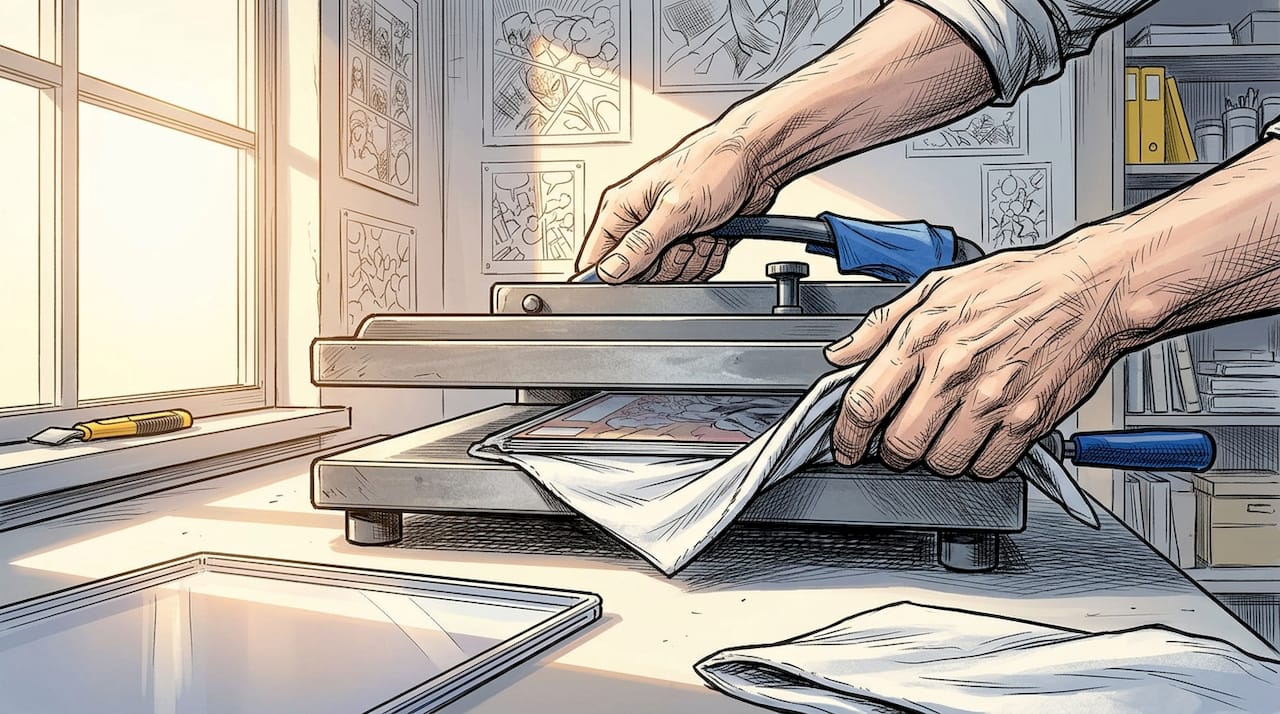
Bleaching or re-glossing that is detectable by graders is classified as restoration, which carries its own grade designation and typically reduces a book's market value. The line between conservation and restoration is narrow, and crossing it unintentionally is a real risk.
Pro Tip: Deacidification sprays like Archival Mist can slow future acid migration on books that are yellowing but not yet heavily tanned. They will not reverse existing tanning, but they can buy time.
Safe, low-risk DIY cleaning steps and what to skip entirely
Conservative dry cleaning is the only at-home approach worth attempting on a book you care about. Follow this sequence carefully.
- Photograph everything first. Document the front cover, back cover, and any pages with visible discoloration before touching the book.
- Put on archival cotton gloves. Skin oils accelerate tanning and leave fingerprint marks.
- Practice on a reader copy. If you have a lower-value duplicate, run through the full sequence on that book first.
- Soft brush pass. Use a clean, dry, soft-bristle brush (a wide watercolor brush works well) to sweep loose dust and debris off each page with light strokes from the spine outward.
- Absorene or document-cleaning putty. Gently roll a small piece across soiled areas. This lifts embedded surface grime without abrading the paper.
- White vinyl eraser. On non-glossy areas with stubborn soiling, a white vinyl eraser used with very light pressure can remove residue the putty missed. Never use a pink eraser; it is too abrasive.
- Melamine foam (Magic Eraser) — use with extreme caution. This can remove some marks on covers but has a real risk of lifting inks, especially on older or glossy stock. Test on an inconspicuous corner first and stop immediately if you see any color transfer.
Do not attempt any of the following at home:
- Soaking pages in water or any liquid solution
- Applying hydrogen peroxide, bleach, or any chemical whitener
- Using any solvent-based cleaner on interior pages
- Attempting wet treatments on brittle, cracked, or spine-split books
- Any treatment on a book worth more than you're comfortable losing
If you notice any color lifting, paper softening, or new tide lines forming, stop immediately and let the book dry flat before reassessing. At that point, professional help is the right call.
When professional cleaning, pressing, or conservation makes sense
Some books should never see a DIY cleaning attempt. Use these checkpoints to decide:
- Book value. If the book's current market value makes a professional fee reasonable, pay it.
- Brittleness. If pages crack when flexed even slightly, no at-home wet treatment is safe.
- Extent of tanning. Full-cover, deep brown tanning is beyond what dry cleaning addresses.
- Staple condition. Rusty or corroded staples can stain surrounding paper during any wet treatment.
- Historic importance. Key issues, first appearances, and signed copies deserve professional handling.
What professionals can do: intake screening for brittleness, dry cleaning, pressing, and in some cases controlled wet treatments tested on inconspicuous areas first. They document every step, which matters for grading submission. What they cannot do without triggering a restoration designation: invisible bleaching that leaves no detectable trace. If a treatment is visible to a grader, it is restoration, and that designation affects value.
- Request an intake evaluation. A professional should screen for brittleness and overall condition before committing to any treatment.
- Get a written scope of work. Know exactly what will be attempted and what the expected grade benefit is.
- Ask for before-and-after photos. Documentation protects you and the book's provenance.
- Understand the cost range. Basic cleaning and pressing runs from inexpensive to moderate for most books; assessed wet treatments or high-value submissions carry higher fees.
- Confirm the grading submission plan. If you're heading to CGC, make sure the professional handles the paperwork and shipping correctly.
Pro Tip: Always ask whether a proposed treatment will be disclosed to CGC. If the answer is unclear, that is a red flag. Non-restorative pressing and dry cleaning require no disclosure; detectable chemical treatments do.
How to stop further tanning and protect your collection
Prevention is the most reliable tool you have. Archival storage dramatically slows tanning and is far cheaper than any treatment.
- Mylar sleeves (Type D or equivalent). Polyester Mylar is chemically inert and will not off-gas acids onto your books. Avoid PVC bags, which accelerate degradation.
- Acid-free backing boards. Replace old boards regularly; they absorb acids over time and transfer them to your comics.
- Upright storage, spine up. Flat stacking puts weight on covers and can cause warping; upright storage in a box reduces pressure.
- Temperature: 60–70°F. Heat accelerates oxidation. Attics and garages are the worst storage environments for comics.
- Relative humidity: 40–50%. Too dry causes brittleness; too humid invites mold and foxing.
- No direct light. UV light is a primary driver of tanning. Even indirect sunlight through a window causes damage over time.
- Separate acidic paper. Newsprint, old magazines, and non-archival materials stored near comics will off-gas acids that migrate into your books.
A hygrometer and a small climate-controlled storage space are two of the best investments a serious collector can make. Stable conditions do more for long-term preservation than any cleaning treatment.
Lessons from professional press and cleaning practice
In practice, the most common scenario we see is mild-to-moderate edge tanning on Silver and Bronze Age books stored in non-archival conditions for decades. The approach in those cases is conservative: dry cleaning first, pressing if warranted, and a clear conversation with the collector about realistic grade outcomes before anything more invasive is considered.
For books with full-cover tanning, the workflow looks like this:
- Intake screening. Check for brittleness by gently flexing a corner. If the paper cracks, wet treatment is off the table entirely.
- Dry cleaning pass. Remove surface soiling that might be masking the true extent of tanning.
- Pressing evaluation. Assess whether pressable defects (spine rolls, corner bends) are present and worth addressing.
- Controlled wet treatment decision. Only considered after dry cleaning, only on books that pass the brittleness screen, and only after testing on an inconspicuous area.
- Documentation. Every step is photographed and noted for the CGC submission paperwork.
The most important thing we tell collectors: a professionally pressed and cleaned book with honest tanning notation on its CGC label is worth more than a book that was aggressively treated, suffered tide lines, and came back with a restoration designation. Stabilize and document — don't chase perfection at the cost of integrity.
The distinction between non-restorative cleaning and restoration is not just semantic. CGC treats them differently, buyers treat them differently, and the long-term value trajectory of a restored book versus a conserved one is meaningfully different. Pressing Issues discloses every treatment to collectors before proceeding and will always recommend the conservative path when the outcome of a more aggressive approach is uncertain.
Pro Tip: If you're submitting to CGC after professional cleaning and pressing, ask your service provider for a written treatment summary. Graders appreciate transparency, and it protects you if questions arise later.
Why preservation-first is the only approach we stand behind
Collectors come to us hoping we can make their tanned books look like new. We understand that impulse completely. But the honest answer is that tanning reflects real chemistry that has already happened inside the paper, and chasing a cosmetic fix with aggressive treatments often leaves a book worse off than it started.
Our commitment at Pressing Issues is to document the condition accurately, attempt only what we can do without risking further damage, and give collectors a clear picture of what a realistic grade outcome looks like before we touch anything. We will never attempt an invasive technique without documented consent, and we will never promise a grade we cannot honestly support.
Pressing Issues: professional cleaning and pressing for comics you care about
Collectors who want professional results without the risk of DIY missteps have a clear path forward. Pressing Issues offers non-restorative comic cleaning and pressing in Seattle and Portland, with a workflow built around protecting your book's integrity at every step.

The intake process starts with a condition evaluation: we screen for brittleness, document existing defects, and give you a written estimate of the expected grade benefit before any work begins. Dry cleaning, pressing, and assessed wet treatments are all available depending on what the book can safely tolerate. Every submission includes full photo documentation and complete CGC paperwork handling, so your book moves through the grading process without gaps in its history. View our services, rates, and turnaround times to see what fits your collection, or visit our comic cleaning service page to learn more about what each treatment involves.
Sources
These resources are worth reading before attempting any cleaning or treatment on a book you value: