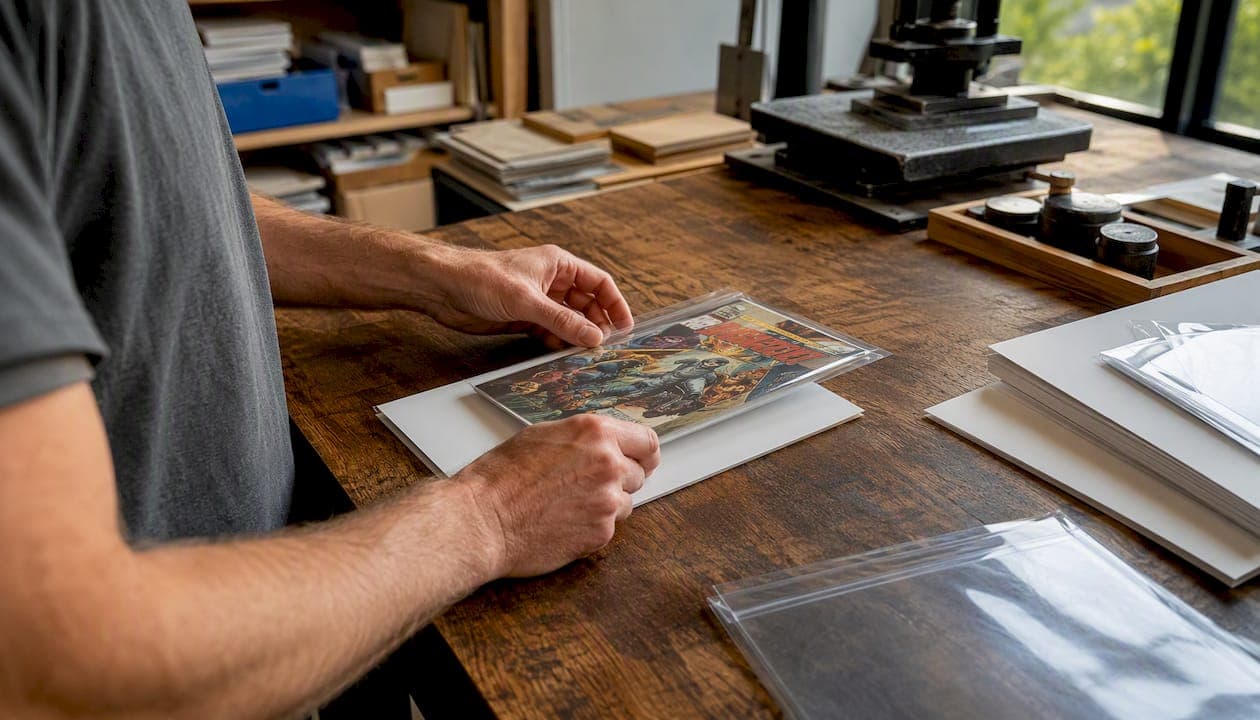
A heat-press comic is a comic book that has been flattened and stabilized using controlled heat, pressure, and time to relax paper fibers and reduce non–color-breaking defects, without adding or removing any original ink. The industry term for this process is comic book pressing, and for collectors, it is one of the most effective tools available for improving eye appeal and potentially moving a book up a grading tier — provided the defects are the right kind.
Pressing helps when:
- The book has spine waves, roll, or light reading creases
- Defects are non–color-breaking (no ink loss, no color flaking)
- The goal is improving eye appeal for grading or resale
Pressing will not fix:
- Stains, foxing, or water damage
- Tears, missing pieces, or brittleness
- Color-breaking creases or ink flaking
- Restoration or previous amateur repairs
Key Takeaways
Comic book pressing is a non-restorative process that uses heat, pressure, and time to flatten structural defects, and its value to collectors depends entirely on matching the technique to the right defects on the right books.
| Point | Details |
|---|---|
| What pressing is | Controlled heat, pressure, and time flatten paper fibers without adding or removing ink. |
| What it fixes | Spine waves, light bends, and reading creases — non–color-breaking structural defects only. |
| What it cannot fix | Stains, tears, color-breaking creases, water damage, and missing paper are beyond pressing's scope. |
| DIY safety rule | Test on low-value books first; always use a cold-press dwell of at least 12 hours after the heat cycle for best results. hours after the heat cycle. |
| When to hire Pressing Issues | Any book with meaningful market value or a planned CGC submission warrants professional handling. |
Table of Contents
- What does a heat press actually do to a comic book?
- What pressing can fix, and what it honestly cannot
- Equipment and supplies collectors use for DIY pressing
- A safe DIY pressing workflow, step by step
- Risks to collectability, and when to hire a professional
- How a professional pressing service handles your comic
- A note from Charles on what pressing actually delivers
- Pressing Issues: professional pressing for collectors who care about results
- Sources
What does a heat press actually do to a comic book?
Heat relaxes paper fibers, pressure flattens them, and time allows them to set in their new position. That three-part mechanism is why pressing works at all, and why getting any one variable wrong can cause permanent damage.
Paper is made of cellulose fibers that respond to heat and moisture much like fabric. When a comic develops a spine wave or a reading crease, those fibers have been compressed or displaced. Controlled heat softens the fiber bonds enough to allow them to move; even pressure redistributes them flat; a cold-press dwell period afterward locks the result in place. The cover gloss and ink layers sit on top of those fibers, which is why temperature matters so much. Push the heat too high and the ink or gloss can bubble, flare, or transfer to your protective layer.
Professional and hobbyist guidance alike identifies the same three control variables: temperature, pressure, and time. The tradeoffs are real.
- Temperature: Higher heat relaxes fibers faster but risks gloss damage and ink flaring. Community sources commonly cite a conservative range of 130–160°F for comic books.
- Pressure: Even, moderate pressure is the goal. Too much crushes staples or embossed covers; too little leaves waves unreformed.
- Time: Longer press cycles allow deeper fiber relaxation, but they also increase heat exposure. Cold-press dwell time of 12–24 hours after the heat cycle prevents reversion.
Research on fabric and paper substrates confirms that different materials require different settings — what works for a thick cardstock cover may damage a thinner interior page if the press cycle runs too long. That sensitivity is exactly why paper-specific caution is non-negotiable.
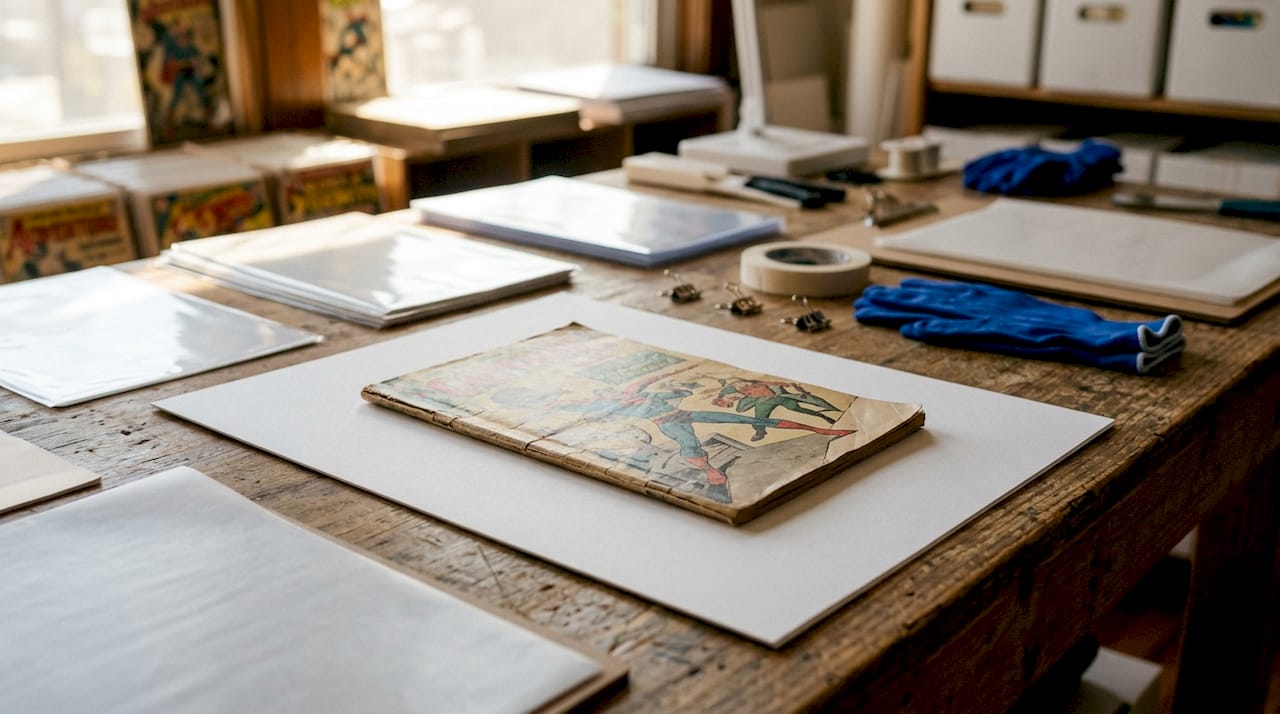
Stack diagram: from bottom to top — acid-free backer board, comic book, protective mylar sheet, top backer board. The comic never touches the platen directly.
What pressing can fix, and what it honestly cannot
Pressing reliably improves eye appeal for structural defects. Spine waves flatten, light reading creases soften, and mild bends relax. For grading purposes, those improvements matter because CGC and other graders evaluate surface defects and structural integrity separately from restoration. A well-pressed book with no color-breaking defects can move up a full grade tier in some cases, which translates directly to market value.
What pressing will not do is equally important to understand.
Defects pressing cannot reliably fix:
- Stains, foxing, or soiling of any kind
- Water damage or tide lines
- Tears, chips, or missing paper
- Color-breaking creases (where ink has already cracked or flaked)
- Brittleness from age or acid degradation
- Previous amateur restoration (glue, tape residue, color touch)
Graders look at surface texture, fiber stress patterns, and the consistency of the cover finish. A successful press leaves no detectable evidence of intervention. An unsuccessful one can leave gloss bubbling, uneven texture, or staple impressions that actually lower a grade. The goal is always to improve the book's natural presentation, not to disguise damage.
Pro Tip: Before pressing anything with real value, test the same technique on two or three low-value reading copies from the same era. Silver Age books behave differently than Modern Age books, and a test run costs almost nothing.
Equipment and supplies collectors use for DIY pressing
The most commonly referenced setup in collector communities is a clamshell-style heat press with a 15" x 15" platen. That platen size covers a standard comic book with room to spare, and the clamshell design applies even downward pressure across the full surface. Consumer-grade models like the MPress 15" x 15" high-pressure press are widely cited in hobbyist discussions as practical entry-level options.
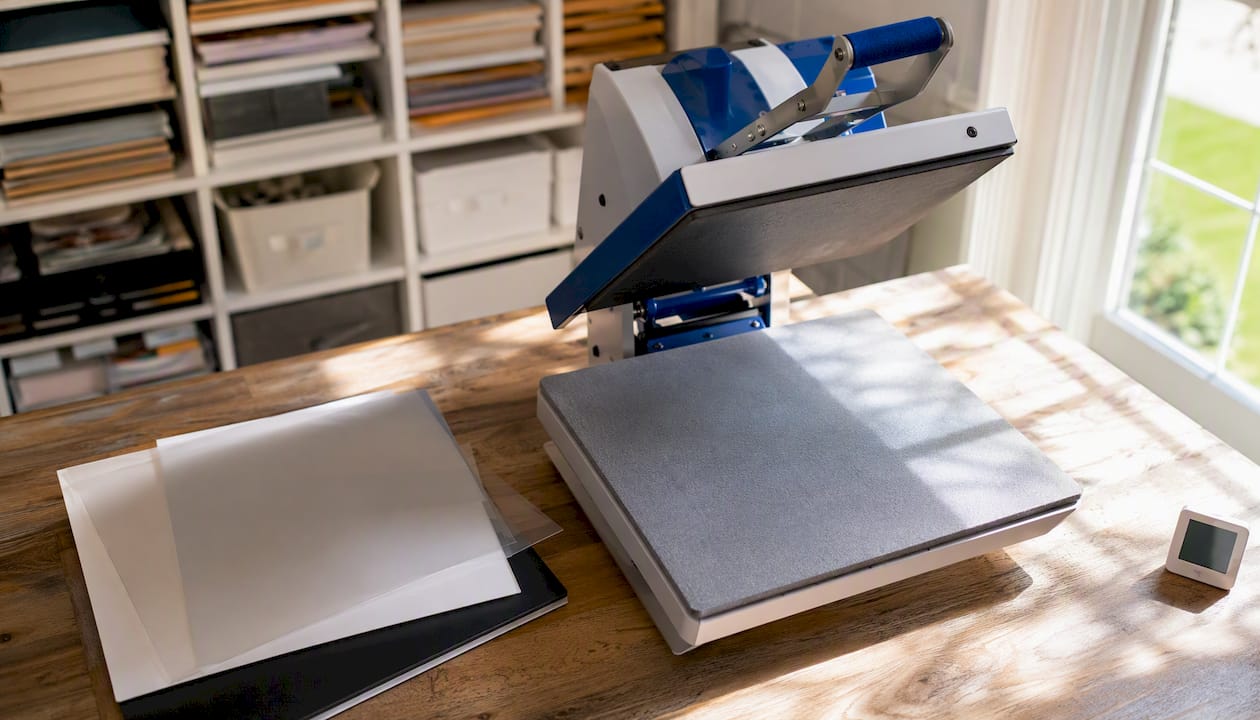
Beyond the press itself, the protective layer stack matters as much as the machine.
Supplies you need:
- Acid-free backer boards (one above, one below the comic)
- Mylar or polyester sleeves as a barrier between the comic and the board
- Butcher paper or newsprint as an additional buffer layer
- A separate cold-press setup (a flat surface with weight, or a book press)
- A reliable thermometer to verify platen temperature accuracy
DIY equipment investment for a basic setup runs from a few hundred dollars for a consumer-grade press to more for a higher-pressure model with a digital readout, according to commonly shared community information. Professional services typically charge per book, with rates varying by book value and condition. For a single high-value book, the math often favors hiring a pro over buying equipment you may use only a handful of times.
Pre-pressing your boards to remove surface moisture before placing the comic is a technique borrowed from fabric transfer work, and it applies directly here. Moisture trapped in the board stack can create steam during the press cycle, which damages paper fibers and cover gloss.
A safe DIY pressing workflow, step by step
The goal of any pressing session is to flatten the book safely, with no evidence of intervention afterward. Every step below is designed to minimize the chance of making a book worse.
- Inspect the book thoroughly. Photograph every defect before you touch it. Note any color-breaking creases, staple condition, and cover gloss type (matte vs. high-gloss covers behave differently under heat).
- Dry-dust the surfaces. Use a soft brush or dry cotton pad to remove loose debris. Never use liquids before pressing.
- Pre-press your boards. Run the backer boards through the press for 30 seconds at your target temperature to drive out moisture.
- Build the stack. Bottom board, mylar, comic face-up, mylar, top board. The comic never contacts the platen or a bare board directly.
- Set conservative temperature and pressure. Start at the lower end of the 130–160°F range. Pressure should be firm but not crushing.
- Run the press cycle. Most hobbyist guides suggest short cycles (30–60 seconds) repeated rather than one long exposure, checking between cycles.
- Transfer immediately to cold press. Move the stack to a flat surface under weight and leave it for at least 12 hours. This dwell time is what prevents the fibers from reverting.
- Inspect under good light. Check for gloss changes, staple movement, and whether the target defects improved.
Safety checklist before every session:
- Set a timer. Never walk away from an active press.
- Confirm the platen temperature with an external thermometer before the first cycle.
- Never use a household iron. on this: irons deliver uneven heat and no pressure control.
- Do not press high-gloss, foil, or water-damaged books without professional guidance.
- Keep a fire extinguisher accessible when working with heat equipment.
DIY community tutorials consistently document that beginners damage a small percentage of their test books, which is exactly why practicing on low-value copies first is not optional advice.
Risks to collectability, and when to hire a professional
Pressing carries real risk to high-value books. For any comic with meaningful market value, the cost of a professional service is almost always less than the cost of a pressing error.
Specific risks collectors face with DIY pressing:
- Heat damage to cover gloss (bubbling, dulling, or texture change)
- Ink flaring or transfer to the protective layer
- Staple popping or impressions from excess pressure
- Detectable pressing evidence that a grader notes on the label
- Worsening a color-breaking crease by applying heat to already-stressed ink
Grading services evaluate pressing evidence as part of their process. A book that shows signs of pressing is not automatically penalized, but a book that shows signs of failed pressing can receive a lower grade than it would have unaltered. Resale trust also depends on accurate representation of a book's condition history.
When to hire a professional:
- The book's current market value exceeds what you are comfortable risking
- The book is a key issue, first appearance, or low-print-run variant
- You have not pressed successfully on comparable test books
- The defects include anything near the cover gloss or a color-sensitive area
- You are planning a CGC submission and want the best possible outcome
Pro Tip: Photograph every defect with good lighting before sending a book to any service. That documentation protects you and gives the professional a baseline to work from.
Guidance on choosing which comics to send for pressing comes down to a simple value-versus-risk calculation. The higher the book's value and the more complex its defects, the stronger the case for professional handling.
How a professional pressing service handles your comic
A professional workflow differs from DIY in every measurable way: controlled environment, documented condition at intake, differential temperature settings by paper type, and a post-press inspection before anything ships back to you.
Here is what a professional process typically looks like:
- Intake inspection: The book is examined under magnification and photographed. Defects are catalogued and a pressing estimate is prepared. For high-value books, a value-increase analysis determines whether pressing is worth the investment.
- Cleaning (if applicable): Dry surface cleaning removes debris that could cause abrasion during pressing. This step happens before heat is applied.
- Humidity and heat-controlled pressing: Temperature is set to the paper type, not a single universal setting. Older, more brittle paper gets lower heat and shorter cycles than Modern Age stock.
- Cold-press dwell: The book moves to a controlled cold-press setup for a documented dwell period, preventing reversion.
- Post-press inspection: The book is re-examined against the intake photos. Any unexpected changes are noted and disclosed.
- Grading submission handling (optional): For collectors pursuing CGC grades, the service manages packaging, paperwork, and shipping.
Turnaround times and service rates vary by volume and book value. Most professional services charge per book, with higher rates for higher-value submissions that require more careful handling. Grading submission assistance is typically an additional fee covering CGC paperwork and shipping logistics.
A note from Charles on what pressing actually delivers
We work with collectors in Seattle and Portland every week, and the single most common misconception we see is that pressing is a miracle fix. It is not. Pressing is a precision tool for a specific category of defect, and it works beautifully when applied to the right book. The collectors who get the best results are the ones who come in with realistic expectations: they know which defects pressing addresses, they have photographed their books, and they understand that a grade improvement is possible but never guaranteed. That conservative mindset is what separates a good outcome from a disappointing one.
Pressing Issues: professional pressing for collectors who care about results
When the book matters, the margin for error is zero. Pressing Issues offers professional comic book pressing and cleaning for collectors and dealers across the United States, with hands-on service based in Seattle and Portland. Every book goes through a documented intake inspection, a value-increase analysis at no extra charge, and a post-press review before it ships back to you.
For collectors planning a CGC submission, we handle the paperwork, packaging, and shipping so you do not have to navigate that process alone. Our per-book fee structure means you pay for exactly what your collection needs, with no minimum volume requirement. Whether you have one key issue or a box of Silver Age books ready for grading, get a pressing estimate and find out what your books could grade at after a professional press.
Sources
The resources below represent the strongest community and professional references available for collectors learning about heat pressing. Each one offers a different angle: practical how-to, equipment guidance, or technique fundamentals.
- How to Press Comic Books Free Online Guide
- Tutorial - Applying fabric transfer materials - University of Illinois digital labs
- Heat Press Basics for Artists: Pressure, Temperature, and Time - Cornford and Cross
- Painting on fabric with the heat press - MicroMacroTextiles
- MPress 15" x 15" high-pressure heat press machine - Heat Press Nation