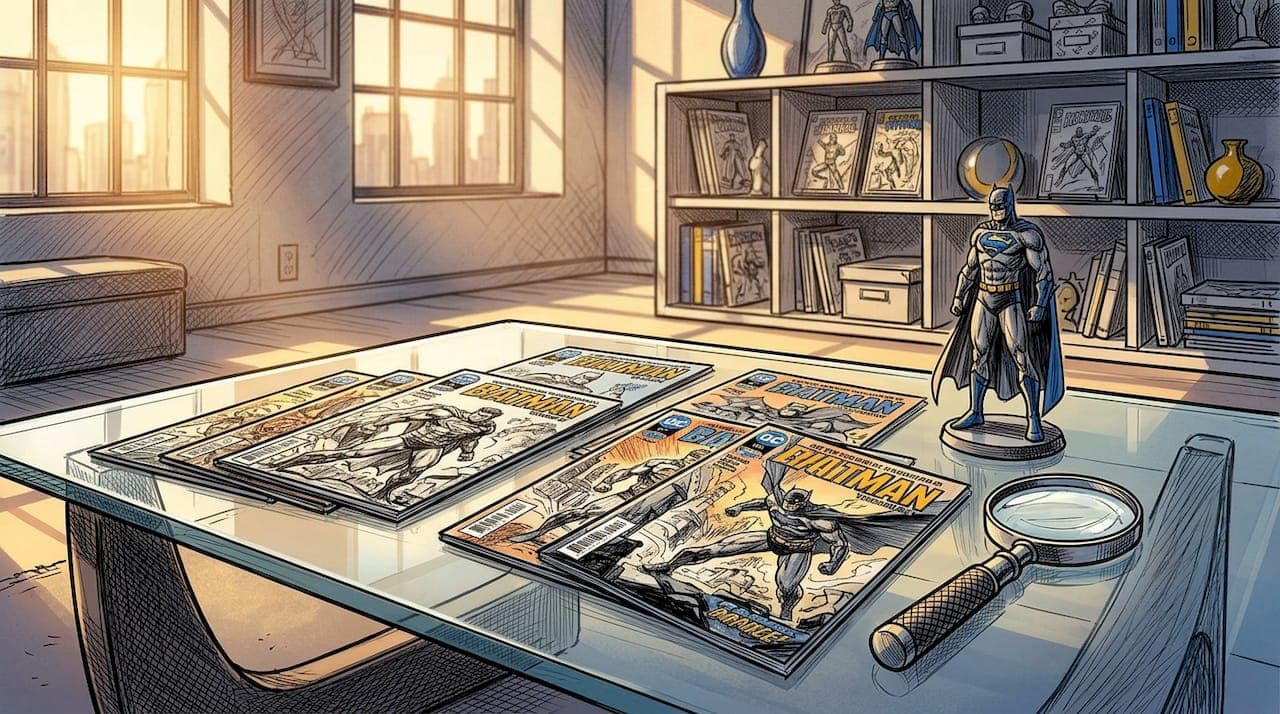
Type A is the primary retail cover of a comic issue; Type B is an alternate cover for the same issue, sold alongside it. That distinction sounds simple, but it drives every service decision you face: whether to have a book cleaned, pressed, appraised, or submitted to CGC for grading. The rule we use at Pressing Issues is straightforward: prioritize professional services when a variant's ceiling, meaning its scarcity multiplied by realized market demand, clearly justifies the combined cost and risk of pressing, cleaning, and grading.
Three entities shape that decision every time:
- Pressing Issues handles cleaning, pressing, appraisal, and CGC submission so you don't have to navigate it alone.
- CGC (Certified Guaranty Company) grades and labels your book, and it distinguishes cover variants on the label itself.
- ComicBookInvest offers dealer-level commentary on how variant markets actually behave, not just how publishers describe them.
Key Takeaways
The letter on a variant cover only matters when realized market data confirms the scarcity and demand that justify professional service costs.
| Point | Details |
|---|---|
| Confirm variant ID first | Use barcodes, order codes, and indicia before filling any CGC submission form. |
| Check realized prices, not asking prices | eBay sold listings and GoCollect/PriceCharting trend data are your actual benchmarks. |
| Apply the 5–8× rule | If the variant's top realized sale is less than 5–8 times total service cost, store it; don't press it. |
| Pressing fixes specific defects | Stress lines, spine ticks, and light creases respond well; color-breaking damage and tears do not. |
| Pressing Issues | Offers pressing, cleaning, appraisal, and CGC submission handling with a complimentary value analysis before any work begins. |
Table of Contents
- What do publishers mean when they label covers "A" and "B"?
- How publishers create scarcity through production and distribution
- How to identify whether a physical book is a Type A or Type B
- Why the A vs B distinction should change your service decisions
- Decision checklist: should you clean, press, appraise, or submit this variant?
- How pressing and cleaning affect CGC grading outcomes
- How to research market demand for a specific variant
- Preparing and shipping a variant for pressing and CGC submission
- How Pressing Issues evaluates a Type A vs Type B variant
- The variant letter is the starting point, not the answer
- Pressing Issues handles the whole process for you
- Sources
What do publishers mean when they label covers "A" and "B"?
Cover A is the primary, main retail edition of an issue. Cover B is an alternate art edition of the same issue, printed for the same release date. Both are typically available to any retailer on an open-order basis, meaning shops can order as many copies of either as they want without hitting a threshold. That open-order status is the first thing to verify, because it directly affects scarcity.
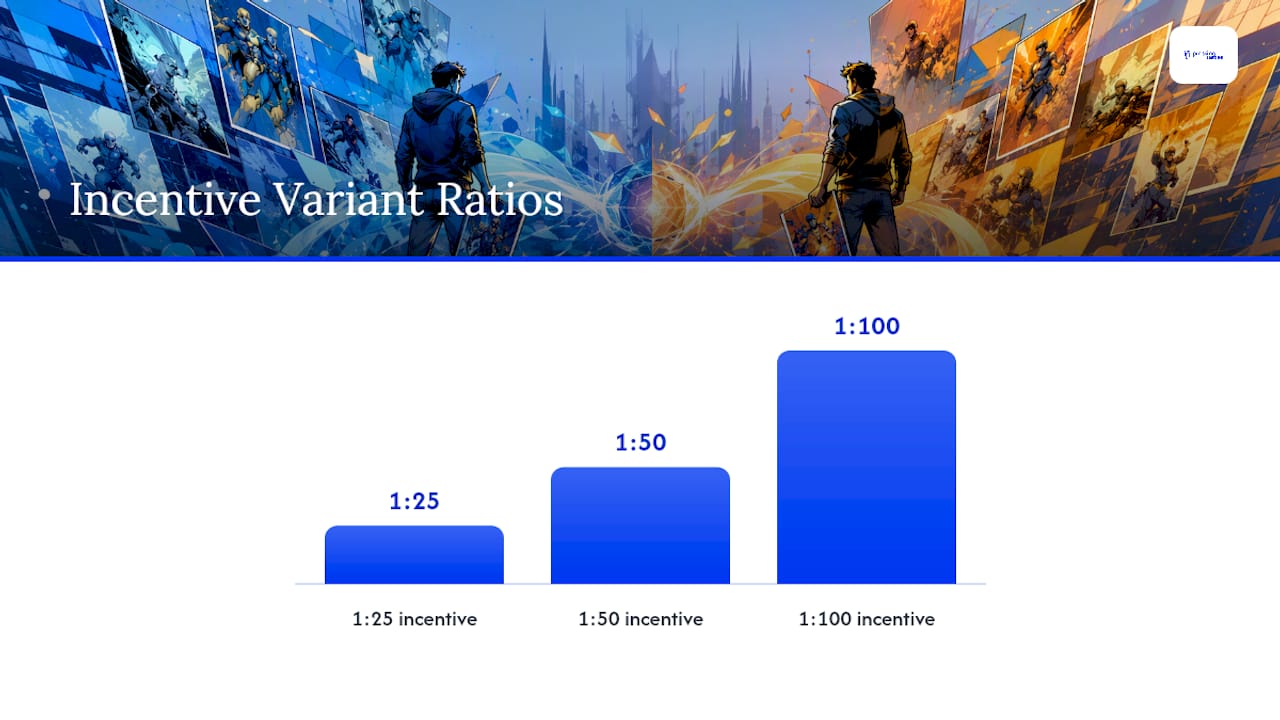
Beyond A/B pairs, publishers also produce incentive variants and separate-order variants, which require retailers to order a set number of regular copies to unlock access. A 1:25 incentive means a shop must order multiple copies of the standard cover to receive one incentive copy. These are structurally different from a standard B cover, even though they sometimes carry a "B" or "C" designation in publisher solicits.
- Open-order A/B: Both covers freely available; secondary-market value depends on demand, not supply restriction.
- Incentive/ratio variants: Require ordering thresholds (1:25, 1:50, 1:100); structured scarcity built in from the start.
- Retailer exclusives: Ordered through a specific shop or chain; print run determined by that retailer's order alone.
- Separate-order variants: Listed under a distinct Diamond or Lunar order code; shops must actively choose to order them.
As WWAC's Variant Covers 101 notes, variant covers are a deliberate publisher strategy to drive sales by creating scarcity or choice. That context matters when you're deciding whether a B cover deserves a $50 pressing fee.
Pro Tip: Check the publisher's original solicit PDF and the retailer order code on the rear cover or indicia. If the B cover carries its own order code separate from the A, it was likely ordered in smaller quantities regardless of its open-order status.
How publishers create scarcity through production and distribution
The mechanics behind variant rarity fall into a few clear patterns. Open-order A/B pairs ship in roughly equal allotments when retailers order equal quantities, but that rarely happens in practice. A shop that orders 50 copies of a hot title might order 40 A covers and 10 B covers based on customer preference, making the B effectively rarer on the secondary market even though both were freely available.
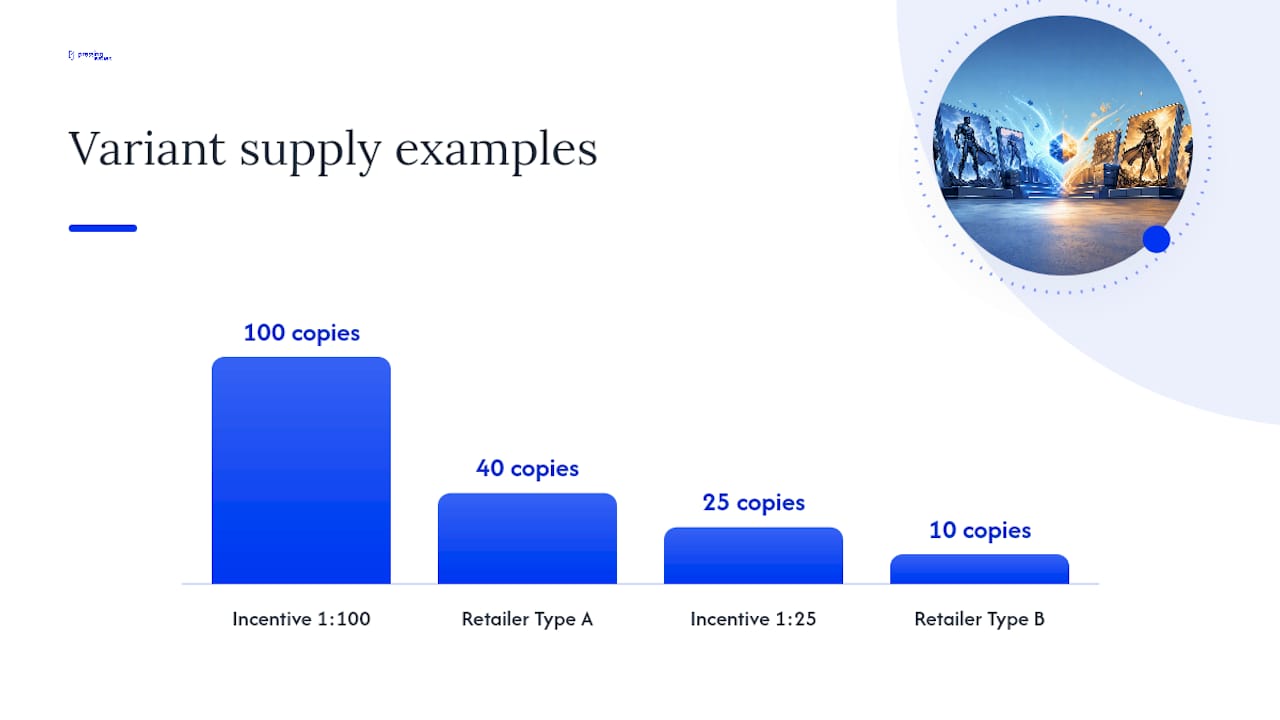
Incentive ratios push scarcity further. A 1:25 ratio variant requires a retailer to order 25 standard copies to receive one incentive copy. At a typical cover price, that equates to a substantial order of standard copies for a single incentive book, which is why ratio variants frequently carry significant price premiums relative to their cover price. A 1:100 ratio variant from a major publisher can command hundreds of dollars in raw form.
Blank and virgin variants sit in their own category. Virgin covers strip the trade dress (logo, title, price box) to show only the art, and they frequently command premiums over their trade-dress equivalents when ratios make them scarce.
Scarcity signal: A 1:25 incentive variant typically retails for approximately 25 times the cover price in shop pricing behavior. Higher ratios can command significantly higher multiples in the secondary market when demand is high.
Key production mechanisms to know:
- Open-order A/B pairs (equal or unequal retailer ordering)
- Incentive ratios: 1:10, 1:25, 1:50, 1:100, and beyond
- Retailer exclusives (single-store or chain-specific print runs)
- Convention and mail-away variants (extremely limited distribution)
- Virgin/blank/sketch covers (art-only, no trade dress)
How to identify whether a physical book is a Type A or Type B
Correct identification before you fill out a CGC submission form is non-negotiable. CGC distinguishes cover variants on the label, and entering the wrong variant can cause delays or require re-labeling during grading.
Visual and physical ID checklist:
- Corner box or cover text (some publishers print "Cover A" or "Cover B" directly)
- Barcode/UPC differences (some variants carry a different UPC or a second barcode)
- Cover art credit in the indicia or credits page
- Rear cover or inside-front-cover order codes
- Publisher or retailer markings (stickers, stamps, or foil logos for exclusives)
Step-by-step identification process:
- Photograph both the front and back covers before handling further.
- Check the indicia (small print block, usually inside front cover or first page) for cover designation language.
- Compare the UPC barcode against the publisher's solicit PDF or a known-correct copy.
- Search the issue on a database like the CGC census or a collector wiki to confirm which cover matches which designation.
- If the book is a retailer exclusive, look for the retailer's branding or a certificate of authenticity included with the book.
- Record your findings in writing before submitting; attach notes to your CGC submission form.
Why the A vs B distinction should change your service decisions
The letter on a cover is not a value signal by itself. What matters is the combination of print-run behavior and realized market demand. A Type B cover that shipped open-order but was under-ordered by retailers can outperform a Type A on the secondary market, and ComicBookInvest has documented exactly this pattern: dealer ordering behavior can make some B variants effectively rarer than A covers even when both were freely available.
The financial logic for service decisions follows from that reality:
- Service cost vs. grade uplift: A pressing and CGC submission typically costs $30–$80 per book depending on tier and turnaround. If a 9.8 of your variant sells for $120 and a raw copy sells for $60, the math barely works. If the 9.8 sells for $400, it works clearly.
- Eye appeal and artist cachet: A B cover by a fan-favorite artist can carry a premium independent of print run. Eye appeal drives pricing in ways that raw grade numbers don't always capture.
- Screen-adaptation potential: A variant featuring a character's first appearance or a key story moment tied to a film or TV adaptation can spike in value quickly, making early pressing and grading a smart move.
Pro Tip: Use comic book resale value factors as a framework: print run, demand trajectory, and condition ceiling together determine whether a service investment makes sense.
Decision checklist: should you clean, press, appraise, or submit this variant?
Work through this before spending a dollar on services:
- Confirm variant ID using the physical cues and step-by-step process above.
- Check eBay sold listings (not asking prices) for the specific variant and grade range you're targeting.
- Review GoCollect or PriceCharting for trend direction: is the realized price rising, flat, or declining?
- Gauge the print run or ratio: Was this open-order, incentive, or exclusive? Consult CovrPrice's variant guide for category context.
- Assess eye appeal and damage type: Pressing fixes stress lines, spine ticks, and light creases. It cannot fix color-breaking creases, tears, or missing pieces.
- Request an appraisal estimate before committing. Pressing Issues offers complimentary value analysis to help you decide.
Pro Tip: If the variant's realized top sale is less than 5–8 times your total service cost (pressing + CGC submission + shipping), prioritize proper storage, Mylar bagging, and acid-free boarding over pressing and grading. Protect the book; invest in services when the ceiling is clear. See which comics to send for pressing for a fuller triage guide.
How pressing and cleaning affect CGC grading outcomes
Professional pressing is a non-restorative process that uses heat and pressure to relax paper fibers, reducing stress lines, spine ticks, and light surface creases without adding material or altering the comic's structure. When done correctly, it can move a book from a CGC 7.0 to an 8.5, or from an 8.5 to a 9.4, depending on the defect profile. Those grade jumps translate directly into realized price differences on the secondary market. See the grading upgrade sweet spots for grade-specific guidance.
What pressing cannot fix:
- Color-breaking creases or spine rolls with ink loss
- Tears, missing pieces, or water damage with tide lines
- Brittleness or significant paper degradation
- Restoration (which CGC flags on a purple label, not a blue one)
CGC's variant labeling is precise. A direct edition and a newsstand edition of the same issue carry different labels and often different values. The same applies to A and B covers. Entering incorrect information on your submission form is one of the most common and avoidable mistakes collectors make.
How to research market demand for a specific variant
Follow this workflow before committing to any service spend:
- eBay sold listings: Filter by "sold" and search the exact issue, cover designation, and grade. Realized prices, not asking prices, are your benchmark.
- GoCollect or PriceCharting: Pull the price trend chart for the specific variant and grade. A rising trend over 90 days is a green light; a flat or declining trend warrants caution.
- ComicBookInvest commentary: Check for any editorial analysis on the specific issue or character. Dealer-level context on ordering behavior can reveal supply anomalies the raw numbers miss.
- Auction house results: Heritage Auctions and ComicLink archive high-grade sales that eBay doesn't always capture for key books.
- Dealer listings: Active dealer asking prices signal where the market expects the book to land, even if realized sales haven't caught up yet.
Tools and what each reveals:
- eBay sold listings: Realized demand, volume, and grade sensitivity
- GoCollect / PriceCharting: Trend direction and population data
- ComicBookInvest: Market context and ordering-behavior analysis
- CovrPrice: Variant category identification and collector tips
When sales volume is low (fewer than three or four sold copies in a grade), treat any reported high as a potential outlier. One motivated buyer does not make a market.
Preparing and shipping a variant for pressing and CGC submission
Packing checklist:
- Bag in a Mylar or polyethylene sleeve sized for the book's era; see comic book bag types for specs.
- Board with acid-free backing board; never use cardboard.
- Double-box for high-value books: inner box snug, outer box with at least two inches of padding on all sides.
- Insure shipments above $100 through your carrier; USPS Priority Mail and UPS both offer declared-value insurance.
Documentation steps:
- Photograph the front cover, back cover, spine, and any notable defects before packing.
- Note the variant designation, issue number, publisher, and any identifying marks in writing.
- Include provenance documentation (receipts, certificates of authenticity) when available.
- Complete the CGC submission form with the correct variant label; double-check against your physical ID notes.
- Keep a copy of all paperwork and tracking numbers.
Turnaround for pressing typically runs two to four weeks depending on service tier. CGC grading adds its own turnaround on top of that, ranging from several weeks to several months depending on the submission tier you select. Check Pressing Issues' rates and turnaround for current timelines.
How Pressing Issues evaluates a Type A vs Type B variant
Pressing Issues is a specialized comic book pressing and cleaning service based in Seattle, Washington and Portland, Oregon. Our evaluation workflow for every variant submission follows a consistent sequence:
- ID confirmation: We verify the cover designation against publisher solicits, barcode data, and collector databases before any work begins.
- Market check: We review recent sold listings and trend data to confirm the service investment is justified by the book's ceiling.
- Cleaning estimate: We assess whether non-restorative surface cleaning will improve eye appeal without risking the book's grade.
- Pressing feasibility: We evaluate the defect profile to determine whether pressing can realistically move the grade.
- Grading submission recommendation: We advise on CGC tier selection based on the book's likely grade and the realized price differential between grades.
The variant letter is the starting point, not the answer
Most collectors come to us having already decided that a B cover is rarer or more valuable than an A cover because the letter implies it. That assumption is wrong often enough to cost real money. An open-order B cover from a low-demand title can sit raw in a long box for years while a Type A from the same issue, ordered in small quantities by cautious retailers, quietly becomes the scarcer book.
The practical rule we apply: identification first, market data second, service decision third. The letter is just a label. The sold listings are the evidence.
Pressing Issues handles the whole process for you
When you're holding a variant and trying to decide whether it's worth pressing, cleaning, or grading, the research and logistics can pile up fast. Pressing Issues cuts through that. We offer professional comic book pressing and cleaning, complimentary value analysis, and full CGC submission handling so you're not managing shipping, paperwork, and grading tiers on your own.
Our process maps directly to the checklist above: we confirm your variant ID, run the market check, assess the book's condition, and give you a clear recommendation before any work begins. If the numbers don't support pressing, we'll tell you. If they do, we handle everything from cleaning through CGC submission and return. Get a quote at Pressing-issues and let us take it from there.
Sources
- Variants on variants - ComicBookInvest
- Can we all agree that Marvel Whitmans are not a thing? - CGC Boards
- All You Need to Know About Variants - CovrPrice
Recommended
- Comic Book Double Cover: What Collectors Need to Know — Pressing Issues
- Comic Book Pressing Secrets Revealed: What Experts Don't Want You to Know — Pressing Issues
- Comic Book Resale Value Factors: A 2026 Collector's Guide
- The Grading Upgrade Game: Where Are the Sweet Spots for Pressing and Cleaning? — Pressing Issues