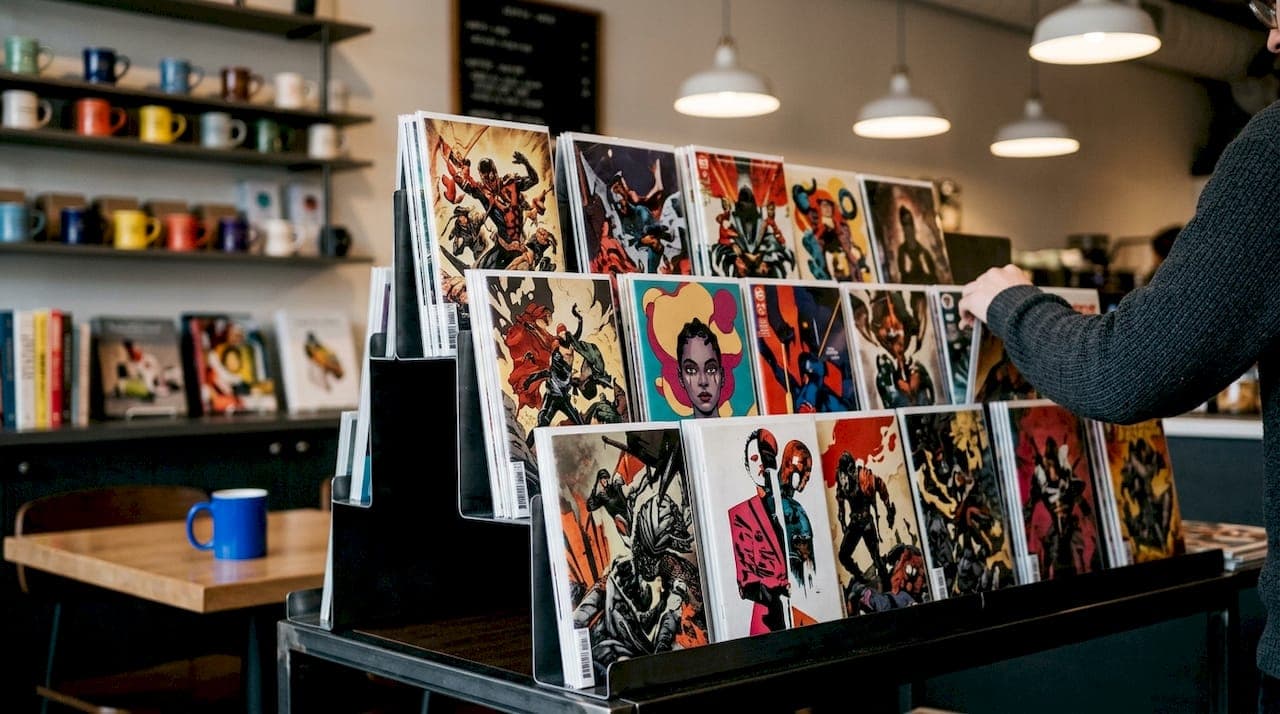
A variant cover comic is a copy of an issue that carries different cover art from the standard edition while the interior story, panels, and pages remain completely identical. The cover changes. The content does not. That single fact is the most important thing a new collector can know before spending money on variants.
Two quick takeaways before we go deeper:
- A variant cover does not give you a different story or bonus pages. You are paying for the art, the scarcity, or both.
- As a beginner, buy a variant because you love the cover art or the artist. Buying purely to flip it for profit is a gamble most new collectors lose.
Pro Tip: Talk to your local comic shop (LCS) before a new issue drops. Many shops can preorder specific covers for you, including ratio variants, if you ask early enough. Waiting until release day often means the rarest covers are already gone.
Table of Contents
- What is a variant cover comic, and how does it actually work?
- Where variant covers came from and why they exploded in the 1990s
- The main types of variant covers you will encounter
- How to find and buy variant covers without overpaying
- What makes a variant valuable, and what does "1:50" mean?
- Should you collect variant covers? Practical advice for beginners
- Key Takeaways
- The habit that changed how we think about variant collecting
- Useful sources for going deeper
What is a variant cover comic, and how does it actually work?
Every variant cover comic shares its interior content with every other copy of that issue. Whether you pick up Cover A, Cover B, or a 1:50 incentive variant, you are reading the same story. What differs across editions is the front cover art, the finish, or sometimes the label printed on the cover itself.
Publishers assign each cover version its own order code in the Diamond or Lunar Distribution catalog. A retailer places separate orders for each code. Cover A is typically the "open order" cover, meaning a shop can order as many copies as it wants. Cover B might also be open order, or it might be a ratio variant that requires the retailer to order a minimum number of Cover A copies to unlock it.
When you browse a preorder list or a seller's listing online, you will see shorthand like "1:25," "CVR B," or "retailer exclusive." These are not random labels. Each one tells you something specific about how the cover was distributed and how many exist. Learning to read that shorthand is one of the fastest ways to stop overpaying.
Where variant covers came from and why they exploded in the 1990s
The concept of marketing multiple covers for the same issue goes back further than most collectors realize. DC Comics published The Man of Steel #1 in 1986 with different covers for newsstand and direct-market editions, making it one of the earliest deliberately marketed variant examples. John Byrne's art appeared on both, but the covers were distinct, and collectors noticed.
What followed in the 1990s was less a creative experiment and more a sales strategy. Marvel, DC Comics, and a wave of independent publishers began releasing multiple covers per issue as standard practice, sometimes four or five at once. Collectors bought every version, convinced that scarcity would make them valuable. The logic seemed sound at the time.
The boom collapsed under its own weight. Retailers had over-ordered, collectors had over-bought, and the secondary market dried up. Many shops closed. The lesson the industry drew was uneven: some publishers pulled back on variants, while others refined the model into the incentive-ratio system we see today.
Critics have not stopped raising the same concern. Some argue that publishers still use variant proliferation to inflate short-term sales figures and encourage speculative buying rather than genuine readership, creating the same instability the 1990s demonstrated. It is a fair point worth keeping in mind when a new #1 issue ships with a dozen covers.
The main types of variant covers you will encounter
Variant covers come in several distinct categories, each with different scarcity levels, price points, and collector appeal. Here is a breakdown of what you will actually see in shops and on secondary markets.
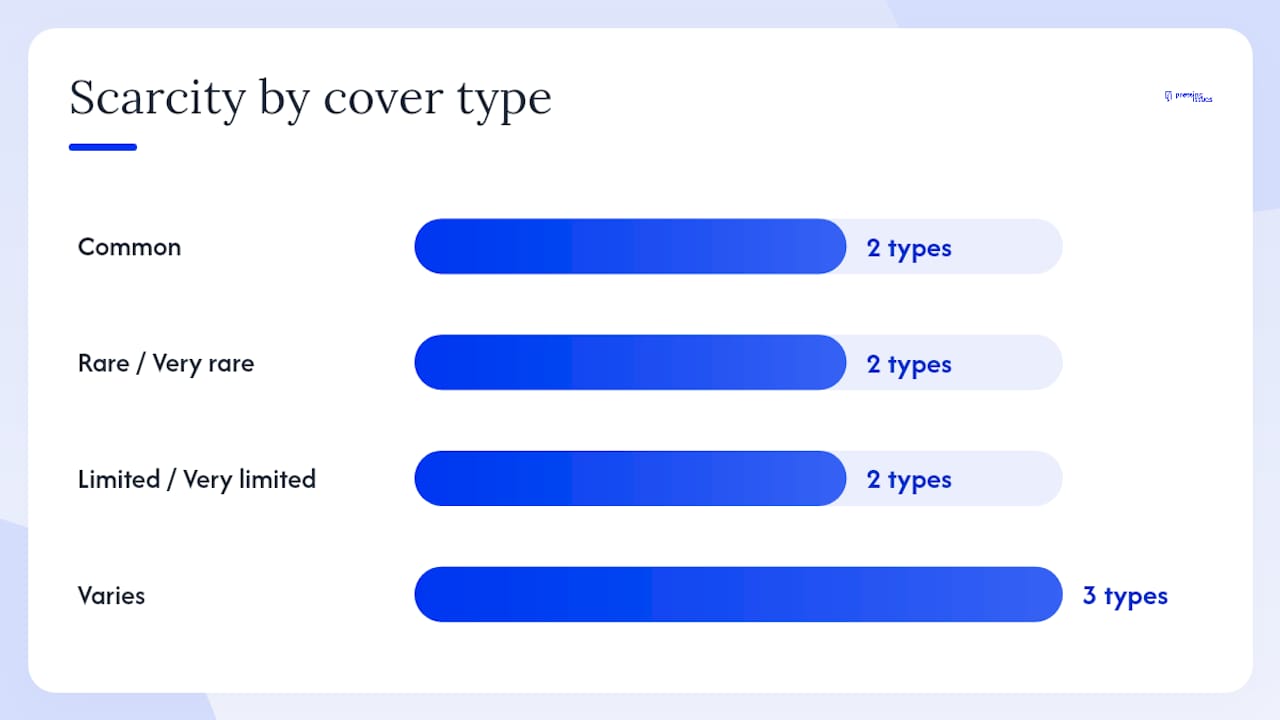
| Cover Type | What It Is | Typical Scarcity | Best For |
|---|---|---|---|
| Cover A / Cover B | Standard open-order covers; both available in unlimited quantities | Common | Reading copies, casual collecting |
| Incentive / Ratio | Unlocked only when a retailer orders a set number of standard copies (e.g., 1:25, 1:50) | Rare to very rare | Speculation, grading |
| Retailer Exclusive | Ordered by a specific shop or chain; often features custom art | Limited | Display, store loyalty |
| Convention Exclusive | Available only at a specific event (SDCC, NYCC, etc.) | Very limited | Display, event souvenirs |
| Virgin (Logo-Free) | Same art as another cover but with no title logo or trade dress | Varies | Display, art appreciation |
| Blank / Sketch | Minimal or blank front cover designed for commissioned sketches | Common at cover price | Convention sketches, custom art |
| Foil / Holographic | Metallic or reflective finish applied to the cover | Varies | Display, nostalgia |
| Wraparound | Art that continues across the front and back covers | Varies | Display |
| Chase | Random insert variant; collector does not know which cover until purchase | Rare | Speculation, set completion |
A few things worth knowing about specific types:
- Blank/sketch covers are sold at or near cover price but can become genuinely valuable if a well-known artist sketches on them at a convention. The blank cover itself is not rare; the sketch on it is what drives value.
Pro Tip: A foil or holographic finish does not automatically make a cover rare or valuable. Finish is a production choice. True scarcity comes from the print ratio, not the shininess. A 1:100 ratio variant on plain paper will almost always hold more long-term value than a foil cover printed in open quantities.
How to find and buy variant covers without overpaying
The most reliable route to variant covers is your local comic shop. Here is a practical sequence for getting the covers you want.
- Attend conventions for exclusives. Convention exclusives are often the only way to get certain covers, and publishers sometimes announce them only days before the event. Arrive early on the first day.
Pro Tip: When buying on secondary markets, always ask the seller for photos of the actual book, not stock images. Condition matters enormously for variants you plan to grade, and a spine tick or corner crease you cannot see in a stock photo can drop a grade by two points.
What makes a variant valuable, and what does "1:50" mean?
A 1:50 ratio variant means a retailer must order 50 copies of the standard edition to receive one copy of the variant. A shop ordering 100 standard copies gets two. A shop ordering 25 gets none. That math is why ratio variants are genuinely scarce: the total number in existence is directly tied to how many standard copies the entire market ordered.
Retailer-incentive variants are usually the rarest and often the most valuable because the ratio controls the print run automatically. A 1:100 variant of a modestly selling title might have only a few hundred copies in existence nationwide.
Beyond the ratio, several other factors drive a variant's value:
- Artist reputation. A cover by a sought-after artist like Adam Hughes, J. Scott Campbell, or Peach Momoko commands a premium regardless of ratio.
- Character significance. First appearances, key story moments, and death/return issues attract more collector attention and hold value longer.
- Media tie-ins. When a character gets a film or TV announcement, related variant covers often spike in price within hours. That spike can be temporary.
- Condition. A high-ratio variant in raw 9.8 condition is worth significantly more than the same cover with a spine tick or corner bend. For comic book resale value, condition is often the deciding factor between a low-value book and a genuinely valuable one.
- Grading. A CGC-graded 9.8 copy of a 1:50 variant will almost always sell for more than a raw copy of the same grade, because the grade is certified and buyers trust it.
- Timing. Spoiler variants released before a major plot reveal can crash in value once the story becomes public knowledge. Buying on hype alone is one of the fastest ways to lose money.
One honest warning: the secondary market for variants is speculative. Many covers that sell for multiples of cover price in the first week settle at or below cover price within a year. Scarcity and demand have to align for value to hold.
Should you collect variant covers? Practical advice for beginners
The honest answer is: collect variants you genuinely want to own, and be cautious about the ones you are buying only because someone online said they would be worth money.
Here is a practical framework for making smarter decisions.
- Buy what you love first. If a cover by your favorite artist makes you want to frame it, that is a good enough reason to buy it. Art you enjoy looking at holds personal value regardless of what the secondary market does.
- Set a budget before you start. Variant collecting can escalate quickly. Decide in advance what you are willing to spend per issue and per month. Stick to it.
- Prioritize scarcity and condition if you are speculating. If you are buying with resale in mind, focus on high-ratio variants (1:50 and above) from titles with strong readership, and only buy copies in near-mint condition.
- Understand when professional pressing and grading make sense. A 1:100 variant from a first appearance issue in excellent raw condition is worth having professionally cleaned and pressed before grading. Small surface defects, spine ticks, and light creases that drop a raw book from a 9.8 to a 9.4 can cut the value significantly. For lower-ratio or lower-demand covers, the cost of professional pressing may not be justified.
- Store raw variants properly. Mylar bags and acid-free backing boards protect covers you are not grading. Keep them out of direct light, especially foil and holographic covers, which fade faster than standard covers.
Pro Tip: Before submitting a high-value variant for CGC grading, have it professionally cleaned and pressed. Choosing which comics to send for pressing is a real decision with real financial stakes. A clean, well-pressed copy has a much better chance of hitting a 9.8 than a raw book with surface debris or a light bend.
Key Takeaways
Variant cover comics offer the same story in every edition; what you are really buying is the art, the scarcity, or both, and condition determines whether a rare variant holds its value.
| Point | Details |
|---|---|
| Same interior, different cover | Every variant of an issue contains identical story content; only the cover art or finish changes. |
| Ratio variants are the rarest | A 1:50 variant requires retailers to order 50 standard copies per variant copy, limiting total supply. |
| Value drivers beyond ratio | Artist reputation, character significance, media tie-ins, and certified condition all affect resale price. |
| Buy what you love | Speculative variants often drop in value; personal enjoyment is the most reliable return on investment. |
| Press and grade high-value copies | High-ratio or key-issue variants in near-mint condition benefit from professional pressing before CGC submission. |
The habit that changed how we think about variant collecting
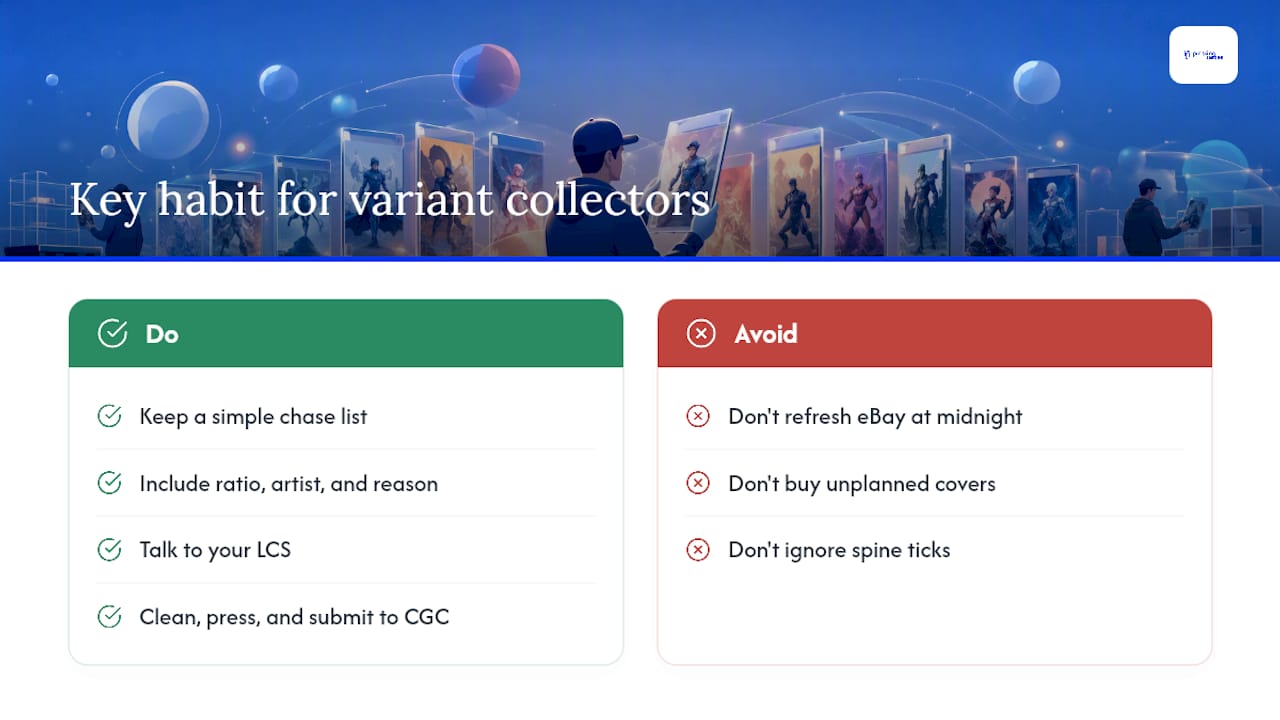
The variant market rewards patience more than speed, and most beginners learn that the hard way. The collectors who consistently make good decisions are not the ones refreshing eBay at midnight on release day. They are the ones who have already talked to their LCS, know exactly which covers they want and why, and have a clear line between "I love this art" and "I think this will be worth money."
One habit worth building early: keep a simple list of the variants you are actively chasing, with the ratio, the artist, and the reason you want each one. That list forces you to be honest about your motivations. When a new #1 ships with 15 covers and social media is buzzing, that list is the thing that keeps you from buying six covers you did not plan for.
If you do land a high-ratio variant or a key issue in excellent condition, treat it like the investment it could be. Get it cleaned, get it pressed, and consider a CGC submission. A book you spent a significant amount on can grade at a 9.8 and hold real value for years. The same book with a spine tick you ignored is just a pretty cover in a bag.
Useful sources for going deeper
These are the sources worth bookmarking as you build your knowledge of variant cover comics.
- Variant cover - Wikipedia
- Variant Covers: The Complete Collector's Guide
- All You Need to Know About Variants - CovrPrice
- So, What's The Deal With Variant Covers? - How to Love Comics
- What are variant covers? Guide - ComicsDeck
- Variant covers are killing comics again — SYFY
- 1:50 - Kings Comics
Recommended
- Comic Book Double Cover: What Collectors Need to Know — Pressing Issues
- Comic Book Pressing & Cleaning Guide for CGC Grading & Comic Collectors | Pressing Issues — Pressing Issues
- Comic Book Pressing Secrets Revealed: What Experts Don't Want You to Know — Pressing Issues
- Expertly Preserving Signed Comics (Safely!) — Pressing Issues