CGC returns most U.S. submissions through FedEx and procures insurance coverage on those packages, with a published domestic cap of $100,000 per package. That's the baseline protection built into every submission. But the cap only holds if your declared value, address type, and carrier choice line up correctly, and PO boxes or your own carrier account can change the coverage picture entirely.
TL;DR:
- Declaring the correct market value is crucial, as under- or overestimating affects both the insurance coverage and shipping fees.
- Shipping to PO boxes results in USPS handling, slower delivery, and different insurance rules compared to FedEx deliveries to physical addresses.
- Shipping insurance generally covers up to $100,000 per package within the US, and exceeding this amount requires third-party coverage or direct CGC contact.
- Using your own carrier account removes CGC’s insurance, adds service fees, and complicates coverage unless properly coordinated beforehand.
- Proper packing with rigid protectors and detailed documentation minimizes the risk of damage and expedites claims if losses or damages occur.
Table of Contents
- How CGC Handles Return Shipping and Insurance
- Declared Value, Insurance Caps, and What Coverage Actually Means
- Using Your Own Carrier Account or a PO Box
- Filing a Claim for Loss or Damage
- Packing and Documentation Tips for High-Value Submissions
- Reducing Shipping Risk on CGC Submissions
- Sources
How CGC Handles Return Shipping and Insurance
CGC ships completed submissions to U.S. addresses. That declared value does double duty: it drives the insurance CGC procures for the return, and it factors into your total shipping fee. Get it wrong, and you're either overpaying for coverage you don't need or leaving a rare key issue underinsured.
PO box addresses work differently. CGC generally routes those returns through USPS instead of FedEx, since FedEx doesn't deliver to postal boxes. That switch usually means a slower transit time, so if you're tracking a submission home for a show or a sale deadline, a street address will get it to you faster.
CGC publishes a domestic shipping and insurance fee matrix in its help center, and it's worth reading before you submit, not after your books arrive with an unexpected charge. A few things push costs higher than the base rate:
- Shipping to extended or remote service areas that FedEx surcharges
- Packages that cross weight thresholds due to slabbed comic volume
- Added items bundled into a single return shipment
- Requests for reinforced or upgraded return packaging
Before you finalize a submission, check the shipping FAQs for current rates, confirm your declared value matches realistic market value, and double check whether your return address is a PO box. Small details on that form determine both your fee and your coverage.
Declared Value, Insurance Caps, and What Coverage Actually Means
Your declared value isn't a formality. It's the number CGC uses to decide how much insurance to procure and, in some cases, which carrier handles the return. Understate it and a loss claim pays out less than the book was worth. Overstate it and you pay more in fees for coverage you'll never collect on.
CGC provides insurance coverage for U.S. returns generally up to $100,000 per package, with a lower coverage cap for international shipments. Above those thresholds, CGC directs submitters to contact Customer Service directly rather than rely on standard procurement.
A distinction that trips up a lot of collectors: the CGC Guarantee covers grading accuracy, meaning CGC stands behind the grade itself. Shipping insurance covers physical loss or damage in transit. They're not interchangeable, and a damaged slab that arrives correctly graded is a shipping insurance matter, not a Guarantee matter.
- Grading accuracy disputes fall under the CGC Guarantee
- Transit loss or damage falls under shipping insurance
- Values exceeding the published cap need third-party coverage or direct CGC contact
If your declared value approaches or exceeds CGC's cap, particularly for a single high-grade key issue, a third-party policy covering full replacement value is the safer move.
Using Your Own Carrier Account or a PO Box
Some submitters prefer to use their own FedEx, UPS, or USPS Express account rather than CGC's default arrangement, usually to earn shipping rewards or control delivery timing. That option exists, but it comes with tradeoffs worth understanding before you commit.
- File your carrier account information with CGC ahead of submission. It has to be on record before your books ship, not requested after the fact.
- Understand that shipments routed through your own account are not insured by CGC, and a service fee typically applies for the arrangement.
- If your return address is a PO box, expect USPS handling, slower transit, and insurance terms that follow USPS rules rather than CGC's FedEx-based coverage.
- Lock in your return address before shipment. CGC's policy on mid-transit address changes is strict, largely for security reasons tied to high-value collectibles.
Filing a Claim for Loss or Damage
Act fast if a return arrives damaged or never shows up. Photograph any damage immediately, before you unpack further, and hold onto every scrap of packing material. Adjusters want to see how the item was packed, not just the end result.
Pro Tip: Save your tracking or PRO number the moment you receive it, and screenshot it separately from your email. If a shipment goes missing, that number is the first thing both FedEx and CGC will ask for.
Contact CGC Customer Service and the carrier at the same time rather than waiting on one to finish before starting the other. For FedEx losses, that means completing the online claim form with your tracking number. For USPS, note that claim windows are time sensitive, generally requiring filing within 60 days of shipment for loss or damage.
- Photograph damage before unpacking further
- Keep tracking numbers, receipts, and original packing materials
- File carrier claims within their specific deadline windows
- Respond promptly to CGC or insurer requests for documentation
Outcomes vary by case: carrier indemnity payouts, CGC-procured insurance settlements, or, if the dispute is about grading rather than shipping, a CGC Guarantee remedy. Clean documentation is what moves a claim from "under review" to "paid."
Packing and Documentation Tips for High-Value Submissions
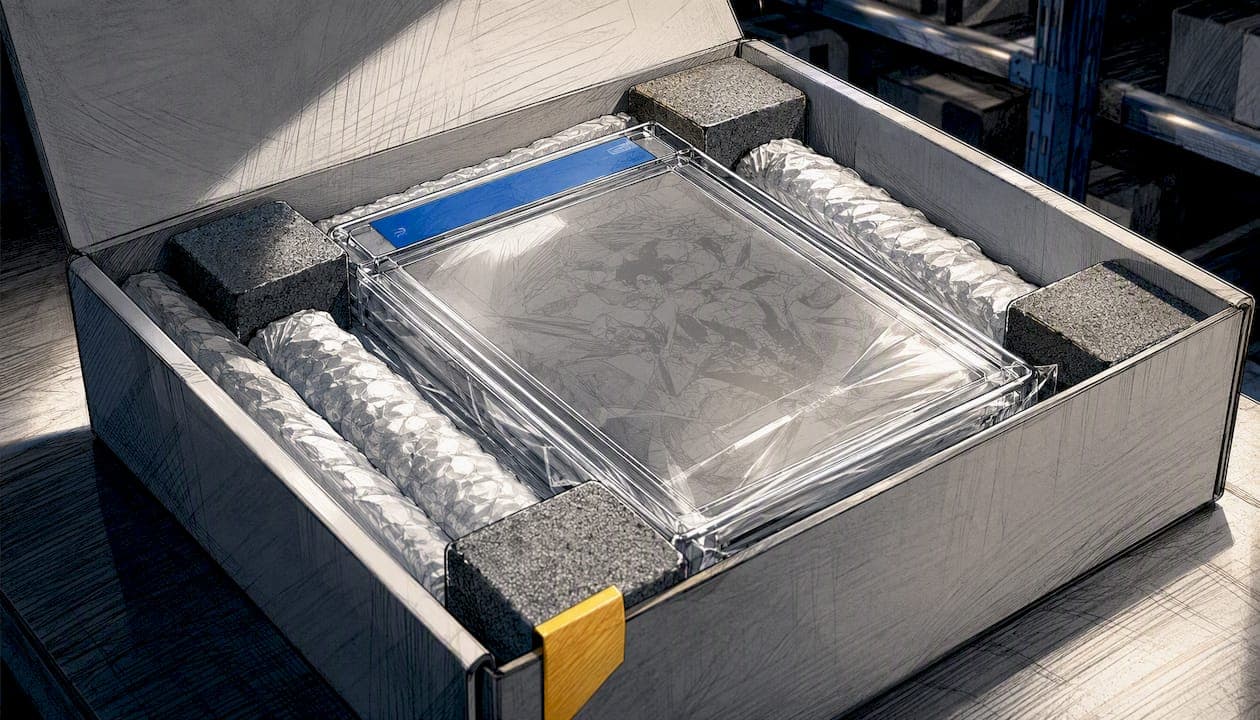
A graded slab survives transit or gets damaged based almost entirely on how it's packed, and we've opened enough return boxes at Pressing Issues to know exactly where corners fail. Our recommended workflow: inner rigid protector around the slab, bubble wrap, dedicated corner supports, an inner box, then a properly cushioned outer box. Skip the temptation to wrap everything drum tight. Overly rigid wrapping transfers shock straight into slab corners instead of absorbing it.
Documentation matters as much as packing. We recommend an itemized packing slip listing declared values for every item, plus photos of each book and the sealed box before it ships. Keep receipts.
- Use rigid inner protectors, not just bubble wrap alone
- Photograph the box at each packing stage: unwrapped, wrapped, boxed, sealed
- Buy third-party coverage when a book's market value exceeds CGC's published caps
- Let a full-service submission handler manage paperwork to avoid errors that void claims
Pro Tip: A single missing declared value on your packing slip can slow down a claim by weeks. Photograph the slip along with the items themselves.
Reducing Shipping Risk on CGC Submissions
We prep every submission as if it's the one that gets lost, because eventually one will be. That means matching declared value to actual market value, never rounding down to save a few dollars on fees. The most common mistake we see is collectors picking their own carrier account to save on shipping costs, not realizing they've opted out of CGC's insurance entirely. For anything above the standard caps, we push clients toward third-party coverage rather than hoping the Guarantee covers a shipping problem it was never built to handle.
— Charles
Ready to send in comics with confidence instead of guesswork? Pressing Issues handles the packing, paperwork, and insurance decisions so your submission arrives safely and your claim, if you ever need one, has the documentation to back it up.
Sources
- CGC Announces Major Improvements to Return Shipping and Insurance Services | CGC
- Shipping Insurance and Delivery Services | USPS