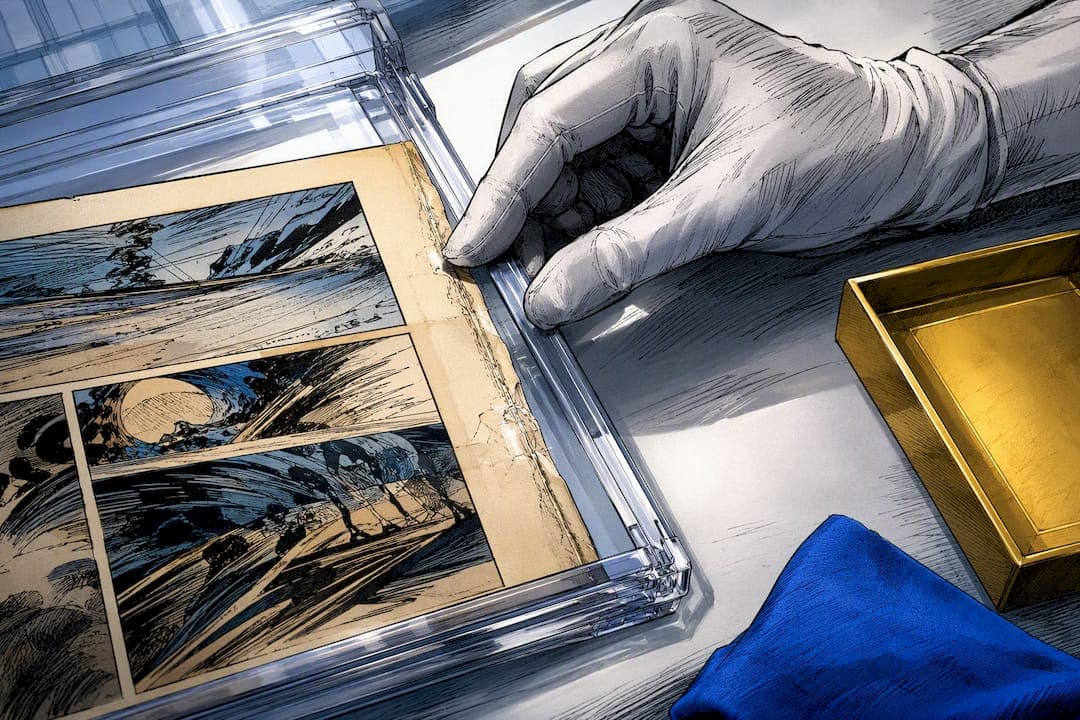
Cleaning and pressing are non-restorative steps that lift dust, smooth bends, and improve eye appeal without adding or removing any material from the book. Restoration goes further: it adds, replaces, or conceals materials to repair damage, and grading houses label it as such on the slab. That distinction changes everything about resale value, so the practical rule is simple. Send common cosmetic issues to a professional cleaner or presser, and think hard before letting anyone touch a book with color, ink, or paper loss.
TL;DR:
- Surface cleaning and pressing address cosmetic issues but do not alter the book's material or structure, unlike restoration techniques.
- Proper cleaning involves dry methods before pressing to prevent grit from causing damage during heat and pressure application.
- Restoration adds material such as color touch, paper fills, or staple replacements, significantly impacting resale value and requiring disclosure on grading labels.
- Restorations rarely increase a book’s market value; small cosmetic fixes on common issues have minimal effect, while major changes decrease originality and price.
- For high-value or rare comics, obtaining a second opinion from a grader before irreversible work ensures preservation of long-term collector value.
Table of Contents
- What Is the Difference Between Comic Cleaning and Restoration?
- How Do Pressing and Professional Cleaning Actually Work?
- How Does Restoration Affect Grading and Resale Value?
- Which Path Is Right for Your Comic?
- Why DIY Repairs Are Risky and How to Store Comics Properly
- What Does Pressing Issues Offer Collectors?
- A Collector's Take on Value vs. Sentiment
- Ready to Send a Comic In? Here's How Pressing Issues Helps
- Where to Learn More About Comic Preservation
- Sources
- FAQ
What Is the Difference Between Comic Cleaning and Restoration?
Cleaning removes surface contamination without altering the paper, ink, or structure underneath it. Pressing applies controlled heat and pressure to reduce spine roll, bends, and warping that haven't broken the color layer. Conservation sits between the two: it stabilizes a book structurally, sometimes with reversible materials, but doesn't try to hide damage. Restoration changes what's actually there. It adds color, fills missing paper, reglues spines, or replaces staples to make a damaged book look better than its true condition.
Professional cleaning and pressing typically address:
- Surface dust, grime, and fingerprints lifted with dry cleaning pads and erasers
- Light scuffs and general soiling on the cover surface
- Non-color-breaking bends, creases, and spine roll corrected through humidification and pressing
- Minor warping from humidity exposure or improper storage
Restoration techniques, by contrast, change what's physically on the page:
- Color touch, where an artist paints over ink loss or color breaks with matching pigment
- Piece fills, where missing paper corners or edges are replaced with matched stock
- Tear seals, which use adhesive to rejoin torn paper
- Married covers, combining a cover from one copy with interior pages from another
- Trimming, cutting damaged edges to create a cleaner border
- Staple replacement, swapping corroded staples for new ones
The line blurs in the middle. Dry cleaning is almost universally treated as a preservation step, not restoration, because it removes nothing but surface residue. But water baths and solvent treatments occupy a gray area. Depending on the chemicals involved and what they're used to accomplish, a wash can cross into conservation or restoration territory, and grading services evaluate it case by case based on intent and materials, not just the technique's name.
How Do Pressing and Professional Cleaning Actually Work?
A reputable service follows a sequence, not a shortcut. Skipping steps is where amateur attempts go wrong.
- Intake and documentation. The book is photographed and its condition noted before anything happens to it. This protects both the collector and the service if a question arises later.
- Dry cleaning. Soft erasers, brushes, and specialized pads lift surface dirt and light staining. This happens before any pressing, because embedded debris left on the surface can grind into the paper under heat and pressure.
- Humidification (when needed). Controlled moisture relaxes stiff or brittle paper so it can be reshaped without cracking.
- Pressing. Calibrated heat and pressure profiles, matched to the book's paper stock, smooth bends and reduce spine roll. Modern glossy stock and pulp-era newsprint respond differently, so a one-size approach is a mistake.
- Reinspection. The book is compared against the intake photos to confirm the improvement and flag anything that didn't respond.
Pressing has real limits. It can smooth a bend that hasn't broken the color layer, but it cannot fill a missing corner, restore lost ink, or repair a torn page. Anything beyond surface and structural smoothing crosses into restoration, and a book that needs it should be evaluated separately.
Pro Tip: Ask any prospective service whether they clean before they press, not after. Cleaning first prevents grit from being pressed into the paper fibers, which can leave permanent marks that no amount of later work will remove.
Transparency matters here as much as technique. A trustworthy provider gives you a clear estimate before work starts, documents the book's condition with before-and-after photos, and tells you honestly when a defect is beyond what cleaning or pressing can fix.
How Does Restoration Affect Grading and Resale Value?
Restoration repairs are disclosed, and that disclosure follows the book for as long as it's graded. Grading services label a book "restored" or note conservation work directly on the holder, and that label is permanent. It's not a cosmetic footnote. It's part of the book's identity from that point forward.
The financial stakes are real. Collectors and market analysts consistently report that a disclosed restoration reduces resale value compared to an unrestored copy in similar condition, though the size of that penalty depends on the extent of the work and how rare the book is. A small amount of color touch on a common back-issue affects price differently than trimming on a Golden Age key. Buyers pay a premium for books that are exactly what they appear to be, and any intervention that changes the original material chips away at that premium.
Common reasons a collector still chooses restoration despite the market hit:
- A sentimental copy that will never be sold, where display quality matters more than resale
- An otherwise unobtainable key issue where a restored copy is the only realistic way to own one
- A severely damaged book that would otherwise be unsellable, where stabilization prevents total loss
One number worth remembering: the gap between a restored and unrestored copy of the same book, in the same apparent grade, can run into the hundreds or thousands of dollars for desirable keys, because buyers are pricing in the loss of originality, not just the visual defect the restoration covered up. Before paying for restoration on anything but a personal-use copy, get a realistic sense of that gap from someone who grades and sells books for a living, not just the restorer doing the work.
Which Path Is Right for Your Comic?
Run through this before you send anything anywhere. It takes five minutes and can save you from an expensive mistake.
- Identify the goal. Are you trying to preserve a reading copy, maximize resale value, or stabilize something falling apart?
- Assess the defect type. Surface dirt and bends point to cleaning and pressing. Missing paper, ink loss, or torn pages point toward restoration or conservation, if anything at all.
- Weigh cost against market effect. Spending restoration money on a mid-value book rarely pays off, because the post-restoration price rarely covers the work plus the disclosure penalty.
- Watch for red flags. Missing pieces, married covers, and trimmed edges are the situations where restoration carries the most risk relative to benefit.
Ask any provider what techniques they'd use, whether the treatment is reversible, whether you'll get documentation, and whether they have experience prepping books for grading submission. A provider who hesitates on any of those questions is a provider to avoid.
Pro Tip: If a book is worth serious money, get a second opinion from a grader before authorizing any irreversible work. A five-minute conversation can prevent a decision you can't undo.
Why DIY Repairs Are Risky and How to Store Comics Properly
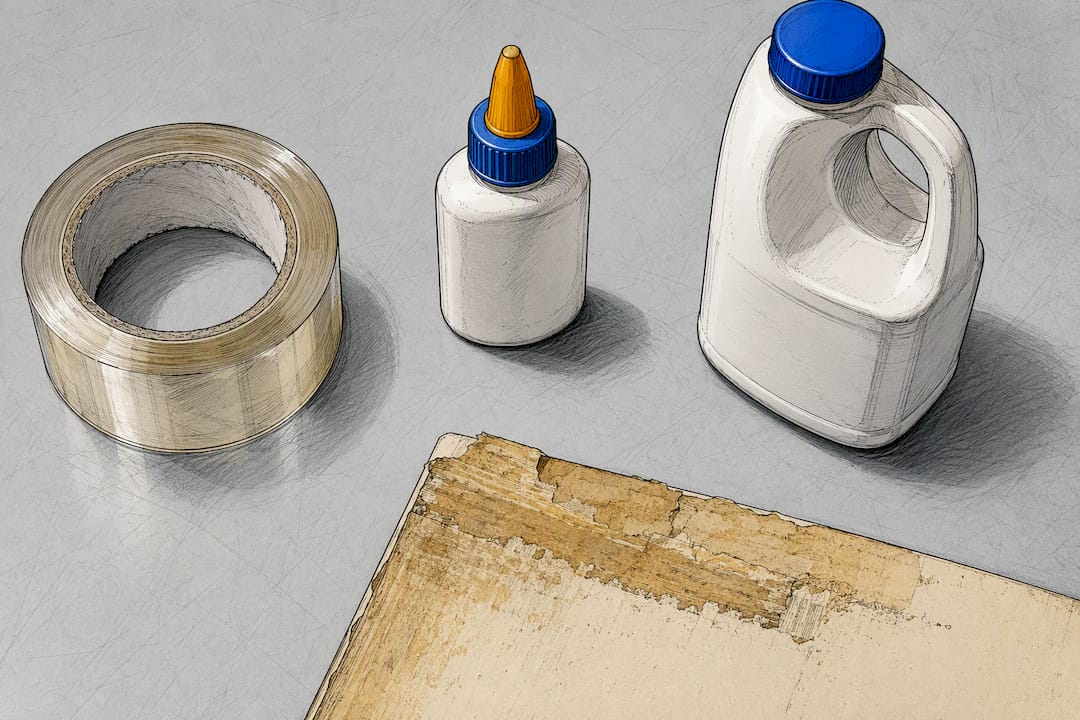
Household tape, craft glue, and bleach show up constantly in amateur repair attempts, and all three cause damage that's difficult or impossible to reverse. Tape adhesive migrates into paper fibers and yellows over time. Bleaching to remove foxing or staining often weakens the paper structure it's trying to clean, and conservators specifically warn against these amateur practices because they tend to accelerate the deterioration they're meant to fix.
Good storage prevents most of the problems that tempt people into risky repairs in the first place. The Library of Congress recommends handling comics with clean, dry hands, avoiding opening pages past 180 degrees, and keeping stable temperature and humidity.
A basic archival setup includes:
- Acid-free bags and boards sized to the book, replaced when they show wear
- Polypropylene or polyester sleeves rather than PVC, since material choice affects long-term stability
- Storage away from basements and attics, where humidity and temperature swings are worst
- Silica gel packs in constrained storage spaces to manage moisture, a step conservators at The Henry Ford recommend
- Minimal light exposure, especially direct sunlight and UV-heavy fluorescent bulbs
Collectors who store books properly from the start rarely face the defects that push people toward restoration later.
What Does Pressing Issues Offer Collectors?
Pressing Issues handles the preservation side of this equation: professional cleaning, pressing, value analysis, and full CGC submission handling for collectors and dealers who want their books improved without crossing into restoration territory. Every book gets documented before any work begins, with condition notes and photos that give you a clear before-and-after record.
The process follows the sequence outlined above: cleaning first, pressing matched to the book's paper era, and reinspection before it ships back or heads into a CGC submission. You get an estimate before committing, a real turnaround timeframe, and secure shipping handling on both ends. If a book's issues genuinely require restoration rather than cleaning, honest guidance on that distinction is part of the service, not an upsell.

A Collector's Take on Value vs. Sentiment
Not every book needs the same level of caution. A reading copy you'll never sell can tolerate more risk than a key issue earmarked for your collection's crown jewel. The mistake collectors make most often is applying one standard to every book they own.
If resale value matters, lean toward reversible, non-invasive care and skip anything that touches the original material. If a book is purely sentimental, the calculus changes. Either way, document everything and consult a grader before authorizing irreversible work on anything valuable enough to regret.
— Charles
Ready to Send a Comic In? Here's How Pressing Issues Helps
Pressing Issues gives collectors a cleaning and pressing option with actual price transparency instead of the vague estimates common at DIY-adjacent shops. Rates run per book by era, from $17 for Modern Age up through $50 for Spine Roll and Golden Age titles, with CGC submission handling billed at 10% per order and high-value books at 5% per book, all posted directly on the services page.
Getting started is straightforward. Send in photos of your book, get an estimate before anything ships, and pack it using the secure shipping guidance provided during intake. Once your book arrives, it goes through the same documented process covered earlier: cleaning, pressing matched to the paper stock, and reinspection against the original photos before it's returned or forwarded into a CGC submission. If you're weighing whether a specific book is worth the investment, value analysis is available to help you decide before you commit to a submission fee. Head to the services and rates page to request an estimate and see current turnaround times.
Where to Learn More About Comic Preservation
For deeper technical grounding beyond this guide, the Library of Congress's collections care guidance covers handling and storage in detail. Harvard Library's preservation team documents how bag and board materials affect long-term outcomes, and grading comparisons like PSA versus CGC offer useful context on how different services handle disclosure.
Sources
- Care, Handling, and Storage of Comic Books - Collections Care (Preservation, Library of Congress)
- Bagged and boarded art: comic book conservation (Harvard Library Preservation)
- Comic book preservation tips from our conservators (The Henry Ford)
- Comics: Things to Avoid During Restoration (iBookBinding)
FAQ
How Much Does It Cost to Get a Comic Cleaned and Pressed?
Pressing Issues prices cleaning and pressing by era, with prices varying based on the comic's age and condition, as detailed on the services page.
How Much Does It Cost to Restore a Comic Book?
Restoration pricing varies widely by the extent of the work and the restorer, since techniques like color touch, piece fills, and trimming each require different time and materials; there's no single published rate across the industry.
Are Restored Comics Worth Anything?
Yes, but typically less than an unrestored copy in similar apparent condition, since grading services disclose restoration on the label and buyers price in the loss of originality.
How Much Does It Cost to Get Comics Appraised?
Pressing Issues offers value analysis as part of its service lineup at no published price, so it's available on request rather than listed as a flat fee.