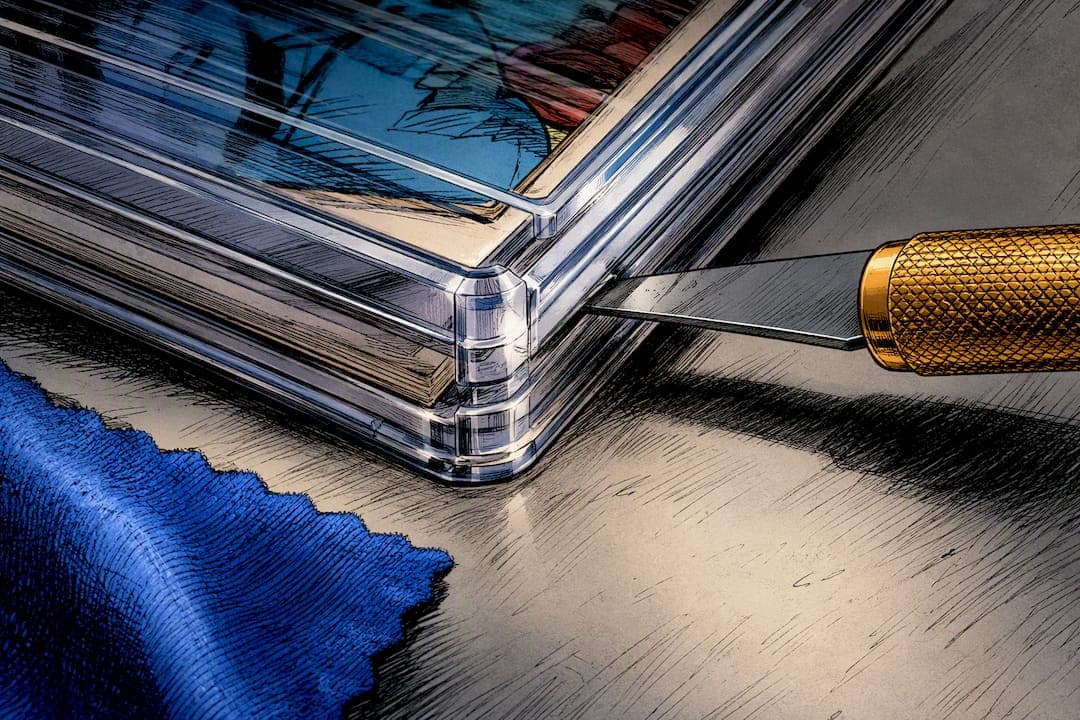
Cracking a CGC slab, in professional terms, means securely opening a CGC holder so a trained technician can inspect, clean, press, and repackage the comic before resubmission. It's not a DIY project. If your book carries real market value, the right move is a professional assessment before anyone touches that case, from a service built specifically for this work.
TL;DR:
- Professional slab opening is a non-restorative process aimed at cleaning, relaxing creases, and correcting handling defects without affecting the comic's grade.
- It makes sense to hire a pro only if pressing can improve the book's condition and the cert number, label, and lawfully owned status are verified beforehand.
- Proper opening involves careful intake, humidity-controlled removal, thorough inspection, dry cleaning, staged pressing, and secure re-casing, with detailed documentation at each step.
- Risks include spine splits, color loss, or grade drops, which professionals prevent through humidity monitoring, incremental pressure, and condition tracking.
- Cost varies based on fees for inspection, cleaning, pressing, shipping, and insurance, with turnaround times often estimated rather than guaranteed.
Table of Contents
- What Does It Mean to Professionally Crack a CGC Slab?
- When Does It Make Sense to Hire a Pro?
- What Happens During Professional Opening and Resubmission?
- What Can Go Wrong, and How Do Pros Prevent It?
- What Will It Cost, and How Long Will It Take?
- How Should You Prepare and Ship a Slabbed Comic to a Professional Service?
- What Happens After Treatment and Resubmission to CGC?
- Who Actually Owns the Comic Once a Slab Is Cracked?
- Does Cracking a Slab Actually Change What the Comic Is Worth?
- DIY Slab Opening Versus a Professional Service: What's Actually at Stake
- Why the "Just Crack It Yourself" Advice Persists, and Why It's Wrong
- How to Start a Slab Opening and CGC Submission With Pressing Issues
- Sources
What Does It Mean to Professionally Crack a CGC Slab?
Professional slab opening is non-restorative work. The goal is never to alter the comic's original material, only to remove surface dirt, relax pressure creases, and correct handling defects that developed before or during encapsulation. That distinction matters to CGC's grading standards, because any restorative work (trimming, color touch, tape removal) can trigger a purple label and tank resale value.
A legitimate service handles the whole chain of custody, not just the physical opening. That typically includes:
- Intake photography of the slab, label, and certification number
- Verification of the CGC cert against submission paperwork
- Careful mechanical opening of the case in a controlled environment
- Visual inspection to flag tears, foxing, or existing restoration
- Dry cleaning of the cover and interior pages
- Pressing to relax creases, spine stress, and cover waves
- Stabilization and re-bagging before resubmission
A knowledgeable technician typically oversees this workflow, treating every book as a candidate for a grade bump rather than a quick turnaround job.
When Does It Make Sense to Hire a Pro?
The math usually comes down to fair market value versus risk. A raw or slabbed comic sitting near a grade threshold that might improve often justifies the cost of professional pressing because the value jump can be substantial on key issues. A book already in near-perfect condition or a low-demand title rarely earns back the fee.
Look for these signals before requesting service:
- Non-color-breaking creases, spine stress, or minor waves that respond well to pressing
- Surface dirt, fingerprints, or handling marks that dry cleaning can address
- A cert number and label condition that match CGC's records without dispute
Pro Tip: Skip cracking a slab on any comic with tape residue, trimming, or color touch already noted on the label. Restoration flags don't disappear with pressing, and reopening won't undo a purple label.
Avoid opening slabs on books you plan to sell as-is in the current holder, or when the CGC grade already reflects the book's true condition. There's no upside in disturbing a settled cert.
What Happens During Professional Opening and Resubmission?
A competent provider follows a sequence, not a shortcut. Skipping steps is exactly how spine splits and color loss happen.
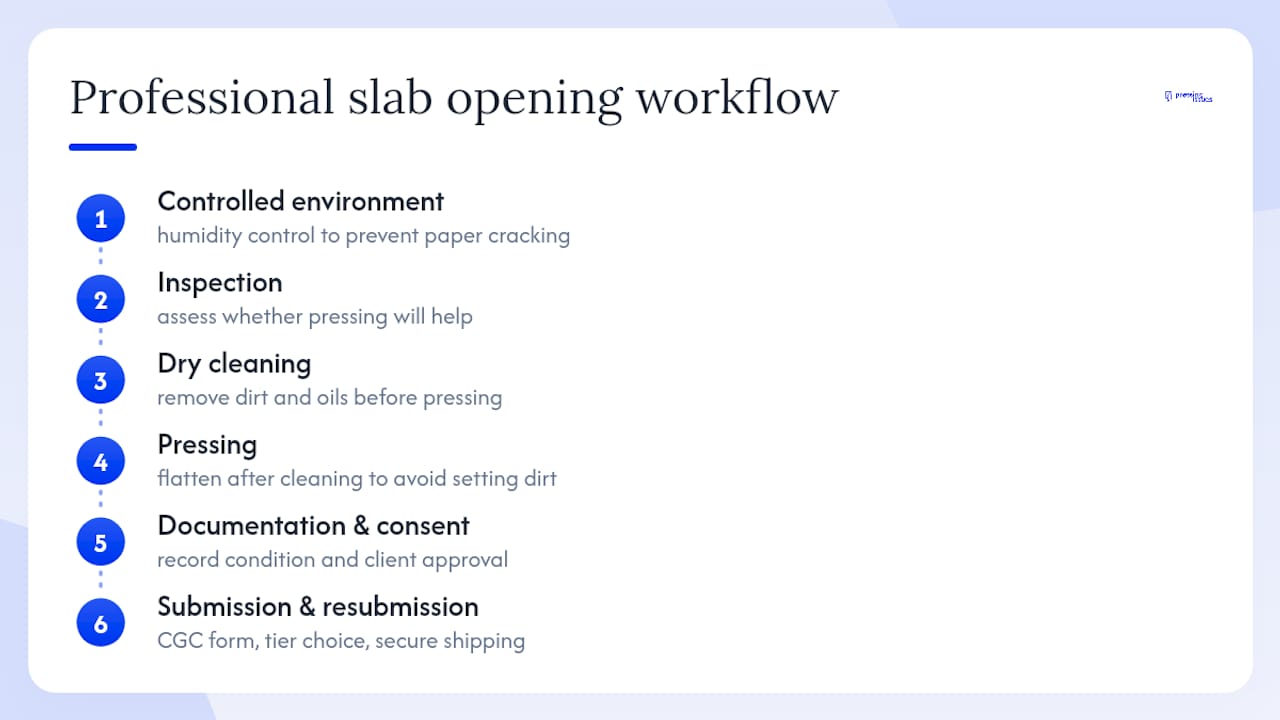
- Intake: The comic arrives with its cert number logged, the slab photographed from multiple angles, and a signed consent form covering declared value and scope of work.
- Secure opening: Technicians break the seal in a humidity-controlled space, since a room that's too dry makes brittle paper more prone to cracking along the spine.
- Inspection: Once out of the case, the book gets a hands-on review to confirm what pressing and cleaning can realistically fix.
- Dry cleaning: Surface dirt and oils come off before any heat or moisture touches the paper. Dry cleaning before pressing matters because pressing can otherwise set contaminants permanently into the fibers.
- Controlled humidification: Difficult folds or tight spine rolls get measured moisture exposure to reduce stress on the paper before any pressure is applied.
- Pressing: Heat and pressure relax creases and waves in stages, never in one aggressive pass.
- Drying and stabilization: The book rests under controlled conditions to lock in the correction without introducing new warping.
- Repackaging: The comic goes into fresh archival materials, ready for resubmission.
From there, the provider typically manages the CGC paperwork directly. That includes:
- Selecting the correct grading tier based on declared value
- Completing CGC's online submission form with add-on services like pressing
- Coordinating secure, tracked shipping to CGC's facility
- Logging the resubmission against the original certification number for continuity
Pressing Issues manages this full loop for clients who'd rather not navigate the online form or shipping logistics themselves, detailed further in its step-by-step submission guide.
What Can Go Wrong, and How Do Pros Prevent It?
Every opening carries some risk, and any provider who tells you otherwise isn't being straight with you. The most common failure modes are spine splits from dry paper, color lifting from over-application of heat, cover detachment along old folds, and outright grade loss from mishandling.
Professionals reduce that risk with a few consistent habits:
- Monitoring humidity levels before touching brittle paper
- Using low, incremental pressure rather than one hard press
- Inspecting between each stage instead of running a fixed process
- Documenting condition before and after with timestamped photos
- Getting signed, itemized consent that spells out what will and won't be attempted
That documentation isn't just paperwork. It's what protects both sides if a dispute comes up over what condition the book was in before service started.
What Will It Cost, and How Long Will It Take?
Pricing usually breaks into a few buckets: an intake and inspection fee, a per-book cleaning and pressing charge, a percentage-based fee for high-value comics, and shipping with insurance layered on top. Pressing pricing and turnaround vary noticeably between independent pressers, dealer-affiliated shops, and grader-owned services, so ask for current lead times before committing a key book.
CGC's own fee schedule adds a $5 handling fee per invoice for online submissions on top of tier-based grading costs, and the company is clear that turnaround times are estimates rather than guarantees. Factor that into any deadline, especially around a convention or auction date.
- Ask whether expedited grading tiers are available for time-sensitive sales
- Confirm whether pressing and cleaning fees are itemized or bundled
- Get insurance coverage details in writing before shipping a high-value book
How Should You Prepare and Ship a Slabbed Comic to a Professional Service?
Preparation is where most avoidable losses happen, usually from underinsured shipping rather than the actual pressing work.
- Photograph the slab from the front, back, and label before it leaves your hands.
- Record the certification number, grade, and any visible label notes in writing.
- Pack the slab in a sturdy box with rigid void fill on all sides, never loose bubble wrap alone.
- Ship with tracking and insurance that matches the book's fair market value, not just its replacement cost as a raw comic.
- Complete any consent and declared-value forms the provider requires before they'll begin work.
Pressing Issues publishes a packing and shipping checklist that walks through exactly this, and following it closely cuts down on transit damage claims significantly.
What Happens After Treatment and Resubmission to CGC?
Once your comic is cleaned, pressed, and repackaged, the resubmission runs through CGC's standard grading process: secure intake, verification against your paperwork, review by multiple graders, and encapsulation in a new archival holder before tracked return shipping.
When the slab comes back, check it carefully:
- Confirm the certification number matches your submission paperwork
- Compare the label's stated grade, restoration notes, and pressed designation against what you expected
- Review any grader notes for defects that weren't previously documented
If the grade came back lower than expected, or if you spot new damage that wasn't present at intake, raise it with the service immediately with your before-and-after photos in hand. A provider that keeps thorough documentation, as CGC's own process encourages through cert tracking, gives you real leverage in that conversation rather than a he-said-she-said dispute.
Who Actually Owns the Comic Once a Slab Is Cracked?
Ownership of the comic never changes just because the CGC case comes off. The slab is packaging, not a title document, and cracking it open doesn't affect who legally owns the book inside. What does change is your relationship with the previous certification. Once a slab is opened, that specific CGC cert number is retired, and the book has to go through the grading process again to receive a new one.
This is where written consent becomes more than a formality. Any professional service should have you sign off on declared value, scope of work, and acknowledgment that the original cert will no longer apply before they touch the case. That paperwork protects you if a dispute arises over what condition the book was in, and it protects the provider from liability claims that have nothing to do with their actual work.
Consignment and dealer transactions add another layer. If you're opening a slab on a comic you don't fully own, say a book held on consignment or jointly owned with a business partner, get explicit written permission from every stakeholder before authorizing the work. A provider has no way to verify ownership disputes on their end, and that responsibility sits with you.
Insurance during the process matters here too. Ask whether the service carries coverage for comics in their possession, separate from the shipping insurance you arrange. A reputable pressing operation should be able to answer that question directly and without hesitation.
Does Cracking a Slab Actually Change What the Comic Is Worth?
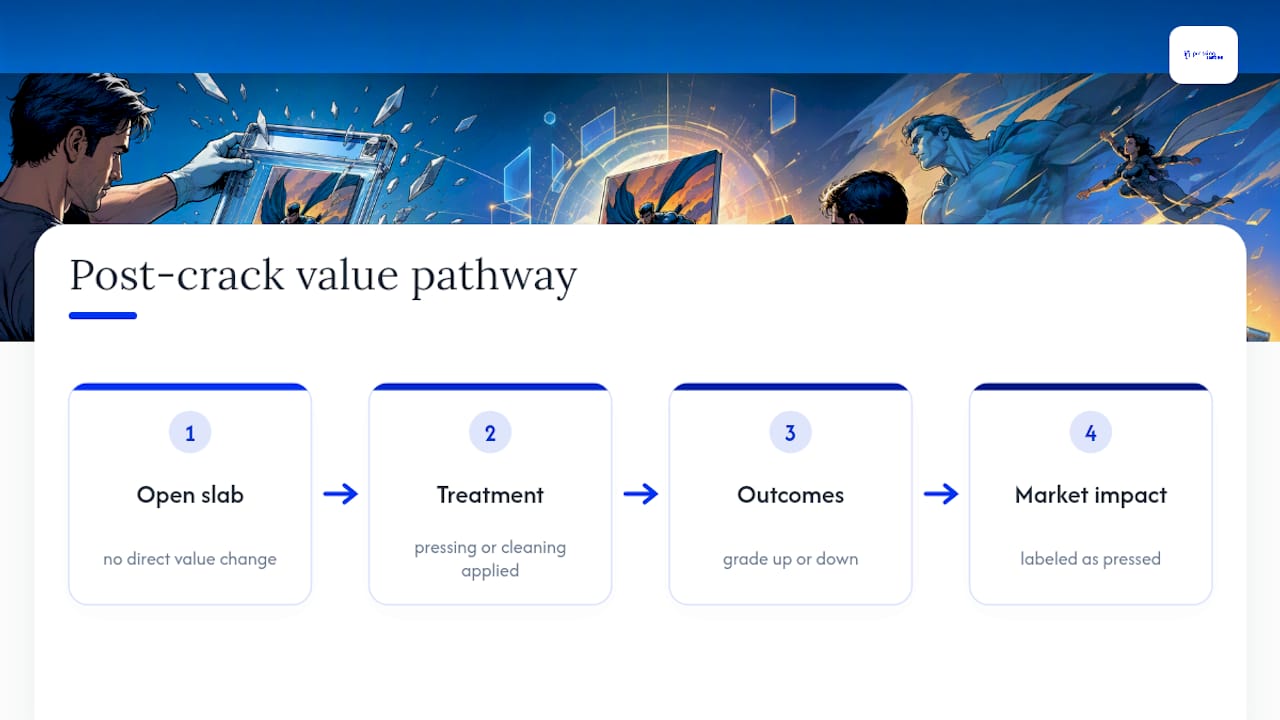
Cracking a slab, by itself, doesn't add or subtract value. What changes value is what happens next: whether cleaning and pressing move the grade up, and whether the resubmission process goes smoothly. A pressed comic can see a meaningful grade improvement, but that result is never guaranteed, and CGC's own standards note that encapsulation shouldn't affect the grade unless damage happens after the fact.
The real risk to value isn't the act of opening the case. It's what happens if the work goes badly, if pressing introduces a new crease, or if handling causes color loss that wasn't there before. That kind of damage can drop a grade rather than raise one, which is why the reputation of the service you choose matters more than the price they quote.
There's also a market-perception factor worth understanding. CGC labels now note when a comic has been professionally pressed, and buyers in the secondary market are generally comfortable with that disclosure. A pressed comic with a clean pressing note doesn't carry the same stigma that undisclosed restoration does. It reads as maintenance, not alteration, as long as the service stuck to non-restorative techniques throughout. You can see exactly how that distinction shows up on the label in this breakdown of pressed comic labeling.
For dealers moving inventory at volume, this is a numbers game across many books rather than one dramatic bet on a single issue. A handful of grade bumps across a batch of mid-value books, done through a service with a consistent track record, tends to pay for itself even when a few books don't improve at all.
DIY Slab Opening Versus a Professional Service: What's Actually at Stake
Some collectors look at a CGC case and figure a bit of careful prying can't be that different from what a professional does. The gap is bigger than it looks. DIY opening skips the humidity-controlled environment that keeps brittle paper from cracking, skips the inspection stage that tells a pro whether pressing will even help, and skips the documentation that protects you if something goes wrong.
Professional services also bring sequencing knowledge that isn't obvious from the outside. Dry cleaning has to happen before pressing, because pressing can permanently set dirt and oils into the paper fibers if they aren't removed first. Get that order wrong at home and you've made the book worse in a way that no amount of later cleaning can undo.
There's also the resubmission side. A DIY crack leaves you managing CGC's online form, tier selection, and shipping logistics on your own, with no professional judgment on whether the book is even a good candidate for regrading. A full-service submission handler manages that entire chain, from opening through the paperwork that gets your comic back in front of a grader.
The honest comparison isn't cost versus free. It's a controlled process with documentation and consent versus an uncontrolled one with no safety net if the spine splits.
Why the "Just Crack It Yourself" Advice Persists, and Why It's Wrong
Every hobby has a strain of advice that treats caution as unnecessary overhead, and comic collecting is no exception. Forums are full of confident posts about prying a slab with a knife and a heat gun, usually from someone who got lucky once on a low-value book and never had to explain a color break to a buyer.
What that advice leaves out is that comic paper doesn't behave consistently. A book from 1975 handles differently than one from 1962, and humidity, prior handling, and even the specific adhesive batch CGC used that year all affect how the paper responds under pressure. A technician who's worked through hundreds of books develops a feel for that variation. A first-time DIY crack has no baseline for comparison and no way to know if the resistance they're feeling is normal or a warning sign.
The other piece people underestimate is what happens after the crack, not during it. Getting the book out of the case is the easy part. Knowing whether it's even a good candidate for pressing, in what sequence to clean it, and how to document the process so a CGC resubmission goes smoothly is where the real value of a professional service shows up. Skipping that step doesn't save money if the book comes back at a lower grade than it started with.
None of this means every book needs professional intervention. Plenty of comics are fine staying exactly where they are. But once you've decided a book is worth opening, the case for doing it carefully, with documentation and a clear process, is stronger than the case for doing it fast.
— Charles
How to Start a Slab Opening and CGC Submission With Pressing Issues
Certain services offer a controlled process for collectors and dealers, handling the full arc: opening the slab, dry cleaning, pressing, and managing CGC resubmission paperwork so clients are not stuck deciphering the online form themselves.
Reaching out to a professional service usually starts with sending photos and details of your book for a realistic estimate before any work begins. You'll sign off on declared value and scope of work, get shipping instructions tailored to your book's fair market value, and know what is being done at each stage. Whether you're deciding between cleaning-only versus a full pressing job, the comic book pressing and cleaning service page breaks down what's included, and the full services and rates page covers turnaround expectations for your specific book. Send your photos in and get a straight answer on whether your comic is worth the work.
Sources
- How to Submit | CGC
- CGC Services & Fees | CGC
- Dry cleaning comic books - Comic Book CPR
- How to Get Comics Graded: A Step-by-Step Guide | Mint Condition