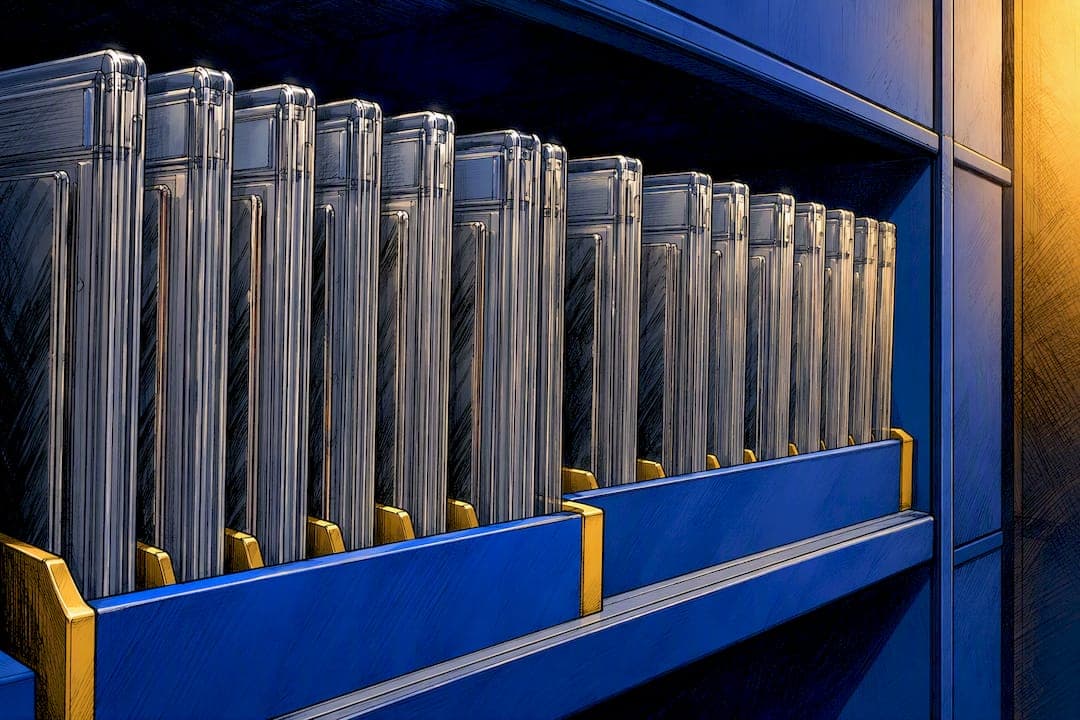
The safest approach for most collectors combines an archival slab sleeve with a stackable, archival-safe storage bin for long-term shelving, reserving a hard latching case only for transport. Use polyester (Mylar) or polypropylene sleeves rated at 2 mil, keep your collection in a stable, cool, dry space, and swap in a padded latching case when a book travels to a convention or the post office.
TL;DR:
- Use an archival sleeve made of polyester or polypropylene and keep slabs stored upright with partitions to minimize handling and prevent damage.
- Store collections in stable, cool, dry environments at 64 to 68°F with 50 to 55 percent humidity to slow paper degradation.
- Select storage options based on budget, mobility needs, and collection size, with static bins for long-term storage and latching cases for transport.
- Confirm that storage materials are PVC-free, include 2 mil thick bags, and are appropriately sized for different grading companies’ slabs.
- Regularly monitor climate conditions, recheck collection condition annually, and sleeve every slab to preserve resale value and physical integrity.
Table of Contents
- What Are the Best Graded Comic Storage Options?
- Do Graded Slabs Still Need an Outer Sleeve?
- What Temperature and Humidity Are Safe for Graded Comics?
- How Should You Organize a Graded Comic Collection?
- What Should You Check Before Buying Graded Comic Storage?
- How Pressing Issues Recommends Preserving Slabbed Comics
- A Collector's Take on Protection vs. Budget
- When Storage Alone Isn't Enough
- Sources
What Are the Best Graded Comic Storage Options?
Not every collection needs the same setup. A short box run and a 500-slab investment collection have different risk profiles, and your storage should match.
Static bins and corrugated boxes are the workhorses of long-term graded comic storage. Vendor products like the BCW Graded Comic Book Bin typically hold 30 to 40 slabs and stack cleanly on a closet shelf. Corrugated graded storage boxes serve the same purpose at a lower price point, and both are built to hold weight without crushing the bottom row.
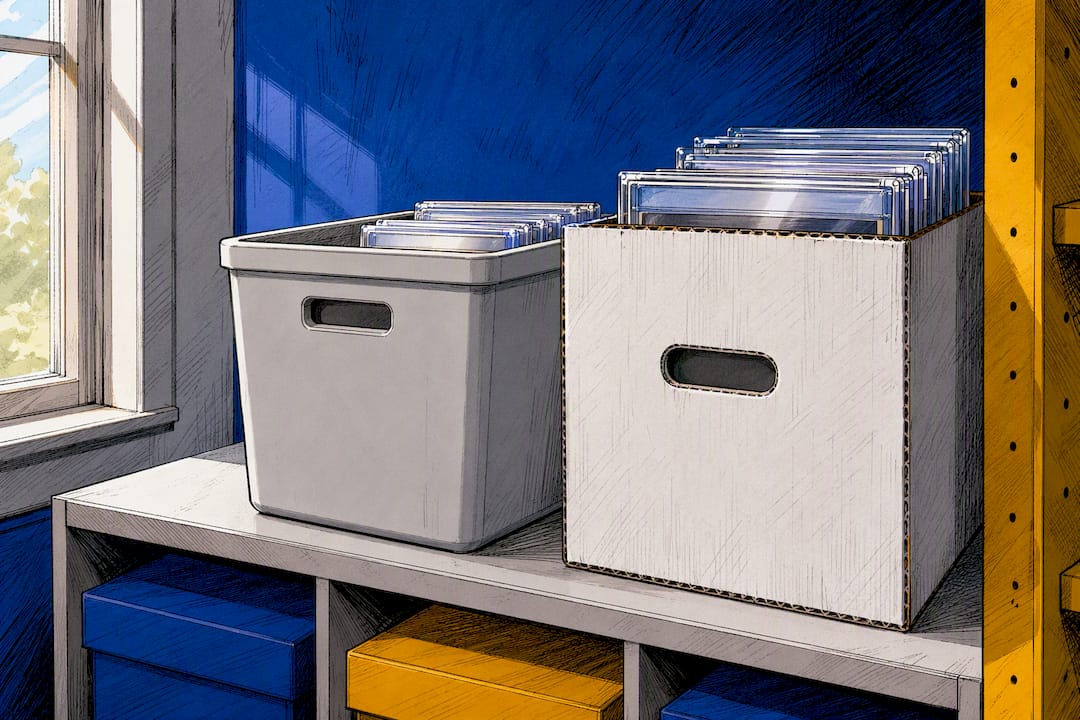
Hard latching cases and travel shells exist for a different job: moving books safely. The BCW Graded Latching Case holds up to 30 comics with a foam interior and double latches that keep the lid shut through baggage handling or a bumpy car ride.
Your decision usually comes down to three factors:
- Budget: corrugated boxes cost far less per slab than foam-lined cases.
- Mobility: if books rarely leave the house, a bin beats a case every time.
- Security: stackability and latch strength matter more once a collection grows past a shelf or two.
Do Graded Slabs Still Need an Outer Sleeve?
Yes, and this is the step collectors skip most often. A CGC, CBCS, PGX, or EGS slab protects the comic inside, but the plastic case itself can scratch, cloud, or pick up dust and fingerprints over years of handling. An outer sleeve preserves the slab's surface and resale presentation, not just the paper underneath it.
Stick to these material rules:
- Choose polyester (Mylar) or polypropylene, both chemically stable and safe for long contact with plastic and paper.
- Avoid PVC and generic craft-store plastics, which can off-gas and degrade slab surfaces over time.
- Look for 2 mil thickness, the standard weight used in products like BCW's graded Mylar bags.
- Favor bags with the resealable strip placed on the bag body rather than the flap, so the adhesive never touches the slab.
Fast fact: a 2 mil archival polyester bag is thin enough to fit snugly around a standard slab without adding bulk, yet thick enough to resist tearing during normal handling.
Slide the slab in at an angle rather than forcing it straight down, and never jam a sleeve that's tight enough to flex the plastic case.
What Temperature and Humidity Are Safe for Graded Comics?
Encapsulation is not a force field. Conservators point out that paper carries inherent acidity and instability that keeps degrading even inside a sealed slab, which means your storage environment still matters after the book is graded.
Preservation guidance points to a target range near 64 to 68°F with relative humidity held around 50 to 55 percent. Stability matters more than hitting an exact number. A room that swings between 55°F at night and 80°F during the day stresses paper and plastic far more than a room that sits steadily at 70°F.
A few placement rules go a long way:
- Skip attics and basements. Both swing hard in temperature and humidity across seasons.
- Keep bins away from radiators, vents, and exterior walls that gather condensation.
- Use LED lighting on a timer if slabs are displayed. Museum conservators warn that direct light accelerates paper deterioration, and LEDs run cooler with far less UV than incandescent bulbs.
- Add a hygrometer to any closet or cabinet holding graded books, and pair it with a small dehumidifier in humid climates.
Pro Tip: Store your bin inside a closet or cabinet rather than out in the open. That second enclosed layer buffers small temperature and humidity swings before they ever reach the slabs.
How Should You Organize a Graded Comic Collection?
Good organization is really about reducing how often you handle each slab. Every extra touch is a chance for a scratch or a drop.
- Label the outside, never the slab face. Use the ID slot built into most bins, or slide an index card behind the slab in its sleeve.
- Store upright with partitions. Stacking slabs flat puts pressure on the bottom books; upright storage with dividers spreads weight evenly and keeps books from sliding.
- Keep an inventory. Track grade, grading company, storage location, and any condition notes in a spreadsheet or notebook.
- Retrieve by sliding, not lifting. Pull a slab out along the bin's length rather than tilting the whole row, which cuts down on clatter and edge scuffs.
What Should You Check Before Buying Graded Comic Storage?
A quick checklist saves you from buying the wrong product twice.
- Slab fit: confirm the bin or case is sized for CGC, CBCS, PGX, and EGS dimensions, since slab thickness varies slightly by company.
- Materials: verify the product is PVC-free and built from archival polyester or polypropylene, and that any bags included are 2 mil.
- Capacity and stacking: most static bins hold 30 to 40 slabs, so match capacity to your current collection plus room to grow.
- Latch and foam quality: for transport cases, look for double latches and closed-cell foam, which resists moisture better than open-cell foam and keeps slabs from shifting in transit.
- Vendor reputation and returns: check the return policy before buying in bulk, especially for corrugated boxes ordered by the case.
How Pressing Issues Recommends Preserving Slabbed Comics
Our routine at Pressing Issues comes down to four habits: sleeve every slab, store upright in a padded or partitioned bin, monitor climate with a hygrometer, and recheck the collection once a year for cloudy sleeves or shifted books.
- Sleeve first, box second. Never rely on the bin alone.
- Store upright with partitions rather than flat stacks.
- Check humidity monthly if you live somewhere with real seasons.
- Do a full annual pass, replacing any sleeve that's yellowed or clouded.
If a book shows spine roll, indentations, or surface dirt before it goes into a slab, that's the moment to consider a comic book pressing rather than storing the problem for later. Storage protects condition. It does not improve it.
A Collector's Take on Protection vs. Budget
Perfection isn't the goal here. A $15 corrugated box does the job for a run of modern slabs worth $20 each. A $60 latching case earns its price the moment a single slab inside it is worth more than the case itself, or the moment that book is heading to a convention in your carry on.
What actually protects a collection is repetition, not intensity: a monthly glance at the bins, an annual inventory check, and swapping any sleeve that's started to cloud. High-value slabs deserve one more step most collectors skip, which is photographing and insuring them the same week they're graded.
— Charles
When Storage Alone Isn't Enough
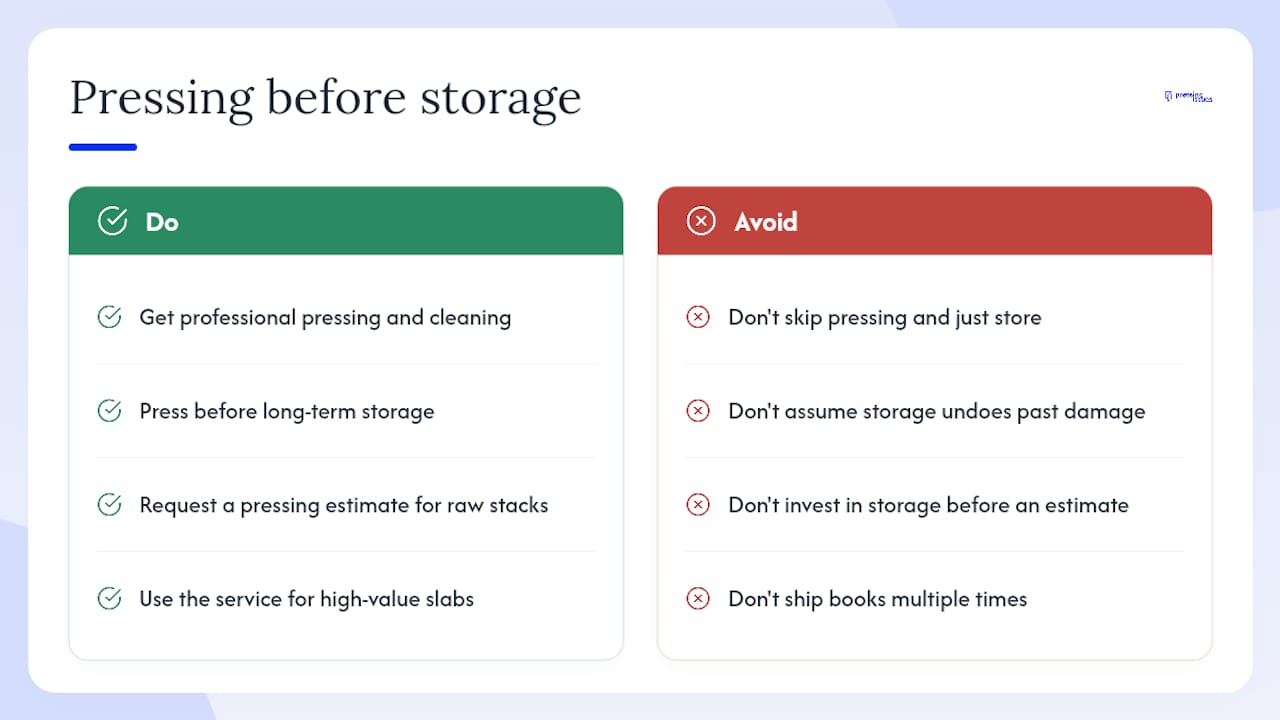
Sleeves and bins protect a slab's condition from this point forward, but they can't undo a crease, a spine tick, or years of surface grime that happened before grading. That's where professional pressing and cleaning comes in as the step before storage, not instead of it.
Pressing Issues handles non-restorative pressing, surface cleaning, and CGC submission logistics for collectors who want to stabilize a book's condition before it goes into long-term storage or heads back out for resale. This matters most for high-value slabs, books with visible defects, and anything you're prepping for a fresh grading submission. We manage the paperwork and shipping so your comics only travel once.
If you have a stack of raw books sitting between "worth grading" and "not sure it's worth the risk," get a pressing and cleaning estimate before you invest in more storage than the collection needs.
Sources
This guide draws on conservator guidance from institutions like Harvard Library Preservation and The Henry Ford, along with product specifications from BCW Supplies for bins, boxes, and latching cases.
For deeper reading on materials and technique, see Pressing Issues' posts on the role of pH in comic preservation, comic book bag types, and packing comics for shipping.
- Graded Comic Book Bin - Black | BCW Supplies
- Comic preservation guide | MyComicsCollection
- Bagged and boarded: art & comic book conservation | Harvard Library Preservation