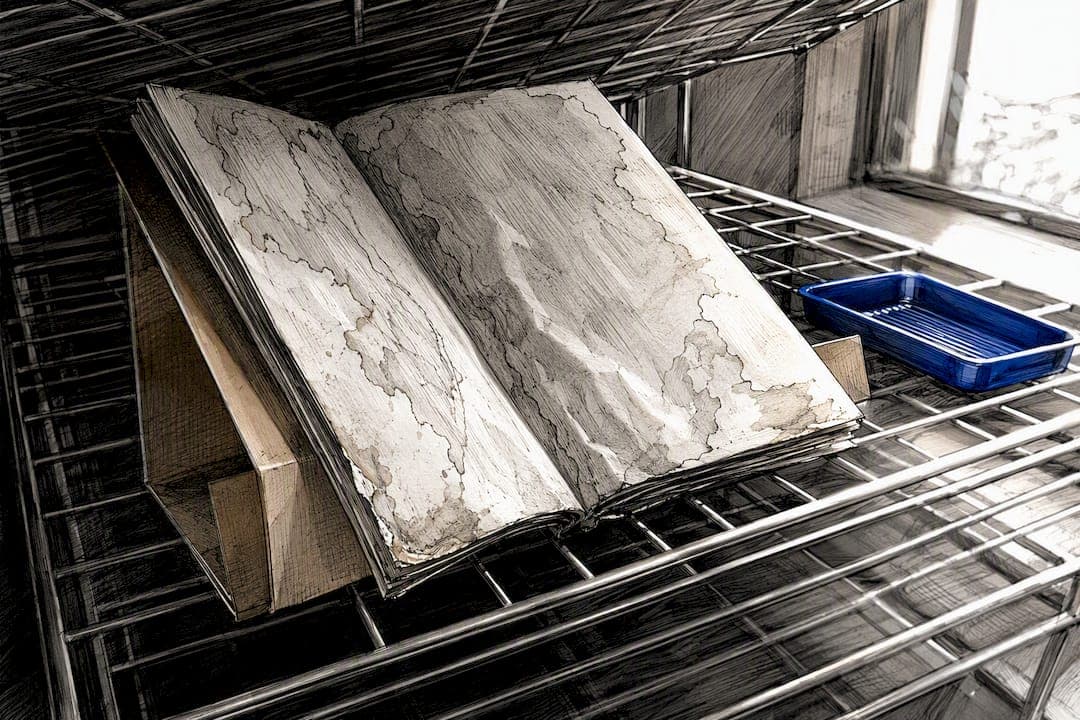
Pressing helps when a wet comic shows waviness, cockle, or shallow non-color-breaking creases from moisture, because controlled humidity and pressure flatten the paper fibers back into shape. It does not remove stains, ink migration, or mold; those need conservation or a full stain treatment instead. If the book is valuable or shows mold or bleeding ink, contact a professional now. Otherwise, photograph the damage and start stabilization within the first 24 to 48 hours.
TL;DR:
- Pressing effectively fixes waviness, cockle, and shallow creases caused by moisture but cannot address stains, mold, ink bleed, or color-breaking damage.
- Home pressing carries risks with brittle, bent, or ink-bleed pages, especially if mold is present; professional screening and controlled conditions are advised for valuable or damaged comics.
- Quick stabilization within 24 to 48 hours involves photographing, drying, and interleaving blotter paper, but active mold or structural issues warrant professional intervention.
- Professional pressing uses humidity control, staged heat and pressure, and detailed documentation, which can improve appearance and potentially raise grading but may also reveal hidden flaws.
- For low-value comics, DIY pressing is generally not cost-effective, and it’s better to seek professional services when moisture, mold, or structural damage is significant.
Table of Contents
- Which Water Damage Issues Does Comic Pressing Fix?
- What Raises the Risk of Damage During Pressing?
- How Do You Stabilize a Water Damaged Comic Before Pressing?
- What Does Professional Comic Pressing Involve?
- Does Pressing Change a Comic's CGC Grade or Value?
- Should You DIY Comic Pressing or Hire a Professional?
- How Pressing Issues Handles Water Damaged Comics
- The Real Tradeoff Between Grade Recovery and Preservation
- Get an Estimate From Pressing Issues
- Sources
Which Water Damage Issues Does Comic Pressing Fix?
Pressing corrects the mechanical distortions moisture leaves behind, not the chemical ones. Paper fibers absorb water, swell, and dry unevenly, which is what causes waviness and cockle. Heat and controlled humidity relax those fibers enough for a press to flatten them back into alignment. That's the whole mechanism, and it's why pressing works on some water damage and fails completely on other kinds.
Defects that typically respond well:
- Light tide lines that haven't set into the paper
- General waviness across a page or the whole book
- Minor cockle (that rippled, wavy-edge texture)
- Shallow creases that don't break the color layer on the cover
Defects pressing cannot touch:
- Actual staining, where pigment has bonded to the paper
- Ink migration or transfer between facing pages
- Mold colonization, active or dormant
- Missing pieces, tears, or rusty staple holes
- Color-breaking creases, where the ink layer has cracked
If you're staring at a comic with visible discoloration rather than just wavy pages, pressing alone won't get you there. That's a cleaning or restoration issue, and treating it as a pressing problem wastes time and risks the book.
What Raises the Risk of Damage During Pressing?
Pressing is a controlled process, but the controls exist because the failure modes are real. Excess humidity combined with heat and pressure can fuse pages together permanently. Push too far and you get ink blurring, especially on comics printed with looser, older inks. Apply uneven pressure to a weakened spine and you can split it rather than flatten it.
Certain conditions raise the odds of something going wrong:
- Brittle or heavily tanned paper (common in Golden and Silver Age books)
- Pages that are already stuck together
- Visible ink bleed or smearing before you even start
- Any sign of active mold growth
Pro Tip: If you see two or more of these indicators, skip the DIY attempt entirely. A book already showing stuck pages or ink bleed has a much higher chance of getting worse, not better, under a home press.
Home pressing guides that recommend gradual weight increases over a full press cycle exist for a reason: rushing the process is what turns a fixable book into a damaged one.
How Do You Stabilize a Water Damaged Comic Before Pressing?
Mold can begin colonizing wet paper within 24 to 48 hours, which means your response window is short. What you do in the first two days determines whether the book is salvageable at all.
Gather these materials first: archival blotter paper, Mylar or polyester sleeves, cotton gloves, distilled water (never tap water, which leaves mineral deposits), flat boards, and a digital hygrometer if you plan to attempt humidification yourself.
Then work through this sequence:
- Photograph the comic from multiple angles before touching anything, documenting cover, spine, and interior pages.
- Stand the book spine-down on a clean, absorbent surface to let excess water drain naturally.
- Never force stuck pages apart while wet; that tears fibers that would otherwise separate cleanly once dry.
- Isolate the book from your other comics immediately to prevent mold spores from spreading.
- Interleave blotter paper between damp sections and change it every few hours as it saturates.
- Let the book dry upright in open air with steady, moderate temperature and no direct sun.
- Once dry, decide whether to attempt a home humidity chamber or ship the book to a pro.
If the book has real value or shows any of the risk indicators above, stop after step 4 and reach out to a professional service instead of proceeding further on your own.
What Does Professional Comic Pressing Involve?
Professional pressing starts before the press ever gets touched. Reputable services screen every submission first, checking for brittleness, active mold, or structural instability that would make pressing dangerous rather than helpful. Books that fail screening get routed to conservation instead, because pressing and conservation solve different problems entirely.
For books that pass screening, the workflow follows a predictable arc. A humidity chamber brings the paper to a controlled relative humidity, commonly in the 80 to 90 percent range, using distilled water exclusively to avoid mineral spotting. The book then moves into a controlled press with calibrated heat and pressure, followed by a cooling cycle before the pages are checked again.
| Process step | Typical range | Why it matters |
|---|---|---|
| Humidity chamber RH | 80 to 90 percent | Relaxes paper fibers without over-saturating them |
| Press cycle | Staged, gradual weight | Reduces risk of fuzzy ink or stuck pages |
| Turnaround | Several days to a few weeks | Depends on book condition and volume |
Blotter and backer boards get rotated throughout to draw out remaining moisture, and dry cleaning of the covers often happens alongside pressing. Photo documentation before and after protects you if grading questions come up later.
Does Pressing Change a Comic's CGC Grade or Value?
CGC treats pressing as a permitted process, distinct from restoration, as long as it doesn't fix color-breaking defects. CGC's own pressing guidance draws a clear line: pressing is interactive with the book's structure but doesn't count as restoration the way solvent cleaning, fills, or color touch do.
That said, pressing isn't risk-free at the grading level either. CGC notes that pressing can reveal or create defects that weren't obvious before, which is why screening beforehand matters as much as the press work itself.
- A well-executed press on a wavy, non-color-breaking book often bumps the grade up
- A book with hidden brittleness may grade worse after pressing than before, if a spine split shows up mid-process
- Photo documentation before submission protects your provenance record if grading questions arise later
- Low-grade, low-value books rarely justify the cost of a professional press against the resale upside
Knowing how CGC labels pressed versus restored books helps you set realistic expectations before you spend money chasing a grade bump that may not materialize.
Should You DIY Comic Pressing or Hire a Professional?
The decision usually comes down to value and damage severity, not personal skill. Many collectors use a rough threshold of a few hundred dollars in book value as the point where a professional becomes worth the cost, since a bad home press can destroy far more value than it saves.
Before committing to either path, work through this checklist:
- Estimate the book's current market value against grading and repair costs.
- Ask any pressing service about their screening policy: do they refuse books with mold or structural instability?
- Ask what humidity and press parameters they use, and whether they document with photos.
- Confirm they carry insurance for shipping and handling.
- Get their pricing structure and turnaround time in writing before you send anything.
Pro Tip: Treat vague answers as a red flag. A service that won't explain its screening process, offers no documentation, or ships uninsured is telling you exactly how much care your comic will get.
How Pressing Issues Handles Water Damaged Comics
Every submission gets screened first. If a comic shows active mold, brittle paper, or structural instability that pressing would make worse, we flag it for conservation instead of forcing it through a press cycle it can't survive. That screening step is the difference between improving a book and ruining it.
For books that qualify, we control humidity and press parameters carefully, document each stage with photos, and handle shipping with insured care from arrival to return. We're candid about outcomes: pressing improves eye appeal and can raise a grade, but it won't erase a stain or bring back a missing corner. If you're not sure which category your book falls into, send us photos and we'll tell you honestly what pressing can and can't do for it.
The Real Tradeoff Between Grade Recovery and Preservation
My rule of thumb: if the book means more to you than its resale number, prioritize stabilization and documentation over an aggressive press attempt. Chasing a grade bump on a sentimental book you'd never sell is a good way to risk damaging it for no real return.
Photo records matter more than collectors give them credit for. They protect provenance, back up insurance claims, and give a grading service context if questions come up later. Pair that with basic shipping insurance whenever a book leaves your hands, and you've covered the two risks most collectors overlook until it's too late.
— Charles
Get an Estimate From Pressing Issues
If your comic needs more than a home dry-out, professional services handle the parts that actually carry risk: pre-screening, controlled cleaning, pressing, and full CGC submission paperwork, so you're not guessing whether your book is ready for a press or better suited for conservation.
Ship your comic in a rigid mailer with a bag and board, spine protected, and let us know upfront if you've noticed mold, ink bleed, or stuck pages. Condition is photographed on arrival and again after treatment, so you have a documented record for grading or insurance either way. Check our services, rates, and turnaround times to see what fits your book, then submit photos through our comic pressing service page to get a straightforward estimate before you commit to anything.
Sources
- Pressing | CGC
- Rescuing Water-Damaged Vintage Comics: A Pressing Guide
- How to Press a Comic Before CGC Submission