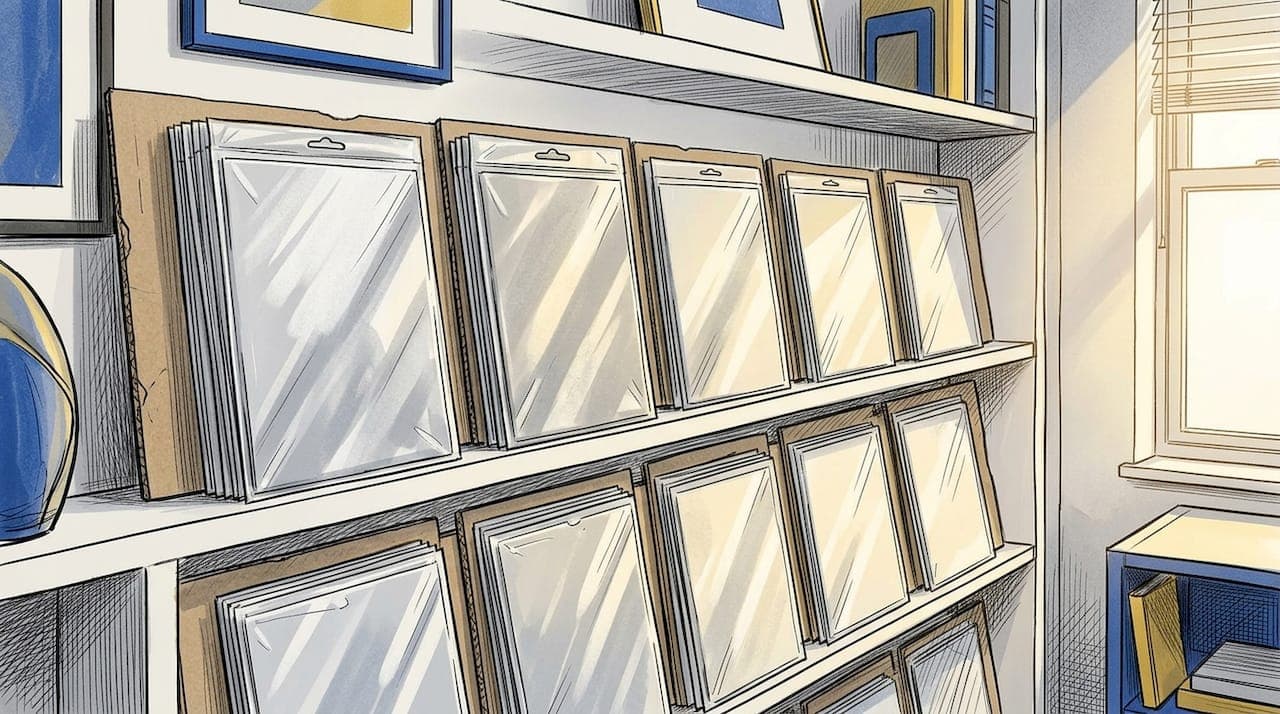
Acid-free comic boards are backing boards made from paper stock with a neutral or mildly alkaline pH, usually with an added calcium carbonate buffer to actively fight off acid damage. If you own comics you care about, the answer is simple: use buffered, lignin-free boards paired with proper bags and stable storage conditions. Anything less puts your books on a slow path toward yellowing, brittleness, and lost value.
Before buying, run through this quick checklist:
- Does the listing say "acid-free" and "alkaline buffered"?
- Is calcium carbonate or a similar buffer mentioned on the product specs?
- Is the board also labeled "lignin-free," not just acid-free?
- Does the thickness match your collection (standard vs. heavyweight for vintage books)?
Key Takeaways
Acid-free comic boards protect long-term paper condition through an alkaline buffer that neutralizes acid, but that buffer depletes over time and can't fix damage that already exists.
| Point | Details |
|---|---|
| Buffer, not just neutral | Look for "alkaline buffered" with calcium carbonate, not just "acid-free" on the label. |
| Lignin-free is separate | A board can be acid-free today and still degrade later if lignin wasn't removed. |
| Thickness scales with value | Use around 700 microns for standard books, 1,000 microns for fragile or vintage comics. |
| Inspect on a schedule | Check high-value books every six months for yellowing, odor, or brittleness. |
| Boards have limits | Structural damage, discoloration, or sticky pages need Pressing Issues's cleaning and pressing services, not a new board. |
Table of Contents
- What "Acid-Free" Actually Means for Comic Backing Boards
- How Buffered Boards Protect Comics, and Where They Fall Short
- Board Specs Worth Checking Before You Buy
- How to Bag and Board a Comic the Right Way
- When to Replace Your Boards: Lifespan and Inspection
- Buying Acid-Free Boards: What to Look for and What to Expect
- What Boards Can't Fix: Notes From the Pressing Table
- Get Professional Help When Boards Aren't Enough
- Frequently Asked Questions
- Sources
What "Acid-Free" Actually Means for Comic Backing Boards
"Acid-free" refers to a material's pH at the time it's manufactured. A neutral pH sits at 7; anything above that is alkaline, and reputable comic boards typically land between 8.0 and 8.5 thanks to a calcium carbonate buffer mixed into the pulp. That buffer doesn't just avoid contributing acid. It actively soaks up acidic compounds that migrate from your comic's own pages.
Here's where collectors get tripped up: acid-free and lignin-free are not the same thing, and you need both.
- Acid-free describes the current pH of the board.
- Lignin-free means the wood-based compound that breaks down into acid over time has been removed.
- A board can start acid-free but still contain lignin, which means it will eventually turn acidic on its own.
Most comics printed before the 1980s were produced on cheap, lignin-heavy pulp paper, which is exactly why those books are more prone to yellowing and brittleness today. A board that's both acid-free and lignin-free, as Library of Congress preservation guidance recommends, is the baseline for protecting them going forward.
How Buffered Boards Protect Comics, and Where They Fall Short
Calcium carbonate works as an alkaline reserve. As acidic vapors off-gas from your comic's paper, the buffer neutralizes them chemically before they can do lasting damage to the page fibers. Archival guides commonly cite a buffer concentration of around 2 to 3% by mass, which is enough to hold that pH in the 8.0 to 8.5 range for years, not forever.
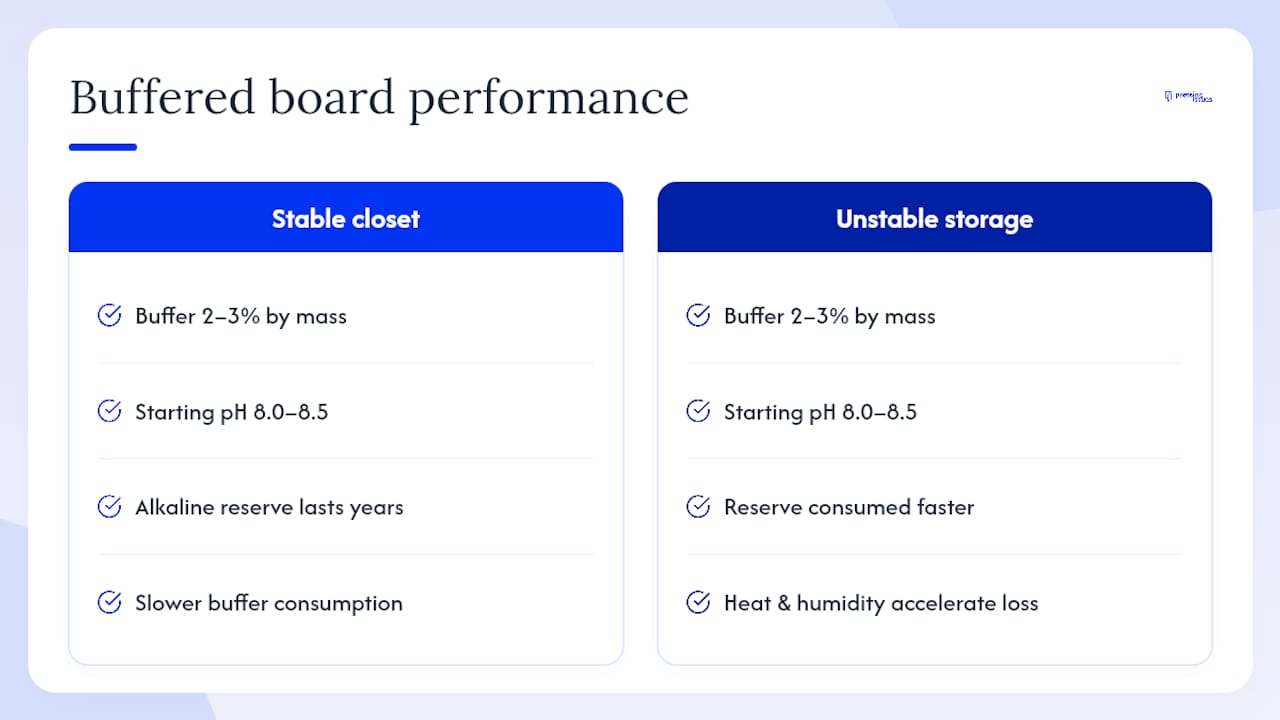
That reserve gets consumed over time. Heat and humidity speed up the reaction, which means a board doing its job in a stable closet will last longer than one baking in a garage.
Pro Tip: Check your boards annually if you store comics anywhere temperatures swing more than 15 degrees between seasons. Consumption of the alkaline buffer accelerates in unstable environments even when the board looks fine.
Boards won't stop UV fading, moisture warping, or a bent spine from rough handling. They're one link in what collector guides call a technical preservation chain that also includes bags, boxes, and room conditions.
Board Specs Worth Checking Before You Buy
Not every board labeled "archival" meets the same standard, so read the fine print. The terms below show up on nearly every product listing, but they mean different things.
- Acid-free: neutral or alkaline pH at manufacture, typically 7 or above.
- Lignin-free: wood-pulp derivative removed so the board won't self-acidify.
- Alkaline buffered: calcium carbonate added as an active neutralizer, not just a passive neutral material.
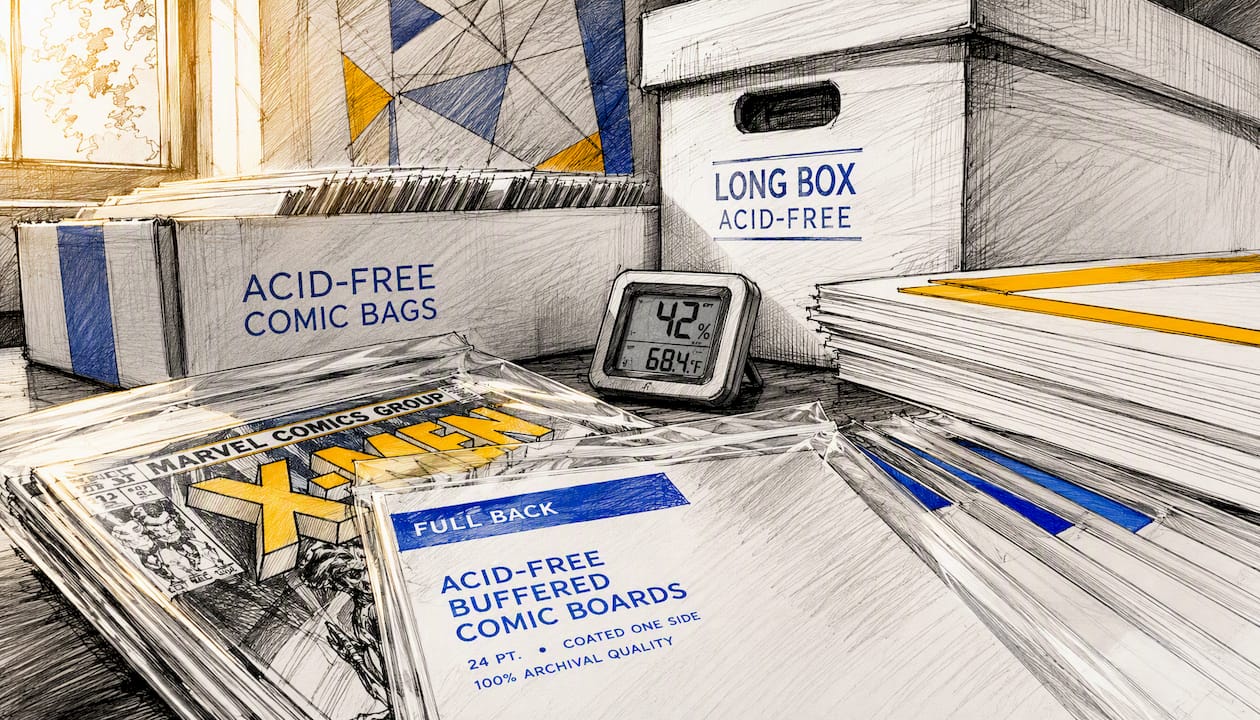
- Thickness: standard boards run around 700 microns (roughly 24 points); collectors storing fragile Golden Age or Silver Age books often step up to 1,000 microns, or about 36 points, for added rigidity.
Bag material matters just as much as the board itself. Polyethylene bags are the cheap acid-free comic supplies most collectors start with, while polyester film, better known by the brand name Mylar, offers superior clarity and long-term stability for books worth grading. Our guide to comic book bag types breaks down which film pairs best with which board weight.
How to Bag and Board a Comic the Right Way
Getting the mechanics right takes about thirty seconds per book once you've done it a few times.
- Select your bag. Match bag size to comic size, and use polyester film for anything you plan to submit for grading.
- Insert the backing board first. Slide it flush against the back cover before the comic goes in, so the board supports the spine rather than pressing against loose pages.
- Slide the comic in gently. Avoid forcing it. If the bag feels tight, you've grabbed the wrong size.
- Seal or fold the flap. Don't tape directly to the comic itself.
- Store upright in a longbox. Comics stored flat under weight develop spine stress over time.
Which side of the board faces the comic matters less than most collectors assume. Flatness and even support across the whole page matter more than orientation. If a supplier specifies a particular side, follow it, but don't lose sleep over it otherwise.
Keep boxes out of direct sunlight, in a room with stable temperature, and never packed so tight that comics bow when you pull one out. A loosely filled box that lets air circulate protects better than a jammed one.
When to Replace Your Boards: Lifespan and Inspection
An alkaline buffer is a consumable, not a permanent shield. It reacts with acid over years and eventually depletes, especially in homes without climate control.
Watch for these signs that a board or enclosure needs attention:
- Slight yellowing at the edge where the board touches the comic's cover.
- A faint vinegar-like odor when you open the bag, a classic sign of acetate or acid breakdown.
- Board stiffness turning brittle rather than firm.
- Visible warping or a bag that's lost its shape.
For casual collections, an annual check during a seasonal cleanout is plenty. If you're holding high-grade or investment-tier books, inspect every six months, and swap boards proactively every three to five years rather than waiting for visible damage.
Buying Acid-Free Boards: What to Look for and What to Expect
Stick to sellers who specialize in archival materials rather than generic packaging suppliers. Dedicated comic retailers, archival supply companies, and museum-supply brands consistently publish the specs collectors actually need.
Before adding anything to your cart, confirm the listing states:
- "Acid-free" and "lignin-free" explicitly, not just one or the other.
- "Alkaline buffered" with a calcium carbonate reference.
- Thickness in microns or points.
- pH range or alkaline reserve percentage, if available.
Watch out for plain corrugated cardboard marketed as a backing solution. It's frequently acidic, sitting around pH 5.5 to 6, according to comic storage and preservation guidance, and it can actually accelerate damage to the book it's supposedly protecting. Bulk archival boards cost more than cardboard alternatives, but the price difference is small compared to what a single damaged key issue can cost you in resale value.
What Boards Can't Fix: Notes From the Pressing Table
We see the same pattern constantly: a collector with a stack of perfectly boarded comics that still show spine roll, sticky pages, or heavy discoloration. Good boards can't undo damage that already happened.
Boards prevent future acid migration. They don't reverse existing structural problems, remove old adhesive residue, or flatten a warped cover. When a book has real structural issues, that's a job for professional pressing, not a fresh piece of backing board.
Get Professional Help When Boards Aren't Enough
Buying the right board is step one. When a comic already shows spine stress, surface dirt, or the kind of discoloration boards can't reverse, Pressing Issues is the alternative to guessing your way through DIY fixes that risk further damage.
We handle comic book cleaning and pressing as non-restorative work, meaning we improve a book's presentation and grading potential without altering its originality. We also manage CGC submission paperwork and shipping, and offer complimentary value analysis so you know whether a treatment is worth it before you commit. If your comic still looks rough after proper bagging and boarding, or you're weighing whether a key issue is worth submitting for grading, check our full service list and turnaround times and request a consult before you decide.
Frequently Asked Questions
What are acid-free comic boards made of? They're typically made from purified, lignin-free paper stock treated with a calcium carbonate buffer, which keeps the board's pH in the mildly alkaline range instead of drifting acidic over time.
Do I need acid-free boards for common, low-value comics? Not strictly. Standard acid-free boards protect any comic reasonably well, but if a book has real financial or sentimental value, spend the extra dollar or two on buffered, heavyweight options.
Can acid-free boards reverse yellowing that's already happened? No. Boards prevent future acid migration; they don't undo existing discoloration. That kind of damage typically requires professional cleaning or pressing.
How often should I replace acid-free backing boards? Every three to five years for most collections, with inspections every six to twelve months depending on how valuable the books are and how stable your storage environment is.
Is buffered paper safe for every comic, including Silver Age books? Generally yes, though some conservators note that certain color photographic materials react differently to alkaline buffering. For standard newsprint comics, buffered boards remain the recommended approach.
Sources
- Care, Handling, and Storage of Comic Books - Collections Care (Preservation, Library of Congress)
- Comic Book Preservation Guide: Bags, Boards & Storage — MyComicsCollection
- Collect