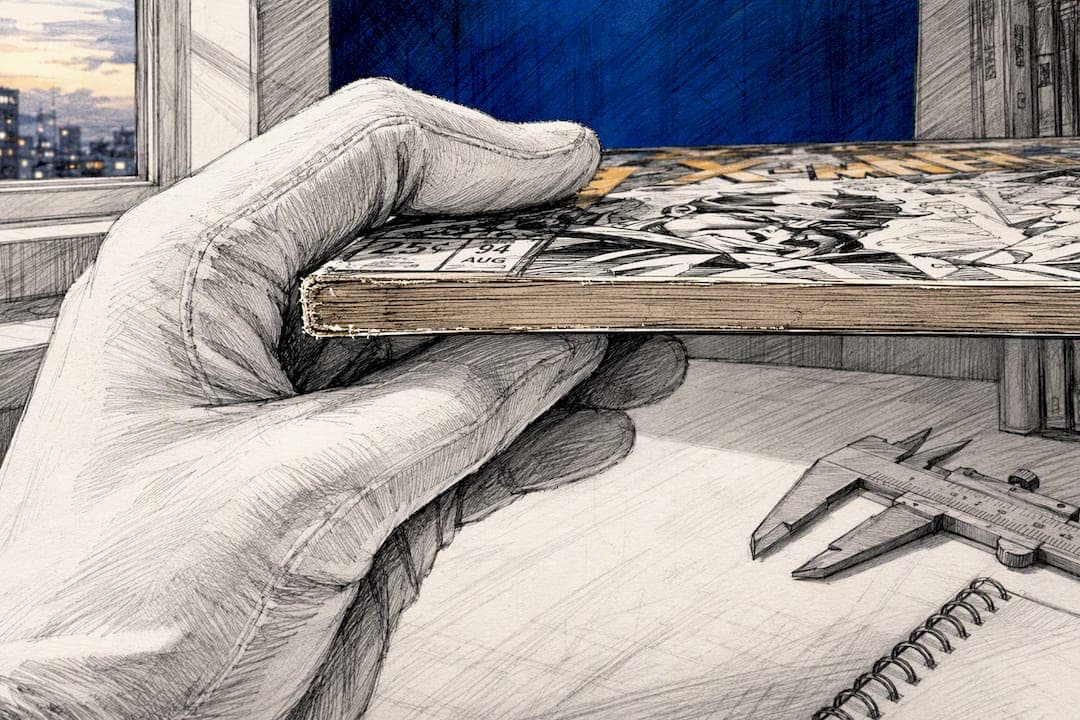
A trimmed comic has had paper cut away from its cover or pages, usually to remove edge tears, chips, or discoloration, or to bring an odd-sized book closer to standard dimensions. Grading companies classify this as restoration whether or not the seller disclosed it, and that single fact changes everything about what the book is worth.
The consequence lands fast and hard. Once a slab or a seller's description flags trimming, the book stops competing with unrestored copies in its grade bracket. Research on restoration detection puts the typical hit at roughly 30% of what an equivalent unrestored copy would bring. That is not a rounding error. It is the difference between a book funding your next grail purchase and one that barely covers the CGC fee.
Here is what that means in practice for anyone buying, selling, or holding a book they have questions about:
- Trimming is a physical alteration, not a cosmetic touch-up, and graders treat it as such.
- Restoration status appears on the label separate from the numeric grade.
- Detection relies on comparing edges, colors, and dimensions against known originals.
- Even a small trim on a key issue can erase thousands of dollars in value.
Key Takeaways
Trimming permanently classifies a comic as restored, and that single label typically cuts its resale value to around 30% of an unrestored copy in the same grade.
| Point | Details |
|---|---|
| Definition matters | Trimming means paper was physically cut from the cover or pages, not just cleaned or pressed. |
| Edge inspection is your first check | Bright, uniform, feather-free edges under strong light are the clearest visual warning sign. |
| Grading labels disclose it separately | CGC and CBCS note restoration apart from the numeric grade, so a high grade doesn't rule out a trim flag. |
| Golden Age books deserve extra caution | Production variance in older print runs can mimic trimming, making provenance essential for ambiguous cases. |
| Documentation protects everyone | Photograph edges before selling, buying, or submitting a book for pressing, cleaning, or grading. |
Table of Contents
- What Is a Trimmed Comic, and How Do You Spot One?
- How Trimming Affects Grading Labels and Market Value
- When a Rough Edge Isn't a Trim: Production Variances and False Positives
- What to Do If You Suspect a Comic Is Trimmed
- Pressing Issues' Take: Where Cleaning and Trimming Detection Overlap
- What Collectors Get Wrong About Trimming
- Frequently Asked Questions
- Sources
What Is a Trimmed Comic, and How Do You Spot One?
Spotting a trim starts with your eyes and ends with a tape measure. Nobody gets good at this overnight, but a repeatable checklist catches the majority of cases without needing a lab.
1. Inspect the edges under strong light. Natural aging leaves a book's edges with texture: slight oxidation, small color variation, occasional feathering where paper fibers have separated over decades. A trimmed edge often looks unnervingly clean. Whiter, smoother, and more uniform than the interior pages, because it has not spent 60 years absorbing oxygen and handling wear the way the rest of the book has.
2. Check for truncated artwork. Look at the cover margins and the area around printed marks like the Comics Code Authority stamp. Photo comparisons from restoration guides frequently show logos or border art cut off mid-design, which is a strong tell that someone shaved material off the edge after printing.
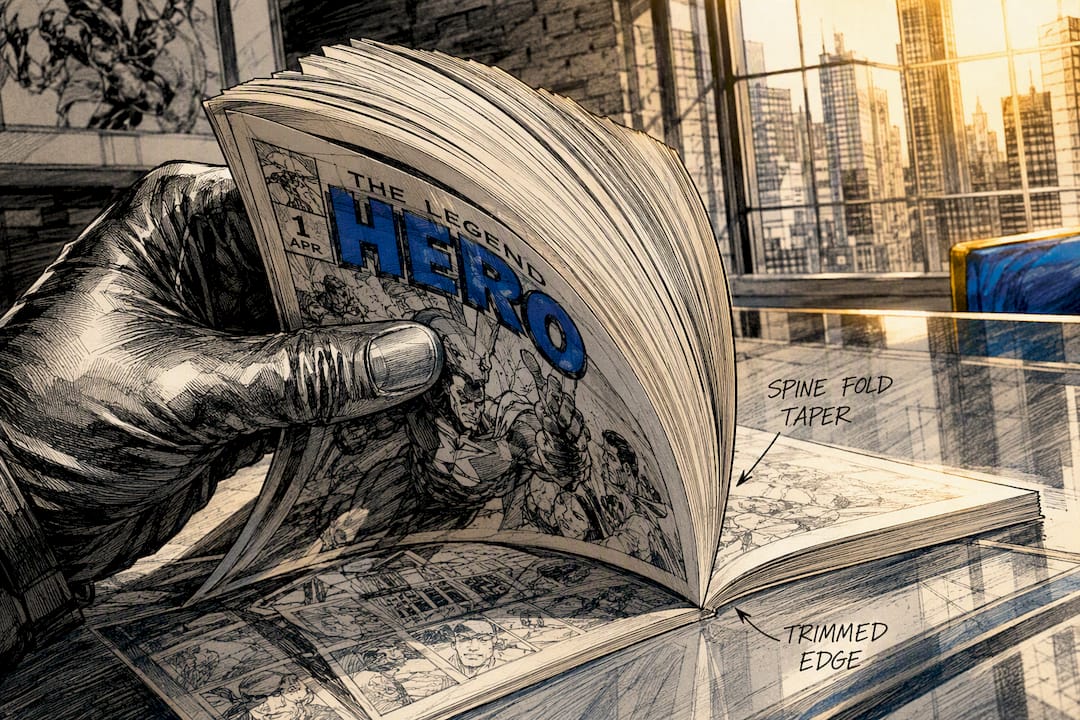
3. Fan the pages and watch the fold. An untrimmed comic's interior pages taper to a visible point at the spine fold when you flex them slightly. A trimmed book often loses that point entirely, presenting a flatter, harder edge because the trimming process squared off what should be a natural taper.
4. Measure against verified dimensions. Every issue has an expected height and width within a small tolerance. Pull up measurements for a certified original of the same book and compare with calipers or a precise measuring tape. A quarter inch of difference across the top edge is not a coincidence.

5. Photograph everything before you decide. Take straight-on shots of all four edges, close-ups of any logo or border near the trim zone, and a raking-light shot (light angled low across the surface) that reveals texture differences a flat photo misses.
Pair a jeweler's loupe or a
magnifier with your calipers, and you have most of what a knowledgeable collector uses in the field. The magnifier reveals whether the cut edge shows the fiber separation of a saw or blade versus the natural roughness of decades-old paper.Pro Tip: Compare the suspect book's edge color to its own interior pages, not to another copy. A book that has yellowed evenly inside but shows bright white paper at the very edge is telling you something the seller probably didn't.
How Trimming Affects Grading Labels and Market Value
Grading companies do not hide restoration. They flag it directly on the label, and that flag travels with the book for as long as it exists in slabbed form.
CGC and CBCS both use a restoration designation that sits apart from the numeric grade. A book can grade a strong 9.0 on the traditional scale and still carry a purple or amber label noting trimming, because the grade measures physical condition while the restoration note measures whether that condition was achieved honestly. Our own breakdown of the CGC restored label covers how that distinction plays out on paperwork buyers actually see.
Trimmed copies of the same book, same grade, often sell for around 30% of what an unrestored copy commands, according to collector-sourced detection research.
That gap exists for a reason beyond snobbery. Serious collectors buy comics as long-term stores of value, and a trimmed book carries resale risk that follows every future owner. CBCS forum discussions repeatedly describe trimmed copies moving at steep discounts because buyers know the next buyer will discount it too.
A few points worth keeping straight:
- Restoration flags apply regardless of intent. Trimming done decades ago by a previous owner still counts.
- The flag does not disappear if the book is reslabbed by a different service.
- Ambiguous cases exist. When a grader's report notes "possible trimming" rather than confirming it outright, that hedge usually reflects genuine uncertainty, not corporate caution.
- Heritage Auctions' glossary lists trimming among a handful of restoration techniques graders specifically track, alongside color touch and tear seals.
When a Rough Edge Isn't a Trim: Production Variances and False Positives
Not every odd edge means someone took scissors to a comic. Production quality in vintage printing was inconsistent, and mistaking a factory quirk for deliberate trimming can cost you a good deal or start an unfair dispute.
- Golden Age binder cuts. Books from the 1940s were often bound and cut in bulk on machinery with looser tolerances than modern printing. A slightly uneven top edge or a margin a sixteenth of an inch off spec can simply be how that specific print run left the factory.
- Batch variance across printings. Two copies of the same issue, printed in different runs or by different regional printers, sometimes measure slightly differently even when neither has been touched since publication.
- Why Golden Age books are the hardest calls. Analysis of detection challenges notes that skilled trimming on older books can mimic natural edge characteristics closely enough that even experienced graders disagree, especially without provenance.
- When to lean on provenance instead of eyeballing. If you have pedigree history, an old auction listing with photos, or a previous grading report from years before the current sale, those documents settle more disputes than another round of edge inspection ever will.
If the edges look slightly off but nothing else lines up with the classic trim signature (bright white cut, truncated art, missing fold point), the honest answer is often "inconclusive," and that is a legitimate outcome, not a cop-out.
What to Do If You Suspect a Comic Is Trimmed
The right move depends on which side of the transaction you are on, but both sides benefit from the same instinct: document first, argue second.
1. If you're selling, disclose before you list. Photograph all four edges in raking light, note anything unusual in the listing, and price the book as though it carries a restoration flag. Forum guidance on suspected trims consistently warns that non-disclosure risks disputes, refunds, and a reputation hit that outlasts any single sale.
2. If you're buying, request specific images. Ask for straight-on edge shots, a raking-light photo, and a close-up of any logo or border near the corners. Compare what you receive against verified measurements for that issue.
3. Ask about history. Previous grading reports, old sale listings, or a documented ownership chain carry more weight than a fresh set of photos from a seller with no track record.
4. Get a second opinion before you commit real money. If the book is a key issue and the stakes are high, an independent expert look before submission beats finding out after you've paid a grading fee and shipping both ways.
5. Price conservatively when doubt remains. Structure offers around the discounted, restored-copy value rather than the clean-copy price, or build a walk-away threshold into your negotiation from the start.
Pro Tip: Never let excitement about a "too good to be true" price talk you out of the edge check. The deals that look best on price are exactly the ones most likely to be hiding something in the margins.
Pressing Issues' Take: Where Cleaning and Trimming Detection Overlap
Pressing and cleaning change how a comic's surface and edges look, which means the process interacts directly with trimming detection whether we intend it to or not. Removing surface grime or light indentations can make edges appear crisper. That is exactly why documentation matters before we ever touch a book.
Here's what collectors should expect from a professional service:
- We photograph edges and surfaces before and after every job, so nobody has to guess what changed and what was already there.
- Cleaning and pressing address surface dirt, spine roll, and non-restorative defects. Neither process adds or removes paper, so trimming a book before it reaches us stays exactly as it was.
- If a book shows signs consistent with trimming, we flag it rather than proceed as though the issue doesn't exist.
- Pre-service documentation protects collectors when the book eventually goes to CGC or CBCS for grading.
If you're weighing whether a book is worth submitting after service, our comic book cleaning page walks through what the process covers, and our service rates and turnaround times page breaks down what to expect before you commit a book to the process. Neither pressing nor cleaning restores missing paper. If a comic has been trimmed, that history stays part of its record no matter how good it looks afterward.
What Collectors Get Wrong About Trimming
Most advice on trimming treats it like a binary you can solve with a checklist: measure the edges, check the fold, done. That undersells how often the honest answer is "probably, but not provably." Golden Age books especially resist certainty, and I think the collecting community's appetite for clean verdicts does readers a disservice.
The bigger blind spot is timing. Collectors obsess over detecting trims after they own a book, when the leverage to walk away or negotiate has already evaporated. The checklist matters most before money changes hands, not after.
If you take one thing from this: build your own reference photos of verified, ungraded originals for the books you collect most. That comparison set beats any generic checklist, because you're measuring against the real thing rather than a description of what the real thing should look like.
Frequently Asked Questions
What does trimmed comic mean in simple terms? It means someone cut paper away from the cover or interior pages, usually to remove damage like tears or chips, or to correct an odd trim size. Grading companies treat this as restoration.
Does a trimmed comic still get a numeric grade? Yes. CGC and CBCS assign a condition grade and a separate restoration note, so a book can grade a 9.0 and still carry a restored label because of the trim.
How much value does trimming actually remove? Research on restoration detection puts trimmed copies at roughly 30% of what an equivalent unrestored copy sells for in the same grade.
Can pressing or cleaning fix a trimmed comic? No. Pressing and cleaning address surface flatness and dirt without removing or adding paper, so a trim from before service remains part of the book's permanent record afterward.
Is it possible to trim a comic and have it go undetected? It happens, particularly with skilled work on Golden Age books where production variance already creates ambiguity. That's why comparative photo evidence and provenance matter as much as visual inspection.
Sources
- Trimming • Comic Book Daily
- Spotting Comic Restoration - Comic Book Boys | Sell Your Comics Fast Recommended
- trimmed books | CBCS Comics | Page 1