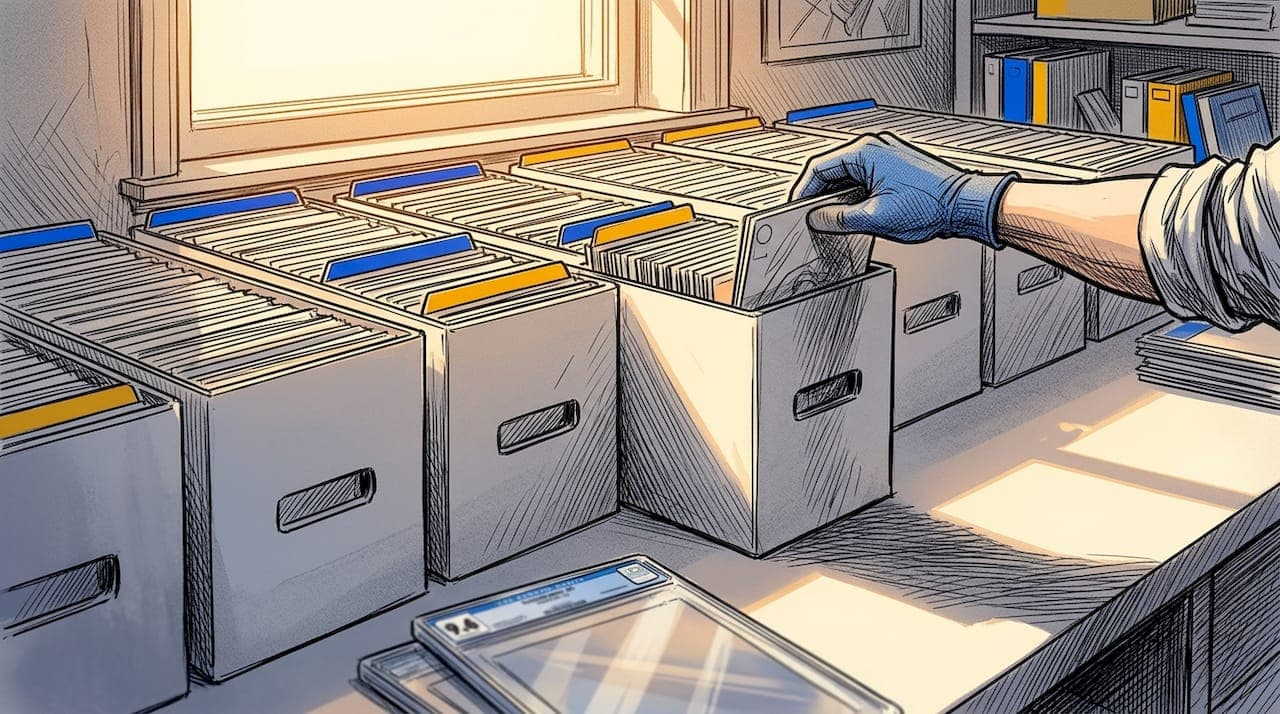
Inventory organization for comics is the professional process of inspecting, cleaning, pressing, appraising, and preparing physical comics for CGC grading submission and resale. It covers preservation, improved eye appeal, potential grade uplift, and safer shipping so your books arrive at the grading table (and your buyer's mailbox) in the best possible condition. Done right, it turns a shoebox of "maybe worth something" issues into a documented, submission-ready inventory. Pressing Issues handles this for collectors and dealers who don't want to gamble a key book on DIY pressing or guess at a $5 online handling fee schedule they've never read closely.
The immediate next step is simple: pull your candidate books, note anything you already know about their condition, and request a screening or estimate before you touch a single page.
- Preservation of paper, ink, and structure over time
- Improved eye appeal through non-invasive pressing and cleaning
- Potential grade and value uplift on borderline books
- Simplified CGC submission with fewer paperwork errors
- Safer shipping through standardized packing and tracking
Pro Tip: Never assume a book is "too far gone" without a screening. Professional pressers see hundreds of spine rolls and cover ripples a year; what looks hopeless to you is often routine to them.
Key Takeaways
Professional inventory organization combines inspection, cleaning, pressing, appraisal, and CGC submission handling to protect and potentially raise a comic's resale value.
| Point | Details |
|---|---|
| Definition matters | Inventory organization means inspection, cleaning, pressing, appraisal, and CGC submission prep, not spreadsheet cataloging. |
| Screen before you spend | Color-breaking creases, missing pieces, and brittle paper rarely respond to pressing and waste service fees. |
| Follow the order | Clean, then humidify, then press, then rest. Reversing steps risks locking in damage. |
| Know the CGC fees | CGC charges a $5 online handling fee and $8 paper handling fee per invoice, with turnaround times treated as estimates only. |
| Document every handoff | Photos, manifests, and tracking numbers form your chain-of-custody record from bench to buyer. |
| Pressing Issues covers the full cycle | Screening, cleaning, pressing, appraisal, and CGC submission handling are managed together with per-comic pricing detailed on the services page. |
Table of Contents
- Who Needs Professional Inventory Organization, and When?
- What Is the Step-by-Step Workflow for Organizing Comic Inventory?
- What CGC Rules Should You Know Before Submitting?
- How Do You Pack and Ship Comics Without Losing Value?
- When Does Pressing Actually Increase Net Value?
- How Pressing Issues Handles Your Comic Inventory
- Ready to Get Your Comics Screened?
- Frequently Asked Questions
- Sources
Who Needs Professional Inventory Organization, and When?
Not every long box needs a service. You need one when the math or the moment justifies it.
Reach for professional inventory organization when you're holding high-value keys, books sitting on a grade borderline (say, a 9.2 that could be a 9.6), lots headed for resale or consignment, a dealer intake batch that needs fast triage, or an estate collection where nobody knows what's actually inside. A single Amazing Spider-Man #300 in rough shape justifies individual attention. A 40-box dealer acquisition justifies batch screening and manifesting before anyone spends a dollar on pressing.
Some books, though, aren't worth the fee. Watch for these red flags before you pay for anything:
- Color-breaking creases or tears that have already cracked the ink layer
- Missing pieces, coupon cuts, or trimmed pages
- Heavy staining, foxing, or water damage that's soaked into the paper
- Brittle or acidic paper stock that won't tolerate humidity or heat
- Cover materials (certain glossy or laminated stocks) known to react poorly to pressing
If a book falls into that list, spend your money on grading fees for a book that will actually benefit, not on pressing a lost cause. Our comic book damage guide breaks down which defects are fixable and which are permanent.
What Is the Step-by-Step Workflow for Organizing Comic Inventory?
Every professional pressing operation follows some version of the same sequence, and skipping a step is where collectors get burned. ComicBookCPR's technical writeup on pressing order confirms what most experienced pressers already know: doing steps out of order can lock in defects or cause new damage that pressing can't undo. Here's the order that works.
- Inspection and reject screening. Check for color-breaking defects, missing pieces, and paper condition before committing to any service. This is where you decide a book is or isn't a candidate.
- Dry cleaning. Surface debris, grime, and light residue come off before any heat or moisture touches the book.
- Humidification and dent work. Controlled moisture softens paper fibers enough to relax dents and rolls without saturating the page.
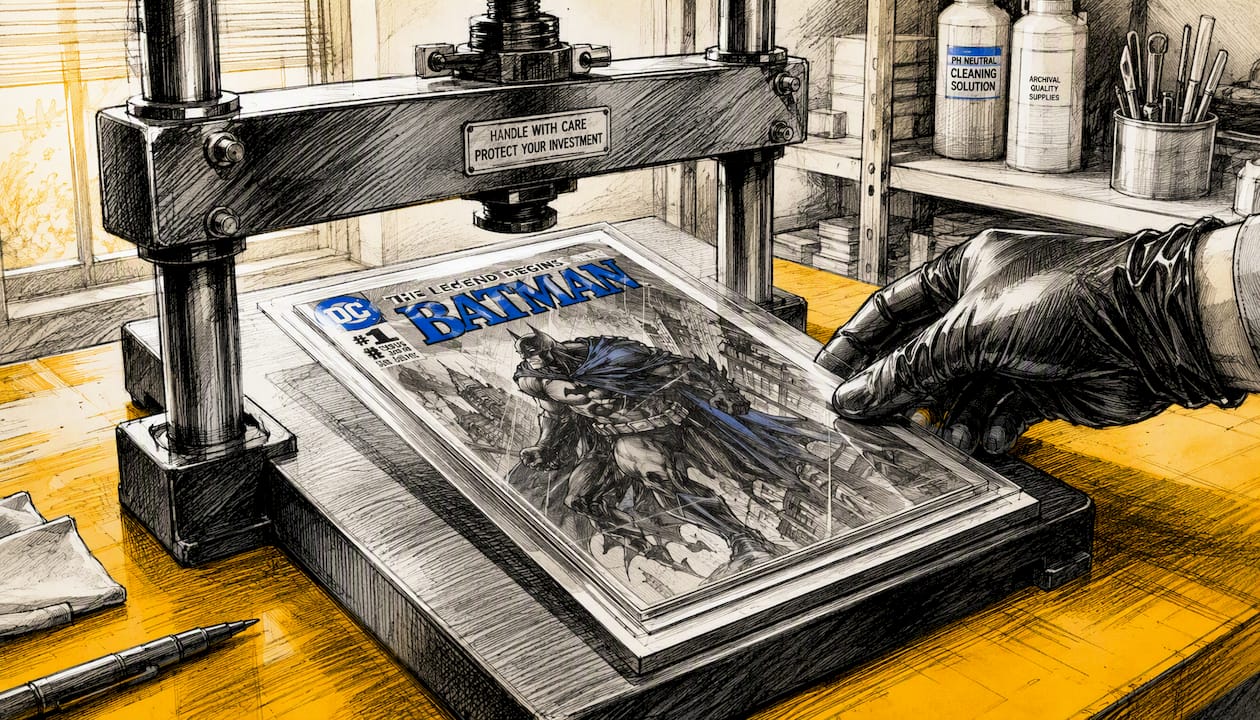
- Pressing. Even, controlled pressure flattens spine rolls, corner dings, and cover waves. CGC is explicit that professional pressing isn't restoration since there's no disassembly, no solvents, and no chemical treatment involved.
- Rest and reversion check. Pressed books need time to stabilize before anyone declares success.
- Appraisal and manifesting. Estimate fair market value (FMV) and likely grade range, and log it.
- Photo documentation. Shoot the book before and after service for your own records and for chain-of-custody.
- Batch labeling. Assign a lot ID so nothing gets mixed up in a multi-book submission.
- Submission routing. Send the book on to CGC through your chosen submission path.
Build a simple manifest with these fields for every book: title, issue number, estimated grade, estimated FMV, service selected, estimated fees, and lot ID. It sounds tedious for one comic. It's essential for forty.
Pro Tip: Never dry-clean a comic after it's been pressed. Cleaning agitates the surface, and a freshly pressed book is more vulnerable to smudging or fiber disruption than one that hasn't been touched yet. Clean first, press second, always.
What CGC Rules Should You Know Before Submitting?
CGC's own policies shape how you should organize inventory long before a box ships to their offices. First, screening matters: scans and photos alone aren't reliable for judging whether a book will press well, so a physical screening (either from CGC's process or a pressing service) is worth the time before you commit a key book to treatment.
Second, understand the fee structure. CGC applies a $5 handling fee per invoice for online submissions and $8 per invoice for paper submissions, on top of grading tier fees tied to publication date, FMV, and turnaround speed. Add-on services like pressing and autograph authentication get bundled into the same submission process.
Third, turnaround times are estimates, not promises. CGC is upfront that stated windows aren't guaranteed, which matters if you're timing a submission around a sale or a convention.
Fourth, pick your submission route deliberately: direct membership submission, an authorized dealer, walk-in drop-off, or expedited service, each with different cost and speed tradeoffs. Whichever route you choose, submission tracking functions as your chain-of-custody record, so keep every confirmation number.
How Do You Pack and Ship Comics Without Losing Value?
Packing mistakes destroy more comic value than bad pressing does. Follow this sequence for every shipment:
- Photograph the full lot before packing, matching each photo to its manifest entry.
- Bag and board every book individually, even ones already in top loaders.
- Use a rigid mailer or double-box method with corrugated inserts for anything above a few books.
- Fill every void with packing material so nothing shifts in transit.
- Seal, label with the lot ID, and match the label to your manifest.
Insure shipments according to declared FMV, and require signature confirmation on anything carrying real value; a lost package without a signature requirement is a fight you'll lose. Keep pre-service photos, timestamped manifests, tracking numbers, and signature logs together as one chain-of-custody file for every handoff.
Pro Tip: Screenshot your tracking confirmation the moment you ship. Carriers occasionally lose scan history, and a saved screenshot with a timestamp is worth more than a memory of "I definitely shipped that."
When Does Pressing Actually Increase Net Value?
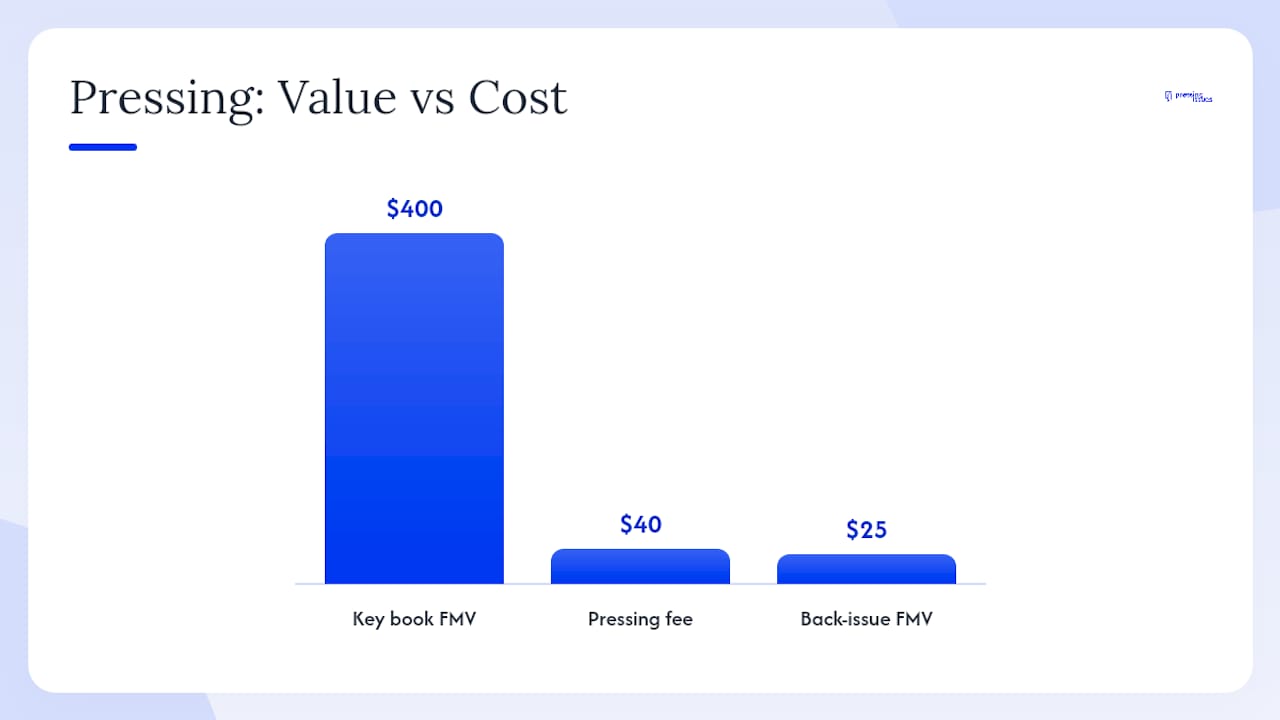
The math is simple even when the decision isn't. Pressing and cleaning tend to pay off when a book's fair market value, multiplied by a realistic grade jump, clears the combined cost of the service fee plus CGC's grading and handling fees. A $400 key book that moves from a 9.0 to a 9.4 might justify a $40 pressing fee and standard grading tier easily. A $25 back-issue rarely will, no matter how nice it looks pressed.
Some industry guidance, like CollectAComic's pressing overview, frames this the same way: pressing fixes non-color-breaking defects like spine rolls and cover waves, but color-breaking creases, tears, and stains stay put no matter how skilled the presser is.
Red flags that make pressing a poor investment:
- Color-breaking creases or spine splits
- Missing pieces or trimmed margins
- Cheap mass-market stock with no meaningful FMV upside
- Severe foxing that's chemically altered the paper
- Fragile, brittle paper unlikely to survive humidification
How Pressing Issues Handles Your Comic Inventory
Pressing Issues runs the full workflow under one roof: screening, dry cleaning, pressing, appraisal, and CGC submission handling, plus shipping management so you're not the one standing in line at the post office with a padded mailer. Pricing follows a simple shape: a per-comic fee for cleaning and pressing, a separate fee for submission handling, and a percentage-based fee that applies only to very high-value items. Current rates live on our services and rates page, since fees shift and we'd rather you see the real number than an outdated one.
Turnaround depends on volume and CGC's own posted estimates. What we need from you upfront: a manifest, clear photos, and sign-off on any book above your comfort threshold before we press it.
- Send a manifest with title, issue, condition notes, and estimated FMV
- Include clear front and back photos of each book
- State your approval threshold for pressing on higher-value items
Pro Tip: Include your estimated FMV even if you're not confident in the number. It helps us flag books where our appraisal differs significantly from yours, before any work begins.
A Note From the Shop Floor
Every book that comes across our bench gets the same treatment: inspect first, document everything, and press conservatively rather than aggressively. Comics don't reward shortcuts, and paper that's survived forty years doesn't need to be rushed through a process in an afternoon.
Pro Tip: Let a pressed book sit stabilized for five to seven days before shipping it anywhere. Books shipped too soon after pressing are the ones most likely to show reversion when they arrive.
Ready to Get Your Comics Screened?
Pressing Issues screens every book before committing to a treatment plan, so you're never paying for pressing on a comic that won't benefit from it. If you've read this far, you likely have a stack of candidates sitting somewhere between "worth checking" and "definitely worth pressing," and the fastest way to find out which is which is a real screening, not another round of guessing from photos.

Before you reach out, gather a few things: clear photos of each candidate book, a rough manifest with issue numbers and your estimated FMV, and your approval threshold for pressing on anything above a value you'd want to sign off on personally. That short list is usually enough for us to give you a real estimate instead of a vague range.
Start with our comic book pressing service page to see what's included, or head straight to our services and rates page to check current turnaround windows before you ship anything.
Frequently Asked Questions
What is inventory organization comics, exactly? It's the professional workflow of inspecting, cleaning, pressing, appraising, and preparing comic books for CGC grading submission and resale, not a cataloging system or spreadsheet tool.
Does pressing count as restoration? No. CGC states plainly that pressing is non-restorative because it involves no disassembly, solvents, or chemical treatment, just controlled heat and pressure.
How much does CGC charge to submit a comic? Fees vary by submission tier, but CGC applies a $5 handling fee per online invoice and $8 per paper invoice on top of grading costs.
Can every comic be pressed? No. Books with color-breaking creases, missing pieces, or brittle, acidic paper are poor candidates and rarely improve enough to justify the fee.
How long does CGC turnaround usually take? CGC ties turnaround to your submission tier, but explicitly states that posted turnaround times are estimates only and not guaranteed.
Sources
- CGC Grading — Services & Fees | CGC