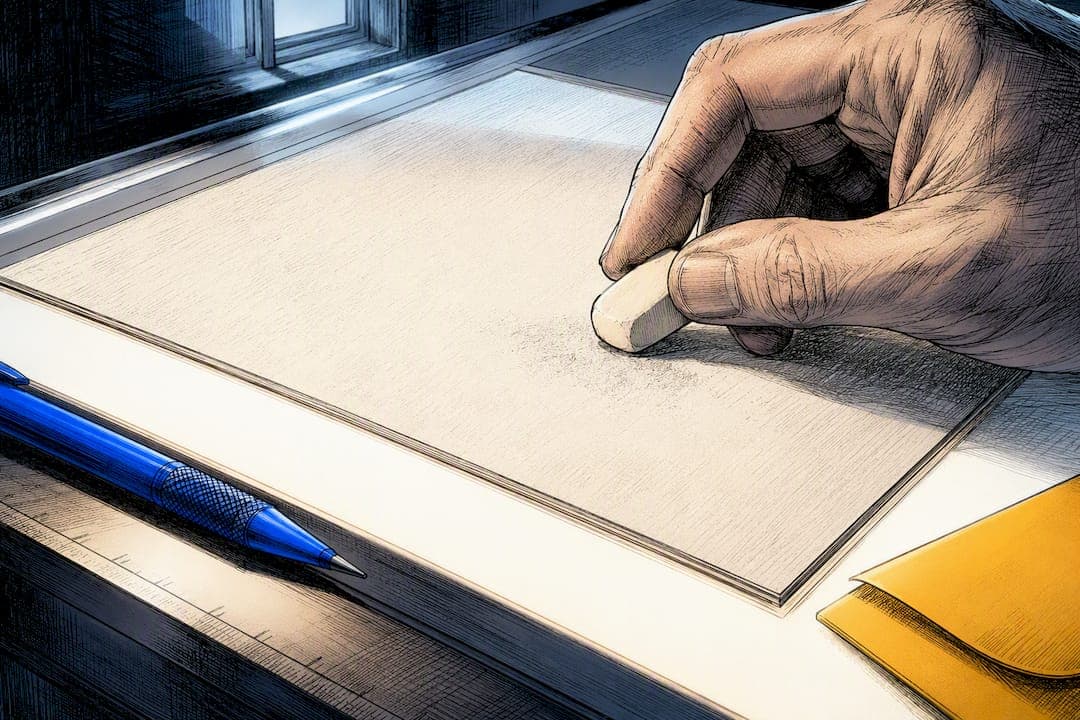
For white or light comic covers, gentle dry cleaning is the safe first step. Skip water and chemical whitening entirely, since both risk a restoration flag. Reach for soft erasers and dry pads on surface dust and light smudges, then stop and consult a professional if the book is stained, brittle, signed, or headed for a grading submission.
TL;DR:
- Gentle dry cleaning with soft erasers and pads is safest for white or light comic covers; avoid water, solvents, and household cleaners to prevent damage.
- Test cleaning tools on low-value books first, and stop immediately if color lifts, stains spread, or paper becomes brittle.
- Cleaning alone does not affect a comic's grading; only liquid or chemical treatments are considered restoration and can lower value or be marked on the certificate.
- Store cleaned comics upright in archival sleeves with acid-free backing boards, away from direct sunlight and extreme humidity for long-term preservation.
- Professional cleaning and pressing offer expert risk assessment, precision, and can include CGC services, especially for valuable or fragile comics.
Table of Contents
- Tools And Supplies For Cleaning A White Comic Cover Safely
- How Do You Dry Clean A White Comic Cover Step By Step?
- Will Cleaning Hurt My Comic's Grade?
- Storing A Clean White Cover So It Stays That Way
- What A Professional Comic Cleaning And Pressing Service Actually Does
- What Collectors Get Wrong About Cleaning White Comic Covers
- Ready To Submit A Comic For Professional Cleaning?
- Where To Learn More About Cleaning And Grading Policy
- Sources
- FAQ
Tools And Supplies For Cleaning A White Comic Cover Safely
Every safe dry-cleaning kit starts with a handful of soft, forgiving tools. Choose supplies based on how targeted the cleaning needs to be, and always test on the least valuable book in your stack first.
- Soft PVC erasers and white polymer eraser caps for lifting surface grime from broad flat areas without introducing wet residue.
- Dry-cleaning pads, along with Absorene putty for uncoated stock, though it should always be tested on a hidden corner first since it can leave residue on glossy modern covers.
- Makeup remover cotton rounds or dry Swiffer sheets for a final buff once eraser debris is cleared.
- Acid-free cardstock backing boards, microfiber cloths, and cotton gloves to keep the workspace lint-free and the cover supported.
- Water, household solvents, and bleach belong nowhere near a comic. They warp pages and pull ink straight off the paper, according to Evoretro's collector cleaning guide.
- Mr. Clean Magic Erasers are a last resort at best. Their melamine foam is mildly abrasive, and it can dull gloss or scuff ink if you press too hard, so save it for books you're willing to risk.
Small precise tools like pencil-cap erasers reduce pressure near spines and detailed ink, while the larger PVC blocks work faster across wide white margins where tool choice depends on precision versus efficiency.
How Do You Dry Clean A White Comic Cover Step By Step?
A clean white comic cover comes down to patience and restraint. Rush the process or grab the wrong tool, and you can push dirt into the paper fibers instead of lifting it out. Work through these steps in order, and don't skip ahead just because a section looks slow.
- Set up the workspace. Clear a flat, well-lit surface, wipe it down, and slide a rigid acid-free backing board under the cover. A too-flexible surface underneath can cause an indentation or spine split you won't notice until it's too late.
- Put on cotton gloves. Skin oils transfer to paper faster than most collectors realize, especially on a white cover where every smudge shows.
- Start with a soft brush. Sweep away loose dust and debris before any eraser touches the page. This alone often improves the look of a lightly handled book.
- Move to a small, precise eraser for detail work. Use short, light strokes near the spine, staples, and any inked text. Lift the eraser and check your progress every few strokes rather than grinding in one spot.
- Progress to a broader PVC eraser for open white space. Cover ground efficiently on the front and back panels, always working with light pressure and frequent debris checks.
- Consider Absorene putty only on uncoated, non-glossy covers. Test an inside margin or extreme corner first and wait 24 hours to check for tackiness or gloss change before using it anywhere visible. Glossy modern covers are especially prone to residue that fuses permanently once heat or pressure gets involved.
- Finish with a dry pad or makeup remover cotton round. This buffs away the fine haze left by eraser work and evens out the surface.
- Remove every trace of eraser crumb and putty residue before doing anything else. Any leftover debris can fuse into the paper during pressing, so this step is non-negotiable if a press is in the book's future.
Pro Tip: Practice this entire sequence on a low-value duplicate before you ever touch a book you actually care about. Ten minutes on a beater copy teaches you more about pressure and pacing than any written guide can.
Stop immediately if you see color lifting onto your eraser, if a stain seems to spread rather than lift, if the paper feels brittle or crackly under light pressure, or if the book carries a signature you can't risk smudging. Those are the moments a professional cleaning and pressing service earns its fee.
Will Cleaning Hurt My Comic's Grade?
CGC draws a firm line collectors need to understand before they touch anything. Dry cleaning, meaning the removal of surface dust, dirt, and light smudges, is not classified as restoration. Liquid-based stain removal and chemical whitening are different animals entirely; CGC treats those as advanced conservation techniques that can be identified and labeled as restoration on the grading certificate.
That label matters because a restoration designation typically caps a comic's value well below what an unrestored copy in the same condition would command, and it follows the book permanently once recorded.
Watch for these red flags before attempting anything beyond a soft eraser:
- Stains that appear to have soaked into the fibers rather than sitting on the surface.
- A glossy sheen that seems to lift or smear under gentle pressure.
- Whiteness that looks suspiciously uniform for a book's stated age, a common sign of prior undisclosed treatment.
- Brittle, crackling paper that could tear under normal eraser friction.
- Any signature, sketch, or inscription near the area you'd need to clean.
If a book is a realistic grading candidate, especially anything approaching a 9.0 or higher, get a professional opinion before you touch it with anything more than a soft brush.
Storing A Clean White Cover So It Stays That Way
Cleaning gains disappear fast without the right storage habits behind them. Slide the comic into an archival sleeve with an acid-free backing board immediately after cleaning, then store it upright rather than flat to prevent warping over time.
- Keep books out of direct sunlight, which yellows white paper faster than almost anything else in a collection.
- Maintain a stable temperature and moderate humidity; attics, basements, and garages swing too widely to be safe long-term homes.
- Handle with cotton gloves and limit direct contact, especially on the white margins where oils show fastest.
- Choose UV-filtering display cases if you want a book visible rather than boxed.
Preventative care, not repeat cleaning, protects value over the long run. Acid-free boards and climate-controlled storage do more for a comic's condition than any cleaning session ever will. Pressing deserves a separate mention here too: it flattens minor wrinkles and corner bends using heat and pressure, and it's a distinct, non-restorative service from cleaning, not a substitute for it.
What A Professional Comic Cleaning And Pressing Service Actually Does
A professional evaluation goes further than a home dry-cleaning session because it weighs risk against potential value gain before a single tool touches the book. That judgment call, whether a stain is worth attempting or whether the paper is too fragile to risk, is where experience matters most.
Professional services typically include:
- Non-restorative surface cleaning using the same category of dry tools collectors use at home, applied with more precision and experience.
- Pressing to flatten spine ticks, corner dings, and minor undulations without crossing into restoration.
- Full CGC submission handling, including paperwork, packaging, and shipping coordination for the grading process.
- A value analysis that estimates whether cleaning and pressing are likely to move the needle before you commit money to the process.
Service transparency around scope, pricing, and turnaround is what separates a business you can trust with a $2,000 book from one you can't. Ask for all three before you ship anything.
What Collectors Get Wrong About Cleaning White Comic Covers
The biggest misconception floating around collector forums is that cleaning is a single skill you either have or don't. It's not. Dry cleaning a white comic cover is genuinely low risk when you stick to soft erasers and light pressure, and most collectors could learn it in an afternoon with a stack of dollar-bin books to practice on. The conventional advice online undersells how forgiving that first tier of cleaning actually is.
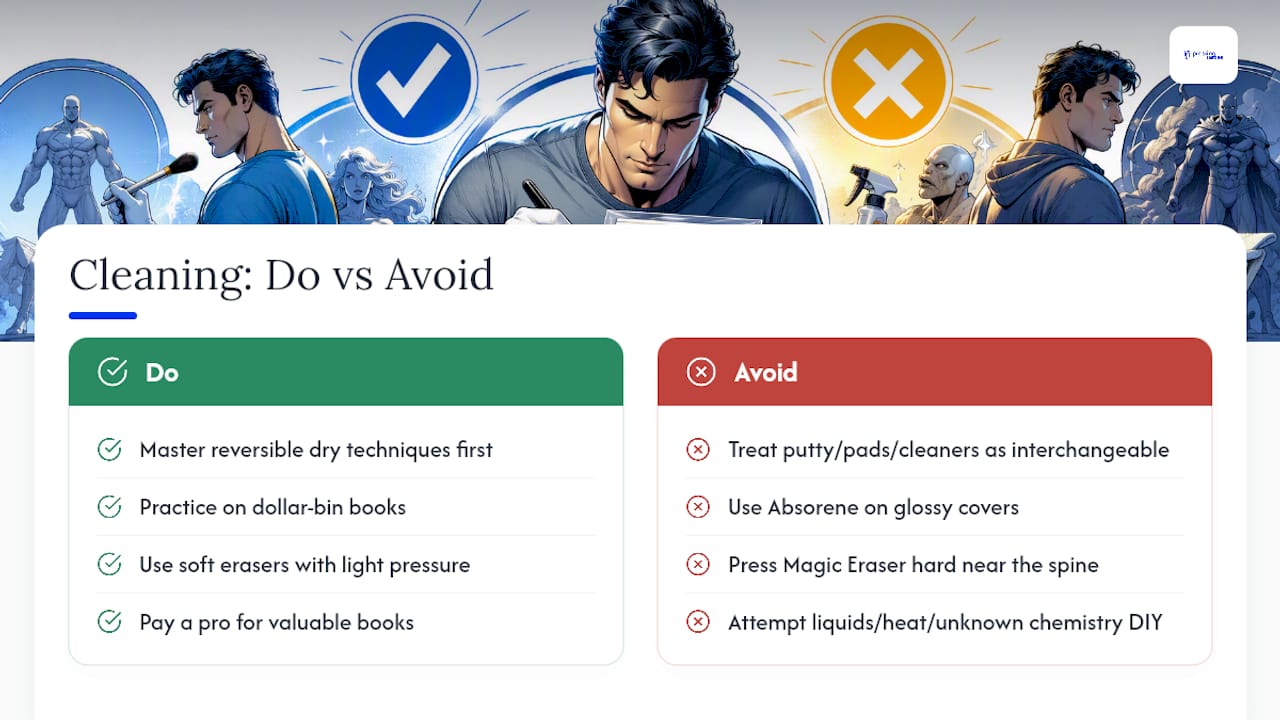
Where that same advice falls apart is the moment collectors treat putty, pads, and household cleaners as interchangeable options on a spectrum, rather than as tools with very different risk profiles. Absorene on the wrong glossy cover, or a Magic Eraser pressed too hard near the spine, can do damage a careful eraser never would.
The priority for any collector should be simple: master the boring, reversible techniques first, and treat anything involving liquid, heat, or unfamiliar chemistry as a decision point, not a DIY project. If the book is valuable enough to matter, the smartest move is often the one that costs a little money and saves a grade.
— Charles
Ready To Submit A Comic For Professional Cleaning?
A professional cleaning and pressing service is the direct alternative to guesswork when a book is too valuable, too fragile, or too stained for a home eraser kit. Instead of testing putty on a corner and hoping for the best, you get a non-restorative cleaning and pressing evaluation from someone who has weighed that exact tradeoff hundreds of times.

Every submission starts with a straightforward estimate covering comic cleaning and pressing services, so you know the scope and cost before anything ships. That estimate also factors in whether the work is likely to improve the book's market value enough to justify the fee, not just whether it can be done. Rates, service details, and expected turnaround are all listed on the Pressing Issues services page, and CGC submission handling is available for books headed straight into the grading pipeline. If your comic has a stain that won't lift with an eraser, visible foxing, or a signature you're not willing to risk, request an evaluation before you touch it with anything more than a soft brush.
Where To Learn More About Cleaning And Grading Policy
CGC's restoration resource page lays out the taxonomy collectors need before attempting anything beyond dry cleaning. For foxing specifically, Pressing Issues' guide to foxing on comics explains when that kind of staining calls for professional help. Collectors curious about how grading services compare more broadly can also check this PSA versus CGC grading breakdown.
Sources
- CGC — About restoration and conservation services
- Dry Cleaning Comic Books — Comic Book CPR
- How to Clean Comic Books Safely — Evoretro
- 7 Simple Tools to Begin Cleaning Your Comics — Nerds on Earth
FAQ
How Do I Clean A Comic Book Cover Without Damaging It?
Use dry tools only, meaning soft brushes, PVC erasers, and dry pads, working with light pressure and frequent debris checks. Avoid water, solvents, and bleach entirely, since they commonly cause warping and ink loss.
Can I Use A Magic Eraser On A Comic Book Cover?
Only as a last resort and with heavy caution, since the mild abrasiveness in melamine foam can dull gloss or scuff ink if pressed too hard. Test it on a low-value book first and never use it near the spine or inked areas.
How Do I Display Comics Without Fading Their Covers?
Store comics upright in archival sleeves with acid-free backing boards, out of direct sunlight, and display them in UV-filtering cases if visibility matters to you. Stable temperature and humidity matter as much as light exposure for preventing long-term yellowing.
Does Dry Cleaning A Comic Affect Its CGC Grade?
Dry cleaning is not classified as restoration under CGC's guidance, so it generally doesn't trigger a restoration label. Liquid or chemical treatments carry that risk instead, which is why anything beyond a soft eraser calls for professional judgment.
When Should I Hire A Professional Instead Of Cleaning At Home?
Hire a professional when you see stains that seem to have soaked into the paper, brittle pages, suspiciously uniform whiteness for the book's age, or any signature near the area needing work. A professional comic book pressing and cleaning service handles exactly this kind of evaluation before recommending cleaning, pressing, or a CGC submission.